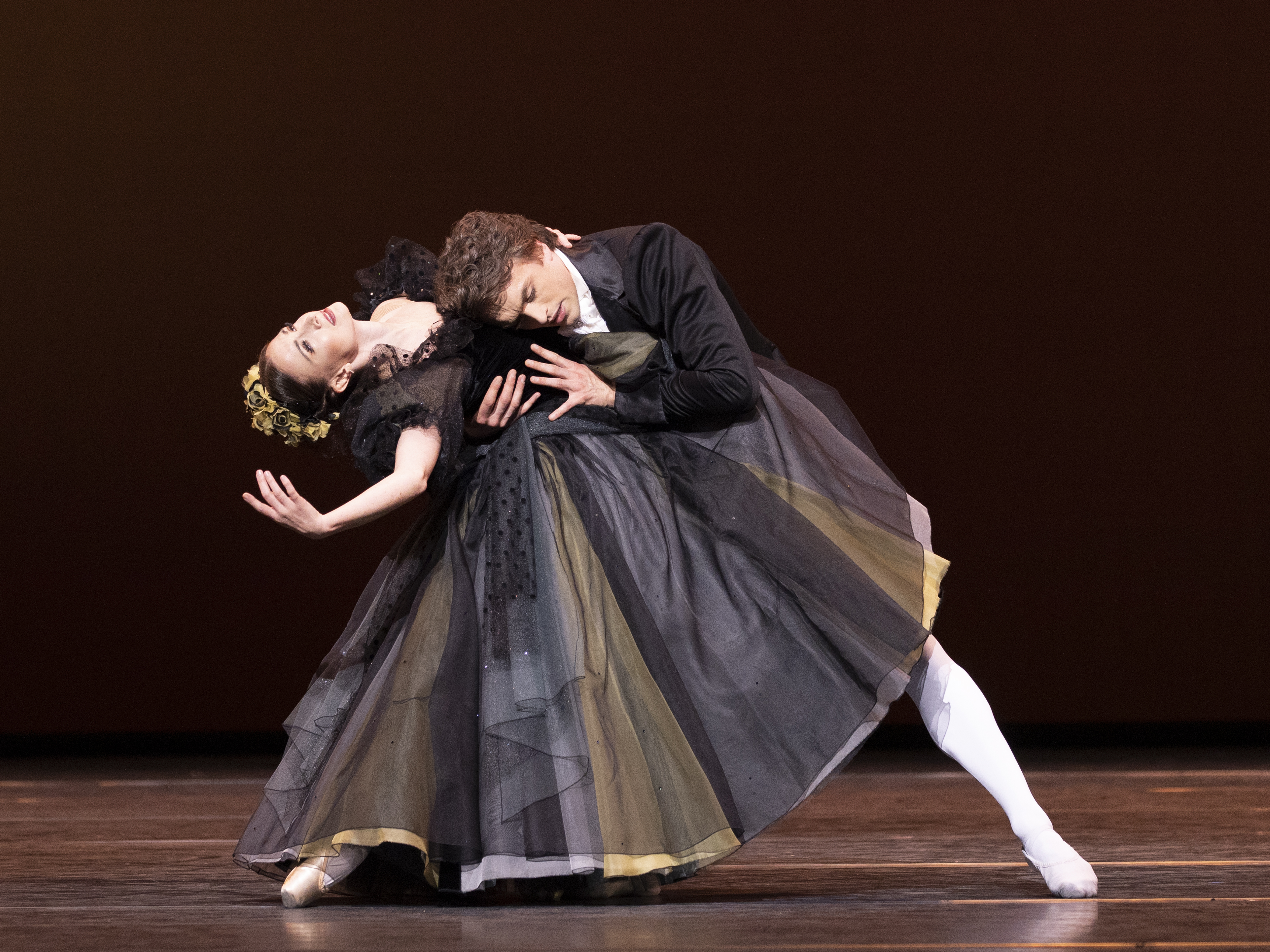
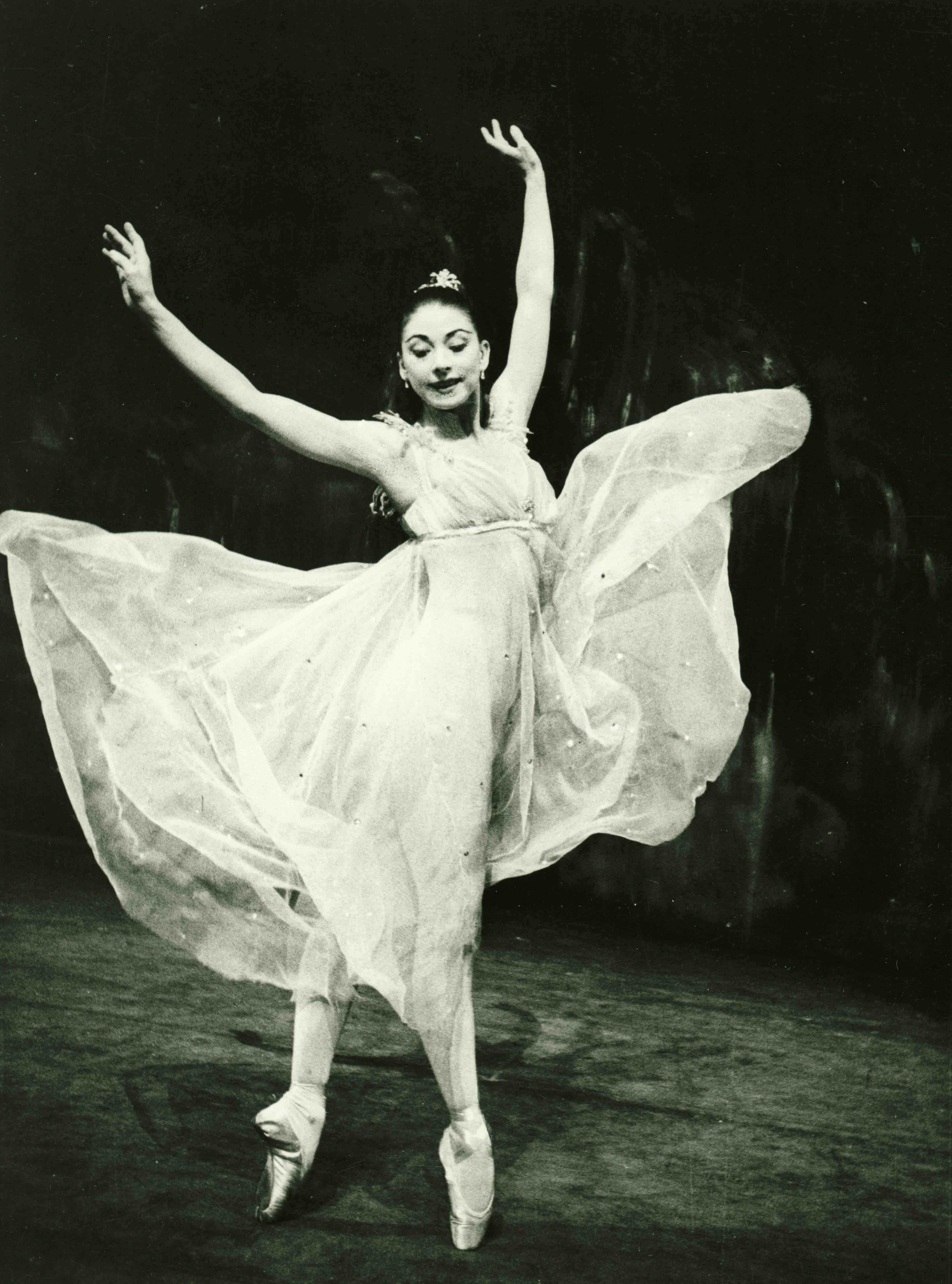
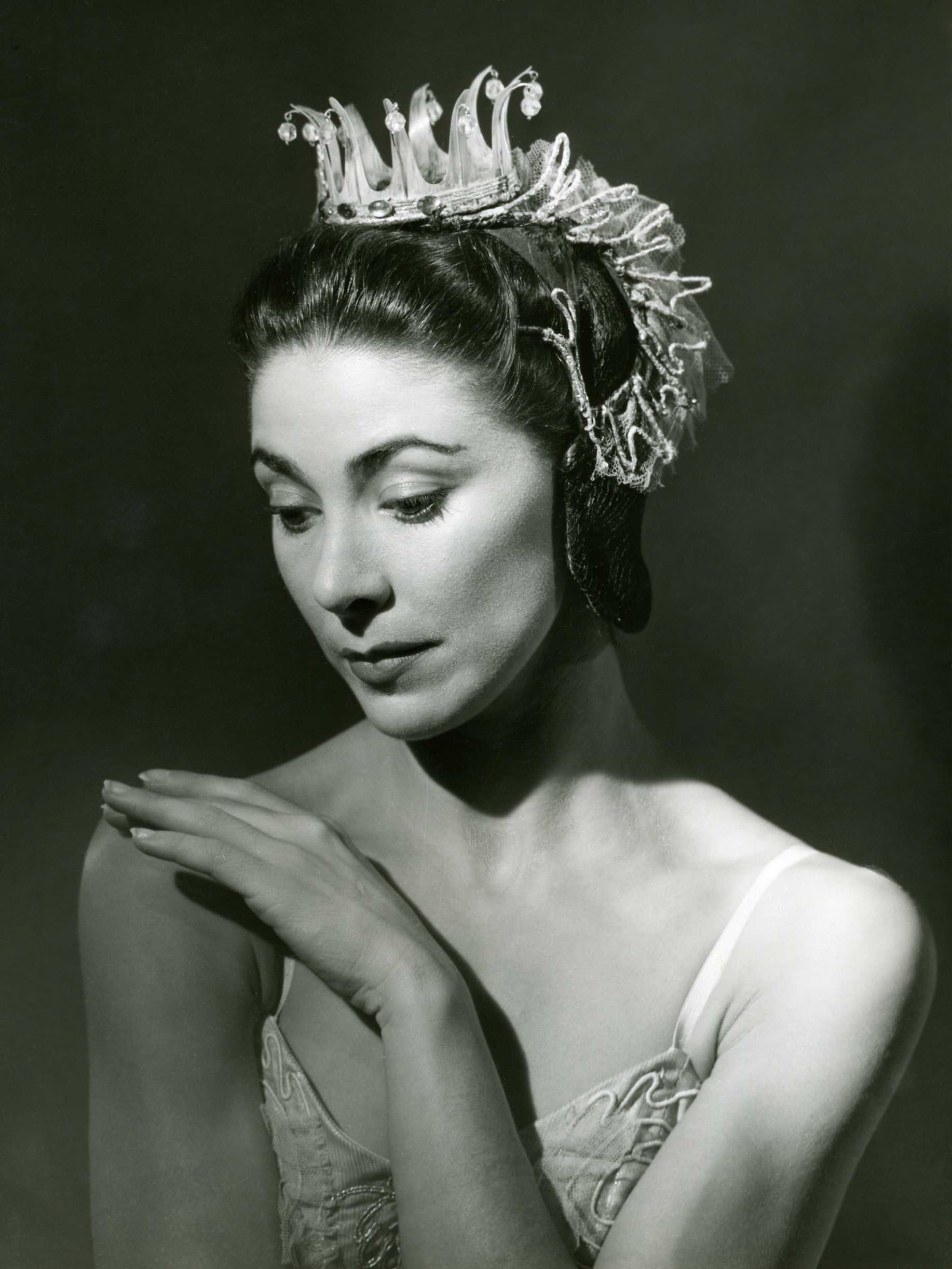
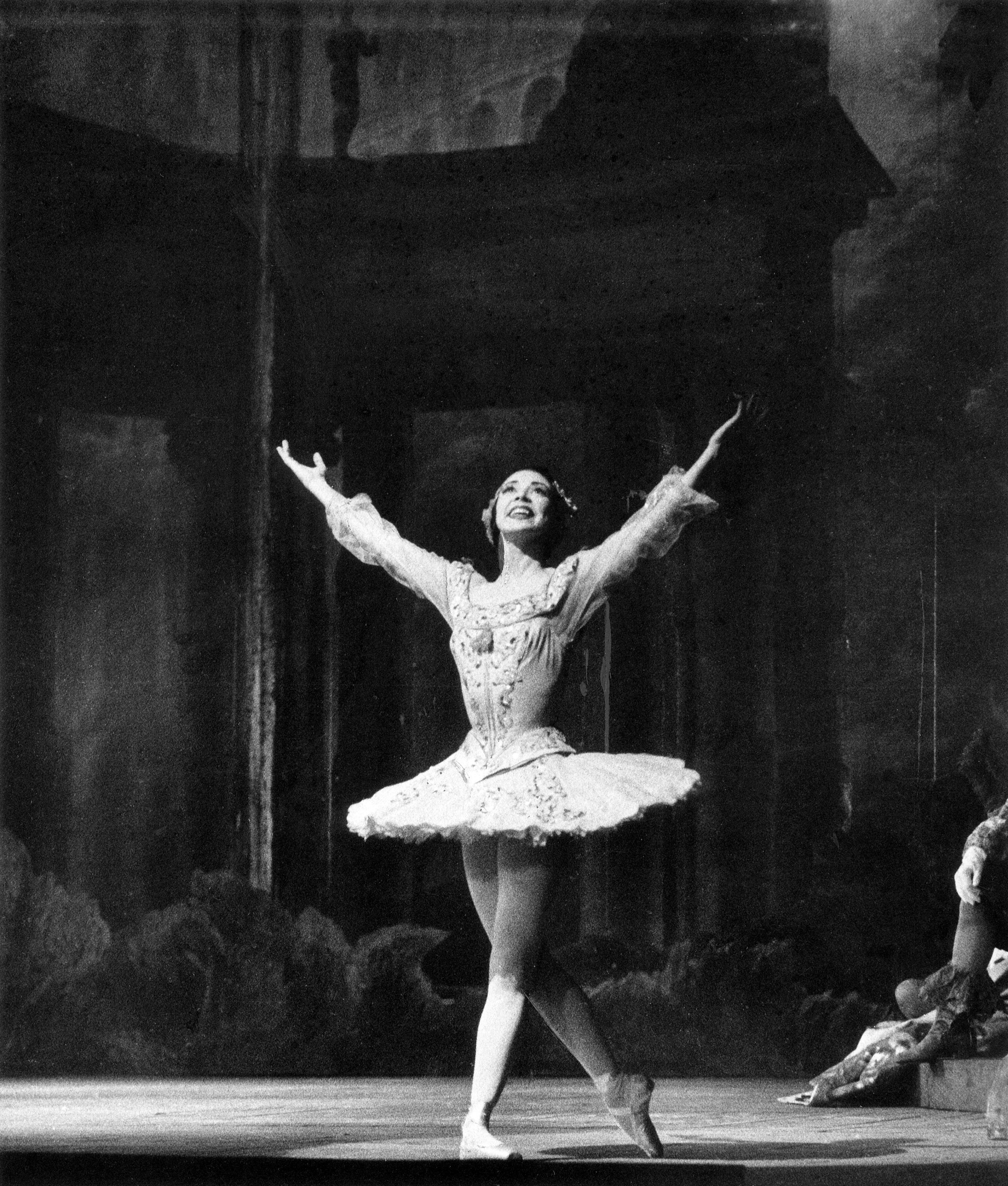
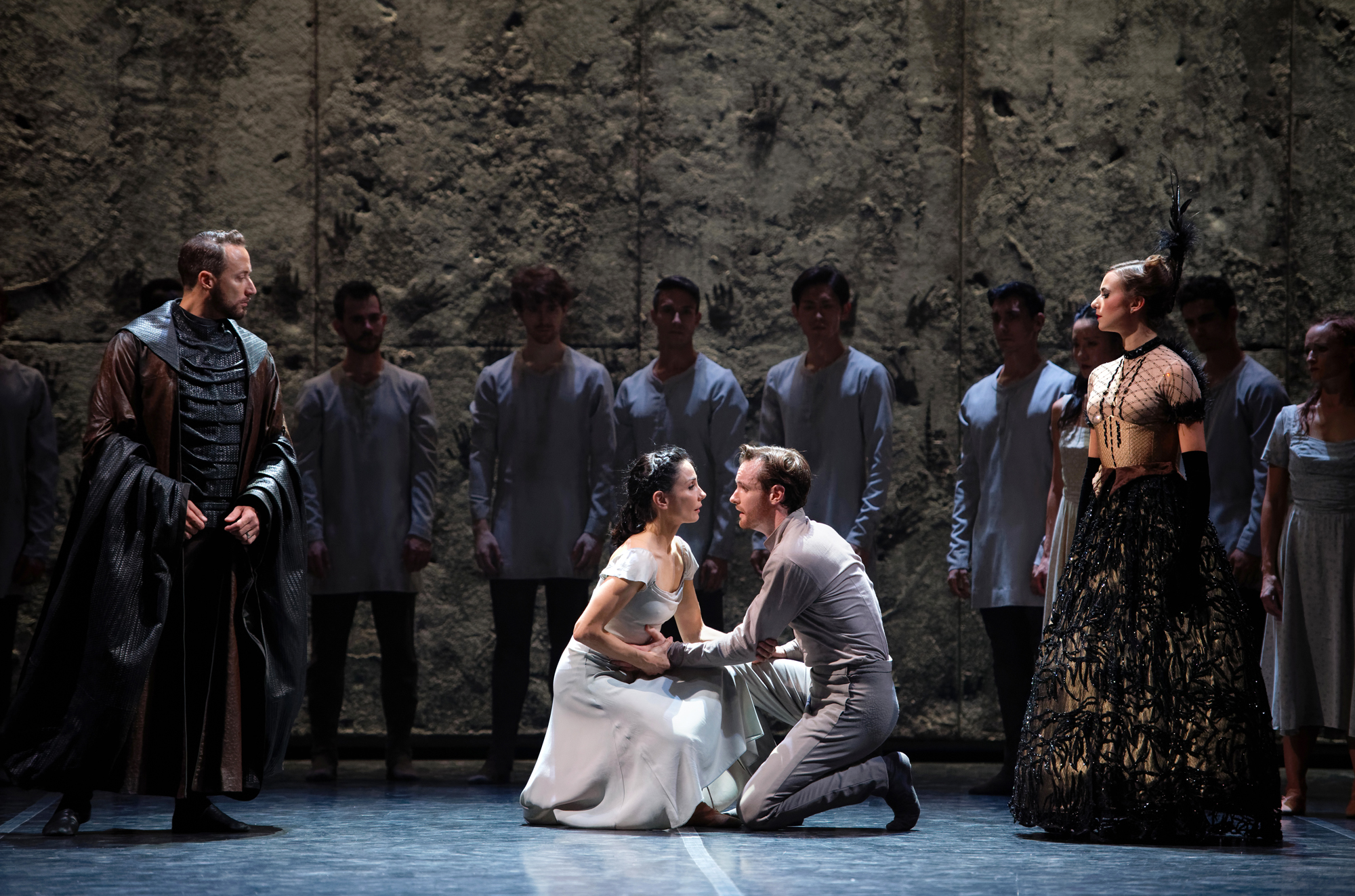
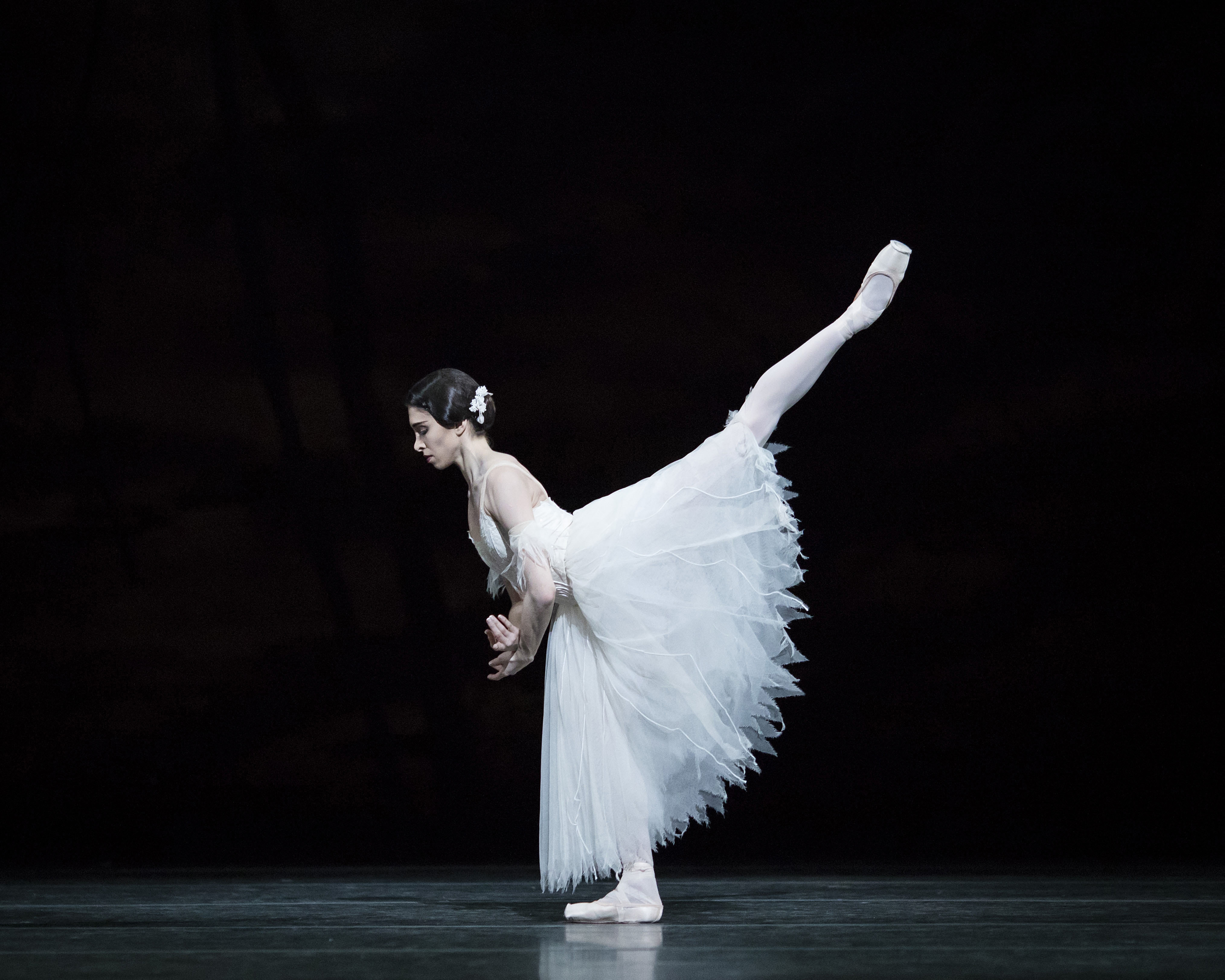
Romeo and Juliet On Screen Now & Then

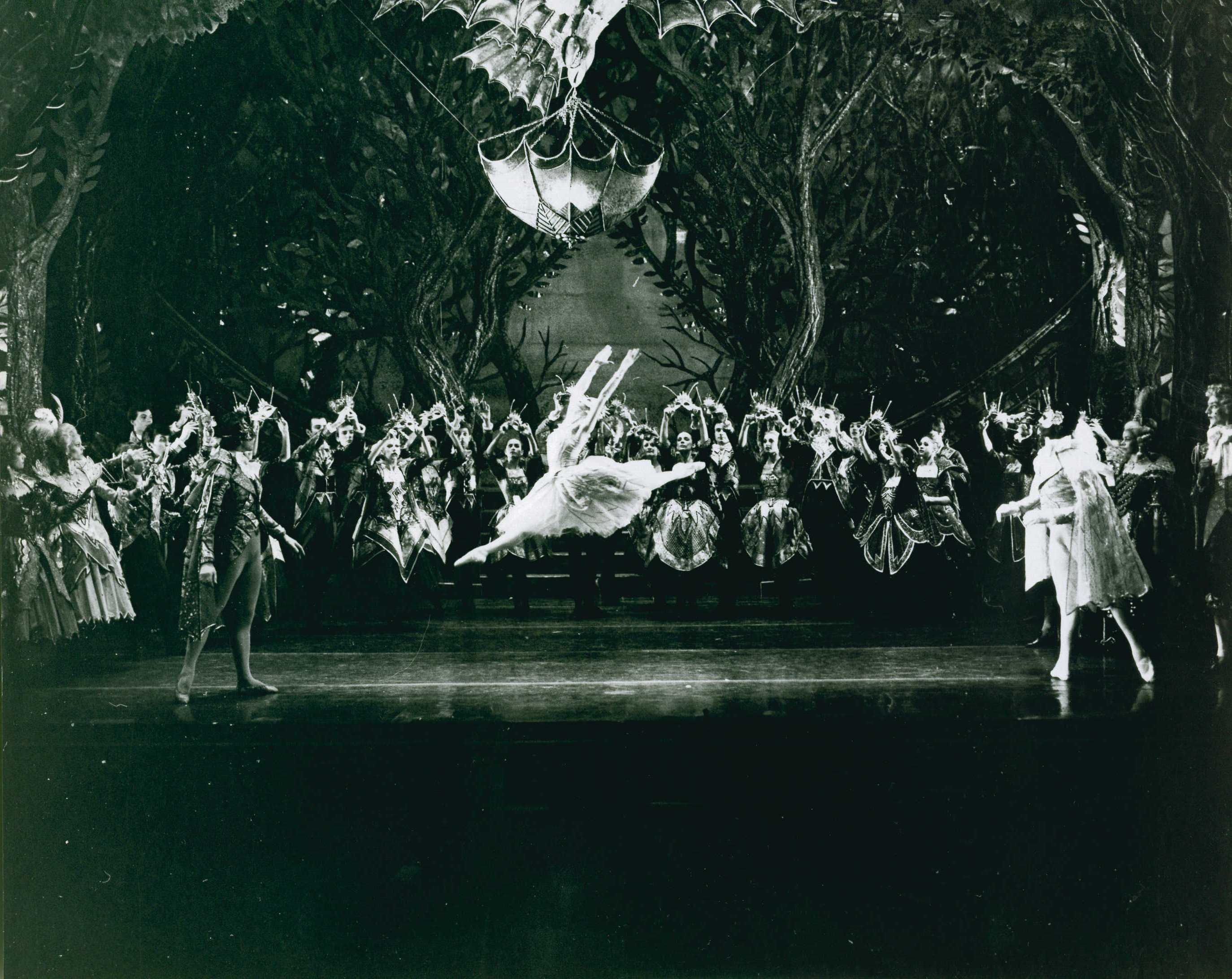
The year 2025 marks the 60th anniversary of Kenneth MacMillan’s Romeo and Juliet.  

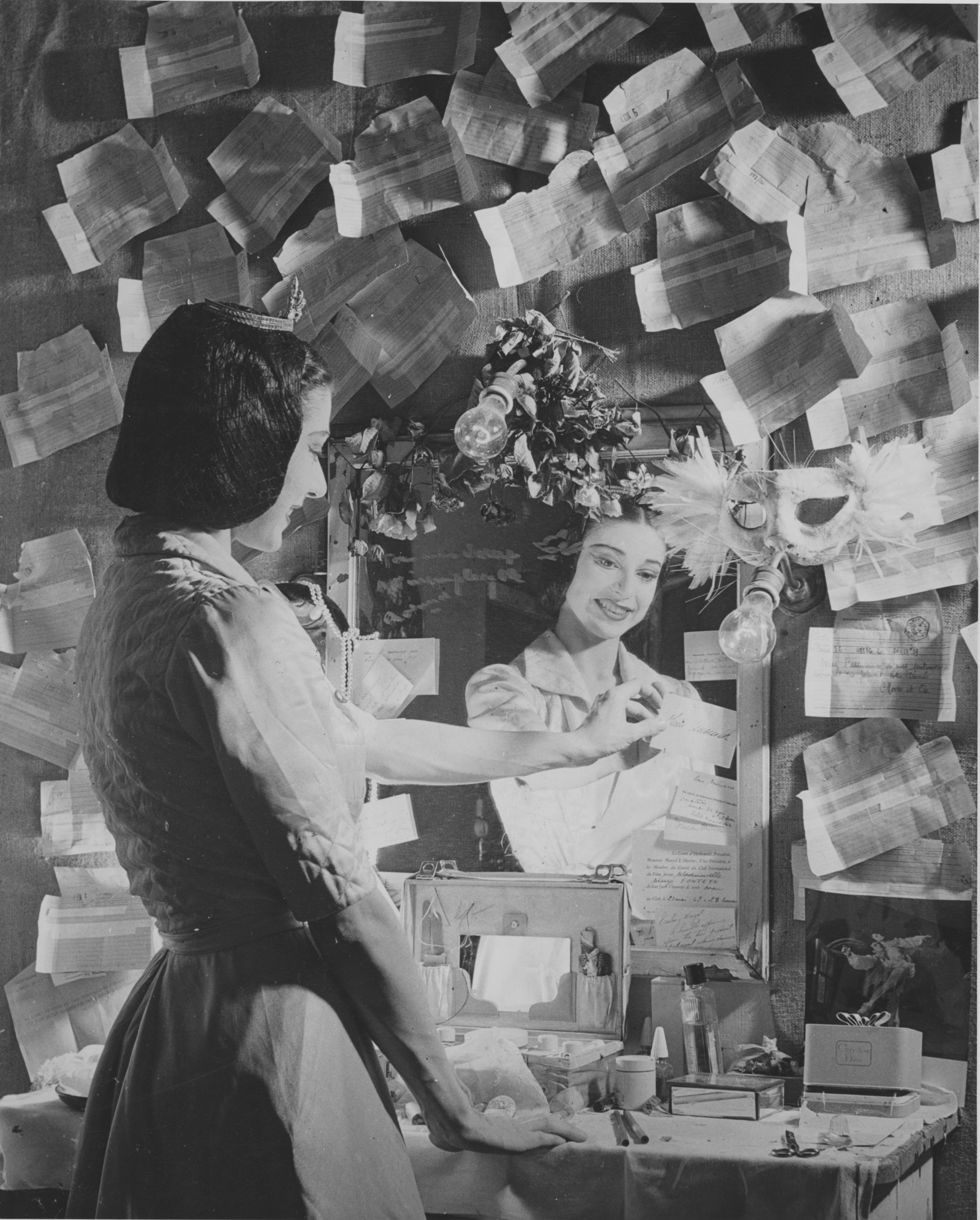
At the premiere in 1965, Margot Fonteyn and Rudolf Nureyev famously received forty-three curtain calls (“The Royal Ballet’s Romeo and Juliet”).  Since then the work has been staged regularly, filling the Royal Opera House. Moreover, despite the abundance of balletic Romeo and Juliets performed across the globe, as Emma Byrne of the Evening Standard points out, MacMillan’s adaptation is often considered to be the “definitive” ballet version of Shakespeare’s play.

From 1966 to the present day MacMillan’s Romeo and Juliet has also been screened in the cinema, on television, and since the 1980s reproduced on VHS tapes, then DVDs, and now on streaming services.  This is the topic of our discussion below, originally written in 2022, and now updated, and enhanced with original artwork by Victoria Trentacoste of thinkcreatewrite.com.

Romeo and Juliet on Screen Now

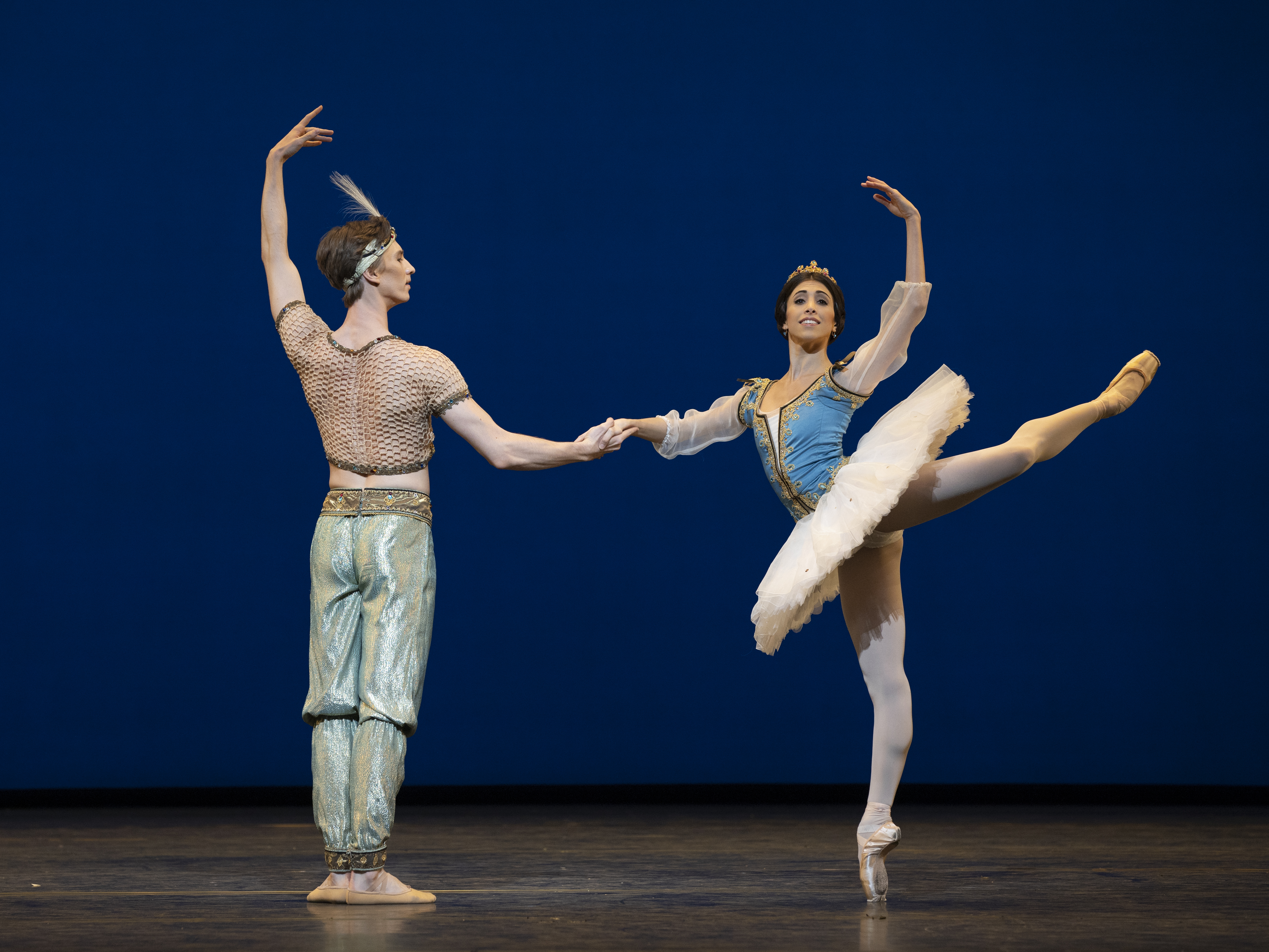
Given the importance of this year’s anniversary in the history of MacMillan’s ballet, the announcement that a performance would be live-steamed in cinemas once again came as no surprise.  In contrast, when a 2007 recording of Romeo and Juliet starring the celebrated dance partnership of Tamara Rojo and Carlos Acosta arrived in cinemas the following year, it caused quite a stir, as well as a debate about the advantages of watching ballet in cinemas (Wilkinson).  Since then cinema screenings in the arts have become a regular occurrence, not only from the Royal Opera House but from, amongst other venues, the Metropolitan Opera in New York, the Palais Garnier in Paris, and the National Theatre here in London.  And no fewer than four live performances of MacMillan’s Romeo and Juliet have been screened in cinemas since 2008, featuring the following principals: Lauren Cuthbertson and Federico Bonelli (2012); Yasmine Naghdi and Matthew Ball (2019); Anna Rose O’Sullivan and Marcelino Sambé (2022); Fumi Kaneko and Vadim Muntagirov (2025). Apart from this year’s offering (which will presumably be released in due course), all of these recordings have been made commercially available either on DVD or on Royal Ballet and Opera Stream, and all have been directed for the screen by Ross MacGibbon, former dancer with the Royal Ballet, and now a renowned filmmaker specialising in dance and theatre.

In preparation for our original Romeo and Juliet post in 2022 we studied all of the recordings available on DVD.  However, for the purposes of our discussion below we focussed on only one of these recordings.  We found it quite tricky to choose, but we decided that the ballet partnership of Rojo and Acosta made a neat parallel with the Fonteyn and Nureyev partnership featured in the Romeo and Juliet on Screen Then section of this post.  

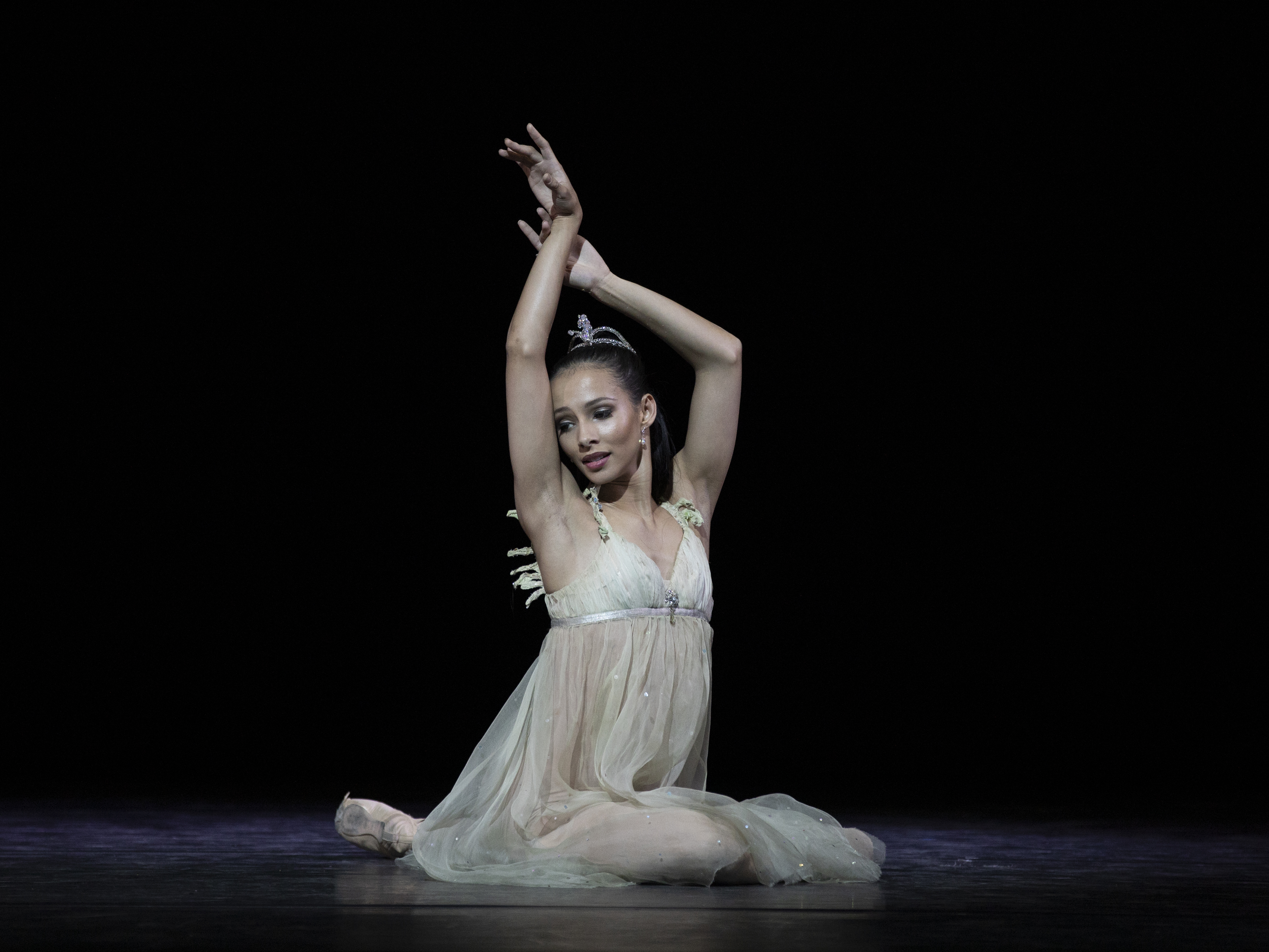
By the time of filming Rojo and Acosta were an established partnership in both the 19th century classics, particularly Giselle (Perrot/Coralli, 1841) La Bayadère (Petipa, 1877) and Swan Lake (Petipa/Ivanov, 1895), and in MacMillan’s Manon (1974), as well as Romeo and Juliet.  Described as taking the Royal Ballet “by storm” when they joined the company (Acosta in 1998, Rojo in 2000) (Guiheen), over time they became known on stage as the “Brangelina of ballet” (Tan).  This suggests that although they indubitably did not cause the sensation of Fonteyn and Nureyev (has any couple in the history of British ballet?), they were unquestionably a ballet partnership of glamour, and a force to be reckoned with.  Further, they had received outstanding notices for their performances.  John Percival, for example, claimed that Rojo “must be the best Royal Ballet Juliet for a quarter century or more, since Gelsey Kirkland’s guest seasons”, adding that Acosta was “on equally fine form”, while according to Sarah Crompton, their performances “absolutely gleam[ed] with greatness” (qtd. in “Reviews 2004-2007”). In contrast, with the exception of Bonelli, all of the other protagonists filmed in Romeo are home grown, so to speak, all having had at least some training at the Royal Ballet School; neither were their partnerships celebrated to the same extent.  However, by the 2012 Bonelli-Cuthbertson performance, cinema screenings of ballet were well established, and consequently perhaps no longer needed the draw of an international star partnership. 

By now you must be asking yourselves about still the most publicised screening of the ballet in recent years, that is, Romeo and Juliet: Beyond Words … which we have of course not forgotten.  For their 2019 Beyond Words former Royal Ballet dancers Michael Nunn and William Trevitt held auditions, resulting in the cast being led by two more home-grown talents: Francesca Hayward and William Bracewell.  Undoubtedly the reason for the additional publicity was that Nunn and Trevitt produced and directed an adaptation of the ballet filmed on location.  Their choice of location was the Renaissance backlot of the Korda Studios in Hungary.  Constructed for the TV series The Borgias, the backlot is a magnificent and atmospheric set of buildings, courtyards, piazzas, alleys and interiors depicting historical Italy.  

Filming the ballet on location was of course not an original idea. As early as 1955, Lev Arnshtam directed the seminal Romeo and Juliet by Leonid Lavrovsky (1940) on location in the Yalta Film Studio.  Perhaps more important for our discussion, however, is the film of Shakespeare’s play directed by Franco Zeffirelli.  We know that MacMillan had been inspired by Zeffirelli’s 1960 Old Vic staging.  Further, the naturalism emphasised by Zeffirelli in his direction lent itself well to an on-location filming, including the Palazzo Borghese in Rome, the streets of the medieval town of Gubbio, and the Basilica of St Peter in Tuscania.  Therefore, this way of breathing fresh life into MacMillan’s choreography and bringing the ballet to potential new audiences seemed to us entirely compatible with the choreographer’s own vision for his work.  

In all of the recent live recordings on DVD the familiar rich colour palette of Nicholas Georgiadis’ designs dominates: deep reds, browns and golds, with injections of white, noticeably in the costumes of the two Lovers.  In contrast to this, Beyond Words is altogether brighter and livelier in its initial visual impact, opening as it does on the sun beaming down on a courtyard scene of hens and a dog, a busy servant, and a small child running off on some errand.  Juliet’s room is no longer a minimally furnished vast stage space, but a chamber embellished with pale light drapes that let the sunshine in, and filled with various furnishings, including a chest, cushions, a settle, chairs and candles.    

MacMillan’s ballet began life in 1964 when he was commissioned to create a short work for Canadian television.  This work in fact became the Balcony pas de deux, which MacMillan created on his muses Lynn Seymour and Christopher Gable.  This duet was the beginning of the full ballet that premiered the following year in London.  Given its place both within the narrative and as the culmination of Act I, it is of course one the ballet’s main climaxes; but for us, the fact that the rest of the work emerged from this pas de deux gives it a special significance.   

At the start of the scene Tamara Rojo’s Juliet emerges from the darkness of the balcony, the whiteness of her skin and dress gleaming softly through the night air, and we think of Romeo’s wistful words …

But soft! What light through yonder window breaks?

It is the East and Juliet is the sun!

(11.2.2-3)

She looks down at the hand that Romeo touched when they first met in the Ballroom, brings her hands together and holds them to her cheek.  Again, we hear the voice of Romeo: 

See how she leans her cheek upon her hand!

Oh that I were a glove upon that hand,

That I might touch that cheek!

(11.2.23-25).
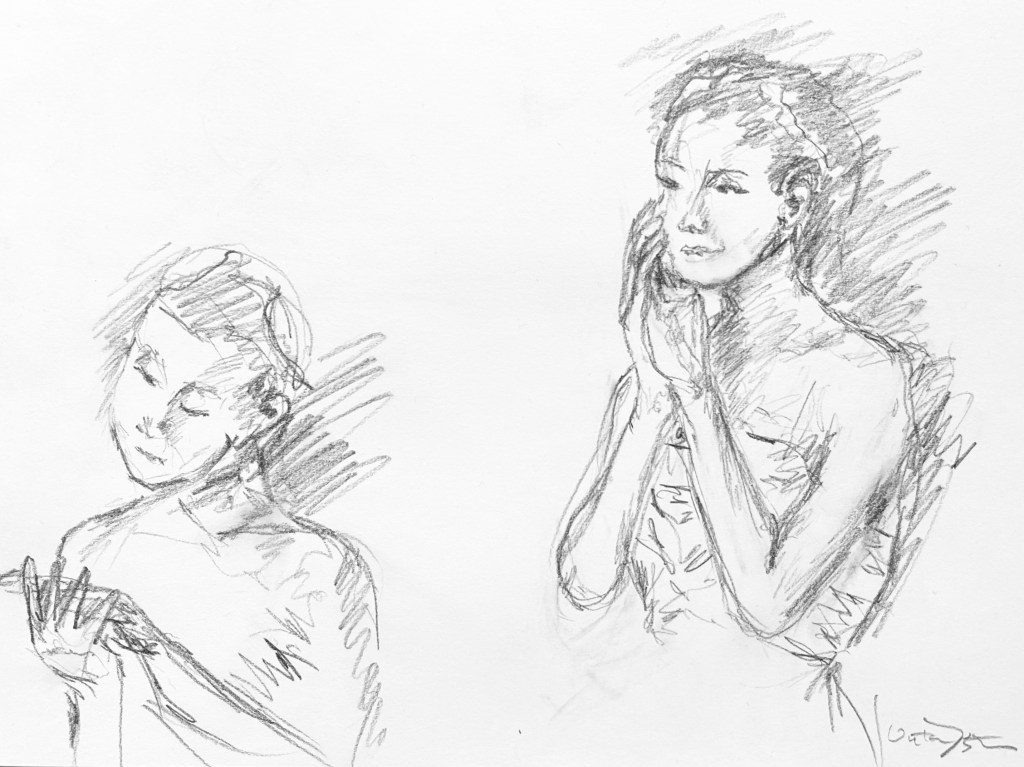
Given that MacMillan, Seymour and Gable worked with Shakespeare’s text, it seems reasonable to assume that these gestures were integral to the original choreography, but even if not, we know that Rojo studied Shakespeare’s text in her preparation for dancing the ballet, thereby rendering her approach to creating her own version of Juliet faithful to the spirit of the work (“Tamara Rojo on being Juliet”).  We also find that the resonances with Shakespeare’s soul-stirring verse, and the reference to their first meeting lend a palpable air of longing to the opening of the scene.  

At the end of the scene Juliet returns to the balcony, only to kneel down immediately and reach for Romeo, who is straining up towards her.  But despite their burning passion, their hands don’t quite meet—a reminder perhaps that the distance imposed upon them is simply too great; or maybe it is an expression of unfulfilled desire; or perhaps both.  Whatever our feelings about this moment, it is also a foreshadowing of the tomb scene where Rojo’s Juliet lacks the strength to keep hold of Romeo’s hand as she draws her last breath.

In an interview after the Beyond Words premiere, Hayward talked about how important the set was to her understanding and portrayal of Juliet.  At the start of the Balcony Scene music we see the Nurse (Romany Pajdak) brushing Juliet’s hair.  Juliet seems preoccupied, restless.  As she approaches her balcony, we watch her from behind, almost as if we are following her into another world.  But the scene is softly aglow with the light of the moon, so there is no sense of Juliet lighting up the darkness; neither are there any noticeable gestures referring to Juliet’s first meeting with Romeo or to Shakespeare’s text.  But what we are given here is a sense of being physically present in Verona, as we watch the Lovers through the foliage of the garden.  And at the end of the scene not only do their hands touch, but they are able to hold one another’s forearms before letting go again.  Although the scene is to us rather less poetic than the stage version, it recreates the sense of realism that MacMillan was so eager to effect in a work—a realism to which we have perhaps become too accustomed to fully appreciate.

At the end of the film our minds return to this moment of joy: looking through the grille enclosing the crypt, we witness Juliet’s failed attempt to reach Romeo’s hand.  In close-up shot all we can see in the final moments are her hands dangling over the tomb, almost as if they were disembodied.  It is well known that MacMillan wanted no sentimentality to be portrayed in this scene: “… the death scene was crucial to Kenneth.  His lovers were not reunited in death.  They did not die in each other’s arms” wrote Seymour (186).  As far as MacMillan was concerned, the death of Romeo and Juliet was a complete waste of young life (qtd. in Seymour 186), and this ending seems to us a fitting indictment on all those involved in precipitating the death of the teenagers. 
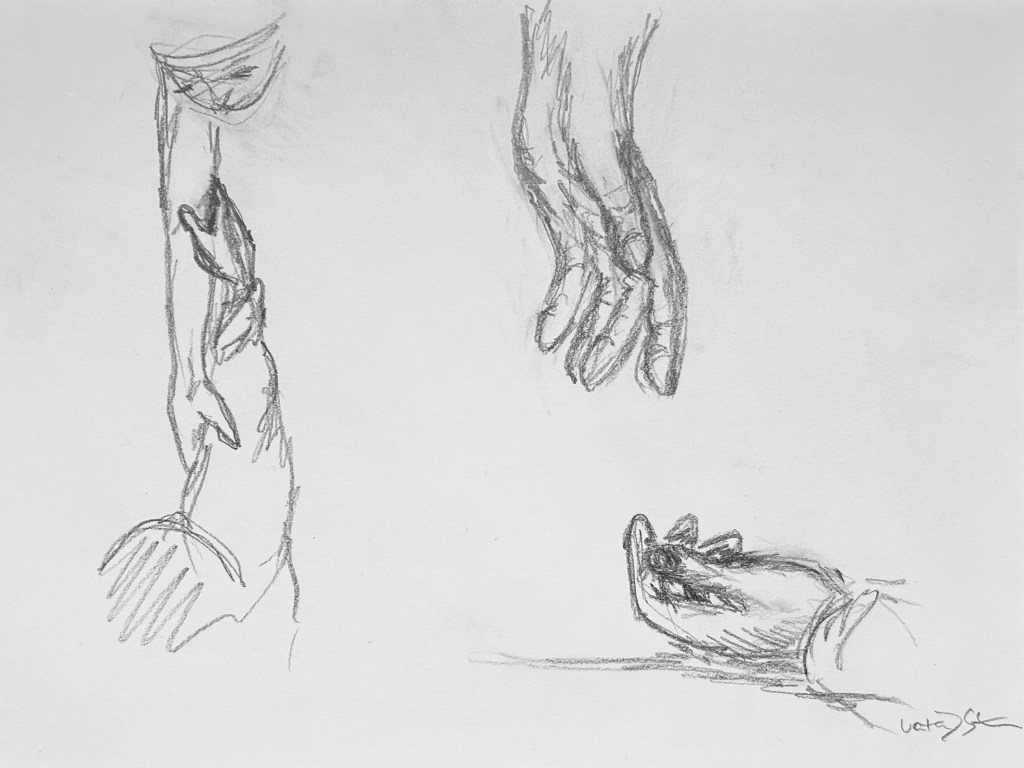
Another memory that Seymour writes about is the now iconic scene where Juliet sits alone and still on her bed in desperation until she resolves to visit Friar Laurence for help with her predicament.  Sixty years after the premiere, this is still a suspenseful moment of high emotion in a live performance, a moment when we invariably reach for our opera glasses to experience more intensely Juliet finding a glimmer of hope through her despair.  As if mimicking our opera glasses, in both the recordings we’re analysing the camera moves in close, so that we can witness the expressivity of Rojo and Hayward in their near stillness, watch the quickening of their breath, the agitation in Hayward’s face, and the transformation from Rojo’s dark mien to the return of light to her face.  And sixty years after the premiere, this must surely still constitute a challenge for the ballerina to project her interpretation of Juliet’s emotions through the most economical of means.  Rojo herself states, “The hardest thing is the moment when you sit in bed and you have no movement at all to express your feelings” (“Tamara Rojo on being Juliet”).

Romeo and Juliet on Screen Then

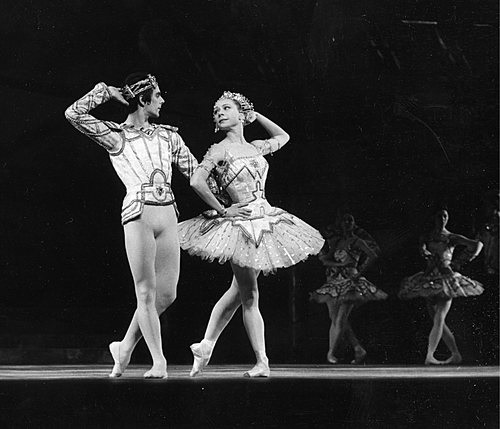
For commercial recordings of Romeo and Juliet from earlier years there is no problem of choice: as far as we are aware, there are only two.  These are the film version made just one year after the creation of the work, starring Fonteyn and Nureyev, and the 1984 recording for BBC television featuring Wayne Eagling and a 21-year-old Alessandra Ferri.

We found comparing the two in terms of visual impact very interesting.  Although recorded in Pinewood Studios, the film version attempts to simulate a theatre experience with the opening and closing of the curtains at the start and end of each act, and curtain calls at the end.  Given that it was produced and directed by the film maker Paul Czinner, we would guess that the budget was quite substantial.  In contrast, the quality of the television film is rather poor, far from the high definition to which we have now become accustomed.  Although a sense of opulence is still conveyed with some imagination on the part of the viewer, the television production values are of the time, and we must confess that to us it is rather drab looking.  This MacMillan may of course have appreciated in a way, given his love for realism in the theatre.

On the other hand, from the start the Czinner film blazes with colour like a Renaissance painting, with bright blues and highly pigmented reds, striking yellows and dazzling golds and greens vying for attention.  For us these original sets and costumes provide an ideal frame for the kind of vibrancy that MacMillan had so admired in Zeffirelli’s Old Vic production of the play in 1960 and wished for his own ballet.  In fact he told Georgiadis, who often attended rehearsals, that he wanted a Verona “where young horny aristocrats roamed the town full of romantic, adventurous spirits” (qtd. Seymour 181).

Just as there is such a dramatic contrast between the look of the two recordings, there are some equally alerting contrasts in the particular moments that we have discussed above in the Now section of this post.

When booking tickets at the Royal Opera House, we have always preferred to sit on the left side of the auditorium for this ballet, to ensure that we can watch Juliet on her balcony.  There seems to be a substantial amount of freedom from performer to performer with regard to how she uses the opening music of this scene, and very likely ballerinas won’t even perform exactly the same movements from one performance to the next; so this is another moment when the opera glasses come out.  Ferri appears with an air of blissful restlessness, looking up at the moon, down to her hands, over the balcony and up to the moon again.  Leaning her elbows on the balustrade, the most telling moment is when she holds her hands to her cheek, swaying her body gently from side to side with an ecstatic smile on her face.  But Fonteyn’s use of this moment of freedom to explore Juliet’s feelings we find almost disconcerting.  As in the 2007 and 1984 productions, she emerges from darkness to light up like Romeo’s “bright angel” (Shakespeare 11.2 26, p. 37), after which she gestures slowly upwards with her right arm towards the moon.  Although we know the moon to be significant to Shakespeare’s scene, in our opinion the gesture does not reveal much about Juliet’s thoughts and emotions.  This was contrary to the intentions of MacMillan, Seymour and Gable who had “tried to find steps and gestures to express the characters’ state of mind” (Parry 279).

The scandal of the world premiere of Romeo and Juliet being given to Fonteyn and Nureyev in favour of Seymour and Gable, who had contributed so much to the rehearsal process, is well documented.  Not only was Seymour cast as the fifth Juliet, but it was she who taught the role of Juliet to the other four ballerinas: “Margot … wanted to create her own Juliet”, she recalls (188).  This is particularly noticeable in some movements near the start of the Balcony Scene that are reminiscent of “The Kingdom of the Shades” from Marius Petipa’s 1877 La Bayadère, which Nureyev had staged in 1963: supported pirouettes ending in arabesque accentuate Fonteyn’s classical line, and were presumably chosen by her for this reason.  At the close of the scene Nureyev remains downstage right in a lunge, elegantly gesturing towards Juliet on the balcony as she reciprocates by unfolding her arm in his direction.  This approach does accentuate the irreconcilable distance that the family feud has imposed upon the Lovers; but the poses strike us as symbolic, rather than reflecting the naturalism and urgent emotion that MacMillan was after.  As Seymour put it during a coaching session on the Balcony Scene:

He wanted you to be a real pimply teenager, both of you, who bump noses when they first try to kiss and do all that sort of thing.  They didn’t do it beautifully … it was a little awkward, and a little wonderful, and a little gawky and a little this and a little that.  So try not to deal with it as if you’re some kind of ballerina.

(“Romeo and Juliet Masterclass”)

Another noticeable discrepancy that jars somewhat is Fonteyn’s choice of movement when her Juliet is trying to find a solution to her approaching marriage to Paris.  Rather than sitting on the bed facing directly downstage, she kneels by the bed facing downstage left and mimics crying before raising her head and slowly moving her gaze to downstage right, almost as if watching herself rushing to Friar Laurence.  Perhaps this worked at the time, but when the viewer is accustomed to the drama of being confronted with Juliet’s stillness face-on, it breaks the intensity of the moment.

Seymour recalls what a daring decision it was to reduce movement to a minimum at this climactic point in the narrative, and what a challenge it presented for her, but that MacMillan was convinced that she was capable of holding the audience (185-86).  And his belief in Seymour was justified: audiences and journalists alike were struck by the audaciousness of the sequence, Seymour claiming that it “had a singularly terrifying effect on the scalp of balletgoers” (193).

Presumably it was a combination of Fonteyn’s celebrity status and the challenge presented by the innovative choreographic and dramatic ideas conjured up by MacMillan, Gable, and Seymour that persuaded the other Juliets to adopt Fonteyn’s approach to interpreting the choreography and character, resulting in MacMillan’s fear that his vision of the ballet would not be realised onstage (189).  However, as the recording of Ferri’s 1984 performance testifies, MacMillan’s fears were ultimately unfounded.  The Balcony Scene ends with Romeo and Juliet straining towards one another in their burning desire to touch one another’s hands just one more time before they part.  Ferri’s Juliet sits on the bed facing the audience as Colin Nears’ camera zooms out, thereby emphasising her aloneness in the vast stage space that represents her room.  And Ferri, who became such a long-standing interpreter of the role, showed no reluctance in the death scene to allow the weight of her body to hang in a precarious backbend over the sepulchre with no thought to elegance, unable to keep hold of Romeo’s hand.  Fonteyn’s Juliet, on the other hand, dies holding onto Romeo’s arm and with her body carefully arranged so we can still see her face, and with little sense of the precariousness that might disrupt the ballerina image.  

Ironically perhaps, the Czinner recording states overtly that the purpose of the film is twofold: to preserve the performance for a wider audience and as a record for posterity.  For us, however, the importance of the film lies not so much in its preservation of the dancing of the two undisputed ballet stars of the era, but the way in which the reluctance of the performers to engage fully with MacMillan’s vision highlights the radical nature of MacMillan’s choreography seen both in performance and in the later films.

Concluding thoughts

Having grown up at a time when the only way to engage with ballet choreographies apart from seeing them live was through written materials, photos, LPs and the occasional television broadcast, we feel immensely privileged to have access to all of these recordings of MacMillan’s Romeo and Juliet.  

The films offer us an insight into the radical nature of the choreography, and ways in which the politics of power can have an impact on the nature of a choreographic work.  We can also re-evaluate the work after a long period of familiarity and find new ways of appreciating it through the imaginative work of directors and new casts that bring the work to life again.

© British Ballet Now & Then

References

Byrne, Emma. “Romeo and Juliet review: an inspired choice for the Royal Ballet’s return”. Evening Standard, 6 Oct. 2021, www.standard.co.uk/culture/dance/romeo-and-juliet-review-royal-opera-house-b959020.html

Guiheen, Julia. “Tamara Rojo and Carlos Acosta in “Romeo and Juliet” (2007)”. Pointe Magazine, 20 Nov. 2019, pointemagazine.com/tbt-tamara-rojo-carlos-acosta/

Parry, Jann. Different Drummer: the life of Kenneth MacMillan. Faber & Faber, 2009.

“Reviews 2004-2007”. Tamara Rojo, 7 Mar. 2006, www.tamara-rojo.com/reviews-2004-2007/.

“The Royal Ballet’s Romeo and Juliet: 50 years of star-crossed dancers – in pictures”. The Guardian, 2 Oct. 2015, www.theguardian.com/stage/gallery/2015/oct/02/royal-ballet-romeo-and-juliet-50-years-of-star-crossed-dancers-in-pictures.

Seymour, Lynn, with Paul Gardner. Lynn: the autobiography of Lynn Seymour. Granada, 1984.

—. “Romeo and Juliet Masterclass: Balcony pas de deux”. Revealing MacMillan, Royal Academy of Dance, 2002. 

“Tamara Rojo on being Juliet”. Dance Australia, 26 May 2014, http://www.danceaustralia.com.au/news/tamara-rojo-on-being-juliet

Tan, Monica. “Tamara Rojo and Carlos Acosta: the Brangelina of ballet on chemistry, ageing and loss of innocence”. The Guardian, 27 June, 2014, www.theguardian.com/culture/australia-culture-blog/2014/jun/27/tamara-rojo-carlos-acosta-brangelina-of-ballet

Wilkinson, Sarah. “Why Watch Ballet on the Silver Screen?”. The Guardian, 15 Aug. 2008, www.theguardian.com/stage/theatreblog/2008/aug/15/whyshouldipaytoseeprerec

Gender Fluidity Now & Then: fairy tale, myth and icon

Gender Fluidity Now

The Sleeping Beauty now

When the curtains rises on Marius Petipa’s 1890 The Sleeping Beauty, we are left in no doubt that we are entering a world of rigid codes in terms of clothing, etiquette, and hierarchy.  And as the ballet progresses, we quickly become aware of its binary nature, with clear-cut distinctions between good and evil, beauty and ugliness, youth and age, male and female.

Based on Charles Perrault’s “old fairy”, the Evil Fairy Carabosse is indisputably female.  Nonetheless, following perhaps the example of Old Madge in August Bournonville’s La Sylphide (1836), Carabosse was originally performed by the renowned virtuoso and mime artist Enrico Cecchetti, and is still frequently performed by a male dancer.  Another contributory factor to this decision may have been the nature of Baba Yaga, the “supreme scare figure of the Russian nursery”, who in mythographer Marina Warner’s words “breaks the laws of nature.  Baba Yaga isn’t quite a woman, and certainly not feminine; there’s something of Tiresias about her, double-sexed and knowing” (more about Tiresias in the Then section of this post).  

Writing in 1998, American historian Sally Banes describes Carabosse as “old, ugly, wicked, hunchbacked” (54).  Clearly Carabosse is guilty of wickedness (although we are not given any explanation why), and her other attributes are implied through her name: bosse meaning hump or swelling, and cara meaning face.  This is indisputably the archetypal figure of the ugly old crone (Warner; Watson; Windling).

Banes analyses the ways in which Carabosse flaunts all the codes integral to Sleeping Beauty’s court life:

She breaks the polite bodily codes of the courtiers.  She takes up too much space; her movements are angular, spasmodic, and grotesque.  She transgresses the boundary between female power seen as beautiful and good (as in the Lilac Fairy’s commanding presence) and female power seen as ugly and evil … Usually played by a man (like Madge in La Sylphide, symbolizing her distinctly unfeminine traits and behavior), Carabosse has all the wrong proportions, above all gigantic hands.  She is a monster precisely because she is a category error, seemingly violating gender boundaries by combining aspects of male and female.

In this world a woman can be either powerful, good and beautiful or powerful, evil and ugly.   However, not only is Carabosse ugly and evil, and old, but like Baba Yaga she simultaneously embodies an archetypal female stereotype and fails to adhere to ideals of femininity.  And in this world of classical ballet, she is incapable of executing la danse d’école: “Unlike the good fairies, who balance confidently on one leg while dancing, she cannot even balance on two legs, for she walks with a cane” (Banes 54).

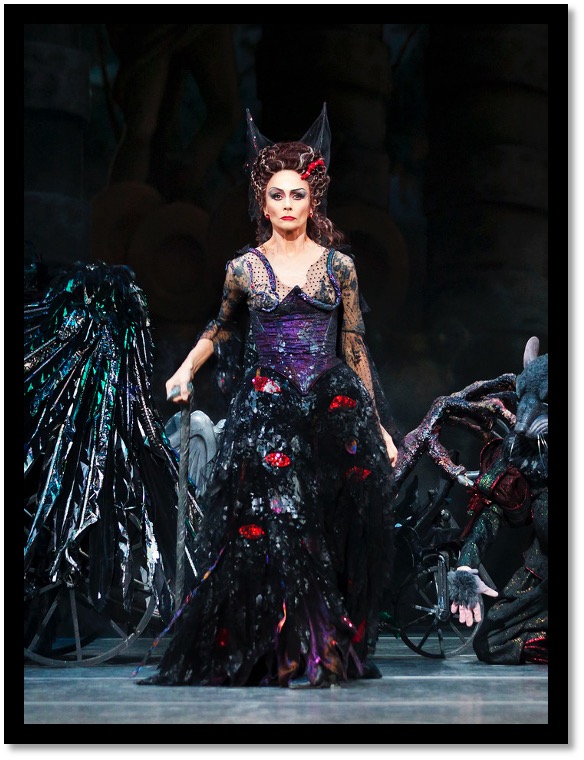
Kristen McNally as Carabosse, 2023 © ROH/Johan Persson

The Royal Ballet’s last run of Sleeping Beauty showcased a variety of female dancers in the role, including Kristen McNally, who has been performing Carabosse since 2009.  Reviews of McNally demonstrate that in her interpretation, while the Evil Fairy may indeed be a monster by nature, she strays far from Banes’ description of Carabosse:  Gerald Dowler describes her as “icily beautiful” with “an evil heart”, while Jann Parry sees her as similarly “glamorous and spiteful”.  One of McNally’s predecessors Genesia Rosato, who performed the role in the first decade of this century, and is our favourite Carabosse, was perceived by reviewers not as “a grotesque old hag …, but a rather sexy and dangerous woman” (Titherington), a “beautiful fairy turned spiteful and gothic” (Liber).

Genesia Rosato as Carabosse with artists of The Royal Ballet, 2011 © ROH/Johan Persson

Fortunately for us, both of these compelling performances are available commercially, so we were able to analyse the dancers’ movements closely in relation to Banes’ words and our knowledge of non-verbal communication and gender representation.  As is characteristic of women, both Rosato and McNally walk with a narrower gait and keep their gestures rather closer to the body than do their male predecessors, such as Anthony Dowell and Frederick Ashton, and they use their canes to poke rather than beat the offending Catalabutte, who forgot to invite Carabosse to the Christening. Unlike the figure of the “ugly old crone” they walk upright, their skin is smooth, and their lips red; and there are no “gigantic hands”.  Nonetheless we still see some “violation of gender boundaries” in their behaviour: they command the space around them; their gestures are strong, broad and intrusive, their eye contact ferocious.  In fact their behaviour in general exhibits the kind of dominance more typical of men (Argyle 284; Burgoon et al. 381; Carli et al. 1031; Mast and Sczesny 414). 

It seems clear that these renditions of Carabosse as glamorous and beautiful do not transgress the gender binary in the way that Banes has in mind, even though some masculine traits are visible.  However, for us, the critical point about gender here is that in this particular world of Sleeping Beauty, a woman can be powerful and evil … and yes, beautiful.  

Over at English National Ballet, who last performed The Sleeping Beauty in 2018, Kenneth MacMillan’s 1986 production provides a different, but equally fascinating, lens through which to view Carabosse, thanks to the costuming of Nicholas Georgiadis.  Luke Jennings’ colourful description of Carabosse with her “sallow features and madly crimped [red] hair” is an unmistakable reference to Queen Elizabeth I, so renowned for her combination of masculine and feminine traits. 

In 2018 casts included both male and female performers.  Clearly, from critic Vera Liber’s point of view, there was a noticeable distinction between the interpretations of the first and second casts, one male, one female:

On first night, James Streeter revels in playing up the panto villain, giving it plenty of gothic largesse, whereas second cast Stina Quagebeur is a deliciously spiteful Nicole Kidman lookalike, a vengeful woman wronged.

James Streeter as Carabosse in English National Ballet’s The Sleeping Beauty, 2018 © Laurent Liotardo

Even though not explicit, the comparison with a female actor and choice of words “deliciously spiteful” and “vengeful woman” do strongly imply that, to Liber, Stina Quagebeur appears markedly more feminine than James Streeter.  And her depiction of Quagebeur’s Carabosse is very much in line with the descriptions of Genesia Rosato and Kristen McNally in the role, combining evil, beauty and power.  

What Carabosse and Elizabeth I have in common is that they both have the power to wreck the dynasty: Elizabeth through her choice not to bear children, and Carabosse by scheming to prevent Aurora from producing an heir.  And this parallel with Elizabeth informs our understanding of Carabosse as a character that does not fit comfortably within a single gender category.  

The Scottish preacher and author John Knox (1514-1572) declared that “God hath revealed to some in this our age that it is more than a monster in nature that a woman should reign and bear empire above man” (2).  So whether performed by a male or female dancer, this Elizabeth-Carabosse can been seen as “a monster … seemingly violating gender boundaries”.  And on a personal note, we would have to say that Stina Quagebeur is without a doubt the most terrifying Carabosse we have ever encountered.

Cinderella now

Last season Scottish Ballet explored gender fluidity, again in the context of a familiar, well-loved fairy-tale ballet, but in an unusual and innovative way.  

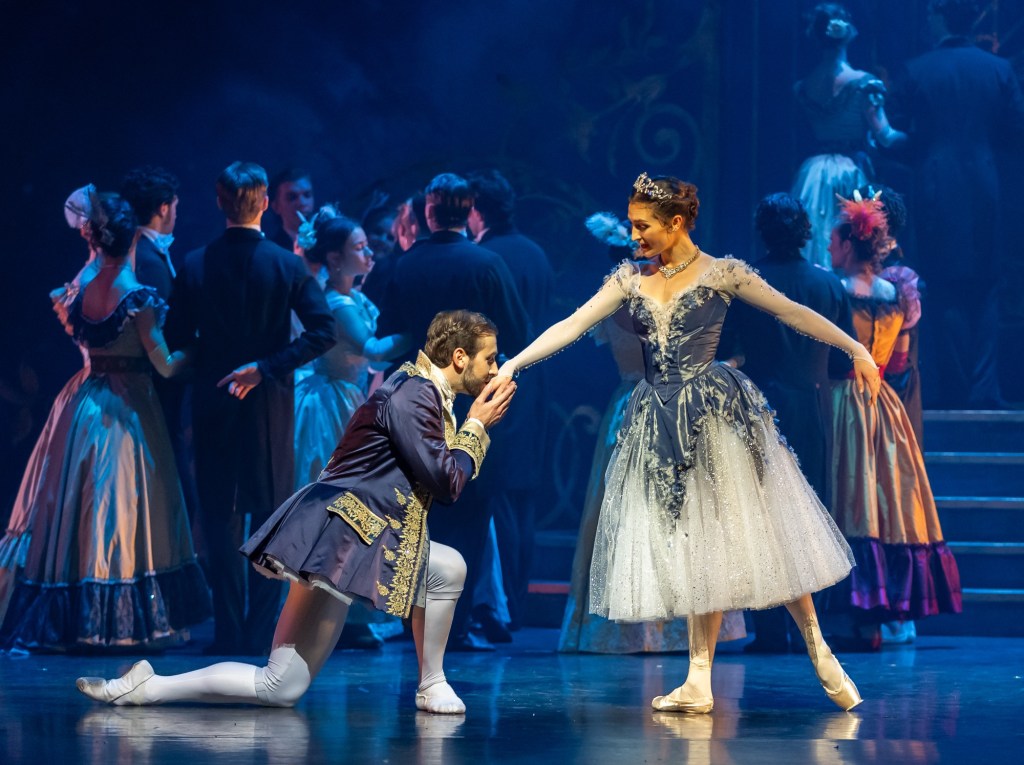
Bruno Micchiardi as Cinders in Scottish Ballet’s Cinders. Credit Andy Ross

Renamed Cinders! the narrative of Cinderella on some nights featured the usual female Cinders, who falls in love with the Prince, while on others, romance blossomed between a male Cinders and the Princess.  

The cast was deliberately not released in advance, so each audience remained uncertain of Cinders’ gender until their appearance on the stage.  Consequently, when purchasing tickets, audiences had at least to be open to the challenge of a new way of viewing the work.

Scottish Ballet describes Cinders! as “an evolution and adaptation of Christopher Hampson’s [2015] Cinderella”.  Given ballet’s rigid gender codes in terms of roles, behaviours, technique and vocabulary, you may, like us, be wondering how such a gender swap could ever be achieved. Critic Kathy Elgin asks with apparent consternation, “Would a man have to cope with girly bourrée-ing?”.  Evidently, however, the adaptations were far more subtle than these musings suggest, as Elgin asserts that “the choreography is much the same irrespective of who’s playing what, except for some obvious variation in solos to accommodate male / female specialities. That is, in pas de deux, each is dancing the steps they would have danced in any pairing”.  Yet despite the subtlety of the changes, it is clear that for both dancers and viewers the approach to characterisation made a substantial difference, resulting in fresh insights into of the nature of the protagonists.

Bruno Micchiardi as Cinders and Jessica Fyfe as Princess Louise in Scottish Ballet’s Cinders. Credit Andy Ross

Principal Dancer Bruno Michiardi reflected on the rehearsal process:

What I’ve found most interesting about the fluidity of the roles of the Cinders leads is just how different and new it’s made the ballet feel. We all know and love the classic story of Cinderella, but this new version means we’re suddenly working in this amazing upside-down realm, where the male part (previously a more traditionally stoic character) is a complex mixture of vulnerability and resilience, and the female role (usually quite timid and downtrodden for most of the original ballet) is empowered and full of charisma… I’m excited at the prospect of exploring this further and sharing that with the audience! (“Introducing Cinders”)

Reviewer Tom King sees this exchange of gender as a “re-written … dialogue of the dance between the Princess and Cinders … so the gender prominence of this work now changes completely too as it is the male lead who now dominates and performs so much of this ballet”.  In contrast Elgin notes that “the commanding style of a princess in her own right reminds us how rarely women get the chance to make that kind of confident statement”.  

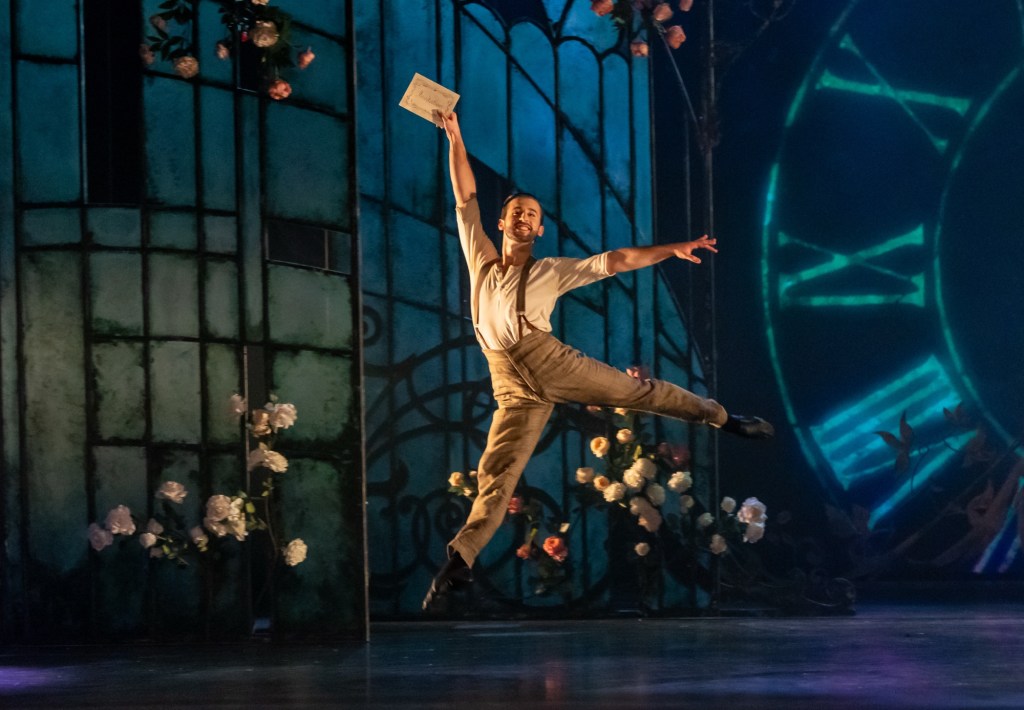
Bruno Micchiardi as Cinders in Scottish Ballet’s Cinders. Credit Andy Ross

These different perspectives highlight what is most important to us about the Cinders! gender swap—that is, the opportunity for both dancers and audience to reappraise how they perceive gender roles within the context of a traditional ballet narrative.

Broken Wings and the Male Fridas

In 2016 choreographer Annabelle Lopez Ochoa created a very different world to that of The Sleeping Beauty and Cinderella for English National Ballet.   Based on the life of artist Frida Kahlo, this ballet presents gender fluidity in a unique way—unique, but completely in line with Kahlo’s life and art.

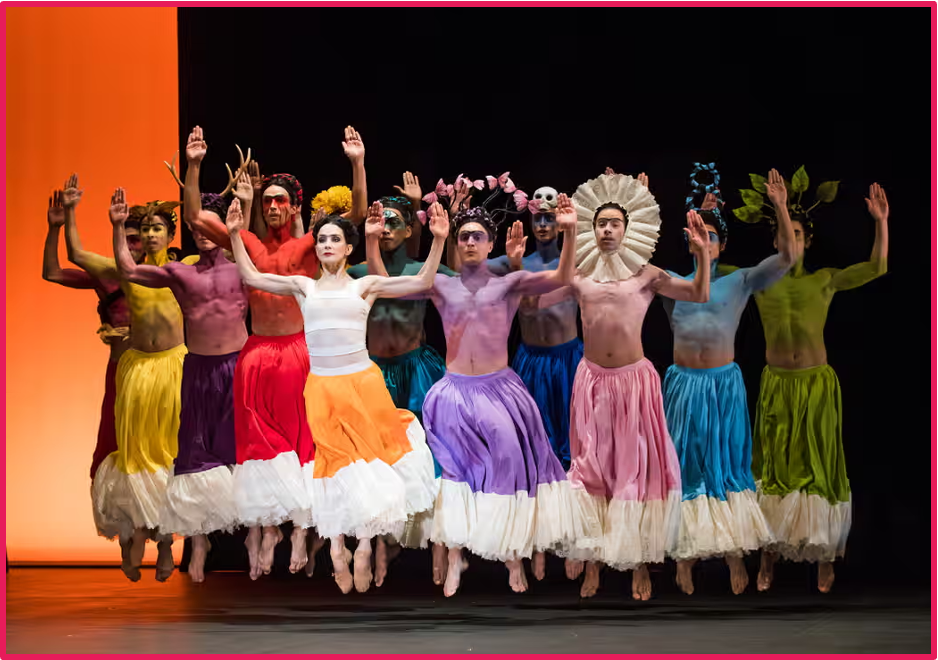
Like Queen Elizabeth I, Kahlo was known for her own peculiar union of masculinity and femininity.  In the ballet this is perhaps most notable through the presence of eleven “Male Fridas” who bring Kahlo’s paintings into three-dimensional life. 

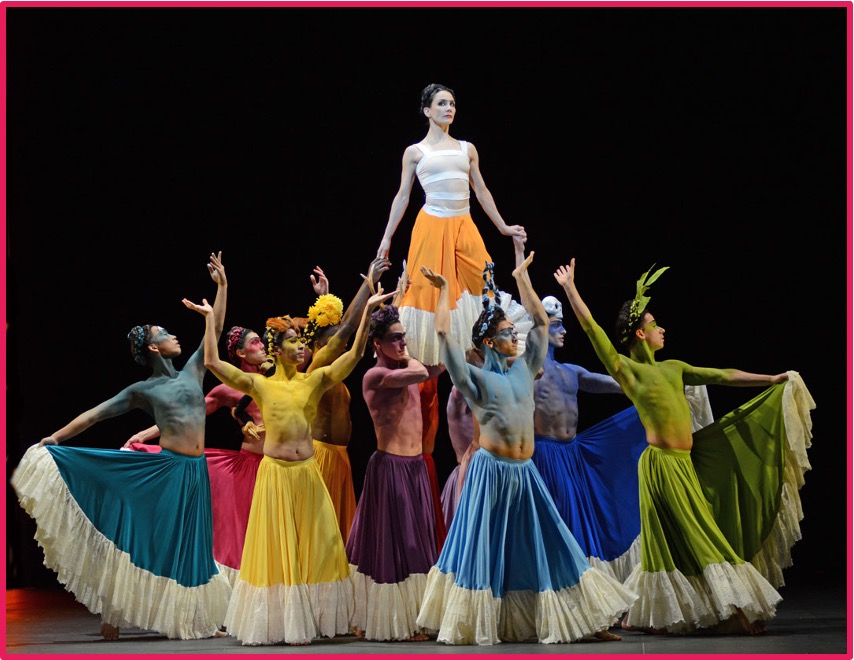
Performed by male members of the company, these Fridas, described by designer Dieuweke van Reij as an “extension of Frida herself”, sport billowing full-length ruffled skirts, in bright, contrasting colours, inspired by traditional Tehuana dress. Their headdresses include flowers, butterflies, antlers, and the ceremonial resplandor, referencing specific self-portraits by Kahlo, including Self-Portrait with a Necklace of Thorns (1940), Self-Portrait as a Tehuana (1943), and Self-Portrait with a Monkey (1948).  Their torsos are painted to match their skirts.  

Tamara Rojo & Artists of English National Ballet, 2016 © Dave Morgan

The costumes are inspired by Kahlo’s iconic dress style, which is undeniably feminine, with the soft folds of the material and decorative headdresses.  But Kahlo was also known for a more androgynous style of dressing: even as a teenager she was known to wear a man’s suit with waistcoat and tie, and in her 1940 Self-Portrait with Cropped Hair she has cut her hair short and wears a man’s dark suit.  Her monobrow, moustache and strong features were also celebrated, even exaggerated, in her paintings.  And neither in terms of her behaviour did Kahlo conform to stereotypical femininity, with her forthrightness, her revolutionary politics, and her sexual appetite for both female and male lovers.  But despite the evident femininity of the Broken Wings costumes, they also connote power.  This is because the Tehuana dress is the traditional dress of the Zapotec women from the Isthmus of Tehuantepec, who are unconventional in being considered, to some extent at least, a matriarchal society, and from which, significantly, Kahlo’s mother hailed.

As the Male Fridas swirl and sway with bold lunges and leaps, and expansive leg gestures, they make full use of their skirts, creating a riot of colour and energy.  And Frida joins them, dressed in an orange Tehuana skirt, dancing in the same bold but non-gendered style, sometimes in unison.  Her dominance is writ large as the Male Fridas hold her aloft, and she boldly leads and directs their movements, displaying Kahlo’s own peculiar fusion of masculinity and femininity.

Tamara Rojo & Artists of English National Ballet, 2016
© Tristram Kenton

Further, the non-binary nature of the “Male Fridas” is accentuated by their strong resemblance to the “muxes” of Zapotec culture.  The muxes are considered neither female nor male, but instead are a recognised third gender.  While they are assigned male at birth, as adults they exhibit more stereotypically female attributes in their behaviours, and economic and societal roles.  This can be seen, for example, in the way they dress, their skill at embroidering and weaving, and their caregiving to elderly relatives (Balderas; Plata).

And now we return to The Sleeping Beauty and Cinderella to discover how gender fluidity manifested itself in British ballet in the past, before exploring a less conventional work …

Gender Fluidity Then

The Sleeping Beauty then

As we said in the Now section of this post, in 1890 Marius Petipa created the character of Carabosse for Enrico Cecchetti.  However, it’s interesting that when Sergei Diaghilev mounted his production of The Sleeping Beauty in London in 1921, Carabosse was performed by Carlotta Brianza, the originator of the role of Princess Aurora.  Over the last century there have been phases of male and female Carabosses, and following the lead of Petipa and Diaghilev, the calibre of dancers has sometimes been extraordinary, including Frederick Ashton, Robert Helpmann, Monica Mason, Lynn Seymour, Anthony Dowell, Edward Watson and Zenaida Yanowsky.  

  Frederick Ashton, 1955 © Showcase Productions

While it’s of interest that Brianza performed Carabosse for Diaghilev, it’s even more fascinating that it was not the role of Carabosse that the Impresario originally had in mind for Brianza; rather, it was her original role of Princess Aurora (Christoudia 201).  By 1921 Brianza was in her mid-50s.  According to the drama The Ballerinas, it was Brianza herself who suggested that she perform the part of the Evil Fairy.  It would be understandable if Brianza had considered herself unsuitable for Aurora at this point in her career (Tamara Rojo famously stated that she believed ballerinas should not be performing Aurora beyond the age of forty, and the first night went to the 26-year-old Olga Spessivtseva).  Ironically though, Carla Fracci, who performs sections of Aurora’s choreography as both Brianza and Spessivtseva in the programme, was herself just shy of fifty when it was recorded, and we would defy anyone to say she looks anything but youthful in both her appearance and her dancing.  At the 1890 premiere designer Alexander Benois described Brianza as “very pretty”, while reviews highlighted her grace and elegance (qtd. in Wiley 189).  Perhaps the most celebrated photograph of Brianza as Aurora shows her balancing sur pointe in cou de pied, her hands placed demurely by her neck, so that her forearms partially hide her décolleté, and attired in a tutu that gives her the perfect wasp-like waist.  The picture of femininity.  There seems no logical reason then that in her 50s Brianza would have lost all of her beauty, grace and elegance.  

It is difficult to know what Brianza was like as Carabosse, but we were able to find a small number of photos of her in the role, which make it crystal clear that Carabosse in this production was bereft of beauty, grace and elegance.  One photo shows her surrounded by her entourage of rats that seem to tower over her, making her appear a rather petite figure, her stature diminished by her hunched back and lankness of her hair (“Carlotta Brianza as Carabosse”). Feminine, but hardly the ideal of femininity.  In another she is seems to be mistress of all she surveys.  The stoop and the lank hair are still in evidence, but her silhouetted profile brings a baleful mystery to her lone, and in this image androgynous, figure (MacDonald 280).

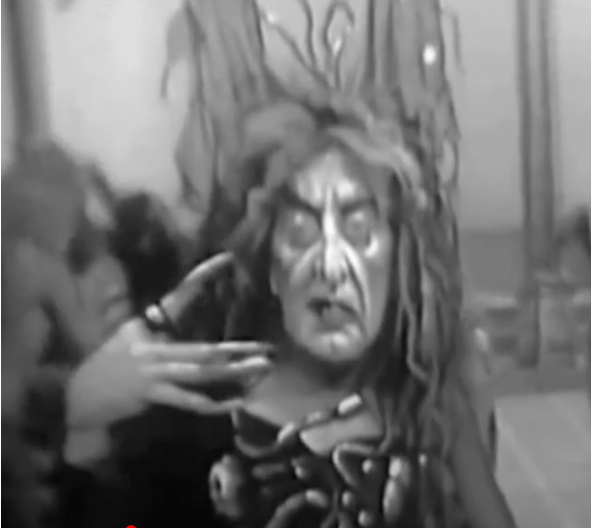
Luckily, however, we have a very good idea of how Carabosse was portrayed in the 1950s by the Royal Ballet in the celebrated 1946 production by Nicholas Sergeyev and Ninette de Valois, thanks to two recordings of the work, made in 1955 and 1959.  On opening night Robert Helpmann accomplished the astonishing feat of performing both Carabosse and the Prince. However, it is Ashton who appears in the 1955 recording, while the 1959 film features Yvonne Cartier, who by this time was focussing on mime due to an inoperable ankle injury. 

Yvonne Cartier, 1959
© Royal Academy of Dance / ArenaPAL

Even though these two performances feature a male and a female dancer, they both exhibit a remarkable likeness to the image of Carabosse that we outlined in the Now section of this post.  With their blemished skin and stooping gait both Ashton and Cartier display the attributes of the archetypal “ugly old crone” or “grotesque old hag”.  More particularly, the words of Sally Banes could have been written specifically for these renditions of the Evil Fairy: Ashton’s movement are indisputably “angular, spasmodic, and grotesque”, while Cartier spreads her arms wide like enormous wings, and as a result “takes up too much space”.  And they have “the wrong proportions”.  Ashton has an exaggerated prosthetic nose, and they both have “gigantic hands” due to their long fake nails, threatening gestures, and in the case of Cartier, the spreading of her fingers like a raptor’s talons.

Yvonne Cartier, 1959
© Royal Academy of Dance / ArenaPAL

It seems that not even Brianza, the hyperfeminine Aurora of 1890, could escape the curse of being transformed from benign and pulchritudinous to malevolent and unsightly.  But as we have seen, the figure of Carabosse has evolved quite drastically over the last decades of the 20th century and into the current century, challenging the binaries of female vs. male, ugliness vs. beauty, good vs. evil.  How will that evolution continue, we wonder?

Cinderella then

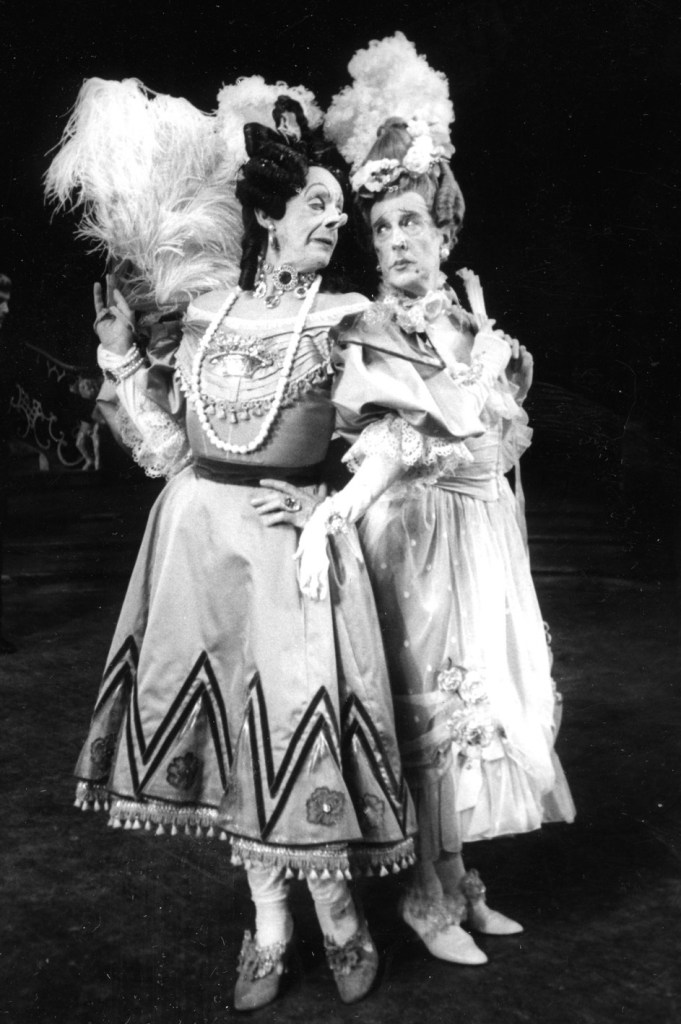
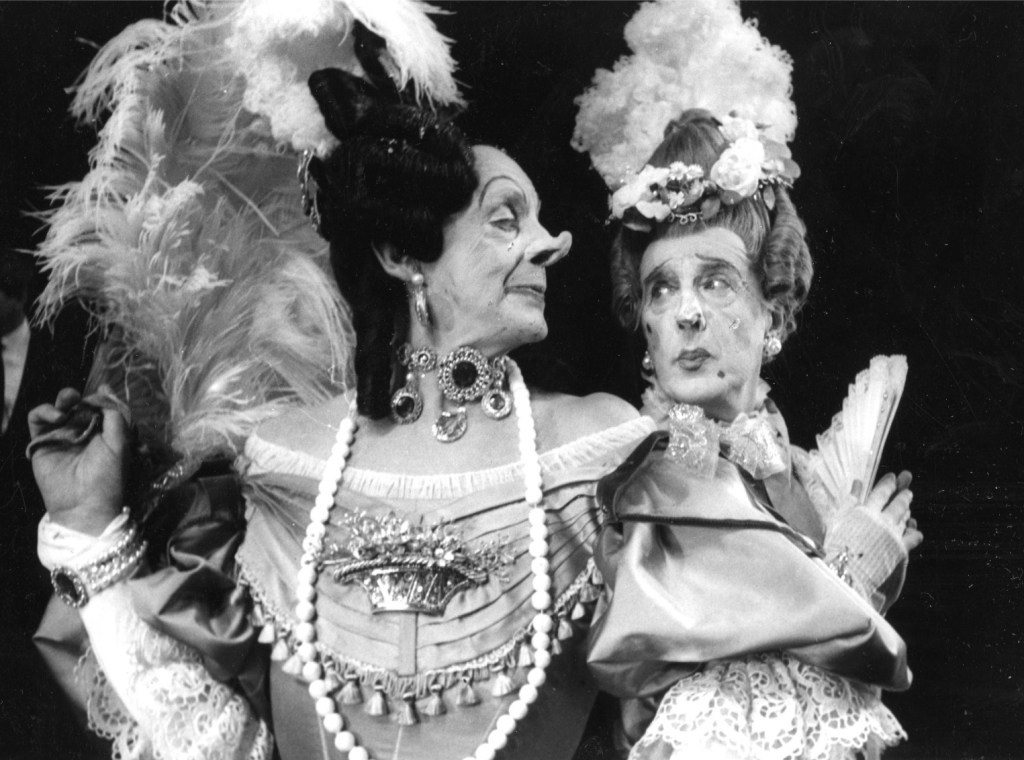
The Royal Ballet’s decision to cast female Stepsisters as well as the traditional male Stepsisters in their 2023 production of Ashton’s Cinderella caused quite a stir (“Ashton’s Cinderella”; Pritchard), and we were excited about this “new” development.  However, we soon discovered that it had been Ashton’s original intention to create his choreography on female dancers, more specifically on Margaret Dale (the pioneer ballet filmmaker) and Moyra Fraser.  It was in fact Fraser’s unavailability that caused the change in plan, resulting in the celebrated Ashton-Helpmann Stepsister twosome.

Although critic Judith Mackrell has referred to the Stepsisters as “monsters”, in stark contrast to Carabosse, they are “monsters of delusional vanity” (“Girls Aloud”) rather than monsters of evil.  Their behaviour and movements are noticeably “feminine”: they preen in front of the mirror, fuss about their clothes, bicker, walk in a flouncing manner and perform “female” variations at the Ball.  These variations overtly reference typical vocabulary from classical pas for ballerinas: small sissonnes piqué arabesque into retiré, a series of pas de chatdéveloppé à la secondeemboîtés en tournant; they even include lifts and fish dives supported by their male partners.  In fact the solo for the timid Stepsister, performed by Ashton, draws on the Sugar Plum Fairy variation, and perhaps also on Walt Disney’s hippo ballerina Hyacinth (Fantasia, 1940), inspired by the Baby Ballerina Tatiana Riabouchinska.

Further, there are additional layers of femininity to these characters.  Firstly, with their exaggerated costumes and comedic manners, they recognisably reference the tradition of the Pantomime Dame, so familiar to audiences in this country.  Secondly, Ashton had performed the Prince in Andrée Howard’s 1935 Cinderella, and according to David Vaughan (234) was influenced by some aspects of the characterisation, costumes and wig of the sister which Howard choreographed, designed and performed herself.  And thirdly, both Ashton and Helpmann were known for their mimicry, notably of women, and both were said to have been influenced by specific “female eccentrics” (Kavanagh 365): Helpmann by Jane Clark (renowned for her feistiness) and comedienne Beatrice Lillie (Vaughan 234), and Ashton himself by Edith Sitwell (Kavanagh 365). 

According to dance critic and historian David Vaughan, a female cast was unsuccessful, because “the kind of observation of the female character that lay beneath these performances could be achieved only by men” (234).  However, we would argue that, as in the case of the Pantomime Dame, performers and audience share an understanding that the performers are male, and much of the humour resides in this shared understanding, despite the overt performative femininity: “The audience and the character comically share the knowledge that the Dame is not really a woman” (“‘It’s behind you!’”).  And there must have been a delicious additional irony attached to the first cast at the premiere in 1948, given the status of both Ashton and Helpmann as key figures in the development of British ballet. 

While the Sisters each perform a ballerina solo, their dancing is very poor in classical terms, with turned-in feet, shaky balance, poor coordination and spatial confusion.  This of course adds to the humour of the work, a humour that perhaps loses some of its edge when these Pantomime Dames are performed by women. However, it also suggests that female characters who are not fully female, as it were, are in some way lacking, incapable as they are of performing female danse d’école, even when they are female dancers pretending to be male dancers pretending to be female.  

Moyra Fraser and Margaret Hill, 1958
© Royal Academy of Dance / ArenaPAL

Although Ashton and Helpmann were the most fêted “twin monsters” (Mackrell, “Girls Aloud”), the 1957 recording of the work featured Kenneth MacMillan instead of Helpmann.  Writing about MacMillan’s performance, Peter Wright spotlights the humour that arises from the play on gender in this context:

Kenneth’s performance is remarkably considered, recognisably feminine but still decidedly masculine in the best tradition of pantomime dame … He was very funny. (149)

Tiresias

Happily, undertaking research for this post gave us the opportunity to discover  more about a lesser known ballet by Frederick Ashton which, according to the Royal Opera House performance database, was performed only fourteen times over a period of four years after the premiere in 1951.  Based on the titular figure from Greek mythology, Tiresias was a tale of sexual identity and pleasure, following the life of Tiresias, who was transformed from man into woman and then back to manhood as the result of his reaction to witnessing a pair of copulating snakes.  Having experienced life as both man and woman, he is asked to decide the quarrel between Zeus and Hera as to whether males or females gain more enjoyment from the sexual act.  

As we might expect from a ballet of this era, the eponymous Tiresias was not gender fluid in the way that Frida and her corps de ballet are in Broken Wings.  Instead, Tiresias was performed by two dancers: Michael Somes as the male Tiresias, and Margot Fonteyn as his female counterpart.  Nonetheless, David Raher, writing in The Dancing Times (15) after the premiere, made some comments about Fonteyn’s performance that are pertinent to our discussion: 

Instead of contrasting femininity, she conveyed a masculinity in the attack and brio of her dancing.  Incontestable evidence of her gender, however, lay in the soft yet firm arm placements and in the unsurpassed magic of controlled développés …

While we ourselves may not make the same gender associations as Raher, the critic’s commentary clearly demonstrates that he perceived aspects of male and female in Fonteyn’s performance.  

David Vaughan, who also wrote Ashton’s biography, refers to the “wonderfully ambiguous eroticism” of the pas de deux (254), perhaps implying that the representation of gender is not as straightforward as is generally the case in ballet.  Although there seems to be no publicly available video footage of the ballet, we have found some sources that suggest the sensual nature of the choreography:  Julie Kavanagh’s description of the pas de deux as “fizz[ing] up into a kind of orgasm” (391), and John Wood’s photograph of Tiresias and her Lover (danced by John Field) showing them in a stylised pose of post-coital bliss, splayed across one another on the floor in a mirror image as they gaze into one other’s eyes.  

Judging from the reviews, the number of performances, and the literature on Tiresias, the ballet was neither a critical nor a commercial success.  Perhaps the sexually charged choreography and risqué subject matter (glossed over in the programme notes) were too ahead of their time.  After Fonteyn’s fiancé forbad her from performing the role again, her replacement Violetta Elvin took on the role, and when her she remarried, the same thing happened: her new husband banned her from dancing in further performances (Macaulay).  

Clearly the erotic nature of the choreography was challenging in 1951.  And this seems to have been the sticking point   However, the iconoclastic choice of gender fluidity and sexual identity as subject matter, in addition to sexual pleasure, should in our opinion not be forgotten, as it is a testament to the daring nature of a choreographer who is perhaps too often associated with conventionality. 

Concluding Thoughts

From this exploration of a small number of British ballets based on fairy tales and myth, it is clear that ballet is not entirely new to the concept of gender fluidity, and the more we dig into the characters, the more complex they become.  Nonetheless, while attitudes towards gender, and the stereotypes associated with two strictly defined genders, are becoming more open in everyday life, ballet is only very slowly reflecting this cultural shift.  Happily, this autumn two British companies have announced upcoming productions that will clearly feature gender-fluid characters: Northern Ballet’s Gentleman Jack, choreographed by Annabelle Lopez Ochoa, and Scottish Ballet’s Mary Queen of Scots in choreography by Sophie Laplane.

As long ago as 2012 Gretchen Alterowitz urged her readers to “contemplate the possibility of multiple or varied genders having a place in the ballet world” (21).  We would suggest that the example of Annabelle Lopez Ochoa’s Broken Wings based on the icon Frida Kahlo shows us that ballet does in fact have the capacity to create worlds where a greater diversity of gender representation can be explored—a diversity more suited to our current world and more relevant to the global art form that ballet has become.   

Next time on British Ballet Now and Then 
Autumn 2024 saw Noel Streatfeild’s 1936 novel Ballet Shoes adapted for the National Theatre.  We investigate this new stage production, television adaptations, and the original book itself.   

© British Ballet Now & Then

References

Alterowitz, Gretchen. “Contemporary Ballet: inhabiting the past while engaging the future”. Conversations Across the Field of Dance Studies, no. 35, 2015, pp. 20-23.

Argyle, Michael. Bodily Communication. 2nd ed., Routledge, 1988.

“Ashton’s Cinderella – new Royal Ballet production”. BalletcoForum,https://www.balletcoforum.com/topic/26439-ashtons-cinderella-new-royal-ballet-production/. Accessed 1 Sept. 2024.

Balderas, Jessica Rodriguez. “Muxes, the third gender that challenges heteronormativity”. Institute of Development Studies, 3 Feb. 2020, https://alumni.ids.ac.uk/news/blogs-perspectives-provocations-initiatives/513/513-Muxes-the-third-gender-that-challenges-heteronormativity

“The Ballerinas”.  YouTube, uploaded by markie polo, 24 May 2020, https://www.youtube.com/watch?v=Sx2D40Wavwg&t=10586s.

Banes, Sally. Dancing Women: female bodies on the stage. Routledge, 1998.

Burgoon et al. Nonverbal communication. 2nd ed., Routledge, 2022.

Carli, Linda L. et al. “Nonverbal Behavior, Gender, and Influence”. Journal of Personality and Social Psychology, vol. 68, no. 6, 1995, pp. 1030–1041, https://doi.org/10.1037/0022-3514.68.6.1030.

“Carlotta Brianza as Carabosse with her entourage of rats in the opening scene of The Sleeping Princess 1921”. Victoria and Albert Museumhttps://www.vam.ac.uk/blog/diaghilev-and-ballets-russes/more-diaghilev-and-film-industry

“Cinders! 2023”. Scottish Ballethttps://scottishballet.co.uk/discover/our-repertoire/cinders/. Accessed 16 May 2024.

Christoudia, Melanie Trifona. “Carlotta Brianza”. International Dictionary of Ballet, edited by Martha Bremser, pp. 200-01

Dowler, Gerald. “The Royal Ballet – The Sleeping Beauty”. Classical Source, 3 Jan. 2017, www.classicalsource.com/concert/the-royal-ballet-the-sleeping-beauty-3/

Elgin, Kathy. “Scottish Ballet’s Cinders! confirms Hampson is a savvy theatre-maker”. Bachtrack, 9 Jan. 2024   https://bachtrack.com/review-cinders-scottish-ballet-hampson-glasgow-edinburgh-december-january-2023-24

Fracci, Carla. “The Ballerinas”. YouTube, uploaded by Markie polo, 24 May 2020,  https://www.youtube.com/watch?v=Sx2D40Wavwg

“Introducing Cinders with a Charming Twist to the Tale”. Scottish Ballet, 2013, scottishballet.co.uk/discover/news-and-articles/introducing-cinders/

“‘It’s behind you! A look into the history of pantomime’”. University of York, 2010, www.york.ac.uk/news-and-events/features/pantomime/.

Jennings, Luke. “The Sleeping Beauty/English National Ballet – review”. The Guardian, 9 Dec. 2012, www.theguardian.com/stage/2012/dec/09/sleeping-beauty-english-national-ballet

Kavanagh, Julie. Secret Muses: the life of Frederick Ashton. Faber & Faber, 1996.

Knox, John. 1558. The First Blast of the Trumpet against the Monstrous Regiment of WomenBlackmask Online, 2022, http://public-library.uk/ebooks/35/36.pdf

Liber, Vera. “The Sleeping Beauty”. British Theatre Guide, 2009, www.britishtheatreguide.info/reviews/RBsleepingbeauty-rev

Macdonald, Nesta. Diaghilev Observed. Dance Horizons, 1975

Macaulay, Alastair. “Ashton and Balanchine: parallel lines”. NYU The Center for Ballet and the Arts, 2018, https://balletcenter.nyu.edu/lkl2018-script/

Mackrell, Judith. “Chase Johnsey’s unlikely success is a bold and beautiful victory for ballet”. The Guardian, 6 Feb. 2017, www.theguardian.com/stage/2017/feb/06/chase-johnsey-success-national-dance-awards

—. “Girls Aloud”. The Guardian, 1 Dec. 2003, www.theguardian.com/stage/2003/dec/01/dance
Mast, Marianne Schmid, and Sabine Sczesny. “Gender, Power, and Nonverbal Behavior”. Handbook of Gender Research in Psychology, vol. 1, Jan. 2010, pp. 411-25, SpringerLinkhttps://doi.org/10.1007/978-1-4419-1465-1_20

Plata, Gabriel. “Celebrating diversity: Meet Mexico’s Third Gender”. Inter-American Development Bank, 19 May 2019, https://www.iadb.org/en/story/celebrating-diversity-meet-mexicos-third-gender

Parry, Jann. “Royal Ballet – The Sleeping Beauty – London”. DanceTabs, 14 Nov. 2019, https://dancetabs.com/2019/11/royal-ballet-the-sleeping-beauty-london-2/

Pritchard, Jim. “The Royal Ballet exhibits Ashton’s Cinderella choreography in their Disneyfied new staging”. Seen and Heard International, 14 Apr. 2023, https://seenandheard-international.com/2023/04/the-royal-ballet-exhibits-ashtons-cinderella-choreography-in-their-disneyfied-new-staging/

Reij, Dieuweke van. “Broken Wings: interview with designer Dieuweke van Reij”. English National Ballet, 20 Jan. 2019,  www.ballet.org.uk/blog-detail/broken-wings-interview-designer-dieuweke-van-reij/

Rojo, Tamara. “Tamara Rojo South bank show 3”. YouTube, uploaded by Kabaiivansko2, 23 Apr. 2014, https://www.youtube.com/watch?v=hfOoX16RLFM

Titherington, Alan. “Tchaikovsky: The Sleeping Beauty (Royal Ballet – 2006)”. Myreviewer.com, 29 Sept. 2008, www.myreviewer.com/DVD/108291/Tchaikovsky-The-Sleeping-Beauty-Royal-Ballet-2006/108400/Review-by-Alan-Titherington

Vaughan, David. Frederick Ashton and his Ballets. Rev. ed., Dance Books, 1999.

Wright, Peter. Wrights and Wrongs: my life in dance. Oberon, 2016.

Warner, Marina. “Witchiness”. London Review of Books, vol. 31, no. 16, 2009, https://www.lrb.co.uk/the-paper/v31/n16/marina-warner/witchiness

Watson, Paul. “On Fairy Tales and Witches”. The Lazarus Corporation, 6 Jan. 2015, https://www.lazaruscorporation.co.uk/blogs/artists-notebook/posts/on-fairy-tales-and-witches

Windling, Terri. “Into the Wood, 9: Wild Men & Women”. Myth and Moor, 31 May 2013, https://windling.typepad.com/blog/2013/05/into-the-wood-8-wild-men-and-women.html

The 19th Century Canon Now & Then

The 19th Century Canon Now

Last summer Birmingham Royal Ballet (BRB) brought their new production of Marius Petipa’s 1869 Don Quixote to London, after it had premiered four months earlier at the Birmingham Hippodrome.  With the exception of The Nutcracker, which is pretty much obligatory fare for any major ballet company (as discussed in our very first British Ballet Now & Then post, this was the first work from the 19th century ballet canon to have been performed by BRB since Carlos Acosta took over as Artistic Director in January 2020.  The premiere had originally been planned for the start of Acosta’s inaugural season, but like so many productions had to be postponed due to the Covid pandemic.

Matador Scene featuring Brandon Lawrence as Espada Photo with Artists of Birmingham Royal Ballet; photo: Emma Kauldhar

The choice of Don Quixote in favour of any other work from the 19th century canon was hardly surprising: Acosta himself has been long associated with the role of Basilio.  At the age of 17 he won the Prix de Lausanne after dancing Basilio’s Act III variation; he performed the role with the Royal Ballet (RB) in Rudolf Nureyev’s staging mounted by Ross Stretton and then created his own production of the ballet for the Company, now adapted for his own Company.

Like the other 19th century classics, Don Quixote provides technical challenges for dancers of different ranking, and opportunities for a large cast of performers to engage in different styles: classical, character and mime.  Other works in the British ballet repertoire that offer similar opportunities are La Sylphide (Bournonville, 1836), Giselle (Coralli/Perrot, 1841), Coppélia (Saint-Léon, 1870; Petipa, 1884) La Bayadère (Petipa, 1877), The Sleeping Beauty (Petipa, 1890), Swan Lake (Petipa/Ivanov, 1895) Raymonda (Petipa, 1898) and Le Corsaire (Petipa, 1899).

Artists of English National Ballet in La Sylphide, photo: Laurent-Liotardo
Jurgita Dronina and Isaac Hernandez in La Sylphide, photo: Laurent Liotardo

Apart from the fact that these works were all created during the 1800s, when ballet as an art form became more recognisably what we understand as ballet today, with its focus on the female dancer, themes inspired by Romanticism, and development of pointe work and ballets blancs, they are all connected by the fact that they were originally choreographed in France or Russia and “travelled” to this country via various routes (as we will discuss further in the Then section of this post).  Although we are sure that you are all familiar with Don Quixote, La Bayadère, Raymonda and Le Corsaire, these works took a number of decades to become established within the British repertoire, being produced in the UK at different times by different companies from 1962 to 2022, and not always in their entirety.

If you follow this blog, you will already know the history of Raymonda in the UK prior to English National Ballet’s evening-length production, which premiered in January last year.  Important details for this particular post is the fact that it was Nureyev, just three years after his defection from the Soviet Union, who first staged Raymonda in this country, initially in a complete production for the Royal Ballet (1964), and then as a one-act ballet based on the final act of the work, in 1966.  In this form Raymonda can stand on its own as a divertissement within a mixed bill, and between 1993 and 2014 English National Ballet also performed a single-act Raymonda, firstly in a production by Frederick Franklin (the British-American dancer, teacher, choreographer and director), and then, in 1993 in Nureyev’s staging, as part of the Nureyev Celebration, marking 75 years since Nureyev’s birth and 20 years since his death.

Momoko Hirata as Kitri and Mathias Dingman as Basilio, with Artists of Birmingham Royal Ballet in Don Quixote; photo: Johan Persson

Similarly, it was Nureyev who first staged La Bayadère in the UK—not in its entirety, but in that superb example of high classicism, the “Kingdom of the Shades”—and who introduced the Le Corsaire grand pas de deux to the British repertory.  In 1985 the “Kingdom of the Shades” entered the repertory of English National Ballet in a production by Natalia Makarova, and in 2013 the same company became the only British ballet company to perform the complete Corsaire.

The three most celebrated ballet defectors from the Soviet Union all had a tremendous impact on dancing in the West, but like Nureyev, Makarova and Mikhail Baryshnikov also had a substantial influence on the expansion of the 19th century repertoire, by staging major full-length productions for American Ballet Theatre: La Bayadère (Makarova, 1980) and Don Quixote (Baryshnikov, 1978).  Relevant for the development of British ballet is the fact that both of these productions were also mounted on the Royal Ballet.  While La Bayadère was the first complete version of the work to be performed in Britain (and remains the only full-length production in the UK), Don Quixote has had a far more varied history in this country, including stagings by Ballet Rambert (1962) and by London Festival (now English National) Ballet (1970), both mounted by Polish ballet master Witold Borkowski, in addition to the two more recent RB productions.  It seems that it is only since the RB’s staging of Baryshnikov’s version in 1993 that the work has become more firmly established within the British ballet repertoire. 

Although these star dancers from the Soviet Union also mounted new productions of 19th century works already established within the British ballet repertoire (including Nureyev’s Nutcracker for the Royal Ballet in 1968, and Makarova’s 1988 production of Swan Lake for London Festival Ballet), it is noticeable that they focused their efforts primarily on the 19th century works that they knew from their experiences at the Vaganova Academy and Mariinsky Ballet but were absent from North American and Western European companies.  And the newer 19th century additions to the British ballet repertoire have indubitably enriched our understanding of ballet as an art form, given dancers new challenges and offered audiences both entertainment and food for thought.  Don Quixote belongs to a very small number of comedic ballets, and provides a great variety of character and demi-character roles.  Le Corsaire is teeming with opportunities for virtuoso male dancers.   And can any scene in the ballet repertoire surpass the transcendence of the “Kingdom of the Shades”?

Artists of English National Ballet in Le Corsaire photo: Laurent-Liotardo

Yet even ballet, with its highly stylised technique, and its penchant for magic and fantasy and reputation for escapism, is not immune from the changing attitudes of our Zeitgest.  Although ENB’s production of Le Corsaire is little over a decade old, the last time it was performed (at the start of 2020), it came with a caveat from the Artistic Director, Tamara Rojo:

When English National Ballet commissioned its new production of Le Corsaire, we worked to challenge some of the traditions of this work, and therefore made adaptations to tone [down] the characters.  We know that still some elements, such as the attitude towards women and other cultures, now seem unacceptable to our values.  However, we present this traditional work with the strength of the assumption that the audience has the knowledge and the critical frame of judgement to view them in the context in which they were created.

As explored in our Raymonda post, in her own 2022 production of Raymonda, Rojo was at pains to address conflicts between current attitudes and those prevalent in Petipa’s original production, by offering a heroine with greater agency over her own life, and a reconceptualisation of Abderakhman the Muslim Saracen to address the traditional othering of this character.

The Royal Ballet last staged La Bayadère in 2018.  For the most part, as is usual for works that are already established in the repertoire, reviews highlighted the performances of the principals, and as is usual for works which feature major ballets blancs, commented on the unison of the corps de ballet (Desvignes; Hugill; Jennings; Parry).  However, both Robert Hugill and Luke Jennings raised concerns regarding Bayadère‘s promotion of orientalist attitudes manifest in “its inanely capering fakirs, lustful priests and blithe appropriation of Hindu, Islamic and Buddhist religious and cultural motifs” (Jennings). 

In recent years BRB, ENB, RB, and Scottish Ballet have all made revisions to the choreography, costumes and/or make-up of the Arabian and Chinese Dances from the Nutcracker productions in order to start confronting such offensive stereotypes.  But how does a company approach revising a whole full-evening work?

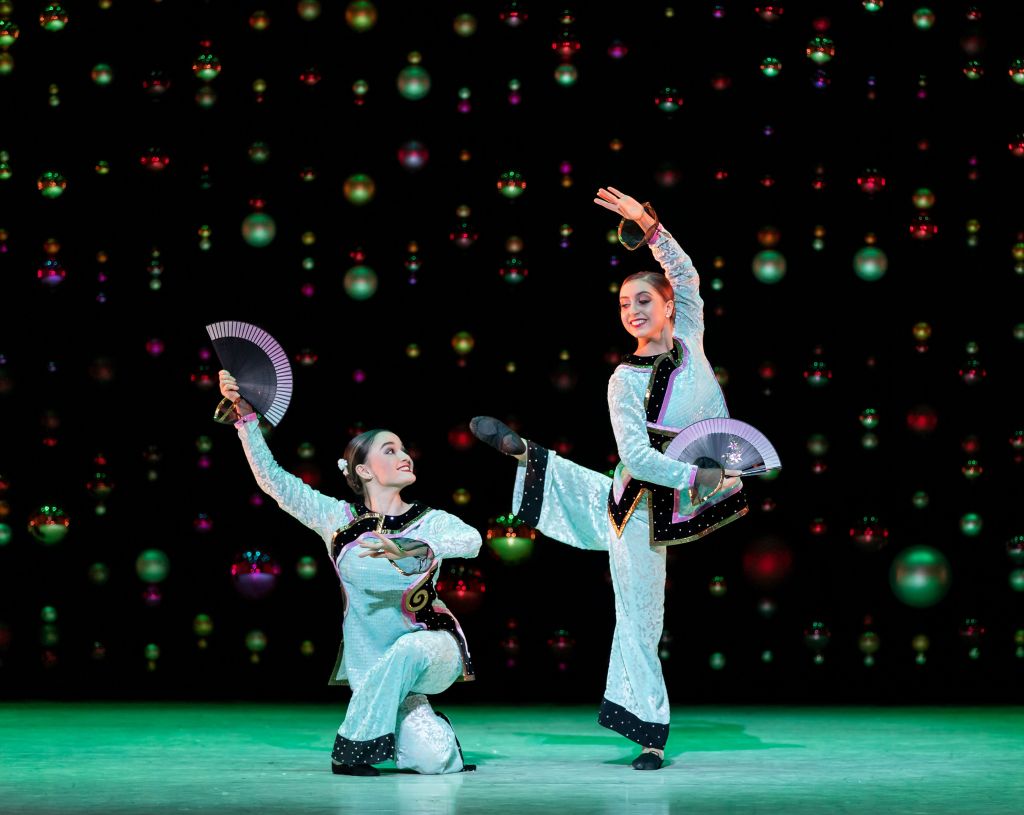
Scottish Ballet Artist Alice Kawalek and First Artist Kayla-Maree Tarantolo in Chinese Tea Dance. Photo credit: Andy Ross

In the United States, Arts Educator and Co-founder of Final Bow for Yellow Face Phil Chan is producing his own versions of Le Corsaire and La Bayadère to make them more suitable and relevant for American 21st century audiences by addressing what he perceives to be their inherent racism and misogyny.  In his plans, Le Corsaire takes place at a beauty pageant complete with “scheming showgirls, gunslinging beauty queens” (Chan), while La Bayadère will feature Hollywood cow girls and references to Busby Berkeley’ oeuvre, as well as a plot line similar to Singin’ in the Rain (Donen/Kelly, 1952).  These ideas may avoid racial stereotyping, but on paper at least they seem to raise other problematic issues.  Neither do we understand how the tragic nature of La Bayadère will translate into this new context.  Perhaps the productions themselves will transcend their description on paper …

The 19th Century Canon Then

In the 1920s and early 1930s, when Marie Rambert and Ninette de Valois were taking their first steps to establish ballet as a British art form, there was no canon of 19th century “classics” as we know it today. 

So what exactly was the tradition of ballet in 19th century Britain?

Well, in the 1840s, during the flourishing era of ballet Romanticism, Her Majesty’s Theatre Haymarket became a centre for the art form, with important works being created there by the pre-eminent French choreographers of the day Jules Perrot (co-creator of Giselle in 1841, with Jean Coralli) and Arthur Saint-Léon (choreographer of Coppélia, 1870).  These included Ondine, La Esmeralda and Pas de quatre by Perrot, and La Vivandière by Saint-Léon.  However, the situation changed radically in the later decades of the century, when music halls and variety theatres, such as the Empire and the Alhambra on Leicester Square, became regular venues for ballet performances, a situation that continued into the 20th century.  Despite the frequency of performances and popularity of ballet in these theatres, the works created specifically for the music halls were short lived, and even the names of the choreographers, such as Carlo Coppi and Katti Lanner, are not generally well known to today’s ballet-going public.  Further, these connections to popular theatre meant that the status of ballet as a serious art form was on thin ice, even though versions of Giselle and Coppélia, now generally considered as works of the highest calibre, were staged at the Empire in the 1880s.  And when in 1921 Serge Diaghilev mounted his sumptuous production of Tchaikovsky’s The Sleeping Beauty, based on Marius Petipa’s 1890 choreography but titled The Sleeping Princess, it was also produced in a music hall setting: at the Alhambra.

SLEEPING BEAUTY, Deanne Bergsma ( as The Lilac Fairy ) ; The Royal Ballet at the Royal Opera House, London, UK ; January 1969 ; Credit: G.B.L. Wilson / Royal Academy of Dance / ArenaPAL

When de Valois set up the Vic-Wells Ballet (later to become the UK’s flagship company the Royal Ballet) in 1931, she had a clear vision of the kind of repertoire she considered necessary for a national British company.  It consisted of four categories:

  1. Traditional-classical and romantic works
  2. Modern works of future classic importance
  3. Current works of more topical interest
  4. Works encouraging a strictly national identity in their creation generally

(Bland 57)

With both Ashton and herself at the helm creating new choreographies, it is clear how her last three aims might be fulfilled.  But of course, what interests us in this post is the way de Valois obtained the “Traditional-classical and romantic works”.

SWAN LAKE ; Nadia Nerina , Shirley Grahame and Doreen Wells ; Choreographed by Ashton and de Valois ; Designed by Hurry ; Music by Tchaikovsky ; the Royal Ballet New Group, at the Royal Opera House, London, UK ; May 1965 ; Credit : G.B.L. Wilson / Royal Academy of Dance / ArenaPAL

What we find fascinating is that political events came to de Valois’ aid: like many other figures from the Russian ballet world, the Mariinsky régisseur Nikolai Sergeyev had fled his home after the 1917 Revolution.  With him he took scores of 19th century works in a dance notation system devised by Vladimir Stepanov.  These included The Sleeping Beauty, The Nutcracker and Swan Lake, as well as Giselle and Coppélia; ballets of which de Valois had some, but limited, knowledge (Walker 129).  The distinct advantage of mounting the works from the notation scores was of course that it must have given a sense of gravitas to the productions through an authenticity that most music hall productions were unlikely to match, even if that was indeed an aim.  Before Sergeyev started to work for de Valois, he had already staged two works in London: Diaghilev’s The Sleeping Princess, and The Camargo Society’s Giselle.  However, the work of staging these ballets for de Valois’ fledgling company created a cornerstone of the British ballet repertoire.  Further, this process was solidified by Mona Inglesby, founder of International Ballet in 1941, another highly significant figure who promoted 19th century works in Britain, and for whom Sergeyev worked from 1946 until his death in 1951.  Crucially, the company toured these works the length and breadth of the British Isles: from the suburbs of London through the Midlands to Liverpool and Manchester, up to Newcastle, Glasgow and Edinburgh, and over to Belfast and Dublin.  In fact, although the Company folded in 1953, International Ballet was of such significance in its day that it was chosen to appear at the opening of the Royal Festival Hall in 1951.

LA BAYADERE – Dress rehearsal Royal Opera House – Covent Garden November 1963 SIR FREDERICK ASHTON / RUDOLPH NUREYEV and THE CORPS DE BALLETS Credit: Royal Academy of Dance / ArenaPAL

De Valois’ and Inglesby’s selection of works seems highly interesting to us, because the ballets they produced constituted only approximately one quarter of the works that could have been staged.  La Bayadère, Le Corsaire and Raymonda could have entered the British ballet repertoire decades sooner; we might have enjoyed The Pharaoh’s Daughter (Petipa, 1862) and La Esmeralda (Petipa after Perrot, 1886) or the Petipa and Ivanov version of La Fille mal gardée (1885).  Both Inglesby and Pavlova before her had made plans to produce La Bayadère, but had reached the conclusion that it was “too old fashioned” (Inglesby 97; Pritchard “Bits” 1121).  While Pavlova did mount a version of Don Quixote, according to historian and expert in British ballet history, Jane Pritchard, this also struck audiences as rather dated after Leonid Massine’s Le Tricorne (1919) (Anna Pavlova 112).  La Esmeralda also proved enticing to Inglesby, but was rejected as a project by the Royal Opera House (Inglesby 106-107).  On other hand, Giselle, Coppélia, The Sleeping Beauty and Swan Lake all had two distinct advantages: they had already been introduced to the British public, and they all had superb scores (Tchaikovsky was known to have admired the compositions of both Adolf Adam and Leo Delibes) (Pullinger).

RAYMONDA ( Act III ) ; Donald MacLeary and Svetlana Beriosova ( as Jean de Brienne and Raymonda ) ; The Royal Ballet at The Royal Opera House, London, UK ; March 1969 ; Credit: G.B.L. Wilson / Royal Academy of Dance / ArenaPAL

In addition to music hall performances of Coppélia at the Empire Leicester Square from the 1880s into the early 1900s, we were also intrigued to discover that in 1890, the same year that Petipa had choreographed the ballet for the Mariinsky Theatre with Carlotta Brianza as Aurora, one of the other Italian ballerinas who starred with the Russian Imperial Ballet, Pierinna Legnani, had danced the same role in a full production at the Alhambra, but to the choreography of Leon Espinoza with music by Georges Jacobi.  Further, in the years immediately leading up to the first London season of the Ballets Russes in 1911, the West End evidently became a veritable hive of ballet activity, with appearances from Lydia Kyasht, Tamara Karsavina, Olga Preobrazhenska, Alexandra Baldina, Ekaterina Geltzer, and of course Anna Pavlova.  Included in these performances were shortened versions of works that were to become “the classics”: in 1910 Preobrazhenska staged Swan Lake at the Hippodrome, while Karsavina mounted a truncated production of Giselle at the Coliseum.  The following year saw the complete Giselle, The Sleeping Beauty Grand pas de deux and a two-act condensed Swan Lake at the Royal Opera House performed by the Ballets Russes.

And what of the ubiquitous Nutcracker? Well, if you have been following British Ballet Now & Then since the start, you will know that the notion of The Nutcracker as a quasi-obligatory Christmas treat is a phenomenon of the later 20th century. In fact this ballet was not well known in this country before de Valois’ Vic-Wells Ballet staged it in 1934.  However, the Nutcracker Suite, which was in fact presented in concert halls before the ballet premiered at the Mariinsky Theatre, was performed in London as early as 1896. 

SADLER’S WELLS BALLET – THE NUTCRACKER 1943 ROBERT HELPMANN / MARGOT FONTEYN Credit: Royal Academy of Dance / ArenaPAL

Ballets Russes audiences would also have known some excerpts, because Diaghilev himself was a great admirer of the score and interpolated some of the numbers into his productions of The Sleeping Beauty and Swan Lake (Newman 20-21).

But you may be asking yourself how La Sylphide became integral to the 19th century canon. The original work by Filippo Taglioni, created for his daughter Marie Taglioni, the most celebrated of Romantic ballerinas, was hugely popular in its day and was performed at Covent Garden only a few months after the March premiere in Paris, 1832.  Marie Taglioni also performed it in Russia, where it continued to be included in the repertoire, and was revived by Petipa in 1892.  However, it does not seem to have been amongst the works that were recorded in the Stepanov notation, and sometime during the first half of the last century Filippo Taglioni’s choreography was lost, although the Romantic ballet expert Pierre Lacotte did produce a reconstruction of it for the Paris Opera Ballet in 1972.  As you probably are aware, the choreography that has been passed down through the generations is the version by August Bournonville, who saw the original production in Paris, but then created his own in 1836.  According to Pritchard (who also happens to be one of our favourite dance historians), Marie Rambert, who established the first ballet company in the UK, loved Romantic ballet (“Marie Rambert” 1177).  She had become familiar with Giselle during her time with the Ballets Russes, and in 1946 Giselle became the first long work to enter the repertoire of Ballet Rambert (now Rambert).  This production was staged with the help of historian Cyril Beaumont, author of The Ballet Called Giselle, first published in 1944, and still available to purchase today.  Beaumont devotes a substantial section of his book to La Sylphide, exploring its influence on Giselle in terms of themes, style, technique and structure.  The work he discusses is the original Taglioni La Sylphide, which was of course not available for Rambert to stage.  Instead, the Bournonville version was staged in 1960, by Bournonville expert Elsa Marianne von Rosen.  In contrast to the full-length Giselle and La Sylphide, only extracts from The Sleeping Beauty, The Nutcracker and Swan Lake were performed by Rambert.  However, Rambert seems to have produced an appetite for Bournonville’s ballet in Britain: Danish ballet master Hans Brenaa was invited to stage a production for Scottish Ballet in 1973; in 1979 the Danish dancer Peter Schaufuss (later to become Artistic Director) mounted his production for English National Ballet; and eventually the Royal Ballet acquired the work in Johan Kobborg’s 2005 staging.  Perhaps one factor that contributed to the growing familiarity with La Sylphide of the British ballet audience was the BBC broadcast of the Act II Pas de deux in 1960 with von Rosen herself, followed by a broadcast of the complete work with Ballet Rambert less than a year later.  Another factor was undoubtedly Rudolf Nureyev’s performances with Scottish Ballet at the London Coliseum in 1976, in which he danced James at every performance over the course of two weeks.

Concluding thoughts

A brief glance through Instagram leaves us in no doubt about the popularity of the 19th century canon across the globe.  And the importance of the works to the British ballet repertoire cannot be denied: in the 2022-2023 season, in addition to the The Nutcracker, Birmingham Royal Ballet have performed Swan Lake, English National Ballet both Raymonda and Swan Lake, and the Royal Ballet The Sleeping Beauty.

We perhaps think of the classics as being exempt from politics, but this is a fallacy: neither their content nor their arrival to these shores can be said to be divorced from politics.  The word “timeless” is also often associated with the term “classics”, but of course the style of performance varies over space and time and our perception of and relationship with the works changes with the Zeitgeist.

Ballet has traditionally been perceived as an ephemeral art form, being handed down by dancers from generation to generation, with limited means for recording the choreography.  But today, with the regular use of Benesh Movement Notation and video to record works in their different productions, perhaps we can feel more secure about the preservation of the 19th century repertoire. 

How would you like to see these works preserved? Would you like to see them performed in a style more compatible with the original style, with original choreography restored, as Alexei Ratmansky has done with his productions of The Sleeping Beauty and Swan Lake? Or would you prefer a more experimental approach, in response to a more contemporary world view, such as that proposed by Phil Chan?  We would love to hear your thoughts!   

© British Ballet Now & Then

We would like to thank our dear friend and colleague Paul Doyle for his help with this post.

Next time on British Ballet Now and Then … Ballet has a reputation for being very gender specific.  However, there is a tradition of subverting gender norms in certain circumstances.  The Royal Ballet’s recent run of Cinderella has seen both female and male identifying dancers perform the Step-Sisters, while the last time English National Ballet staged The Sleeping Beauty, the cast included a gender-fluid dancer, as well as both male and female performers in the role of Carabosse.  So this will be the focus of our next Now and Then post …     

References

Beaumont, Cyril W. The Ballet Called Giselle. Dance Books, 2011.

Bland, Alexander. The Royal Ballet: the first fifty years. Threshold Books, 1981.

Chan, Phil. “On Yellowface and a way forward for Diverse Audiences”. One Dance UK, 2020, https://www.onedanceuk.org/resource/on-yellowface-and-a-way-forward-for-diverse-audiences/.

Desvignes, Alexandra. “Marianela Nuñez shines in a star-studded, polished Bayadère at The Royal Ballet”. Bachtrack, 3 Nov. 2018, https://bachtrack.com/review-bayadere-royal-ballet-nunez-muntagirov-osipova-opera-house-london-november-2018.

Hugill, Robert. “Iconic but flawed: La Bayadère the Royal Ballet”. Planet Hugill, 12 Nov. 2018, https://www.planethugill.com/2018/11/iconic-but-flawed-la-bayadere-royal.html.

Inglesby, Mona, with Kay Hunter. Ballet in the Blitz: the story of a ballet company. Groundnut Publishing, 2008.

Jennings, Luke. “La Bayadère review – moonlit heights from Nuñez and co”. The Guardian, 11 Nov. 2018, https://www.theguardian.com/stage/2018/nov/11/la-bayadere-royal-ballet-review-marianela-nunez-natalia-osipova.

Newman, Barbara. The Nutcracker. Aurum Press, 1985.

Parry, Jann. “Royal Ballet – La Bayadère – London”. DanceTabs, 6 Nov. 2018, https://dancetabs.com/2018/11/royal-ballet-la-bayadere-london-2/.

Pritchard, Jane. Anna Pavlova Twentieth Century Ballerina,

—. “Bits of Bayadère in Britain”. Dancing Times, vol. no. , 1989.

—. “Marie Rambert”. International Dictionary of Ballet, edited by Martha Bremser, St. James Press, 1993, pp. 1175-77.

Pullinger, Mark. “A step into the world of Tchaikovsky’s ballets: Swan Lake”. Bachtrack, 23 July 2017, https://bachtrack.com/ballet-focus-tchaikovsky-swan-lake-petipa-july-2017.

Rojo, Tamara. “A Word from Tamara Rojo, Artistic Director”. Le Corsaire programme Jan. 2020, English National Ballet, London.

Walker, Katherine Sorely. Ninette de Valois: idealist without illusions. Dance Books, 1987.


Ballet at War Now & Then

Art does help you process; it does help you see your own situation from a different point of view; it does help you either process that situation or actually distract from that situation, which is equally valid.  Fantasy is again another of those human necessities, and to be able to disappear in an alternative reality is, I think, now certainly needed

(Tamara Rojo “The Art of Empathy” 13:25-14:22)

Ballet at War Now

Early 2020 was truly auspicious for British ballet.  It began with Northern Ballet’s 50th Anniversary Celebration Gala, featuring dancers from a range of British ballet companies: Birmingham Royal Ballet, English National Ballet, the Royal Ballet and Scottish Ballet.  There were glorious performances of Le Corsaire by English National Ballet, followed by three performances of their 70th Anniversary Gala, highlighting the range of works in their repertoire over the years and the strength of the Company in terms of both technique and character. Cathy Marston’s The Cellist, her first work for the main stage at the Royal Opera House, premiered in February.  And then there was the promise of other major new works: Kenneth Tindall’s Geisha for Northern Ballet, and most excitingly Akram Khan’s much anticipated Creature for English National Ballet – their third collaboration.

With the announcement of COVID-19 as a global pandemic this promise was largely unfulfilled: although Geisha received its world premiere in Leeds to substantial acclaim (Brown, M.; Roy; Hutera), the tour was cancelled, along with all performances in April and May of Red Riding Hood; and to our utter dismay, Creature was postponed weeks before the premiere.  Since we wrote our spotlight post on British ballet in lockdown, further cancellations and postponements have ensued, including both English National Ballet’s and the Royal Ballet’s Swan Lake and Scottish Ballet’s The Scandal at Mayerling, all of which are vital to the finances of the respective companies.  

It goes without saying that the primary purpose of any ballet company is to produce and perform live performances, and that these performances require daily training and rehearsals for the dancers and musicians, as well as work behind the scenes from a whole host of people of different skill sets, including set and lighting designers, wardrobe and technical staff, and physiotherapists, to say nothing of teachers, coaches and directors.  For all of these people, whose communities are sometimes referred to as a “family” (Weiss; Wulff 89), the current loss of this purpose must seem like a bereavement.  Further, for dancers and musicians in particular, who perform in groups as well as individuals and rely on the extreme skill of their bodies to fulfil their profession, being cut off from their working environment with the space and facilities they require must feel far more disorienting, and constitute a far greater breach to their professional identity, than for those of us who are locked out of our offices. 

Understandably perhaps, the language of war pervades the discourse of the pandemic.  Journalists have highlighted vocabulary used to describe our relationship with the virus: Dominic Raab looked “shell-shocked” before chairing the “war cabinet” (Hyde); the virus is a “cruel enemy” that must be defeated in battle (Freedman).  The death toll is constantly updated in the news, and people are anxious about their loved ones, and lose them without being able to bid them a real farewell.  In addition, there is a sense of dislocation as we relocate our work to our homes; this sense of dislocation must be especially acute for dancers who have to practise, sometimes alone, in limited and limiting spaces at home.  And then there is time.  Literary scholar Beryl Pong describes wartime life as having “peculiar temporalities”: it is “a period when one feels that time has stopped, but also when it simply cannot pass by quickly enough” (93).  So we experience dislocation in both time and space, the two elements that choreographer Merce Cunningham regarded to be the only essentials to dance other than the moving body (qtd. in Preston-Dunlop).  This dislocation, the attendant physical restrictions and mental pain are in our opinion most movingly expressed in the film Where We Are.  Organised by Alexander Campbell of the Royal Ballet with choreography by Hannah Rudd of Rambert, the film features Campbell’s colleague Francesca Hayward, freelancer Hannah Sveaas, and Jeffrey Cirio of English National Ballet.  The movements are predominantly performed in the near space of the dancers’ kinesphere, arms folding over their bodies, hands across their mouths and necks, sometimes with tense fluttering gestures; all indicating both the restrictions and the anxiety experienced by the performers in their current situation.  

But despite the poignant message expressed by Where We Are, the film also symbolises hope.  It is not only that Cirio utters the words “I’m so hopeful”, but the film is one of the many activities undertaken by the dancers of this country that are witness to their resourcefulness and creativity.  In our last post we outlined some of these activities, from the practical, such as classes targeted at a wide range of demographic groups, to the highly entertaining films made by Sean Bates and Mlindi Kulashe of Northern Ballet.  Since we wrote that post, there have been many many other delightful offerings.  One favourite is English National Ballet’s Isabelle Brouwers’ Instagram video post in which she cooks a highly nutritious meal, while simultaneously explaining to us how to access the nutrients for optimising dancers’ performance and magic them up into a delicious meal.  This video was made after Brouwers gained a diploma in Sports Nutrition with distinction (Bellabrouwers).  Another favourite is completely different in nature, though equally upbeat: a compilation by no fewer than ten Royal Ballet dancers performing the “Fred Step”, Frederick Ashton’s signature movement phrase, in a variety of guises and locations (Frederick Ashton Foundation). 

Dancers’ projects are highly visible – they are ideal fare for social media, and their ventures also make for engaging feature articles in newspapers, magazines and news websites, garnering such catchy headlines as “How should everyone keep fit during lockdown? Just put on some music and move!” (Monahan), “These Ballet Dancers are Keeping Limber under Lockdown” (Rosado), “Dancing in the streets: Royal Ballet stars rock to new Rolling Stones song” (Wiegand).  For us, however, it was noticeable that later in May and well into June the focus of articles shifted towards the vexed question of reopening theatres and the arduous process of preparing dancers for a return to the stage (Craine; Crompton “What will it take?”; Mendes; Sanderson).  This development seemed to be a response to two events:  the first steps to the easing of lockdown with the opening of “non-essential shops”, and the establishment of a government Cultural Renewal Task Force, which notably included the presence of Tamara Rojo, Artistic Director of English National Ballet.  The resultant growing concern about the future of the arts resulted in a series of petitions and an escalating flurry of anxious activity on social media leading up to a cautious sense of relief triggered by the announcement of a £1.57 billion rescue package for the arts, culture and heritage industries from the Treasury. 

This situation calls for a different kind of creativity from company and theatre directors, one that is less visible, less immediately engaging and eye-catching than videos of performances (including cooking!).  Yet this kind of problem-solving creativity and resourcefulness is vital for the future of ballet in this country, and is crucially a long-term endeavour.  Someone who has brought greater visibility to this kind of creativity is Tamara Rojo, who is an avid theatre goer, as well as being passionate about the development of ballet as an art form and the part that her own company is playing in this.  In June, she participated in three events in which the repercussions of lockdown for the performing arts were included in discussion (“The Art of Empathy”; “The Future of Live Performance”, “Tom and Ty Talk”).  All of the conversations could be described as “equally sobering and optimistic” and “bittersweet” (@uk_aspen).  These oxymoronic phrases capture the predicament faced by artistic directors, who must be realistic in balancing the books as well as idealistic in holding on to their vision for their art form.  At this time, in the face of the plummeting UK economy and the uncertainty regarding the nature of the virus, artistic directors are confronted with a predicament of far greater proportions than is usually the case: depleted income, dancers who require months to return to full physical and mental preparedness for performance, and the likelihood of low box-office takings when theatres reopen, due to new social distancing regulations.   Exacerbating matters is the status of the arts in the UK, implied in Sarah Crompton’s statement: “with so many demands on the Exchequer, the needs of culture may seem low on the list” (“What will it take?”).

Happily, ballet audiences have all benefited from creative solutions already.  Initially companies shared previously recorded performances online.  More recently, the Royal Opera House “re-opened” with Live from Covent Garden, a concert series of ballet and opera streamed live from the Opera House, but minus the audience.  Members of the Royal Ballet danced Morgen, a new creation by Wayne McGregor, Frederick Ashton’s Dance of the Blessed Spirits (1978), and pas deux from Concerto (MacMillan, 1966) and Within the Golden Hour (Wheeldon, 2008).  Of necessity, these were small-scale performances danced by couples living together or individuals dancing alone.   Similarly, wife and husband Erina Takahashi and James Streeter of English National Ballet performed the “White Swan pas de deux” at Grange Park Opera House.     

Ballet companies do, of course, offer a lot of digital content on their websites in order to both inform and entice their audiences.   These include short dance films made specifically for the camera in a variety of settings, such as Ballet Black’s Mute, performed in the Thames Estuary as part of Mark Donne’s Listening with Frontiersman (2016), Scottish Ballet’s Frontiers (2019), filmed in outdoor locations around Glasgow, and the ambitious Ego from Northern Ballet, which moves from the home of the characters to the London tube, to Lytham St. Anne’s seafront. But since the middle of March, of course, the only way for companies to share content has been online.

We have no doubt all experienced how life under lockdown has expanded our use of technology, and the potential advantages of this, for example, in terms of the possibility for some of us to work from home for a portion of the week, and the positive impact a continuation of this practice may have on productivity, the environment and personal finance (Bayley; Courtney).  Similarly, Rojo believes that digital performances and events will, in the future, run in parallel with traditional live shows as part of the core business, rather than digital content on company websites and social media platforms being used predominantly as marketing tools (“The Art of Empathy”).  In our opinion, this is the kind of creative thinking that could bring a boost to ballet as an art form by attracting new audiences, making it more accessible and inclusive, while generating new channels of revenue for companies.  

Let’s finish this section with a war analogy from LBC’s radio presenter Nick Abbot.  He likens life in lockdown to being in a bunker: while we’re in the bunker we’re safe, but we are uncertain of what will meet us when we emerge, and what the repercussions will be of occurrences that have taken place while we have been sheltered in our bunker.  But we do know that as well as performing in theatres, albeit theatres bereft of audiences, dancers are starting to take class again in their company studios that have been made safe for them; and we have a date for the opening of indoor theatres with socially distanced audiences.   So step by step dancers are emerging from their bunkers, and Rojo is confident that we, their audiences, will follow suit once theatres have also been made safe (“The Art of Empathy”).   As far as we are concerned that will definitely be the case, as our thoughts are perfectly encapsulated by Crompton’s eloquent description of the current “absence” of live theatre performances as “an aching hole where something rich and vibrant used to live” (“What will it take?”). 

Ballet at War Then

To lovers of ballet, the story of how the infant British ballet flourished against all the odds during the course of World War II is now a familiar and triumphant episode in the history of the art form in this country (Brown, I.; “Dancing in the Blitz; Mackrell”).  In fact, we have written twice about this phenomenon in previous posts :“The Sleeping Beauty Now & Then”; “British Ballerinas Now & Then”. 

Given the current international standing of British ballet, it is easy to forget that ballet as an established art form with a national company and school and distinctive style of choreography and performance with internationally celebrated dancers does not have a long history in this country, in contrast to the case of France, Russia or Denmark.  As you are doubtless aware, the contemporary dance company Rambert started life as a ballet company named after its founder Marie Rambert, and in fact this was the first ballet company to be established here.  However, by the outbreak of war, Ballet Rambert was still only in its second decade, and Ninette de Valois’ Company, later to become the Royal Ballet, had been founded only eight years previously.

As in the current crisis, the War instigated debates regarding the function and value of the arts, and whether male dancers would serve their country more effectively by joining the armed forces, or in their highly skilled profession, which would allow them to bring the kind of benefits to their audiences that we experience through art, ranging from joy, solace and escapism, to emotional resonance and intellectual stimulation (Eliot 91).  Considering the early stage of British ballet’s development at the time, the advent of war could have been catastrophic for the art form.  Companies still needed to shape an identity through repertoire and the development of a distinctive style; and they needed to build a loyal following.  Even during the Phoney War, conscription, along with the day-to-day problems of rationing, blackouts and restrictions on public transport, all impacted on those involved in ballet, with potentially long-term devastating effects.  

At the start of the War, theatres were closed, causing problems with performing opportunities.  However, in the pithy words of Alexander Bland, “It soon became apparent to the authorities that a total cessation of normal recreation was more damaging to Londoners than a few bombs” (65).  Evidently, access to the arts, including ballet, was perceived as a necessity to the psychological wellbeing of the capital’s residents, and consequently a useful means of boosting the morale of the population, whether or not they were already familiar with ballet as a performance art.  Despite this, availability of suitable performance spaces continued to be a problem in London due to the repurposing of important venues: the Royal Opera House became a Mecca Dance Hall, and Sadler’s Wells (home of the Vic-Wells/Sadler’s Wells Ballet) was used as a centre for air raid-victims (Eliot 34).  

Two institutions were set up to promote and support the arts: CEMA (Council for the Encouragement of Music and the Arts) and ENSA (Entertainments National Service Association).  Although these organisations were privately run, both were supported by the government, indicating the value attributed to the arts at this time (Eliot 33).  In addition to addressing concerns about the mental health of both civilians and members of the armed forces, these organisations proved invaluable in ensuring work for artists in their different fields (34-35).  Over the years of the War ballet companies toured the provinces as well as larger cities, staging shows in an array of different venues in addition to theatres, including local halls, military bases, munitions sites, factories, and aircraft hangars, thereby bringing ballet to new audiences.  In fact, Ballet Rambert were performing for the Codebreakers of Bletchley Park as Germany surrendered in 1945 (Simpson).  There was also lunchtime ballet and teatime ballet, resulting in an increase in the usual number of performances (Eliot 52-3).  This combination of diversity of location and frequency of performance made ballet central to people’s everyday lives (58).  

The necessity and stringencies of touring, catering for new audiences, and producing performances with severely depleted numbers of male dances required imagination and resourcefulness from the various staff members of ballet companies.  Adapting the repertoire to such an assortment of unusual spaces must have called for constant thinking outside the box.  An orchestra was a luxury, so Constant Lambert, Music Director of the Sadler’s Wells Ballet, and Hilda Gaunt, Rehearsal Pianist, accompanied the dancers on two pianos.   Absent male dancers were replaced by young inexperienced colleagues (Eliot 52), although sometimes they were able to participate in performances at short notice when they were on leave (90).  Repertoire was selected to accommodate the situation, with Les Sylphides (Fokine, 1909) a regular item in the performances of many companies:  it was already an audience favourite; it required only one male dancer; and Chopin’s music was originally composed for piano. 

For us, the image of Les Sylphides brings to mind the notion of escapism, and as Rojo says this is one function of art that is “now certainly needed” (“The Art of Empathy”).  Karen Eliot emphasises the importance of ballet’s ability to divert audiences’ attention away from everyday realities in her comments on the rising popularity of the 19th century repertoire during the War years: 

Unexpectedly, the multi-act 19th-century classical ballets that had earlier seemed old-fashioned and irrelevant during the war afforded both comfort and fascination to the diverse audiences who crowded theaters to see them …they opened up worlds of fantasy and colour, granting and audiences a few hours of visual sumptuousness that must have countered the gloom. (174)

However, in in addition to discussing art in terms of diversion, Rojo highlights its ability to help us to process situations we find ourselves in and to see them “from a different point of view”.  For some people this is perhaps more likely to occur when watching and contemplating a different type of work.  Known for the charm, vivacity and even frivolity of his choreographies in the 1930s, Ashton turned to more serious subject matter in the early 1940s in Dante SonataThe Wise VirginsThe Wanderer and The Quest.  In the words of Alexander Bland, “The international crisis seems to have opened up an emotional level in Ashtons’s artistic personality that had not previously been tapped” (59).  Rich in symbolism, these allegorical ballets dealt with such themes as the conflicts between light and darkness, good and evil, the weaknesses of human nature, and the workings of the psyche (Vaughan).

In 2007 an exhibition at the Churchill Museum and Cabinet War Rooms entitled Dancing through the War: The Royal Ballet 1939-1946 showcased the contribution made by the Sadler’s Wells (now Royal) Ballet towards the War effort.  This gave rise to dramatic broadsheet headlines paying tribute to the heroism and fighting spirit of the dancers: “As bombs fell, they danced on” (Crompton) and “Take that, Adolf!” (Mackrell).  Seven years later, a BBC 4 documentary on British ballet in the War years was released: “Dancing in the Blitz: how World War II Made British Ballet”.  As this title suggests, the focus this time was on the ways in which the conditions of war – or perhaps more accurately, the ways in which the government and those involved in ballet responded to those conditions – stimulated the development of ballet in this country in terms of the dancers’ performance and technical skills, the breadth of repertoire and the size and diversity of the ballet audience.  Once again, the company that was the subject of this documentary was the Sadler’s Wells Ballet.

While it is understandable that what was to become Britain’s flagship ballet company would be the principal player in this narrative, we find these accounts problematic.  It is not difficult to locate evidence that the Sadler’s Wells Company was one amongst many contributing to both the War effort and the development of the art form in this country.  For example, Andrée Howard of Ballet Rambert provided “psychological realism” in her work, giving the audience insights into the “interior world” of her characters (Eliot 154-55).  In contrast, Mona Inglesby’s International Ballet toured Britain throughout the War years staging “lavish full-scale ballets and playing in cinemas where theatres weren’t available, taking ballet to the people at a price they could afford” (“Blackout Ballet”).  In fact, such was the prestige of International Ballet by 1951 that it was this company that was selected to perform at the opening of the Royal Festival Hall (Brown, I.).  And there was an array of other, smaller companies that expanded audiences for ballet in Britain through their commitment, fortitude and imagination, offering them (civilians and those involved in military action alike) much needed comfort and distraction on the one hand, and intellectual inspiration and spiritual resonance on the other.  These included Pauline Grant’s Ballet Group, Lydia Kyasht’s Les Ballets Jeunesse Anglaise, the Anglo-Polish Ballet, Les Ballets Trois Arts, the Ballet Guild and the Arts Theatre Ballet (Eliot 38).

Concluding Thoughts

“We are in the business of mass gatherings”.  These straightforward and pragmatic  words from Gillian Moore, Director of Music of the Southbank Centre (“The Future of Live Performance”) highlight both the long-term quandary imposed on the performing arts by lockdown and social distancing, and the way in which the present “war” differs so radically from the situation experienced by ballet companies during World War II, when gatherings of people from all walks of life in a variety of environments and venues became new captive audiences for ballet.  With the emergence of new ballet companies there seems to have been constant work for dancers.  We are not as confident about the employment situation faced by today’s freelancers working in ballet in all their various capacities – freelancers who, in our opinion, should be treated as “the crown jewels” of the industry (Thompson).

Let’s finish by drawing on some words by Karen Eliot from her peerless research on British ballet in the Second World War:

Personnel with the companies was fluid as the smaller groups disbanded and reformed under new direction, or as dancers moved from one organization to another.  Throughout the period, dancers seem to have gamely carried on, moving through the daily regimen of their lives, making do with few resources, and mixing discipline and adventure.  In their various missions, the companies created during the war highlighted ballet’s relevance to new and eager audiences; they demonstrated ballet’s potential to entertain as well as to offer aesthetic stimulus; and they testified to its viability as an art form with a distinct British identity. (38)

As we know, ballet in Britain now has a long-established identity, to which the activity of the War years made a pivotal contribution.  However, since the beginning of lockdown, dancers, musicians, choreographers, film makers, amongst other ballet professionals, have engaged in new online endeavours in order to maintain both professional activity and their relationship with their audiences.  They have offered us entertainment and aesthetic stimulus through their efforts, sometimes collaborating with colleagues from other companies.  We have witnessed their sense of discipline, in particular through the sharing of online classes, and adventure in some of the enterprising videos we have relished.  And we hope that new audiences will be attracted by the current hive of online activity in the world of British ballet.        

But when those new audiences arrive, let’s not forget that the ballet world is an “ecology” comprising a plethora of establishments large and small, who are dependent on one another as well as on individual freelancers (Rojo “Tom and Ty Talk”).  Let’s remember to recognise the contribution of everyone to the development of our art form and how it is helping us through the COVID “war”.

Dedicated to everyone working in British ballet, with heartfelt thanks for their steadfast commitment to the art form that we all love.

© British Ballet Now & Then

Next time on British Ballet Now & Then … Let’s not forget that this year English National Ballet is celebrating their 70th anniversary, so we’ll be thinking about its directors, repertoire and dancers, and the way the company has evolved over time.  

Reference List

Abbot, Nick, and Carol McGiffin. What’s your Problem with Nick and Carol? Letting out gas on a planeGlobalPlayer, 30 June 2020, http://www.globalplayercom. Accessed 11 July 2020.

Apter, Kelly. “Eve McConnachie: ‘Dance Films can add something to the movement because you can isolate moments and play with time’”. The List, 16 May 2019,  https://list.co.uk/news/3595/eve-mcconnachie-dance-films-can-add-something-to-the-movement-because-you-can-isolate-moments-and-play-with-time. Accessed 18 July 2020.

“The Art of Empathy: Renée Fleming and Tamara Rojo on Creativity and Wellbeing”. The Female Quotient, 15 May 2020, https://www.facebook.com/FemaleQuotient/videos/172377800811211/?vh=e. Accessed 12 July 2020.

Bayley, Caroline. “The Highs and Lows of Working from Home”. BBC Radio 4, 2020, http://www.bbc.co.uk/programmes/articles/2Mky6fvrChwCRd7fWQW8h9l/the-highs-and-lows-of-working-from-home. Accessed 19 July 2020.

Bellabrouwers. “The Quarantine Chronicles/Culinary Edition Pt1/2”. Instagram, uploaded 23 Apr. 2020, http://www.instagram.com/tv/B_VjsqSAme5/?igshid=1k1u993r4nt94. Accessed 5 July 2020.

“Blackout Ballet”. BBC Radio 4, 10 Dec. 2012, http://www.bbc.co.uk/programmes/b01p704k. Accessed 22 July 2020.

Bland, Alexander. The Royal Ballet: the first fifty years. Threshold Books, 1981.

Brown, Mark. “Geisha, Northern Ballet, review: ‘ambitious and accomplished’”. The Guardian, 15 Mar. 2020, http://www.telegraph.co.uk/dance/what-to-see/geisha-northern-ballet-review-ambitious-accomplished/. Accessed 31 May 2020.

Brown, Ismene. “Black-Out Ballet: the invisible woman of British Ballet”. The Arts Desk, 11 Dec. 2012, https://theartsdesk.com/dance/black-out-ballet-invisible-woman-british-ballet. Accessed 23 July 2020.

Courtney, Emily. “The Benefits of Working from Home: why the pandemic isn’t the only reason to work remotely”. FlexJobs, 1 June 2020, http://www.flexjobs.com/blog/post/benefits-of-remote-work/. Accessed 19 July 2020.

Craine, Debra. “Tamara Rojo: ‘It’s exciting for the dancers to have a date to work towards’”. The Times, 17 June 2020, http://www.thetimes.co.uk/article/tamara-rojo-its-exciting-for-the-dancers-to-have-a-date-to-work-towards-7d0067cfx. Accessed 17 June 2020.

Crompton, Sarah. “As bombs fell, they danced on”. The Telegraph, 5 Feb. 2007, http://www.telegraph.co.uk/culture/theatre/dance/3662992/As-bombs-fell-they-danced-on.html. Accessed 31 May 2020.

—. “What will it take to save British theatre?”. Vogue, 11 June 2000, http://www.vogue.co.uk/arts-and-lifestyle/article/uk-theatre-crisis-coronavirus. Accessed 14 June 2020.

“Dancing in the Blitz: how World War 2 Made British Ballet (BBC Documentary)”. YouTube, uploaded 9 May 2019, http://www.youtube.com/watch?v=g5xxPY8er7E. Accessed 22 July 2020.

Edgerton, David. “Why the Coronavirus crisis should not be compared to the Second World War”. New Statesman, 3 Apr. 2020, http://www.newstatesman.com/science-tech/2020/04/why-coronavirus-crisis-should-not-be-compared-second-world-war. Accessed 30 May 2020.

Eliot, Karen. Albion’s Dance. Oxford, 2016.

Frederick Ashton Foundation. “Fred step film”. YouTube, uploaded 27 May 2020, http://www.youtube.com/watch?v=qbiMm96_H2M&feature=youtu.be. Accessed 5 July 2020.

Freedman, Lawrence. “Coronavirus and the Language of War”. New Statesman, 11 Apr. 2020, http://www.newstatesman.com/science-tech/2020/04/coronavirus-and-language-war. Accessed 30 May 2020.

“Frontiers”, choreographed by Myles Thatcher. Scottish Ballet, 2019, http://www.scottishballet.co.uk/tv/frontiers. Accessed 18 July 2020.

“The Future of Live Performance”. Aspen Initiative UK,11 June 2020.

Hyde, Marina. “The horror of coronavirus is all too real. Don’t turn it into an imaginary war”. The Guardian, 7 Apr. 2020, http://www.theguardian.com/commentisfree/2020/apr/07/horror-coronavirus-real-imaginary-war-britain. Accessed 23 May 2020.

Hutera, Donald. “Geisha Review – supernaturally charged and unexpectedly touching”. The Times, 16 Mar. 2020, http://www.thetimes.co.uk/article/geisha-review-supernaturally-charged-and-unexpectedly-touching-g3xgrf557. Accessed 31 May 2020.

Mackrell, Judith. “Take that, Adolf”. The Guardian, 14 Feb. 2007, http://www.theguardian.com/stage/2007/feb/15/dance. Accessed 22 July 2020. 

Mendes, Sam. “How we can save our theatres. Financial Times, 5 June 2020, http://www.ft.com/content/643b7228-a3ef-11ea-92e2-cbd9b7e28ee6. Accessed 20 June 2020.

Monahan, Mark. “‘How should everyone keep fit during lockdown? Just put on some music and move!’”. The Telegraph, 30 Apr. 2020, http://www.telegraph.co.uk/dance/what-to-see/should-everyone-keep-fit-lockdown-just-put-music-move/. Accessed 14 June 2020. 

Donne, Mark. “PERFORMANCE: Mute”. BalletBlack. Performed by Circa Robinson, 2016, https://balletblack.co.uk/bb-on-film/. Accessed 18 July 2020.

Pong, Beryl. British Literature and Culture in Second World Wartime: for the duration. Oxford UP, 2020.

Rosado, Ana. “These Ballet Dancers are Keeping Limber under Lockdown”. 7News, 20 Apr. 2020, https://7news.news/these-ballet-dancers-are-keeping-limber-under-lockdown/. Accessed 14 June 2020.

Roy, Sanjoy. “Northern Ballet: Geisha review – potent fusion of romantic dance and Japanese horror”. The Guardian, 15 Mar. 2020, http://www.theguardian.com/stage/2020/mar/15/northern-ballet-geisha-review-grand-theatre-leeds. Accessed 31 May 2020.

Sanderson, David. “Ballet dancers need three months to get back in step after lockdown”. The Times, 15 June 2020, http://www.thetimes.co.uk/article/ballet-dancers-need-three-months-to-get-back-in-step-after-lockdown-vnrhlw6z7. Accessed 17 June 2020. 

Simpson, Edward. “Solving JN-25 at Bletchey Park:1943-5”.  The Codebreakers of Bletchley Park, edited byRalph Erskine and Michael Smith, Biteback Publishing, 2011. 

Thompson, Tosin. “The real ‘crown jewels’ of the arts? An unprotected freelance workforce”. The Guardian, 22 July 2020, http://www.theguardian.com/stage/2020/jul/22/the-real-crown-jewels-of-the-arts-an-unprotected-freelance-workforce.  Accessed 25 July 2020.

“Tom and Ty Talk: ‘Ballet is honest’ with Tamara Rojo”. Tom and Ty Talk, 19 June 2020, https://pod.co/tom-and-ty-talk. Accessed 19 July 2020.

@uk_aspen. “It’s not often”. Twitter 11 June 2020, 6:28pm, https://twitter.com/uk_aspen/status/1271132243000471555?s=20.

Vaughan, David. Frederick Ashton and his Ballets. Rev. ed., Dance Books, 1999.

Weiss, Deborah. “English National Ballet – 70th Anniversary Gala – London”. DanceTabs, 20 Jan. 2020, https://dancetabs.com/2020/01/english-national-ballet-70th-anniversary-gala-london/. Accessed 31 May 2020.

“Wartime Entertainment”. Victoria and Albert Museum, 2016.

“Where We Are: An original film by Alexander Campbell and Anthoula Syndica-Drummond”. YouTube, 11 June 2020, https://youtu.be/gN8mjOLU9Gg. Accessed 20 June 2020.

Wiegand, Chris. “Dancing in the streets: Royal Ballet stars rock to new Rolling Stones song”. The Guardian, 8 June, 2020, http://www.theguardian.com/stage/2020/jun/08/royal-ballet-rolling-stones-mick-jagger-living-in-a-ghost-town. Accessed 14 June 2020.

Wulff, Helena. Ballet Across Borders. Berg, 2001.

Spotlight on British Ballet Lockdown

How does ballet function in lockdown? Julia and Rosie have been closely following the activities of British ballet companies during the COVID-19 lockdown.  Here are our thoughts …

When people started to absent themselves from public places, and events started to be cancelled we became quite nervous, as we had various performances planned, including the Heritage programme in the Linbury Theatre (a programme of works by Ninette de Valois, Frederick Ashton and Kenneth MacMillan), Kenneth Tindall’s Geisha created for Northern Ballet, and Akram Khan’s Creature choreographed for English National Ballet.  We cheered when Geisha received its world premiere in Leeds, but once lockdown was announced, it was clear that the London performances would be cancelled.  And even more devastating was the cancellation of Creature – Khan’s third collaboration with English National Ballet, featuring the extraordinary Jeffrey Cirio, who has excelled in roles as diverse as Ali in Le Corsaire, Des Grieux in Manon and Hilarion in Akram Khan’s Giselle.

However, we were amazed at how quickly dancers and companies, in the face of a lockdown, started to organise a whole host of online activities, both for themselves and for their audiences.

The first event we recall was actually just prior to lockdown when Tamara Rojo both taught and did class herself with a small number of English National Ballet dancers at City Island, the Company’s new home.  The class was streamed live on Facebook and YouTube, and it was wonderful to see the comments – people were clearly so appreciative, not only of Tamara’s teaching and the skill and dedications of the dancers, but also of the music, as it was the amazing Nicki Williamson playing. After two classes, Tamara had to move what became daily streamed classes to her kitchen.

Tamara-Rojo-C-Paul-Stuart-2
Tamara Rojo – Photo by Paul Stuart

Although it’s a professional class, it’s still manageable for people who regularly take ballet class at an intermediate level, and Tamara explains really clearly, which makes it easy to modify exercises if necessary.  Because she teaches from her kitchen, it has a very personal feel.  This also came across in Birmingham Royal Ballet’s class, which launched their Home from Home series: you can see the dancers in different parts of their houses – Carlos Acosta at the banister, for example.  It was a beautiful sunny day, so it was delightful to see Mathias Dingman doing the centre work in his garden with one of his small sons “joining in”.  In fact, seeing dancers “make do” in their living rooms and dining rooms, holding on to various bits of furniture as makeshift barres and adapting to spaces quite different from a dance studio has become an inspiring symbol of these times.  Beth Meadway of Ballet Cymru even demonstrated and danced a lovely “grand allegro” in a tiny space between bed and wardrobe.

But it’s not only ballet classes for professionals and experienced amateurs that are offered.  English National Ballet was a pioneer of Dance for Parkinson’s, and other companies have followed suit, as well as developing other classes to support people with various health issues.  And these members of the population have not been forgotten.  English National Ballet Artist Kate Hartley-Stevens is teaching Dance for Parkinson’s classes, while Katie Mason delivers sessions for ballet lovers with restricted mobility.  Meanwhile, Scottish Ballet live stream Health classes every week day, including Dance for Parkinson’s Scotland, Dance for Multiple Sclerosis, classes for people with dementia, and more generally for people over the age of sixty.

As we have been researching for this post and keeping our eyes open for new initiatives, it seems that each day brings something new, from English National Ballet’s array of ballet classes at various levels delivered by members of the Company, to Scottish Ballet’s Family Barre for parents and children led by Principal dancer Bethany-Kingsley-Garner, to Birmingham Royal Ballet’s recently announced Baby Ballet uploaded on YouTube in bite-size chunks, including “Stretch those Feet”, “Butterflies” and “Fireworks”.  As the country’s flagship opera house, the Royal Opera House have announced a more ambitious project which will run over the next twelve weeks entitled Create and Learn.  Children are introduced to ballet and opera, if they are not already familiar with the art forms, and given the opportunity to write, make videos, engage in art, and make dances.  The activities are very clearly structured with guidance regarding age suitability and time requirements.  Learning outcomes are even provided.

Even smaller adult ballet enterprises, such as Everybody Ballet (led by Bennet Gartside of the Royal Ballet) and The Ballet Retreat, have now developed digital platforms.  The Ballet Retreat, as the name suggests, is a little different from attending a regular ballet class.  It was co-founded by Hannah Bateman of Northern Ballet and David Paul Kierce, formerly of the same company, and they run adult ballet intensives (from 1 to 3 days), where people are given the opportunity to learn extracts from the traditional ballet repertoire.  Although they still have courses planned for late spring and summer in London and Leeds, currently they are offering a range of ballet classes run by members of Northern Ballet, which has included a Disney ballet barre by Gavin McCaig.

So far our focus has been very strongly on classes, with dancers being wonderfully creative in both doing class themselves and in teaching class, thereby developing additional skills.  As lecturers ourselves, we know that teaching requires a range of intellectual, interpersonal and communication skills, and an extra layer of complexity is demanded for online delivery, we feel.    However, performances of various types are also being offered online, from works previously released on commercial DVD, such as the Royal Ballet’s The Metamorphosis and The Winter’s Tale, and Northern Ballet’s 1984, to performances created in people’s homes for the specific purpose of bringing us cheer.

Northern Ballet in Jonathan Watkins’ 1984. Photo by Emma Kauldhar

Northern Ballet are well known for their children’s ballets, such as Puss in Boots and The Ugly Duckling. These ballets are adapted for television in collaboration with CBeebies.  This year it was heart breaking that they had to cancel the tour of their latest children’s production Little Red Riding Hood, but the show has been made available on BBC iPlayer with the usual supplementary activities on CBeebies, such as jigsaw puzzles at various levels and movement to try at home.

Without a doubt the most entertaining of the performances have been the films made by Sean Bates and Mlindi Kulashe of Northern Ballet in their flat and the adjacent car park.  They made the news with their renditions of “The Greatest Show” and “Tomorrow”, evidently breaking some furnishings in the procedure.

At the other end of the scale, one of the most stirring performances was the except from Raymonda played by the English National Ballet Philharmonic under the baton of Music Director Gavin Sutherland.  The orchestra members were all playing from their homes, and the film was beautifully edited to highlight different sections of the orchestra, enhancing the gorgeous melodies and sumptuous textures of Alexander Glazunov’s score.  But what made this performance particularly rousing was its dedication to NHS Staff and its title “Play for our Carers”.  While of the surface, this might seem quite random, let’s remember that Tamara Rojo’s new adaptation of Raymonda opening in the autumn is inspired by Florence Nightingale.  Not someone to do things by halves, Tamara has been researching the life of Florence Nightingale for four years in preparation for this production, so the dedication was more than fitting.

ENB Philharmonic

As we were writing this post, English National Ballet announced the most exciting initiative yet – their Wednesday Watch Parties.  Each Wednesday a full recording of a Company performance will be premiered online; no complete recordings of these works have ever been made available before.  For the first two Wednesdays two jewels of their recent repertoire are being released on Facebook and YouTube for 48 hours: Akram Khan’s Dust (2014) and Anna Lopez-Ochoa’s Broken Wings (2016).  And there will be more jewels to come no doubt …

Tamara Rojo and James Streeter in Dust by Akram Khan – Photo by ASH

At this time of crisis, British ballet companies are working assiduously to keep themselves fit and ready to return to work, but they are also demonstrating their creativity in ways that help to bolster the nation in body, mind and spirit.  We hope that their generosity of spirit and invaluable contribution to people’s health and well-being at this time will be recognised and rewarded in both the short and the long term.


SPOTLIGHT ON CATHY MARSTON’S THE CELLIST: Love, Loss and Resolution

In my tiny collection of CDs is an album entitled A Lasting Inspiration, a collection of Jacqueline du Pré recordings.  It was probably a gift for my Father, a great admirer of the cellist’s.  In the 1960s she became a household name, particularly in a family where every member played a musical instrument, we bought the The Great Musicians Weekly and were very happy to receive classical music LPs at Christmas and for birthdays.  Listening to records was a regular family activity in the evenings and at weekends, as was watching the classical music quiz show Face the Music.

As well as CDs, I also own a few black vinyl records.  Their now slightly tatty covers, the feel of the vinyl, the dust they attract and scratches they are prone to bring back memories of the 1960s and 1970s, the “golden age of record players” (“The History of the Record Player”). They also remind us of their power as a measure of the success of a musician, both within their lifetime and beyond.

In the opening scene of Cathy Marton’s The Cellist, based on the life of du Pré (frequently referred to as Jackie), dancers gradually bring black vinyl records on to the stage, roll them like wheels across the stage, hold them to their ears and swoop them through the air in circular pathways.  The motion of the LPs draws us back into their era and their world of classical music.

Love

“To love at all is to be vulnerable.  Love anything and your heart will be wrung and possibly broken.” (Lewis 147)

As is the case in so many ballets, love features as a major theme in The Cellist.  In fact, Marston herself describes her ballet as a “story of love and loss” (qtd. in Alberge).  Although romantic love is the central concern of so many works, we are accustomed to the portrayal of other types of love in ballet: parental love (Giselle), filial affection (La Fille mal gardée), the love between siblings (A Winter’s Dream), the loyalty of friendship (Le Corsaire), the bond between a teenager and her nurse (Romeo and Juliet), the mature love between husband and wife (Onegin).  In The Cellist too parental love is notable, as well as the intense passion that is ignited between Jackie and the pianist and conductor Daniel Barenboim.  A more unusual type of love also emerges through the intermittent return to the stage of the records, tenderly handled by her fans.  And this is inextricably bound to the great love at the heart of Marston’s ballet: du Pré’s lifelong love of music, and in concrete terms, her cello: not for nothing does Jenny Gilbert title her review “A grand love affair with a cello”.

Du Pré was celebrated for the passion of her playing.  The 1967 video recording of Edward Elgar’s Cello Concerto in E Minor, (“Jacqueline du Pre & Daniel Barenboim Elgar Cello Concerto”), the musical composition most closely associated with her, shows her wrapping herself around her cello, gazing lovingly at its neck, and characteristically swaying from side to side, tossing her long golden hair back from time to time.  The concerto ends with a triumphant flourish, immediately followed by a rhapsodic smile directed straight at her conductor Barenboim, conveying a palpable feeling of elation from the music they have just created together.

Adrian Curtin from Exeter University argues that du Pré’s “physical abandon” meant that “Her appeal derived not only from the sound of her playing; the sight of her playing was also an important element” (144).  Given the significance of her physical style for audiences and the visibility of her deep and intense love for music, what better way to express this love in choreography than to cast a dancer as the Cello.

This decision was without a doubt a daring move on Marston’s part, although it is also a natural development in her choreographic style: dancers represent objects in Jane Eyre (2016), The Suit (2018) and Victoria (2019).  Du Pré’s 1673 Stradivarius, however, is presented as an altogether more sentient being, and is of course, along with Jackie, the main protagonist.  Not only did Marston want to explore the relationship between a human being and an object, but she wanted to investigate how the spirit of music represented by the Cello would feel looking back on its relationship with the musician (qtd. in Nepilova).

Given the sensuous nature of her choreography (think of the duets in Jane Eyre, The Suit and Victoria), Marston is the ideal choreographer to portray the vibrantly physical performer and her instrument.  As Jackie and her Cello dance together they revolve around the stage, swirling, swooping, tumbling as one, only occasionally pausing for the Cello to admire the Cellist’s charismatic playing.  Skimming across the stage together they bring to mind the notion of du Pré’s “close identification with the cello, as though performer and instrument were one” (Curtin 148).  Once Barenboim is in the picture, Marston creates an exquisite metaphor for the bond between the three of them, as Jackie and her Cello rock forwards and backwards in a series of luscious, rapturous arabesques penchés and developpés devant, supported by Barenboim in the middle.

The magnificent climax to the ballet is in the form of the Elgar concert conducted by Barenboim, Jackie’s soon-to-be husband.

It is clear from the ebullience of Jackie’s behaviour that she has no idea how vulnerable her all-consuming love for her Cello has made her.

The Cellist_The Royal Ballet, ROH Covent Garden,Choreography: Cathy Marston , The Cellist; Lauren Cuthbertson,   The Conductor; Matthew Ball, The Instrument; Marcelino Sambe Scenario; Cathy Marston and Edward Kemp, Music;Philip Feeney, Designer;Hildegard
The Cellist, The Royal Ballet, ROH Covent Garden, Choreography: Cathy Marston, The Cellist: Lauren Cuthbertson, The Conductor: Matthew Ball, The Instrument: Marcelino Sambé

Loss

“A single person is missing for you, and the whole world is empty.” (Didion 192)

Jackie stands with her Cello in front of an audience, poised and ready to perform.  But no music is forthcoming.  She is paralysed by the uncontrollable trembling of her right hand caused by the Multiple Sclerosis from which she is now suffering.  The audience departs at the bidding of Barenboim.

Standing alone in front of her expectant audience, sitting alone desperate to come to terms with the disease, lying on the floor alone in despair, her world is empty.  The Cello attempts to comfort her, repeating the embrace in which he initially held the Young Jackie.  He tries to lift the ailing Adult Jackie in the same pose, holding his hands to her ears.  But the movement that gave her life as a child she now rejects.

In his terse assessment of the situation, Adrian Curtin encapsulates its sheer brutality: du Pré “a musician known for her physical abandon was abandoned, as it were, by her own body” (148).  The single missing “person” that makes her world empty is not the Cello itself, but her ability to make music with the Cello.  As the Cello tries to repeat the rocking penché and developpé motion from the pas de trois with Barenboim, Jackie flounders, unable to execute the movements that once brought them both such joy.

Sitting alone in her chair, Jackie’s world looks empty.

Resolution

And yet, her world isn’t quite empty.

Led by the Young Jackie, The Cellist comes to a quiet, but not silent, close with the return of the main characters to the stage.  As the Cello slowly circles the space, he seems to be spinning the fabric of the ailing Jackie’s memories together.  A dancer rolls a single LP across the stage once more.  The LP is handed to the Young Jackie, a symbol of her lifelong love of music, her success and renown that survived her illness and death, and her extraordinary gift that is celebrated to this day.  As our own memories of du Pré and her world have been rekindled, we are reminded that the past leaves behind traces, including glorious recordings of her work on vinyl, on CD and online in the form of television documentaries and recordings, as well as audio recordings.

The Cellist_The Royal Ballet, ROH Covent Garden,Choreography: Cathy Marston , The Cellist; Lauren Cuthbertson,   The Conductor; Matthew Ball, The Instrument; Marcelino Sambe Scenario; Cathy Marston and Edward Kemp, Music;Philip Feeney, Designer;Hildegard
The Cellist, The Royal Ballet, ROH Covent Garden, Choreography: Cathy Marston , The Cellist; Lauren Cuthbertson, The Conductor; Matthew Ball, The Instrument; Marcelino Sambé

In this cyclical structure, with its recollections of love and success and assurance that not all has been lost, lies resolution, even hope perhaps, as implied by Jenny Gilbert’s insightful closing remarks on the work: “Ultimately, the tone of The Cellist is celebratory, underlined by a closing image of Sambé slowly and dreamingly spinning like a vinyl LP”.

Undoubtedly Jacqueline du Pré will continue to be a “lasting inspiration” to lovers of classical music, “the music she made resonating onward, etched in the memories of those who heard her and the recordings she left behind” (Kemp).  And in her new ballet The Cellist Cathy Marston has incalculably enriched our understanding of du Pré in the most poignant and inspirational way.

© British Ballet Now & Then, 2020

Dedicated to my Dad, Paul Gerhard

References

Alberge, Dalya. “Jacqueline Du Pré’s life inspires new Royal Ballet production”. The Guardian, 12 Jan. 2020, https://www.theguardian.com/stage/2020/jan/12/jacqueline-du-pre-life-loves-and-ms-inspire-royal-ballet-production. Accessed 11 Mar. 2020.

Curtin, Adrian. “‘O body swayed to music’: The allure of Jacqueline du Pré as spectacle and drama”. Studies in Musical Theatre, vol. 9, no. 2, June 2015, pp. 143-59, Intellect, doi:10.1386/smt.9.2.143_1.

Didion, Joan. The Year of Magical Thinking. Harper Perennial, 2006.

Gilbert, Jenny. “The Cellist/Dances at a Gathering, Royal Ballet Review – A grand love affair with a cello”. The Arts Desk, 19 Feb. 2020, https://www.theartsdesk.com/dance/cellistdances-gathering-royal-ballet-review-grand-love-affair-cello. Accessed 6 Mar. 2020

“The History of the Record Player”. Electrohome, 2020. Accessed 23 Feb. 2020.

“Jacqueline du Pre & Daniel Barenboim Elgar Cello Concerto”. YouTube, 9 May 2016, https://www.youtube.com/watch?v=OPhkZW_jwc0. Accessed 1 Feb. 2020.

Kemp, Edward. “The Cellist”. Dances at a Gathering / The Cellist. Programme. Royal Opera House, 2020, p. 25.

Lewis, C. S. The Four Loves. William Collins, 2016.

Nepilova, Hannah. “New ballet ‘The Cellist’ explores Jacqueline du Pré’s life in dance”. Financial Times, 7 Feb. 2020, https://www.ft.com/content/899320c2-4696-11ea-aee2-9ddbdc86190d. Accessed 14 Feb. 2020.


Cinderella Now & Then

Cinderella Now

It’s been a year of Cinderellas!

We started this blog two years ago with The Nutcracker Now & Then. Last December we published a second Nutcracker post.  However this year, Cinderella seems a more relevant ballet for our Christmas discussion.

On the other hand, Cinderella seems to be a ballet for all seasons: at the start of 2019 Scottish Ballet (SB) were performing their production by Christopher Hampson; in the summer English National Ballet (ENB) performed Christopher Wheeldon’s Cinderella in the round at the Royal Albert Hall, but in the autumn toured the original version, choreographed on Dutch National Ballet and San Francisco Ballet for the proscenium stage; shortly after this Northern Ballet (NB) started to tour their 2013 production by David Nixon, which they will continue to perform over the Christmas period and then again in the spring months of 2020.

Of course, Cinderella adaptations that are based on the famous score by Sergei Prokofiev have the four seasons built into the structure of the work, if the choreographer chooses to employ the music in that way.  Wheeldon and ENB took advantage of this structure when adapting his 2012 choreography for the huge arena of the Albert Hall by doubling the number of dancers for the Four Seasons divertissement making it into a magnificent spectacle.  But nevertheless, with its magical tree, vibrant blues and greens, the fantastical birds and mythical Tree Gnomes, it seems to us to be imbued with a sense of warmth and fecundity that makes us associate it more with spring and summer.

English-National-Ballets-Cinderella-c-Laurent-Liotardo-2
English National Ballets Cinderella / Photo: Laurent Liotardo

The same might also be said for Hampson’s 2007 staging of Prokoviev’s Cinderella with SB, in which a rose planted by Cinderella …

… becomes the motif…, blooming into swirling curlicues and trailing blossom, becoming the backdrop of the ballet’s scenes of magic.  There’s a corps de ballet of roses, and it’s a rose, as much as a dropped slipper, that reunite this Cinders with her prince.  (Anderson)

In this way the magic of nature is woven into the fabric of the ballet, and more literally into the fabric of Cinderella’s gown for the ball, woven together by “silk moths, grasshoppers and spiders” as it is (Lowes).

In contrast to this emphasis on nature’s warmer months, NB’s Cinderella is set for the main part in a fantasy Moscow winter time, affording the opportunity for visits to the winter market populated by the likes of jugglers, acrobats and a magician, skating scenes on the Crystal Lake, and huskies for Cinderella’s sleigh to take her to the ball.

Abigail Prudames and Joseph Taylor in Cinderella. Photo Guy Farrow copy
Abigail Prudames and Joseph Taylor in NB’s Cinderella / Photo: Guy Farrow

The atmospheric score composed by Philip Feeney, and Duncan Hayler’s sparkling set, with its Fabergé-inspired ballroom (new this year) create a quite different world of magic to that created by Daniel Brodie, Natasha Katz and Basil Twist for ENB, and the art nouveau realm of Tracy Grant Lord’s designs for SB.

Araminta Wraith in Scottish Ballet's Cinderella by Christopher Hampson. Credit Andy Ross copy
Araminta Wraith in Scottish Ballet’s Cinderella by Christopher Hampson / Credit Andy Ross

One of the things that these three Cinderellas all provide is a back story that helps to create a sense of humanness in the characters, making them more than stock figures or archetypes.

Both Hampson (SB) and Wheeldon (ENB) show their heroine in childhood grieving over her Mother’s grave.  But the everlasting bond between mother and daughter is symbolised by Cinderella’s tears generating new life: the blossoming of Hampson’s rose garden and the growth of Wheeldon’s magical tree.  Hampson’s Prince is portrayed as lonely, without anyone to whom he can relate (“The Story of Cinderella”), while ENB’s Prince Guillaume seems to enjoy his life with his childhood friend Benjamin too much to want to commit to marriage – until, of course, he meets Cinderella.  A delightful scene occurs in Act I as the result of the familiar trope of swapping identities: taking Guillaume for a destitute pauper, Cinderella offers him food, shelter and company – a mark of her compassionate nature.  But as they clumsily dance together on the table, the attraction between them is unmistakable.

Erina-Takahashi-and-Joseph-Caley-in-English-National-Ballets-Cinderella-c-Laurent-Liotardo-5
Erina Takahashi and Joseph-Caley in English National Ballets Cinderella / Photo: Laurent Liotardo

Nixon’s (NB) Cinderella meets Prince Mikhail in childhood, but the most significant thing we discover about her is that she is partially responsible for her Father’s accidental death; this perhaps accounts for her Stepmother’s antipathy towards her.  Yet, despite her burden of guilt, the grown-up Cinderella radiates delight in the world of the market and the Crystal Lake.  The innovations in characterisation that make this production feel fresh and closer to life, despite the wintry glitter and sparkle, are Cinderella’s eventual bold defiance of her Stepmother, and the Prince’s initial derisory rejection of Cinderella when he discovers her lowly status as a servant to the household.  The Prince’s “upper-class bad-manners moment”, as Amanda Jennings calls it (37), felt quite uncomfortable to watch; however, so poignantly did Joseph Taylor portray Mikhail’s remorse at his own lack of empathy and insight, that there could be no doubting his love for Cinderella.

Cinderella Then

As the first three-act British ballet, Frederick Ashton’s 1948 Cinderella, still regularly performed by The Royal Ballet (RB), is without a doubt the most celebrated Cinderella in the history of British ballet.  And without a doubt this is in part attributable to the number of prestigious ballerinas who have performed the eponymous role, amongst them Moira Shearer, Margot Fonteyn, Nadia Nerina, Svetlana Beriosova, Antoinette Sibley, Jennifer Penney, Lesley Collier, Maria Almeida, Darcey Bussell, Viviana Durante, Tamara Rojo and Alina Cojocaru.

Sibley_Fairy Spring_GBL Wilson
Annette Page ( as The Fairy Godmother ) ; Antoinette Sibley ( as Fairy Spring ) ; Vyvyan Lorrayne ( as Fairy Summer ) ; Merle Park (as Fairy Autumn ) ; Deanne Bergsma ( as Fairy Winter ) ; Royal Opera House, December 1965 ; Credit : G.B.L. Wilson / Royal Academy of Dance

But despite its status in the British Ballet canon, Ashton’s Cinderella is to some extent an exception, especially for the year 1979, which is where we focus our attention now.  We chose this particular year, because not only did the RB stage Ashton’s Cinderella that December, but both NB and SB mounted brand new productions – by Robert de Warren and Peter Darrell respectively.

It is no secret that Ashton choreographed his Cinderella as a tribute to late 19th century ballet.  The divertissements of the Seasons are reminiscent of the Prologue Fairies from The Sleeping Beauty (Petipa, 1890), with their quirky, idiosyncratic movements that portray the feel of the season, while the Stars remind us of Ivanov’s Snowflakes, with their sharp, spikey, shimmering movements and patterns that bring to mind the constellations of the night sky.  The pantomime dame style “Ugly Sisters” could be comical renditions of Carabosse, as they plot to ensure Cinderella’s continued subjugation and to deny her her destiny, earned by the beauty of her being.

Ugly sisters_Ashton & Helpmann_GBL Wilson
Robert Helpmann ( as the Ugly Sister ) & Frederick Ashton (as the Ugly Sister ) Royal Opera House, December 1965 ; Credit : G.B.L. Wilson / Royal Academy of Dance

Like Desiré in The Sleeping Beauty, Cinderella’s Prince arrives late in the proceedings and has to pursue Cinderella through the Stars that form barriers between them.  Like a 19thcentury classical ballerina role, Cinderella herself is the focus of the stage action and the narrative, with a string of solos and duets in different styles.  No ballerina we have seen has ever competed with Tamara Rojo in portraying the two faces of Cinderella: the downtrodden but creative, imaginative and kindly young woman on the one hand, and the ideal vision of the fairy princess on the other.

But in 1979 NB offered a quite different interpretation of the Cinderella story.  De Warren based his choreography on the 1901 score by Johan Strauss Jr., the only ballet score ever written by the composer, and adapted the scenario from Heinrich Regel’s original libretto. The theme of the seasons was retained in the name of the department store where the action is located.  Here Cinderella is employed in the millinery workshop and bullied by her Stepmother, who is head of the department.  However, as far as we can make out, there were no fairies representing the seasons, although magical doves (reminding us of Wheeldon’s fantasy birds) help Cinderella with her chores so that she can go to the ball.

CIN79-001
Alexandra Worrall and Serge Lauoie in Robert de Warren’s Cinderella (1979) for Northern Ballet. Photo Ken Duncan.

The ball has been organised by Gustav, the owner of the Four Seasons, for his staff.  What we find so enchanting about this telling of the story is that Gustav is so in love with Cinderella, despite her lowly position, that he makes excuses to go to the millinery department to catch a glimpse of her, and seeks her out at the ball, where everyone is disguised by masks.

Darrell’s 1979 SB Cinderella shared similarities with the NB production in that it also used an alternative musical score to Ashton’s, one arranged by Bramwell Tovey from music by Gioachino Rossini, including some numbers from his Cinderella opera La Cenerentola (1817).  The libretto was also based loosely on the scenario to the opera (Tovey) and evidently foregrounded the Prince.  The first source we found on this production was a review by John Percival which struck us with both its title “She knows a good ‘un when she sees him”, and with the first lines:

The Hero of Peter Darrell’s ballet Cinderella is the quiet, gentle Prince Ramiro, who is more interested in books than court occasions; you could almost imagine him talking to the plants in the palace gardens …

Scottish Ballet present Peter Darrell's Cinderella. Credit Bill Cooper (1)
Scottish Ballet – Peter Darrell’s Cinderella/ Credit Bill Cooper

This version of Cinderella in fact started with the Prince, who, finding the preparations for the masked ballet tedious, changes places with his equerry Dandini; and as in the current production, an instant bond is kindled between Cinderella and the Prince, despite the disguise.  As Percival emphasises “Cinderella knows real worth when she sees it” (“A Scottish Cinderella” 20).  Once again, nature plays an integral part in the staging, with Exotic Birds, Fire Fairies and Dew Fairies listed in the cast, and Cinderella arriving at the ball in an exquisite cloak resembling butterfly wings.

Concluding thoughts

Choreographers past and present have drawn on different sources and ideas in order to make their particular Cinderella fitting for their context.

Yet, no matter which adaptation you see, Cinderella is a ballet about different kinds of magic, love and beauty, as well as the everyday miracle of nature, with its message of hope and faith in the constant renewal of life.  As such it as an ideal Christmas ballet, as well as a ballet for all seasons.

© British Ballet Now & Then

This post is dedicated to Kelly Kilner, Rosie’s Angel of Islington – a living example of everyday magic.

We would like to thank Graham Watts for his help with our research on Christopher Hampson’s Cinderella.

Next time on British Ballet Now & Then … It’s an exciting anniversary season for English National Ballet, so we must take a look at the history of the company – its directors, repertoire and dancers.  

References

Anderson,Zoë.  “Cinderella, Festival Theatre, Edinburgh, review: Romantic            production combines glamour and liveliness”. The Independent, 24 Dec. 2015, http://www.independent.co.uk/arts-entertainment/theatre-     dance/reviews/cinderella-festival-theatre-edinburgh-review-romantic-          production-combines-glamour-and-liveliness-a6785011.html. Accessed 22            Dec. 2019.

Jennings, Amanda. “Cinderella”. Dance Europe, no. 244, Nov. 2019, pp. 35-37.

Lowes, Susan. “Cinderella”, All Edinburgh Theatre, 8 Dec. 2015, http://www.alledinburghtheatre.com/cinderella-scottish-ballet-review-2015/. Accessed 22 Dec. 2019.

Percival, John. “A Scottish Cinderella”. Dance and Dancers, vol. 30, no. 12, 1979, pp. 18-22.

—. “She knows a good ‘un when she sees him”, The Independent, 17 Dec. 2019, http://www.independent.co.uk/arts-entertainment/dance-she-knows-a-good-un-when-she-sees-him-1191878.html. Accessed 22 Dec. 2019.

“The Story of Cinderella”. Scottish Ballet, 2019, https://www.scottishballet.co.uk/tv/the-story-of-cinderella. Accessed 22 Dec. 2019.

Tovey, Bramwell. “The Music for Cinderella”. Cinderella. Programme. His Majesty’s Theatre, Aberdeen, 1979.

British Ballerinas Now & Then

British Ballerinas Now

We need to talk about Margot!

Margot Fonteyn in dressing room Photo Roger Wood.tif
Margot Fonteyn in Dressing Room – Photo by Roger Wood (c), ROH Collections

In the annals of British ballet, Margot Fonteyn (1919-1991), Prima Ballerina Assoluta of the Royal Ballet, indubitably remains the most celebrated and revered ballerina. As you know, this year marks the centenary of her birth, and so, in recognition of this fact and of her status and role in the development of British ballet, our section on British ballerinas of the past in this post will be devoted entirely to Fonteyn.

It was a tricky task to select current British ballerinas to discuss, but we were led by the cast of Margot Fonteyn, a Celebration, the event organised by the Royal Ballet for June 8th of this year.  The three ballerinas we decided to focus on not only displayed qualities reminiscent of Fonteyn during their performances at the celebration, but have on previous occasions all been noted for particular attributes connected to Fonteyn and the English style of performing ballet.  Further, all three dancers are of British descent, which seems appropriate given that Fonteyn is the inspiration for this post and that from time to time concern is expressed regarding the number of ballerinas in the Royal Ballet who are British nationals.  Our selected ballerinas are Lauren Cuthbertson, Francesca Hayward and Yasmine Naghdi.

Even a modicum of research uncovers interesting parallels between the careers and development of these three ballerinas.  All are principal dancers of the Royal Ballet (the highest rank), who attended both White Lodge and the Royal Ballet Upper School, and joined the Company soon after graduation. In terms of career progression all three ballerinas were dancing with the Royal Ballet for between five and seven years before being promoted to Principal Dancer.  There were two points that caught our eye: the early evidence and identification of talent; the particular qualities in their dancing that had an impact on the repertoire they perform, including the excerpts that were performed by them in the Fonteyn Celebration last season.  While all three ballerinas won the Young British Dancer of the Year Competition before joining the Company, evidencing the calibre of their dancing, other accolades were signs of more specific characteristics: Lauren Cuthbertson and Francesca Hayward were both presented with the Lynn Seymour Award for Expressive Dance, whereas at the age of fifteen Yasmine Naghdi was recipient of the Royal Ballet School’s “Most Outstanding Classical Dancer” Award.  So let’s think a little about this in relation to their individual repertoires …

Although Hayward and Naghdi are younger than Cuthbertson, both celebrating their 27th birthday this year, and their repertoires consequently not as broad as Cuthbertson’s, we feel we can make some valid comments on the repertoires of the three ballerinas.  All of them performed Juliet early in their careers, Cuthbertson in fact debuting when she was still a teenager, and all have danced principal roles in some of the 19th century classics, which to this day still seem to be the ultimate measure of a ballerina’s mettle.  However, it is noticeable that although Naghdi has been performing Odette/Odile since the age of 24, Hayward has not yet danced this crucial role; on the other hand, Hayward has won recognition for her interpretation of Manon, a role that requires sophisticated acting skills, and one that Naghdi still covets.  It is also noticeable that Naghdi’s repertoire includes Gamzatti in La Bayadère, and Matilda Kscheshinskaya in Anastasia, both of which require impeccable classical technique.  In fact, even the way in which she performs Juliet accentuates her clarity of line, revealing this way of interpreting the choreography (“Romeo and Juliet – Balcony Pas de deux”).

In the last two seasons Cuthbertson has added to her repertoire two of Frederick Ashton’s most important and celebrated creations for more mature ballerinas: the first Marguerite, choreographed on Fonteyn, in the 1963 Marguerite and Armand; the second Natalia Petrovna, created on Lynn Seymour, in A Month in the Country (1976).  Although Seymour never reached the zenith of Fonteyn’s fame, in being Kenneth MacMillan’s muse she was nonetheless critical to the development of British ballet once ballet had been established as an indigenous art form: together they facilitated its evolution as a dramatic art form in response to the artistic and social upheaval that marked the late 1950s and 1960s. In a sense Cuthbertson recently also seems to have become an ambassador for British ballet.  Last year she was invited by Yuri Fateev, Acting Director of the Mariinsky Ballet to perform Sylvia, a major role created for Fonteyn by Ashton, in Saint Petersburg. This year she returned to the Mariinsky to dance in Marguerite and Armand and in The Sleeping Beauty, often described as the Royal Ballet’s signature work, a work integral to the development of British ballet and its international standing, and probably Fonteyn’s most celebrated role.

In 2013 Bryony Brind, former principal of the Royal Ballet, expressed her consternation about the lack of British dancers in the highest ranks of the Royal Ballet, Britain’s most renowned ballet company (qtd.in Eden).  At Britishballetnowandthen we think of British ballet as the directors, dancers and choreographers and other collaborators working with companies in the UK, regardless of their ethnicity, nationality or background. However, articles, reviews and interviews reveal the extent to which the issue of nationality looms large in the minds of some people who are interested in the status and development of ballet in this country.  With the addition of Hayward and Naghdi to the list of Royal Ballet principals, headlines such as “Why British Ballet is Dancing with Death” (Eden) have been replaced by “Dancing Queens: meet Britain’s next great ballerinas” (Byrne) and “Waiting in the Wings: meet Francesca Hayward, our best young ballerina” (Craine).

Francesca Hayward in Ondine, photo Andrej Uspenski ROH
Francesca Hayward in “Ondine” – Photo by Andrej Uspenski, ROH

The term British or English is not restricted to the description of nationality, of course, but frequently used in association with a specific school of training and performance style.  Interviews with both Hayward and Naghdi emphasise their English ballet training at the Royal Ballet School, as well as their sense of Britishness in everyday life (Cappelle; Crompton).  This tends to be the aspect of their identity that they highlight rather than the fact that they are both mixed race, in contrast to the American ballerina Misty Copeland, also mixed race, who champions her identity as a black ballerina – the first black principal at American Ballet Theatre.  For us, however, it seems important that they are mixed race (Hayward English and Kenyan, Naghdi Belgian and Iranian), as it means that the roster of principal dancers at the Royal Ballet is becoming more reflective of an increasingly mixed-race Britain.

Margot Fonteyn A Celebration. Yasmine Naghdi and Vadim Muntagirov. ©ROH, 2019. Photographed by Andrej Uspenski. (2)
“Margot Fonteyn A Celebration” – Yasmine Naghdi and Vadim Muntagirov. ©ROH, 2019. Photographed by Andrej Uspenski.

In a 2014 review of Cuthbertson in The Sleeping Beauty, Graham Watts focuses strongly on the notion of English training and performance style, accentuating Cuthbertson’s articulation of English style in his description of her poses and lines as “disciplined”, “refined”, “traditional” and “elegant”.  For Watts the maintenance of this style is vital for the continuity of tradition, which he links directly to Fonteyn:

… after 7 years in the Royal Ballet School and 12 years in the company, she is nothing but the product of the Royal Ballet style.  And – so far as it is possible to tell down the passage of all these years – she does it as Margot did. 

References to Fonteyn also appear in writings about Hayward and Naghdi:  Hayward has been directly compared to Fonteyn (Byrne “Dancing Queens”; Taylor), while descriptions of the impact of Naghdi’s “intense dark eyes” (Byrne, “Royal Ballet”), and the ferocity, energy and musicality of her Firebird (Dowler) are also reminiscent of both Fonteyn’s facial features and her qualities as a dancer.

The roles that were selected for our three chosen ballerinas for the Fonteyn Celebration capitalised on their particular talents.  Naghdi was luminous in the classical Le Corsaire pas de deux in a replica of the tutu that Fonteyn wore in the celebrated recording with Rudolf Nureyev. Cuthbertson captured the mystique of the Woman in Ball Dress in Frederick Ashton’s Apparitions (1936).  Hayward’s Ondine made us forget that we were watching a gala, so intensely did she draw us in water’s nymph’s world.

Apparitions. Lauren Cuthbertson and Matthew Ball. ©ROH, 2019. Photographed by Andrej Uspenski. (2)
“Apparitions” Lauren Cuthbertson and Matthew Ball. © ROH, 2019. Photographed by Andrej Uspenski.

The Ballerina Then: Prima Ballerina Assoluta

Margot Fonteyn as Ondine in The Royal Ballet production of 'Ondi
Margot Fonteyn as Ondine in The Royal Ballet production of “Ondine”, 1958 – Photo by Roger Wood

It seems unlikely that any ballerina will ever compete with the status of Margot Fonteyn in terms of her significance in the history of British ballet.  It was she who headed the triumphant Sadler’s Wells (later Royal) Ballet performance of The Sleeping Beauty that reopened the Royal Opera House in 1946 after its transformation into a dance hall during World War II. It was she who repeated this triumph in New York three years later, earning Britain’s national ballet company the international reputation that it has enjoyed ever since.

Through the course of WWII Britain’s ballet companies, including the Sadler’s Wells Ballet, toured Britain indefatigably bringing the art form to an enormously varied audience including troops, office and factory workers, and codebreakers, sometimes giving as many as four performances a day (“Wartime Entertainment”).  The combination of dedication, determination and hard graft required for the continuous round of class, rehearsals, performances, packing, travelling and finding digs has been recognised as integral to the war effort on the home front, and the indomitable spirit of company members completely in tune with the patriotic mood of the nation.  In fact, historian Karen Elliot goes as far as to claim that “the artform was deemed vital to the survival of the average British citizen” (4).

In addition to a swiftly growing audience for ballet, an English style of choreography and performance was being developed through the work of Ninette de Valois, Frederick Ashton and Fonteyn herself as Ashton’s muse and the ballerina of the Sadler’s Wells Ballet.  Fonteyn’s style of dancing was, and has continued to be, perceived as the essence of the English style, with her clean, unexaggerated lines, and with her musicality and focus on balance, poise and harmony rather than on a show of virtuosity.

But Fonteyn’s mother was half Brazilian, and from the ages of nine to fourteen she lived with her parents in China.  So perhaps it is not surprising that back in London, when she first joined the Vic-Wells Ballet School, Ninette de Valois famously referred to her as “the little Chinese girl in the corner” (Daneman 58).  At the time when Fonteyn joined de Valois’ school there existed a prevalent notion that the British were incapable of performing ballet: ballet was a foreign art form, connected in people’s minds particularly to Russia, due to the influence of the Ballets Russes (1909-1929) and Anna Pavlova.  Ballets Russes was firmly connected with the notion of exoticism, depicted in particular through works such as “The Polovetsian Dances” from Prince Igor, The Firebird, Cléopâtre, Schéhérazade, Une Nuit d’Egypte, and Thamar, all choreographed by Michel Fokine from 1911 to 1912, and all performed in London.  On the other hand, Anna Pavlova, who regularly toured Britain for two decades between 1910 and 1930, represented the ideal of the ballerina with her “fragility” dark hair, expressive eyes and long neck.  It seems unquestionable therefore that Fonteyn’s dark almond eyes and black hair would have struck audiences as both rather exotic and quintessentially ballerina-like, thereby contributing to her persona as Britain’s undisputed queen of ballet.

Margot Fonteyn by Roger Wood (3)
Margot Fonteyn – Photo by Roger Wood

Importantly, during the early decades of ballet’s development as an indigenous art form in Britain, proponents of British ballet were depicting it as “both exotic and homegrown” (Elliot 19).  Fonteyn seemed to personify this twofold depiction of British ballet through her stalwart “British” approach to the War years coupled with her understated virtuosity on the one hand, and through the “foreignness” of her appearance and stage name on the other.

Margot Fonteyn, a Celebration gave some sense of the range of the ballerina’s repertoire, her versatility and dance qualities, but it would be impossible to pay tribute to this range in one evening: Fonteyn danced for more than four decades in over eighty works (Money).  Let us not forget, however, that the length of her career, the huge number of performances she danced, and both her national and international status were in part at least due to historical circumstance.  This included de Valois’ plan to establish a canon of “classics” to give ballet as an art form some gravitas, in addition to ensuring the creation of new choreographies with a distinctly British identity.  In the early years of this Company this canon consisted of existing ballets from the 19th century that de Valois had access to – Giselle, Coppélia, The Sleeping Beauty, The Nutcracker and Swan Lake – as well as Michel Fokine’s Les Sylphides and Spectre de la rose.  In addition to a repertoire, however, de Valois needed a ballerina who was capable of performing both these 19th century works and the new ballets being choreographed, initially primarily by herself and Ashton.

Fonteyn’s first substantial role was the Creole Girl in Ashton’s 1931 Rio Grande, which she danced in 1935, four years after de Valois had established her company, the Vic-Wells Ballet (later to become the Sadler’s Wells and finally Royal Ballet).  At the tender age of sixteen she was replacing de Valois’ ballerina Alicia Markova, for whom the role had been created, because Markova had left the Company to establish her own company with Anton Dolin.  As well as being a muse for early Ashton choreography, Markova was the first British Giselle, Sugar Plum Fairy and Odette/Odile.  Now Fonteyn swiftly took on those roles, with the result that by the age of twenty she had performed all of them as well as Aurora in The Sleeping Beauty.   In 1936, after seeing the seventeen-year-old Fonteyn as Odette, the influential critic Arnold Haskell enthusiastically declared her to be a ballerina (qtd. in Bland 46).  And over the following two decades and more, the collaboration between Ashton and Fonteyn flourished, becoming a major force in the expansion and style of the British ballet repertoire.

The extent of Fonteyn’s international status and her unassailable standing as the nation’s only Prima Ballerina Assoluta is reflected in the words of Lynn Seymour, who grew up in the small town of Wainwright in Alberta, Canada:

She was a big name.  She was as big a name as the Prime Minister of England, if not more; she was up there with Churchill in my remote little dot on the globe … She was a household word.  She represented ballet; she was ballerina. (Qtd. in Margot chap. 1)

Margot Fonteyn-Roger Wood
Margot Fonteyn – Photo by Roger Wood

 Concluding thoughts

While British ballet may never again experience such a phenomenon as Fonteyn, the three current ballerinas we have highlighted in this post display qualities that are associated with Fonteyn and the “Britishness” of her style, as well as being British by nationality.  In an era concerned about the impact of globalisation on the distinctiveness of national styles in ballet (Meisner 11) it feels to us important to note that the legacy of Fonteyn can still be recognised in today’s Royal Ballet ballerinas.

© British Ballet Now & Then

 Next time on British Ballet Now & Then … As both English National Ballet and Northern Ballet have been performing their productions of Cinderella in 2019, we will make this the focus of our British Ballet Now & Then post for December. Perhaps we will have some surprises for you …


References

Bland, Alexander. The Royal Ballet: the first 50 years. Threshold Books, 1981.

Byrne, Emma. “Dancing Queens: meet Britain’s next great ballerinas”. Spectator Life, 29 Nov. 2017, https://life.spectator.co.uk/articles/dancing-queens-meet-britains-next-great-ballerinas/. Accessed 19 Oct. 2019.

Cappelle, Laura. “Francesca Hayward: the Royal Ballet’s next crown jewel”. Pointe Magazine, Feb./Mar. 2016, http://www.pointemagazine.com/francesca-hayward-the-royal-ballet-2412851665.html. Accesed 19. Oct. 2019.  

Craine, Debra. “Waiting in the Wings: meet Francesca Hayward, our best young ballerina”. The Times, 2 Oct. 2015, http://www.thetimes.co.uk/article/waiting-in-the-wings-meet-francesca-hayward-our-best-young-ballerina-rr5jpfprs9z. Accessed 19 Oct. 2019.

Crompton, Sarah. “Yasmine Naghdi Interview: the British ballerina on her stellar rise at the Royal Ballet”. The Sunday Times, 17 Dec. 2017, http://www.thetimes.co.uk/article/yasmine-naghdi-interview-the-british-ballerina-on-her-stellar-rise-at-the-royal-ballet-hpbhmlqmt. Accessed 19 Oct. 2019.

Daneman, Meredith. Margot Fonteyn. Viking, 2004.

Dowler, G. J. “The Royal Ballet – Triple Bill – The Firebird/A Month in the Country/Symphony in C”. Classical Source, 4 June 2019, http://www.classicalsource.com/db_control/db_concert_review.php?id=16531. Accessed 19 Oct. 2019.

Eden, Richard. “Why British Ballet is Dancing with Death”, The Telegraph, 12 May 2013, http://www.telegraph.co.uk/culture/culturenews/10051368/Why-British-ballet-is-dancing-with-death.html. Accessed date 19 Oct 2019.

Elliot, Karen. Albion’s Dance: British ballet during the second world war. Oxford UP, 2016.

Margot. Directed by Tony Palmer. Isolde Films, 2008.

Meisner, Nadine. “Talking Point”. Dancing Times, vol. 96, no. 1150, 2006, p. 11.

Money, Keith. Fonteyn: The Making of a Legend. Reynal and Company, 1974.

“Romeo and Juliet – Balcony Pas de deux”. YouTube, uploaded by Royal Opera            House, 17 June 2019, http://www.youtube.com/watch?v=7zXfYygXX0I. Accessed 19 Oct. 2019.

Taylor, Jeffery. “Is Francesca Hayward the New Margot Fonteyn?”. Express, 20 Feb. 2017, http://www.express.co.uk/entertainment/theatre/769489/Royal-Ballet-star-Margot-Fonteyn-Sleeping-Beauty. Accessed 19 Oct. 2019.

Winter, Anna. “Royal Ballet Principal Lauren Cuthbertson: ‘I strive to improve, but I’m comfortable with who I am”. The Stage, 4 June 2019, http://www.thestage.co.uk/features/interviews/2019/royal-ballet-principal-lauren-cuthbertson/. Accessed 19 Oct. 2019.

Giselle Productions Now & Then

Giselle Now

As lovers of the ballet Giselle, first created in 1841 by Jean Coralli and Jules Perrot, we were beside ourselves with excitement when we learnt that Akram Khan was going to choreograph a re-envisioned adaptation of the Romantic work for English National Ballet.  Our only concern was whether the Company would retain a traditional production of their work in the repertoire.  Fortunately this fear was soon allayed when Artistic Director Tamara Rojo announced that Mary Skeaping’s Giselle would be revived in the very same season as the world premiere of what turned out to be a most extraordinary retelling of the work in an age of refugee crises and concerns about increasing social inequality and injustice both in the UK and globally.

This autumn, three years after the premiere of Akram Khan’s work, it is an ideal time for us to revisit Giselle.  Not only has Khan’s adaptation returned to Sadler’s Wells, but two additional stagings are being shown in the same theatre: both Dada Masilo’s 2017 feminist reading of the work, which draws on her South African heritage, in October, and David Bintley and Galina Samsova’s 1999 Giselle for Birmingham Royal Ballet in November.  Therefore, in this post we’re focussing predominantly on productions, rather than on what individual dancers bring to the role of Giselle, as we did in our first Giselle Now & Then post.

As you may know, while maintaining the broad outline of the plot, Khan and his dramaturg Ruth Little have based their narrative on a community of migrants who have lost their jobs in a garment factory and are now reduced to providing entertainment for the cruel Landlords (who replace the aristocrats of the original libretto).  In Act II the ghosts of dead Factory Workers wreak revenge on those who caused their death through the appalling working conditions in the factory.

When watching an adaptation, be it in the same medium, or book to film, play to ballet, the question of characterisation is always an intriguing one.  There has been substantial discussion about the roles of Hilarion and Giselle herself.  While Hilarion is absolutely crucial to the plot, in traditional versions he is not given extensive stage time or activity.  In contrast, Khan’s Hilarion is a major character in terms of the stage action, and complexity of the role, as well as being a lynchpin in the storyline.  A climax to Act I is the altercation between Hilarion and Albrecht, where they circle around one another like two stags fighting over their territory in a ritual of dominance creating a palpable tension with their glaring eyes drilling into one another.  Hilarion is at the same time obsequious with the Landlords, supercilious with Albrecht and controlling with his fellow migrant Factory Workers.  His skewed love for Giselle is bound to end in catastrophe.

Giselle herself is depicted by Khan as a leader (“Akram Khan’s Giselle: discover the main characters”); her pride and defiance are writ large when she refuses to pick up the glove that Bathilde has deliberately dropped, and stubbornly resists bowing her head to the Landlords.  Khan sees Giselle as an optimist in the face of the disastrous closing of the factory and consequential unemployment, so she has no need to kowtow to the Landlords.  She is also in love and expecting Albrecht’s child, so she has broken the rules and rocked the boat of the precious status quo that Hilarion is so eager to hold in balance.

Tamara Rojo and Isabelle Brouwers in Akram Khan's Giselle (c) Laurent Liotardo
Tamara Rojo and Isabelle Brouwers in Akram Khan’s Giselle © Laurent Liotardo

Because of Hilarion’s centrality to Act I and the waywardness of his character, he seems to us to be a counterpart to Myrtha.  Dramaturg Ruth Little describes Hilarion as “both sinning and sinned against” (“Akram Khan’s Giselle: discover”). Luke Jennings once found a libretto for a ballet about Myrtha’s backstory that accounts for her transformation from a loving, joyful and compassionate young woman to a vengeful wraith (“Who was Myrtha?”), and we can imagine reasons for Hilarion’s behaviour and his need to do anything to survive.

Stina Quagebeur in Akram Khan's Giselle (c) Laurent Liotardo
Stina Quagebeur in Akram Khan’s Giselle © Laurent Liotardo

The 1841 Giselle is driven by dualisms: the daylight of the familiar village is pitted against the unknown of the dark forest; the poverty of the peasants is confronted by the blatant wealth of the aristocrats; a human community of corporeal beings is juxtaposed with the world of ethereal Wilis, where the relationship between flesh and spirit, body and soul is explored.  Because of the spiritual element, Tamara Karsavina has referred to it as “a blessed ballet or an holy ballet” (A Portrait of Giselle). The spirit world is defined by a specific style of dancing, la danse ballonnée with its fleet lightness and Romantic tutus that balloon out to create the illusion that the dancers are hovering in the air. As Albrecht moves towards Giselle and fails to catch her, as she floats heavenwards in lifts and reaches away from Albrecht in arabesque, his longing for her is constantly met with confirmation of her unattainability.  One of the reasons that Tamara Rojo chose Khan as the creative artist for this project was because of “the spirituality of the theme” and her belief that “he could find a different way of putting that on stage” (“Akram Khan’s Giselle: the creative”).  The corporeal and ethereal worlds are clearly pitted one against the other by Khan, but the effect is strikingly different…

From the moment the curtain opens we sense the physicality of the dancers’ bodies as they push with all their might against a huge overwhelming wall (designed by Tim Yip).

James Streeter in Akram Khan's Giselle (c) Laurent Liotardo
James Streeter in Akram Khan’s Giselle © Laurent Liotardo

Later, working as a group, they become the looms of their trade, mechanical pulsating machines; at other times they run in droves, almost like animals, as they escape their circumstances in search for new homes.  In the radiant, sometimes playful, Act I duet between Giselle and Albrecht they orbit around one another and visibly enjoy their repeated moments of physical contact.  Tenderly they touch one another’s head, neck, sternum, shoulders and palms, and Giselle places Albrecht’s hand on her abdomen to feel their child growing within her.

Tamara Rojo and James Streeter in Akram Khan's Giselle (c) Laurent Liotardo
Tamara Rojo and James Streeter in Akram Khan’s Giselle © Laurent Liotardo

But the most intimate form of touch is when they touch one another’s faces with their hand  – a movement reserved in Khan’s culture for husband and wife (Belle of the Ballet).

The Wilis of Act II wear pointe shoes, as a tribute to the Romantic tradition and the connection between pointe work and the notion of the otherworldly within that tradition. Moreover, the iconic scene where the Wilis cross one another in lines performing arabesque voyagé en avant is replicated.  Originally this displayed their domination over the forest; in this case they preside over the abandoned factory. But these eldritch factory Wilis pound their canes threateningly and relentlessly into the ground, suggesting a less binary approach to the connection between flesh and spirit, the corporeal and ethereal, soul and body in this rendition of Giselle; and Giselle’s body is literally dragged into the factory by Myrtha – she may be dead, but she is in no way insubstantial.

This connection between body and spirit is demonstrated at its most poignant in the Act II duet between Giselle and Albrecht. For us Jennings’ description of Giselle’s state in Act II rings true: “She’s not dead, but she’s not quite alive, either” (Akram Khan’s Giselle review – a modern classic in the making).  The choreography for Giselle and Albrecht’s duet is physically intimate, the closeness of the bodies more continuous than in the Act I pas de deux.  As they wrap themselves around one another, their touch is more sustained and prolonged.  It is this very physicality that suggests to us that their souls inhabit the same realm.  There are fleeting moments where Giselle seems to evaporate from Albrecht’s embrace, as if in memory of Giselle of old.  But her body is often limp, no longer able to resist the force of gravity, so Albrecht bears her weight and seems to try and woo her spirit back through the warmth of his body.  At one extraordinary moment he draws her up from the ground using the power of her hand on his face, as if the bond between them will return her to life, but she almost immediately sinks back down again. Despite the bond Giselle pushes his hand away from her stomach – a reminder that their child has died within her.  This is far from Romanticism’s trope of representing the spiritual as insubstantiality of body.  A final touch of the hand on the other’s face is the last instance of physical contact. Their final prolonged gaze at one another is so intense that Albrecht fails to notice the wall descending.  This ultimate physical separation in the face of the unassailable wall is gut-wrenching.

Giselle Then

The success of Khan’s Giselle with both critics and audiences in no way diminishes the power of traditional productions, so in this section we are discussing three traditional versions of Giselle performed by three major British ballet companies: David Bintley and Galina Samsova’s staging for Birmingham Royal Ballet, Peter Wright’s Royal Ballet production, and the version mounted by Mary Skeaping for London Festival (now English National) Ballet.  Even though they present “standard” versions of the narrative and choreography, there are differences in design, staging, characterisation and movement style.  These differences may initially seem slight, but on closer inspection they have a significant impact on performances and enable this 1841 Romantic ballet to maintain its freshness, and to continue to capture the imagination of the audiences.

When the Bintley-Samsova production of Giselle was first staged in 1999, Bintley expressed the objective of creating a “proper” Giselle (Marriott), meaning that he wanted to recreate some of the excitement felt by the 1840s audiences (Mackrell “Giselle: Birmingham”).  Part of this excitement was instigated by the designers’ realistic depiction of Giselle’s two contrasting worlds, including live animals in Act I and Wilis “flying” on wires in the second act. Consequently, one of the elements that was chosen as a focus was the visual element.

For this mounting of the work designer Hayden Griffiths created a waterfall, vineyards and mountains as the background for Act I, an environment that David Mead likens to “a Victorian painting come to life”.  The waterfall may also remind viewers of William Wordsworth’s The Waterfall and the Eglantine (1800), thereby making a satisfying connection with Romantic literature.  The verisimilitude of Act I includes “a pig’s bladder football … a dead hare, two live beagles and a real horse” (Mackrell “Giselle: Birmingham”). The village is also brought to life by the inclusion of children in the cast (because why wouldn’t a village have children?) and by ensuring that the dancers emphasise the individuality of each villager.  The bustling liveliness of this act, enhanced by the bright colours of the costumes, provides a striking contrast with the ballet blanc of Act II, with its “flying” aerial Wilis and its ruined abbey, in keeping with the tastes of the Romantic audiences, who relished the successful theatrical fashioning of the mystical and otherworldly.  David Mead captures the atmosphere: “Gothic arches soar heavenwards above the ruined choirs.  Lit by a full moon, peeking through what is left of the windows, it is spookiest of atmospheres”.

Giselle-3000px -revised
Birmingham Royal Ballet dancer Momoko Hirata © Bella Kotak

The waterfall of the first act is particularly significant, as water is an essential element in the legend of the Wilis – in Heinrich Heine’s Über Deutschland, one of the sources used for the original libretto of Giselle, Heine explains that their hems are constantly damp, as they dwell close to or even on the water.  In Giselle; or The Phantom Night Dancers, the play based on the ballet that was produced in London shortly after the ballet’s premiere in Paris, the inclusion of “Fountains of Real Water” in Act II provided a major attraction and was therefore highlighted on playbills in no uncertain terms (Morris 53).  Therefore, it’s interesting that Hanna Weibye  incorporates water imagery in her writing to convey the effect of the corps de ballet as the Wilis in Peter Wright’s production for the Royal Ballet, to convey the impression that they create: “In John Macfarlane’s creamy Romantic tutus they cross the stage in serried ranks like swells on the open ocean, seemingly unstoppable” (“Giselle, Royal Ballet Review”).

It is this staging of Giselle by Wright for the Royal Ballet that is undoubtedly the most celebrated British production of the ballet.  Wright has been producing Giselle since as long ago as 1966.  We were fascinated to discover that when he first saw the ballet in the 1940s, he could not take it seriously.  Once he had witnessed Galina Ulanova perform the title role on the Bolshoi Ballet’s first visit to London, however, he understood its potential; subsequently when John Cranko asked him to produce it for Stuttgart Ballet, Wright discovered (as we do!) that the more he researched, the more fascinated be became (“Getting it Right”).  The current production is the second version that Wright has created for the Royal Ballet, and they have continued performing it regularly since 1985.

Giselle
Giselle. Yasmine Naghdi as Giselle. Giselle. © ROH, 2018. Photographed by Helen Maybanks

Wright’s approach to producing Giselle was to ensure that the characters and the drama made complete sense in his mind.  To this end he made Bathilde into a more haughty, even heartless, character than she was in the original libretto, thereby creating a more sympathetic portrayal of Albrecht. This characterisation is often commented on by critics (Jennings “Giselle Review”; Mackrell “Giselle review”; Watts “An indelible performance”).  Jennings’ comments on Olivia Cowley’s performance is particularly telling: “Realising that Albrecht has broken the village girl’s heart, Cowley’s Bathilde appears not so much wounded as faintly nauseated”.  For Wright it is also essential that Giselle commits suicide, rather than dying of a broken heart, in order to account for her burial in the woods, outside the bounds of the churchyard and therefore unprotected from the Wilis (Monahan).

As in the case of Birmingham Royal Ballet’s production, design is a feature of the work that is essential to the creation of atmosphere, which has been described as “eerie”, with a “threatening” (Weibye) and “brooding” forest (Jennings).  Macfarlane demonstrates a different approach to that of Griffiths, with a more uniform colour palette, but Graham Watts’ vivid description of the Act II décor shows how imaginative design can recreate an atmosphere by bringing new ideas to work that conjure up fresh images in the minds of the audience:

The woods … with their uprooted trees and a ceiling of scrambled, entwined branches provide the perfect lair for the ghostly Wilis to take their revenge on the carefree men who foolishly pass by in the dead of night (“Review: Royal Ballet in Giselle”).

And now to our favourite traditional Giselle …Like Peter Wright, Mary Skeaping spent years researching the ballet, but she also had the added advantage of dancing in Anna Pavlova’s company, when Pavlova herself was performing Giselle.  In addition, Skeaping saw Olga Spessivtseva dance the role, and she received a great deal of support and guidance from Tamara Karsavina to help with her first staging of the ballet in 1953 for the Royal Swedish Ballet. In 1971 Skeaping mounted a production on London Festival Ballet (now English National Ballet), which is their current traditional Giselle.  Undoubtedly the most authentic of the British versions, this production is probably exceeded in authenticity internationally only by Pacific Northwest Ballet’s 2011 reconstruction based on primary sources including two 19th century notation scores and the research of historian Marian Smith’s (“Giselle”).

Jurgita Dronina as Giselle and Isaac Hernandez as Albrecht in Skeaping's Giselle © Laurent Liotardo (5) (1)
Jurgita Dronina as Giselle and Isaac Hernandez as Albrecht in Skeaping’s Giselle © Laurent Liotardo

One of the reasons we favour this production is pure sentimental nostalgia – in particular memories of Eva Evdokmova and Peter Schaufuss as the protagonists, Maina Gielgud as Myrtha and Matz Skoog in the Peasant Pas de deux, as well as the first performance of Natalia Makarova and Rudolf Nureyev dancing the ballet together.  However, we are also fascinated by the impact of recreating period style, so evident in the curved asymmetrical port de bras and posture of the Wilis.  It draws us into another era with its distinctive aura, “antique sense of the supernatural” (Mackrell “Giselle: Coliseum”) and restored sections, such as the complete Pas de vendages for Giselle and Albrecht. Giselle’s solo in this particular section gives a taste of a more authentic Romantic ballet style with its skimming terre-à-terre petit allegro, the batterie and ballon and quick changes of direction, all enhanced by gentle épaulement.  Not only do we appreciate the understated virtuosity of such passages and the way they extend our understanding and knowledge of ballet, but when we watched performances by English National Ballet in 2017, we were struck by the contribution the full Pas de vendages makes to the dramatic climax of Act I.  In comparison with the truncated version that is generally presented, the full Pas brings all the focus of both the onstage audience and the audience in the auditorium, to Giselle and Albrecht. It is playful and tender in its inclusion of the usual game of kisses, but also in the joie de vivre of the dancing style.  Consequently, it distracts us from the plot, giving no warning or sense of the impending disaster.  When Hilarion suddenly challenges Albrecht, it seems to cut like a razor through the celebrations.  After such idyllic moments of love witnessed by her community, Giselle’s isolation in her distress is all the more raw and brutal.  Perhaps it was this dramatic effect that inspired Bintley and Samsova to reinstate some of the usual musical cuts to their interpretation of the work, particularly with Samsova’s personal experience of dancing the title role in a number of different productions.

In our opinion all of these productions are relevant today.  Tamara Rojo herself highlights the impact of the social context on people’s behaviour when their actions are driven by their emotions (“Akram Khan’s Giselle: The Social Context”), a theme that is of course evident in both the 1841 Giselle and the 2016 reinterpretation.  Writing of the Royal Ballet’s production Hannah Weibye considers the added import of the ballet in the #metoo era, emphasising the themes of “abuse of power for sexual gratification” and questioning whether Albrecht deserves Giselle’s forgiveness.  Khan’s interpretation of Giselle is a monumental work of art in its own right.  As an adaptation, moreover, it provides us with a new lens through which to watch the Romantic work, find fresh insights, new emotional resonance, and to appreciate once again its own singular portrayal of love, betrayal and the beautiful, dangerous undead.

© British Ballet Now & Then

Next time on British Ballet Now and Then … To mark the start of the Royal Ballet’s new season and pay tribute to the centenary of the British Prima Ballerina Assoluta’s birth, we will discuss Fonteyn plus three of the ballerinas who participated in June’s Margot Fonteyn a Celebration at the Royal Opera House celebration: Lauren Cuthbertson, Francesca Hayward and Yasmine Naghdi.


References

“Akram Khan’s Giselle: the creative process”. YouTube, uploaded by English National Ballet, 4 Oct. 2016, http://www.youtube.com/watch?v=cs2nsC_pchw. Accessed 17 Sept. 2019.

“Akram Khan’s Giselle: discover the main characters”. English National Ballet, http://www.ballet.org.uk/production/akram-khan-giselle/. Accessed 17 Sept. 2019.

“Akram Khan’s Giselle: the social context”. YouTube, uploaded by English National Ballet, 7 Oct. 2017, https://www.youtube.com/watch?v=Amlg-vPC9xU. Accessed 23 Sept. 2019.

Giselle: Belle of the Ballet, directed by Dominic Best, British Broadcasting Corporation with English National Ballet, 2 Apr. 2017.

“Giselle”. Pacific Northwest Ballet, 2019, https://www.pnb.org/repertory/giselle/. Accessed 23 Sept. 2019.

Heine, Heinrich. “Elementary Spirits”. Giselle. Programme. Royal Opera House, 2001.

Jennings, Luke. “Giselle review – uncontestable greatness from Marianela Núñez”. The Guardian, 28 Jan. 2019, http://www.theguardian.com/stage/2018/jan/28/giselle-review-royal-ballet-marianela-nunez. Accessed 22 Sept. 2019.

Mackrell, Judith. “Giselle: Birmingham Hippodrome”. The Guardian, 4 Oct. 1999, https://www.theguardian.com/culture/1999/oct/04/artsfeatures2. Accessed 23 Sept. 2019.

—. “Giselle: Coliseum”. The Guardian, 12 Jan. 2007, https://www.theguardian.com/stage/2007/jan/12/dance. Accessed 17 Sept. 2019.

—. “Giselle review – Muntagirov and Nuñez display absolute mastery”,The Guardian, 24 Mar. 2016, https://www.theguardian.com/stage/2016/mar/24/giselle-review-muntagirov-and-nunez-display-absolute-mastery. Accessed 17 Sept. 2019.

Mead, David. “Birmingham Royal Ballet: Giselle”, Critical Dance, 21 June 2013, criticaldance.org/birmingham-royal-ballet-giselle/. Accessed 22 Sept. 2019.

Monahan, Mark. “Getting it Right”. Royal Opera House, http://www.roh.org.uk/news/getting-it-right-peter-wright-on-his-production-of-giselle. Accessed 22 Sept. 2019.

Morris, Mark. “The Other Giselle”. The Creation of iGiselle, edited by Nora Foster Stovel, U of Alberta P, 2019.

A Portrait of Giselle. Kultur, 1982.

Watts, Graham. “An Indelible Performance”. Bachtrack, 21 Jan. 2018, https://bachtrack.com/review-giselle-royal-ballet-royal-opera-house-london-january-2018. Accessed 21 Sept. 2019.

—. “Review: Royal Ballet in Giselle”. LondonDance, 19 Feb. 2011, http://londondance.com/articles/reviews/giselle-at-royal-opera-house-3506/. Accessed 21 Sept. 2019.

Weibye, Hanna. “Giselle, Royal Ballet Review”. The Arts Desk, 20 Jan. 2018, https://theartsdesk.com/dance/giselle-royal-ballet-review-beautiful-dancing-production-classic-good-taste. Accessed 21 Sept. 2019.

“Who Was Myrtha?”. Luke Jennings, Thirdcast.wordpress.com/2016/04/12/who-was-myrtha. Accessed 21 Sept. 2019.


Spotlight on Luke Jennings

In response to Judith Mackrell’s announcement that she was leaving The Guardian, we wrote a post on British ballet critics now and then, comparing her writing with that of previous Guardian critics James Kennedy and Mary Clarke.  Disappointed as we were at Judith’s news, we were positively dismayed to discover that Luke Jennings was also giving up his role as dance critic of The Observer: two great dance writers gone in a single year…

Obviously we wanted to acknowledge Luke’s departure from The Observer in a similar way, but thought it would be interesting for our readers to learn something about his own thoughts on his role as a dance critic, his approach to writing and the decisions he makes when composing his reviews, as well as our views.  Rosie spoke to him in December, shortly after he had made public his resignation. 

From the start of the conversation Luke made it very clear that as a dance writer it is crucial to him to “transmit the essence of the experience of watching”. This is an idea that recurred through the course of the conversation, because the essence of the experience of watching ballet depends to a large extent on the type of work being performed. In Kenneth MacMillan’s Romeo and Juliet, for example, the figure of Juliet is absolutely vital to the identity of the work, driving the action of the ballet as she does. Therefore, paying close attention to the ballerina’s performance is essential if the writer intends to create an impression of watching this ballet.  And in fact for us, the way in which Luke manages to bring dancers to life on the page is probably the most compelling aspect of his writing.  Take for example this ravishingly evocative description of Tamara Rojo as Juliet:

Tamara Rojo’s Juliet, meanwhile, is a creation of gentle and shimmering transparency. Like the surface of a lake, she seems to register every tremor, every whisper of breeze. At times, as in the balcony scene, she seems to phrase her dancing with her racing heartbeat; at others, as when Carlos Acosta’s Romeo leaves her alone in the bedroom, the light visibly ebbs from her body. (“Step into the Past”)

The images of light, air and water in this passage create a sense that Juliet’s encounter with Romeo has awoken something elemental within her, setting her aglow with new life, so that she becomes sensitive to everything around her. We see her light up the stage with her new-found love.  The rhythm of the language, with the repetition of “every” pushing the sentence forward, echoes the exhilaration that makes her heart beat so fast.  The parallel structure of the final sentence emphasises the stark contrast between “her racing heartbeat” with its vivid sense of movement, and the disappearance of light and movement at the close of the paragraph. 

Unexpectedly, a considerable amount of time was spent on discussing narrative in ballet.  However, in truth this should hardly have come as a surprise: concern for narrative clarity, logic and cogency are a theme that runs through Luke’s writing.  This can be seen, for example, in his initial comments on Akram Khan’s Giselle (“A Modern Classic in the Making”), and more recently in his review of Alastair Marriott’s The Unknown Soldier (“The Unknown Soldier”), in which he discusses in some detail problems that can occur when storytelling in ballets lacks consistency and logic.

British ballet has a strong tradition of narrative ballet dating back to Ninette de Valois’ creations, including Job (1931), The Rake’s Progress (1935), Checkmate (1937) and The Prospect Before Us (1940).  Luke pointed out that both Frederick Ashton and Kenneth MacMillan would seek advice regarding the libretti of their narrative ballets.  One specific example we discussed was MacMillan’s Mayerling (1978) for which the choreographer collaborated with Gillian Freeman, writer of novels, screenplays and non-fiction, to give shape to a complex story spanning a number of years and involving political intrigue, as well as multiple relationships between Rudolf and the various women in his life.  It should not be forgotten, however, that Freeman was also well versed in the subject of ballet, undoubtedly in part through her marriage with the dance writer and critic Edward Thorpe. 

Yet Luke is of the opinion that current ballet choreographers are in general not adept at constructing scenarios for their ballets, and even select (or have selected for them) narratives that are simply unsuited to ballet adaptation.  Examples are Christopher Wheeldon’s Alice in Wonderland (2011) and Liam Scarlett’s 2014 The Age of Anxiety, both of which are based on literary sources that depend on verbal language for their identity and meaning.  

So fiercely does Luke believe in the necessity of a tight narrative for a successful ballet, that he recommends that companies employ a resident librettist, or at least that libretti be approved by a committee that understands how both ballet and storytelling work.  And indeed, in his final review rounding off his time at The Observer, he asked the question: “Where are the storytellers speaking to a new and diverse audience?” (“Royal Ballet”).

At one point in our conversation there was an epiphany moment when the connection between Luke’s preoccupation with narrative, and our interest in the way in which he writes about the individual interpretation and movement style of dancers suddenly became clear.  This is when the conversation turned to “Juliet as Portrayed by a Force of Nature”.  This is one of our very favourite reviews, one in which Luke compares the performances of Marianela Nuñez and Sarah Lamb in MacMillan’s Romeo and Juliet.  The key is that for Luke the best dancers make choices when phrasing the choreography, and these choices illuminate the narrative: just as the way in which we enunciate and inflect our speech gives particular meaning to our words, so in dance the way the performers articulate and shape the choreography give it a particular meaning.  

In this review the contrast between Nuñez and Lamb, and the way in which they give particular meaning to the role of Juliet is epitomised by one specific single movement that each ballerina highlights in the Balcony Scene.  This movement is inextricably linked to the moment when Juliet abandons herself to her feelings for Romeo, come what may.

In Nuñez’s performances Luke focuses on the rond de jambe, drawing attention to the ballerina’s phrasing, how it makes him feel, and what it means in terms of the narrative – the shift from hesitation to affirmation:

… the segue from the racing blur of the pirouette into the rapturous precision of the rond de jambe is heart stopping. This is when the maidenly evasion ends.  This is when maybe becomes yes.

This means that the reader understands the significance of the movement for both the plotline and the emotional resonance of the choreography.  

When writing about Lamb in the same scene, the emphasis is on the arabesque that follows this moment: “… she signals her surrender to destiny not with the rond de jambe but the plunging fatalistic arabesque that follows it”. So again the reader is given a sense of how the ballerina shapes the movement and its significance for the narrative in this particular performance: in this case the fearless downward trajectory of the arabesque indicates Juliet’s acceptance of her fate, creating a sense that there is no turning back, suggesting perhaps a Juliet of a more reckless temperament.

There is no doubt that Luke’s words convey something of the experience of watching the two different ballerinas, and he made it abundantly clear how important it is to him to achieve this in his writing.  Closely connected to this is his desire to enable his readers to see what he sees, thereby in a sense teaching viewers how to watch, what to look out for.  He referred to Nuñez’s rond de jambe and Lamb’s arabesque as “two concrete moments” that enabled him to give a clear impression of what he witnessed. However, we are also fascinated by how Luke conjures up such a vivid image of these moments.  So let’s take a closer look at his writing … 

When we read the description of Nuñez’s rond de jambe, we feel drawn in by the parallel sentence structure “This is when …” that culminates in “maybe becomes yes”, right at the end of the paragraph.  More than this, the single syllable of yes and the lasting unvoiced sound seems to reflect the impulse into and opening of the rond de jambe, so that the language phrase becomes mimetic of the movement – it seems to mirror the movement in time and space, so that we see the whole body opening out, saying “yes”.

And just as we see this opening of the body in the horizontal plane, Luke’s choice of vocabulary for Lamb’s arabesque accentuates the verticality of her movement: it is plunging, indicating a sudden forceful downward movement; it is fatalistic, suggesting that nothing can prevent the direction of movement.  From this a completely different image appears in our mind.    

You will notice from the passages we have quoted from Luke’s writing that he avoids using a lot of specialist ballet terminology and purposely selects vocabulary and imagery that is part of everyday language that readers of the newspaper will understand and relate to.  This is because he is acutely aware that his writings for The Observer are for a national newspaper, and so for a broad rather than specialist readership, even though ballet lovers and professionals of various kinds (like  ourselves) also read his articles.  He frequently therefore starts with some context, perhaps including some explanation of the narrative, necessary for newcomers before he moves on to detail, or highlighting the particular demands of a role if this is the focus of his discussion, as in the case of “Juliet as Portrayed by a Force of Nature”.  After addressing the needs of the general public, he can “then speak to people who know the language”.  In this way he is able to attract a varied readership.  He described this tightrope act as a “constant pull” “between being comprehensible and being precise”, or “being impressionistic and presenting fact”.  

It was interesting to discover that the contextualisation at the start of the reviews is far more significant than we had supposed.  Luke explained that it’s not possible to tell how people are feeling, or what’s in their mind when they read his articles.  The contextual writing therefore helps the reader to get in the mood and be persuaded by the writing; this Luke likened to the title sequence of a film, where we are lured into another world.  Similarly, the use of second person, which Luke frequently uses in favour of either “I” or “we”, helps him to lead the reader into the experience he is aiming to convey. 

So far we have focussed on Romeo and Juliet, a work dependent on the ballerina for its emotional pull.  This is frequently the case in a dance genre which, since the Romantic era, has placed the ballerina both literally and metaphorically centre stage. However, it is not always the case.  For Luke, the essence of watching The Nutcracker, for example, lies in the whole experience rather than in the performance of particular dancers, even when it is enriched by a magnificent cast. Consequently, over the years reviewing different companies he has given an overview of the dancing, designs, music and narrative, drawing us in with an easy narrative style that evokes The Nutcracker atmosphere.  Here is an example from his 2012 review of English National Ballet’s production: 

The opening, with skaters gliding along the frozen Thames outside the icicle-hung Stahlbaum mansion, is magical. Inside the house we meet a familiar cast of fops and eccentrics, headed by Michael Coleman’s splendidly bonkers Grandfather.

Luke talked of the ballet almost like a ritual, with its “sense of time passing” and the feeling of “once again here we are”.  This is understandable for a critic or a ballet lover who attends the ballet on an annual basis, and the sentiment was reflected in the opening of his final Nutcracker review: “It’s Nutcracker season again”.  Judging from audience numbers and make-up, many are attending for the experience of seeing a version of The Nutcracker as part of their Christmas festivities, rather than as a trip to the ballet.  Therefore, in this scenario too, going to the venue and watching the performance perhaps takes on a different sense of celebration than would be usual when attending a ballet at a different time of year unconnected with a great annual festival. 

Despite the light touch of his Nutcracker reviews, Luke tends to offer the reader food for thought, once again walking the tightrope between appealing to those with a particular interest in ballet, and a more general readership.  He has, for example, questioned the cultural stereotyping of the Act II divertissements (“The Nutcracker – review”; “The Nutcracker review – ballet”) and poignantly drawn our attention to the “shadow aspect” of The Nutcracker: “For every Clara opening her presents beneath the Christmas tree, there’s a Little Match Girl freezing to death in the street outside” (“The Nutcracker review – in every sense a delight”).

And so, just as Luke asks “Where are the storytellers speaking to a new and diverse audience? Where are the women in creative power roles? Where’s the vision?”, we have our own questions: Where are the writers who will bring the dancers we love to life on the page? Where are the critics who will teach us how to watch? And who will give food for thought when watching something as delectable as our annual Nutcracker?

© Rosemarie Gerhard

References

Jennings, Luke. “Akram Khan’s Giselle review – a modern classic in the making”. The Guardian, 2 Oct. 2016, http://www.theguardian.com/stage/2016/oct/02/giselle-akram-khan-review-english-national-ballet. Accessed 30 Dec. 2018.

—. “Juliet as Portrayed by a Force of Nature”. The Guardian, 15 June 2008, http://www.theguardian.com/stage/2006/mar/12/dance. Accessed 22 Nov. 2018.

—. “Step into the Past”. The Guardian, 12 Mar. 2006, http://www.theguardian.com/stage/2006/mar/12/dance. Accessed 22 Nov. 2018.

—. “The Nutcracker – review”. The Guardian, 23 Dec. 2012, http://www.theguardian.com/stage/2012/dec/23/nutcracker-english-national-tamara-rojo. Accessed 2 Jan. 2019.

—. “The Nutcracker review – ballet doesn’t come much more Christmassy”. The Guardian, 7 Dec. 2014, http://www.theguardian.com/stage/2014/dec/07/the-nutcracker-review-birmingham-royal-ballet-christmassy. Accessed 2 Jan. 2019.

—. “The Nutcracker review – in every sense a delight”. The Guardian, 9 Dec. 2018, http://www.theguardian.com/stage/2018/dec/09/the-nutcracker-royal-ballet-review-nunez-muntagirov-osullivan-sambe. Accessed 2 Jan. 2019.

—. “Royal Ballet: Les Patineurs, Winter Dreams, The Concert review – dreams and misdemeanours”. The Guardian, 23 Dec. 2018, http://www.theguardian.com/stage/2018/dec/23/royal-ballet-les-patineurs-winter-dreams-the-concert-review-triple-bill. Accessed 31 Dec. 2018.

—. “The Unknown Soldier Review – when ballet loses its way”. The Guardian, 2 Dec. 2018, http://www.theguardian.com/stage/2018/dec/02/the-unknown-soldier-review-royal-ballet-triple-bill-alastair-marriott-first-world-war. Accessed 31 Dec. 2018.