Gender Fluidity Now & Then: fairy tale, myth and icon

Gender Fluidity Now

The Sleeping Beauty now

When the curtains rises on Marius Petipa’s 1890 The Sleeping Beauty, we are left in no doubt that we are entering a world of rigid codes in terms of clothing, etiquette, and hierarchy.  And as the ballet progresses, we quickly become aware of its binary nature, with clear-cut distinctions between good and evil, beauty and ugliness, youth and age, male and female.

Based on Charles Perrault’s “old fairy”, the Evil Fairy Carabosse is indisputably female.  Nonetheless, following perhaps the example of Old Madge in August Bournonville’s La Sylphide (1836), Carabosse was originally performed by the renowned virtuoso and mime artist Enrico Cecchetti, and is still frequently performed by a male dancer.  Another contributory factor to this decision may have been the nature of Baba Yaga, the “supreme scare figure of the Russian nursery”, who in mythographer Marina Warner’s words “breaks the laws of nature.  Baba Yaga isn’t quite a woman, and certainly not feminine; there’s something of Tiresias about her, double-sexed and knowing” (more about Tiresias in the Then section of this post).  

Writing in 1998, American historian Sally Banes describes Carabosse as “old, ugly, wicked, hunchbacked” (54).  Clearly Carabosse is guilty of wickedness (although we are not given any explanation why), and her other attributes are implied through her name: bosse meaning hump or swelling, and cara meaning face.  This is indisputably the archetypal figure of the ugly old crone (Warner; Watson; Windling).

Banes analyses the ways in which Carabosse flaunts all the codes integral to Sleeping Beauty’s court life:

She breaks the polite bodily codes of the courtiers.  She takes up too much space; her movements are angular, spasmodic, and grotesque.  She transgresses the boundary between female power seen as beautiful and good (as in the Lilac Fairy’s commanding presence) and female power seen as ugly and evil … Usually played by a man (like Madge in La Sylphide, symbolizing her distinctly unfeminine traits and behavior), Carabosse has all the wrong proportions, above all gigantic hands.  She is a monster precisely because she is a category error, seemingly violating gender boundaries by combining aspects of male and female.

In this world a woman can be either powerful, good and beautiful or powerful, evil and ugly.   However, not only is Carabosse ugly and evil, and old, but like Baba Yaga she simultaneously embodies an archetypal female stereotype and fails to adhere to ideals of femininity.  And in this world of classical ballet, she is incapable of executing la danse d’école: “Unlike the good fairies, who balance confidently on one leg while dancing, she cannot even balance on two legs, for she walks with a cane” (Banes 54).

Kristen McNally as Carabosse, 2023 © ROH/Johan Persson

The Royal Ballet’s last run of Sleeping Beauty showcased a variety of female dancers in the role, including Kristen McNally, who has been performing Carabosse since 2009.  Reviews of McNally demonstrate that in her interpretation, while the Evil Fairy may indeed be a monster by nature, she strays far from Banes’ description of Carabosse:  Gerald Dowler describes her as “icily beautiful” with “an evil heart”, while Jann Parry sees her as similarly “glamorous and spiteful”.  One of McNally’s predecessors Genesia Rosato, who performed the role in the first decade of this century, and is our favourite Carabosse, was perceived by reviewers not as “a grotesque old hag …, but a rather sexy and dangerous woman” (Titherington), a “beautiful fairy turned spiteful and gothic” (Liber).
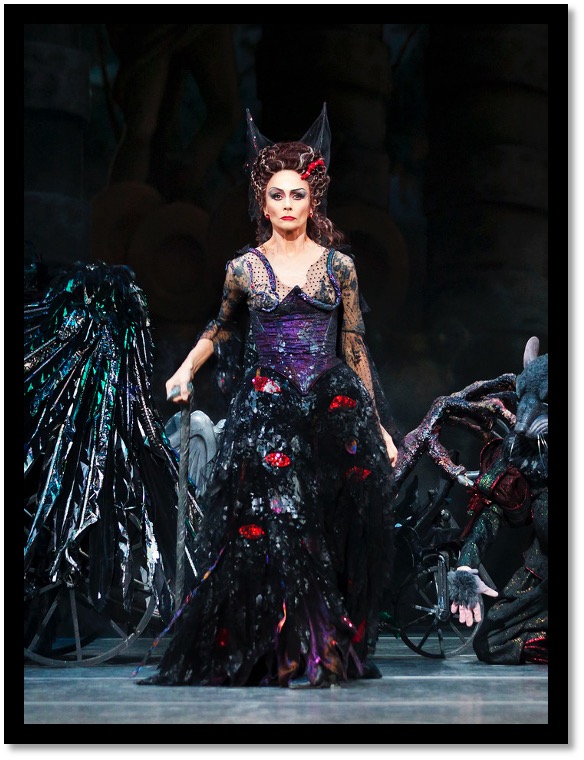
Genesia Rosato as Carabosse with artists of The Royal Ballet, 2011 © ROH/Johan Persson

Fortunately for us, both of these compelling performances are available commercially, so we were able to analyse the dancers’ movements closely in relation to Banes’ words and our knowledge of non-verbal communication and gender representation.  As is characteristic of women, both Rosato and McNally walk with a narrower gait and keep their gestures rather closer to the body than do their male predecessors, such as Anthony Dowell and Frederick Ashton, and they use their canes to poke rather than beat the offending Catalabutte, who forgot to invite Carabosse to the Christening. Unlike the figure of the “ugly old crone” they walk upright, their skin is smooth, and their lips red; and there are no “gigantic hands”.  Nonetheless we still see some “violation of gender boundaries” in their behaviour: they command the space around them; their gestures are strong, broad and intrusive, their eye contact ferocious.  In fact their behaviour in general exhibits the kind of dominance more typical of men (Argyle 284; Burgoon et al. 381; Carli et al. 1031; Mast and Sczesny 414). 

It seems clear that these renditions of Carabosse as glamorous and beautiful do not transgress the gender binary in the way that Banes has in mind, even though some masculine traits are visible.  However, for us, the critical point about gender here is that in this particular world of Sleeping Beauty, a woman can be powerful and evil … and yes, beautiful.  

Over at English National Ballet, who last performed The Sleeping Beauty in 2018, Kenneth MacMillan’s 1986 production provides a different, but equally fascinating, lens through which to view Carabosse, thanks to the costuming of Nicholas Georgiadis.  Luke Jennings’ colourful description of Carabosse with her “sallow features and madly crimped [red] hair” is an unmistakable reference to Queen Elizabeth I, so renowned for her combination of masculine and feminine traits. 

In 2018 casts included both male and female performers.  Clearly, from critic Vera Liber’s point of view, there was a noticeable distinction between the interpretations of the first and second casts, one male, one female:

On first night, James Streeter revels in playing up the panto villain, giving it plenty of gothic largesse, whereas second cast Stina Quagebeur is a deliciously spiteful Nicole Kidman lookalike, a vengeful woman wronged.

James Streeter as Carabosse in English National Ballet’s The Sleeping Beauty, 2018 © Laurent Liotardo

Even though not explicit, the comparison with a female actor and choice of words “deliciously spiteful” and “vengeful woman” do strongly imply that, to Liber, Stina Quagebeur appears markedly more feminine than James Streeter.  And her depiction of Quagebeur’s Carabosse is very much in line with the descriptions of Genesia Rosato and Kristen McNally in the role, combining evil, beauty and power.  

What Carabosse and Elizabeth I have in common is that they both have the power to wreck the dynasty: Elizabeth through her choice not to bear children, and Carabosse by scheming to prevent Aurora from producing an heir.  And this parallel with Elizabeth informs our understanding of Carabosse as a character that does not fit comfortably within a single gender category.  

The Scottish preacher and author John Knox (1514-1572) declared that “God hath revealed to some in this our age that it is more than a monster in nature that a woman should reign and bear empire above man” (2).  So whether performed by a male or female dancer, this Elizabeth-Carabosse can been seen as “a monster … seemingly violating gender boundaries”.  And on a personal note, we would have to say that Stina Quagebeur is without a doubt the most terrifying Carabosse we have ever encountered.

Cinderella now

Last season Scottish Ballet explored gender fluidity, again in the context of a familiar, well-loved fairy-tale ballet, but in an unusual and innovative way.  

Bruno Micchiardi as Cinders in Scottish Ballet’s Cinders. Credit Andy Ross

Renamed Cinders! the narrative of Cinderella on some nights featured the usual female Cinders, who falls in love with the Prince, while on others, romance blossomed between a male Cinders and the Princess.  

The cast was deliberately not released in advance, so each audience remained uncertain of Cinders’ gender until their appearance on the stage.  Consequently, when purchasing tickets, audiences had at least to be open to the challenge of a new way of viewing the work.

Scottish Ballet describes Cinders! as “an evolution and adaptation of Christopher Hampson’s [2015] Cinderella”.  Given ballet’s rigid gender codes in terms of roles, behaviours, technique and vocabulary, you may, like us, be wondering how such a gender swap could ever be achieved. Critic Kathy Elgin asks with apparent consternation, “Would a man have to cope with girly bourrée-ing?”.  Evidently, however, the adaptations were far more subtle than these musings suggest, as Elgin asserts that “the choreography is much the same irrespective of who’s playing what, except for some obvious variation in solos to accommodate male / female specialities. That is, in pas de deux, each is dancing the steps they would have danced in any pairing”.  Yet despite the subtlety of the changes, it is clear that for both dancers and viewers the approach to characterisation made a substantial difference, resulting in fresh insights into of the nature of the protagonists.
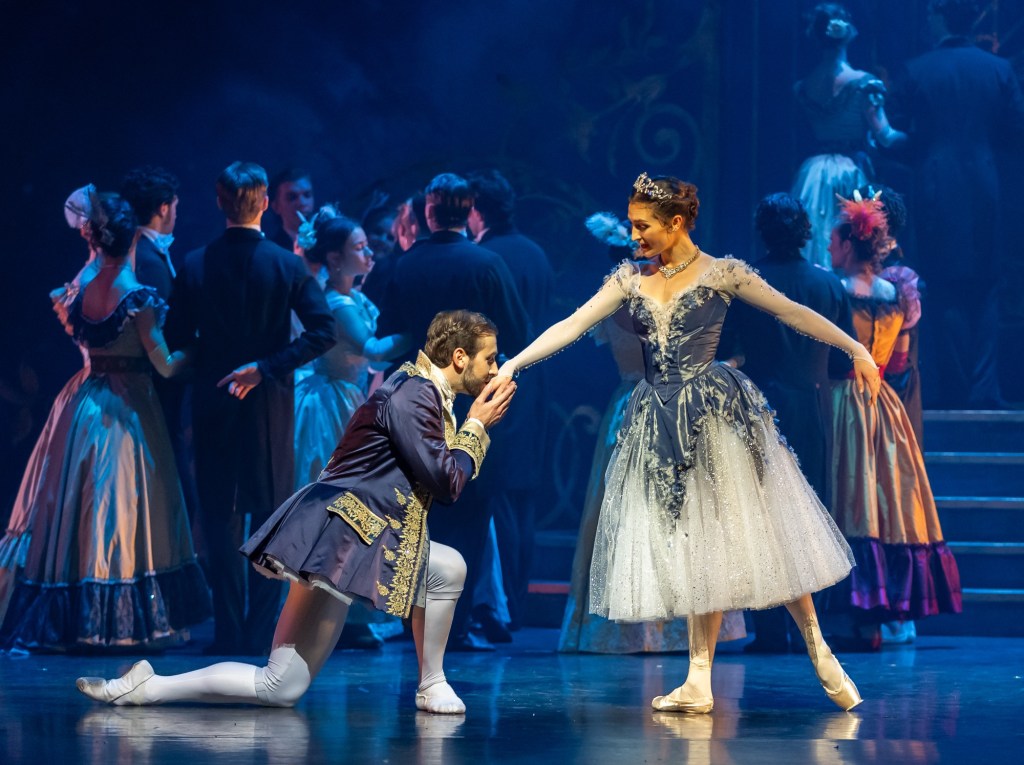
Bruno Micchiardi as Cinders and Jessica Fyfe as Princess Louise in Scottish Ballet’s Cinders. Credit Andy Ross

Principal Dancer Bruno Michiardi reflected on the rehearsal process:

What I’ve found most interesting about the fluidity of the roles of the Cinders leads is just how different and new it’s made the ballet feel. We all know and love the classic story of Cinderella, but this new version means we’re suddenly working in this amazing upside-down realm, where the male part (previously a more traditionally stoic character) is a complex mixture of vulnerability and resilience, and the female role (usually quite timid and downtrodden for most of the original ballet) is empowered and full of charisma… I’m excited at the prospect of exploring this further and sharing that with the audience! (“Introducing Cinders”)

Reviewer Tom King sees this exchange of gender as a “re-written … dialogue of the dance between the Princess and Cinders … so the gender prominence of this work now changes completely too as it is the male lead who now dominates and performs so much of this ballet”.  In contrast Elgin notes that “the commanding style of a princess in her own right reminds us how rarely women get the chance to make that kind of confident statement”.  
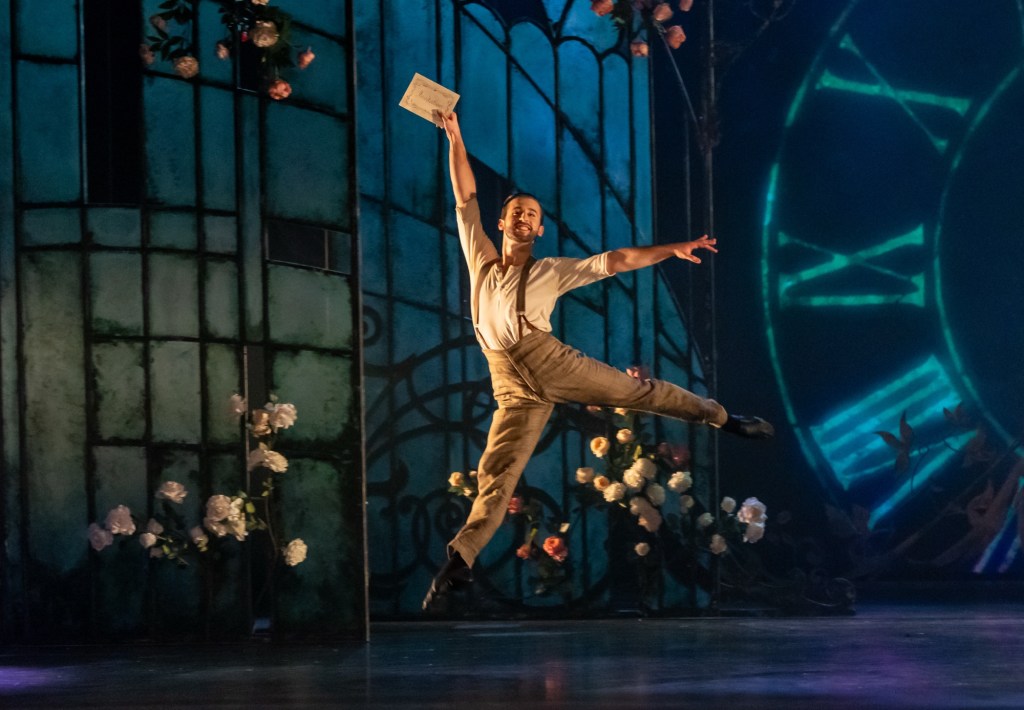
Bruno Micchiardi as Cinders in Scottish Ballet’s Cinders. Credit Andy Ross

These different perspectives highlight what is most important to us about the Cinders! gender swap—that is, the opportunity for both dancers and audience to reappraise how they perceive gender roles within the context of a traditional ballet narrative.

Broken Wings and the Male Fridas

In 2016 choreographer Annabelle Lopez Ochoa created a very different world to that of The Sleeping Beauty and Cinderella for English National Ballet.   Based on the life of artist Frida Kahlo, this ballet presents gender fluidity in a unique way—unique, but completely in line with Kahlo’s life and art.

Like Queen Elizabeth I, Kahlo was known for her own peculiar union of masculinity and femininity.  In the ballet this is perhaps most notable through the presence of eleven “Male Fridas” who bring Kahlo’s paintings into three-dimensional life. 

Performed by male members of the company, these Fridas, described by designer Dieuweke van Reij as an “extension of Frida herself”, sport billowing full-length ruffled skirts, in bright, contrasting colours, inspired by traditional Tehuana dress. Their headdresses include flowers, butterflies, antlers, and the ceremonial resplandor, referencing specific self-portraits by Kahlo, including Self-Portrait with a Necklace of Thorns (1940), Self-Portrait as a Tehuana (1943), and Self-Portrait with a Monkey (1948).  Their torsos are painted to match their skirts.  
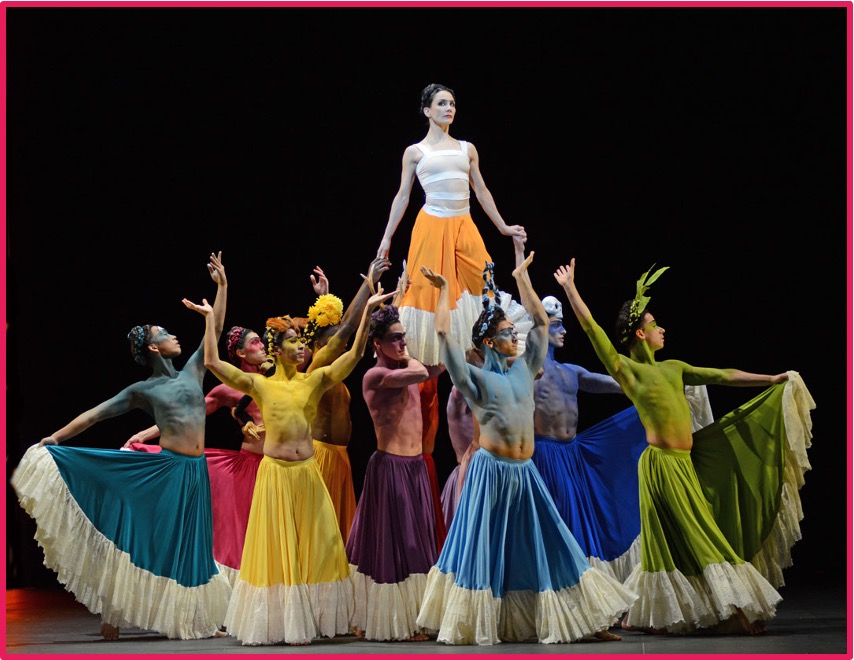
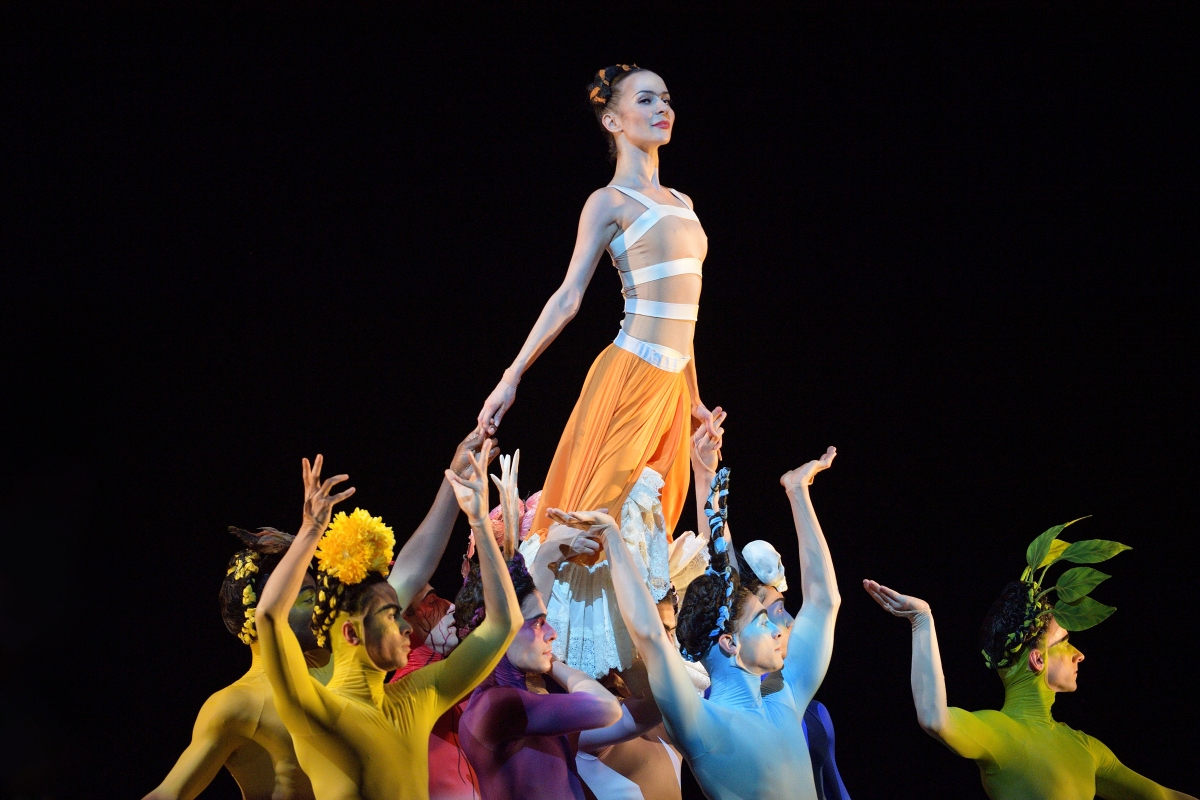
Tamara Rojo & Artists of English National Ballet, 2016 © Dave Morgan

The costumes are inspired by Kahlo’s iconic dress style, which is undeniably feminine, with the soft folds of the material and decorative headdresses.  But Kahlo was also known for a more androgynous style of dressing: even as a teenager she was known to wear a man’s suit with waistcoat and tie, and in her 1940 Self-Portrait with Cropped Hair she has cut her hair short and wears a man’s dark suit.  Her monobrow, moustache and strong features were also celebrated, even exaggerated, in her paintings.  And neither in terms of her behaviour did Kahlo conform to stereotypical femininity, with her forthrightness, her revolutionary politics, and her sexual appetite for both female and male lovers.  But despite the evident femininity of the Broken Wings costumes, they also connote power.  This is because the Tehuana dress is the traditional dress of the Zapotec women from the Isthmus of Tehuantepec, who are unconventional in being considered, to some extent at least, a matriarchal society, and from which, significantly, Kahlo’s mother hailed.

As the Male Fridas swirl and sway with bold lunges and leaps, and expansive leg gestures, they make full use of their skirts, creating a riot of colour and energy.  And Frida joins them, dressed in an orange Tehuana skirt, dancing in the same bold but non-gendered style, sometimes in unison.  Her dominance is writ large as the Male Fridas hold her aloft, and she boldly leads and directs their movements, displaying Kahlo’s own peculiar fusion of masculinity and femininity.
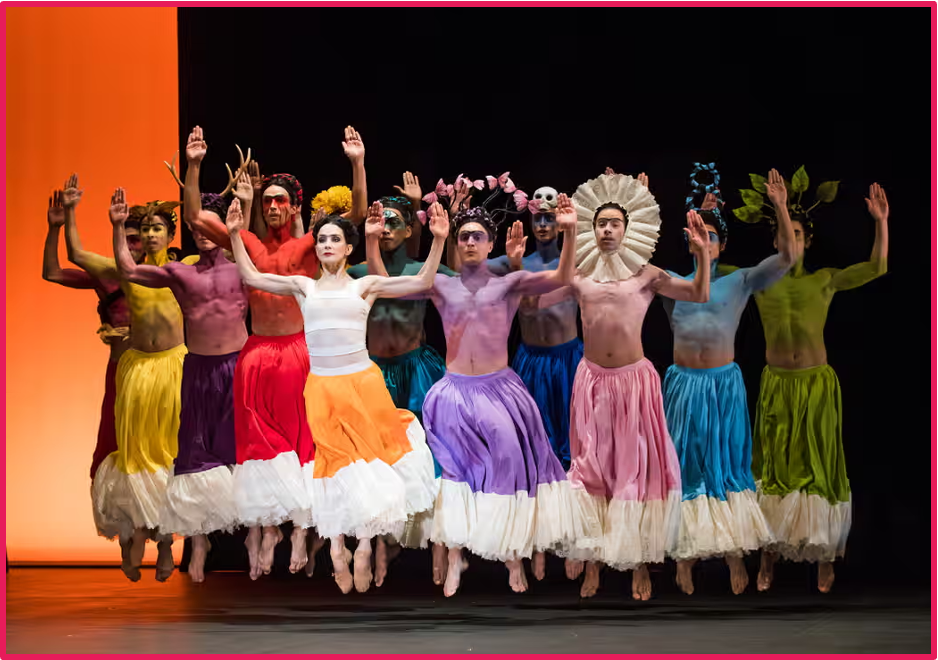
Tamara Rojo & Artists of English National Ballet, 2016
© Tristram Kenton

Further, the non-binary nature of the “Male Fridas” is accentuated by their strong resemblance to the “muxes” of Zapotec culture.  The muxes are considered neither female nor male, but instead are a recognised third gender.  While they are assigned male at birth, as adults they exhibit more stereotypically female attributes in their behaviours, and economic and societal roles.  This can be seen, for example, in the way they dress, their skill at embroidering and weaving, and their caregiving to elderly relatives (Balderas; Plata).

And now we return to The Sleeping Beauty and Cinderella to discover how gender fluidity manifested itself in British ballet in the past, before exploring a less conventional work …

Gender Fluidity Then

The Sleeping Beauty then

As we said in the Now section of this post, in 1890 Marius Petipa created the character of Carabosse for Enrico Cecchetti.  However, it’s interesting that when Sergei Diaghilev mounted his production of The Sleeping Beauty in London in 1921, Carabosse was performed by Carlotta Brianza, the originator of the role of Princess Aurora.  Over the last century there have been phases of male and female Carabosses, and following the lead of Petipa and Diaghilev, the calibre of dancers has sometimes been extraordinary, including Frederick Ashton, Robert Helpmann, Monica Mason, Lynn Seymour, Anthony Dowell, Edward Watson and Zenaida Yanowsky.  
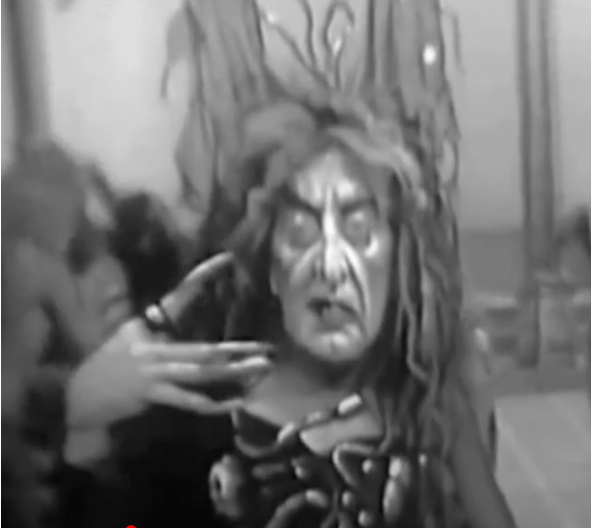
  Frederick Ashton, 1955 © Showcase Productions

While it’s of interest that Brianza performed Carabosse for Diaghilev, it’s even more fascinating that it was not the role of Carabosse that the Impresario originally had in mind for Brianza; rather, it was her original role of Princess Aurora (Christoudia 201).  By 1921 Brianza was in her mid-50s.  According to the drama The Ballerinas, it was Brianza herself who suggested that she perform the part of the Evil Fairy.  It would be understandable if Brianza had considered herself unsuitable for Aurora at this point in her career (Tamara Rojo famously stated that she believed ballerinas should not be performing Aurora beyond the age of forty, and the first night went to the 26-year-old Olga Spessivtseva).  Ironically though, Carla Fracci, who performs sections of Aurora’s choreography as both Brianza and Spessivtseva in the programme, was herself just shy of fifty when it was recorded, and we would defy anyone to say she looks anything but youthful in both her appearance and her dancing.  At the 1890 premiere designer Alexander Benois described Brianza as “very pretty”, while reviews highlighted her grace and elegance (qtd. in Wiley 189).  Perhaps the most celebrated photograph of Brianza as Aurora shows her balancing sur pointe in cou de pied, her hands placed demurely by her neck, so that her forearms partially hide her décolleté, and attired in a tutu that gives her the perfect wasp-like waist.  The picture of femininity.  There seems no logical reason then that in her 50s Brianza would have lost all of her beauty, grace and elegance.  

It is difficult to know what Brianza was like as Carabosse, but we were able to find a small number of photos of her in the role, which make it crystal clear that Carabosse in this production was bereft of beauty, grace and elegance.  One photo shows her surrounded by her entourage of rats that seem to tower over her, making her appear a rather petite figure, her stature diminished by her hunched back and lankness of her hair (“Carlotta Brianza as Carabosse”). Feminine, but hardly the ideal of femininity.  In another she is seems to be mistress of all she surveys.  The stoop and the lank hair are still in evidence, but her silhouetted profile brings a baleful mystery to her lone, and in this image androgynous, figure (MacDonald 280).

Luckily, however, we have a very good idea of how Carabosse was portrayed in the 1950s by the Royal Ballet in the celebrated 1946 production by Nicholas Sergeyev and Ninette de Valois, thanks to two recordings of the work, made in 1955 and 1959.  On opening night Robert Helpmann accomplished the astonishing feat of performing both Carabosse and the Prince. However, it is Ashton who appears in the 1955 recording, while the 1959 film features Yvonne Cartier, who by this time was focussing on mime due to an inoperable ankle injury. 

Yvonne Cartier, 1959
© Royal Academy of Dance / ArenaPAL

Even though these two performances feature a male and a female dancer, they both exhibit a remarkable likeness to the image of Carabosse that we outlined in the Now section of this post.  With their blemished skin and stooping gait both Ashton and Cartier display the attributes of the archetypal “ugly old crone” or “grotesque old hag”.  More particularly, the words of Sally Banes could have been written specifically for these renditions of the Evil Fairy: Ashton’s movement are indisputably “angular, spasmodic, and grotesque”, while Cartier spreads her arms wide like enormous wings, and as a result “takes up too much space”.  And they have “the wrong proportions”.  Ashton has an exaggerated prosthetic nose, and they both have “gigantic hands” due to their long fake nails, threatening gestures, and in the case of Cartier, the spreading of her fingers like a raptor’s talons.

Yvonne Cartier, 1959
© Royal Academy of Dance / ArenaPAL

It seems that not even Brianza, the hyperfeminine Aurora of 1890, could escape the curse of being transformed from benign and pulchritudinous to malevolent and unsightly.  But as we have seen, the figure of Carabosse has evolved quite drastically over the last decades of the 20th century and into the current century, challenging the binaries of female vs. male, ugliness vs. beauty, good vs. evil.  How will that evolution continue, we wonder?

Cinderella then

The Royal Ballet’s decision to cast female Stepsisters as well as the traditional male Stepsisters in their 2023 production of Ashton’s Cinderella caused quite a stir (“Ashton’s Cinderella”; Pritchard), and we were excited about this “new” development.  However, we soon discovered that it had been Ashton’s original intention to create his choreography on female dancers, more specifically on Margaret Dale (the pioneer ballet filmmaker) and Moyra Fraser.  It was in fact Fraser’s unavailability that caused the change in plan, resulting in the celebrated Ashton-Helpmann Stepsister twosome.
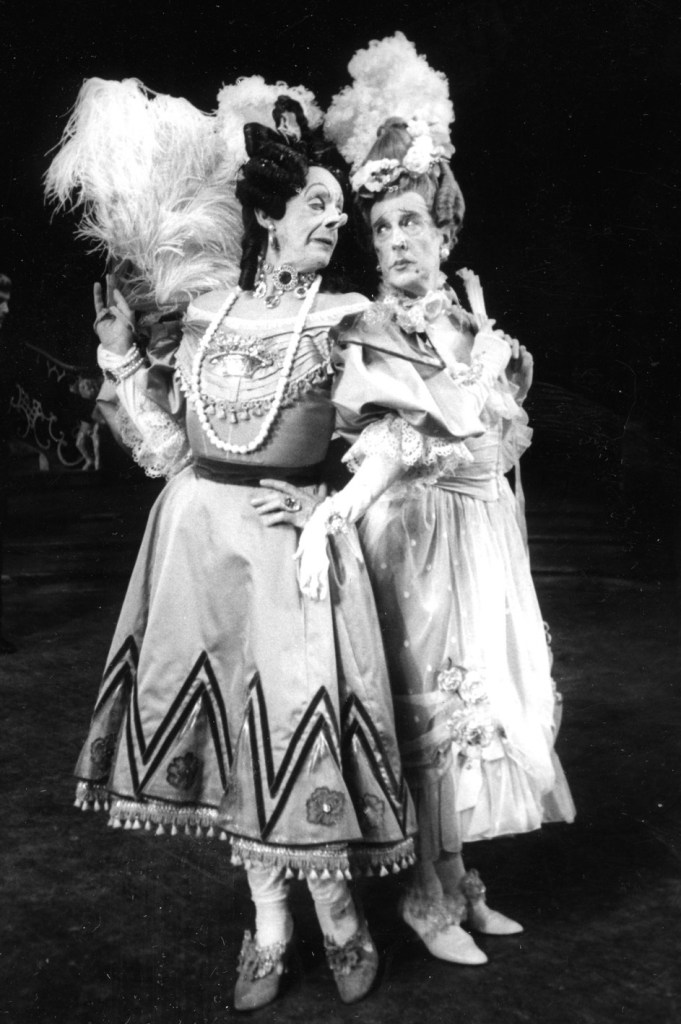
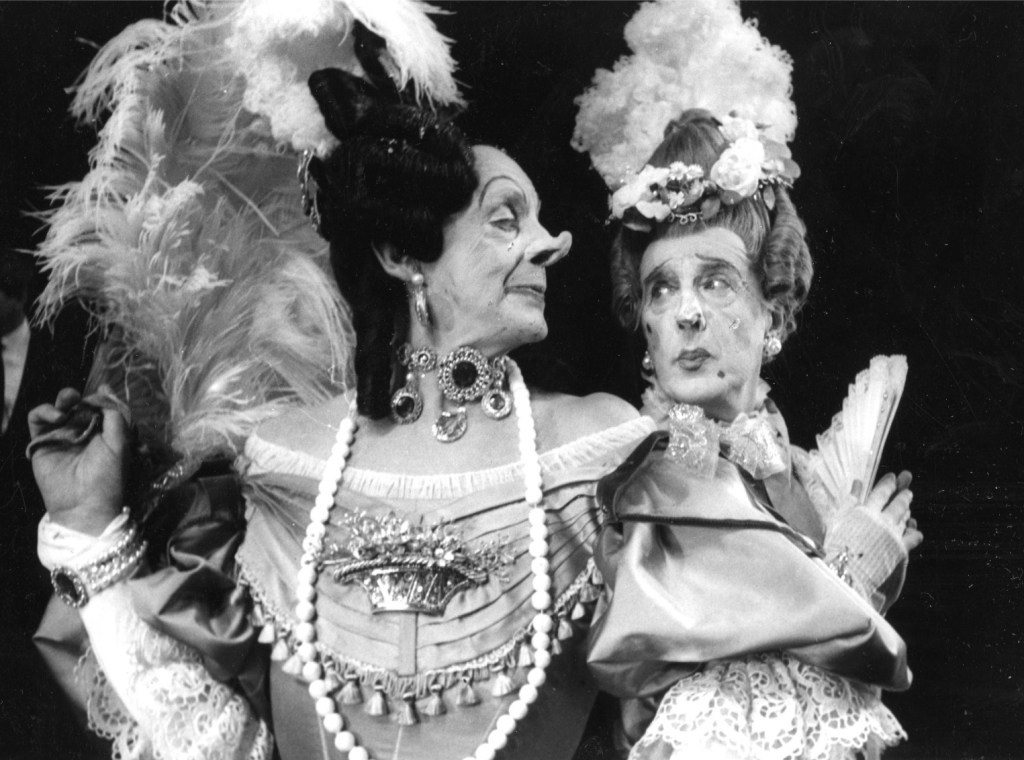
Although critic Judith Mackrell has referred to the Stepsisters as “monsters”, in stark contrast to Carabosse, they are “monsters of delusional vanity” (“Girls Aloud”) rather than monsters of evil.  Their behaviour and movements are noticeably “feminine”: they preen in front of the mirror, fuss about their clothes, bicker, walk in a flouncing manner and perform “female” variations at the Ball.  These variations overtly reference typical vocabulary from classical pas for ballerinas: small sissonnes piqué arabesque into retiré, a series of pas de chatdéveloppé à la secondeemboîtés en tournant; they even include lifts and fish dives supported by their male partners.  In fact the solo for the timid Stepsister, performed by Ashton, draws on the Sugar Plum Fairy variation, and perhaps also on Walt Disney’s hippo ballerina Hyacinth (Fantasia, 1940), inspired by the Baby Ballerina Tatiana Riabouchinska.

Further, there are additional layers of femininity to these characters.  Firstly, with their exaggerated costumes and comedic manners, they recognisably reference the tradition of the Pantomime Dame, so familiar to audiences in this country.  Secondly, Ashton had performed the Prince in Andrée Howard’s 1935 Cinderella, and according to David Vaughan (234) was influenced by some aspects of the characterisation, costumes and wig of the sister which Howard choreographed, designed and performed herself.  And thirdly, both Ashton and Helpmann were known for their mimicry, notably of women, and both were said to have been influenced by specific “female eccentrics” (Kavanagh 365): Helpmann by Jane Clark (renowned for her feistiness) and comedienne Beatrice Lillie (Vaughan 234), and Ashton himself by Edith Sitwell (Kavanagh 365). 

According to dance critic and historian David Vaughan, a female cast was unsuccessful, because “the kind of observation of the female character that lay beneath these performances could be achieved only by men” (234).  However, we would argue that, as in the case of the Pantomime Dame, performers and audience share an understanding that the performers are male, and much of the humour resides in this shared understanding, despite the overt performative femininity: “The audience and the character comically share the knowledge that the Dame is not really a woman” (“‘It’s behind you!’”).  And there must have been a delicious additional irony attached to the first cast at the premiere in 1948, given the status of both Ashton and Helpmann as key figures in the development of British ballet. 

While the Sisters each perform a ballerina solo, their dancing is very poor in classical terms, with turned-in feet, shaky balance, poor coordination and spatial confusion.  This of course adds to the humour of the work, a humour that perhaps loses some of its edge when these Pantomime Dames are performed by women. However, it also suggests that female characters who are not fully female, as it were, are in some way lacking, incapable as they are of performing female danse d’école, even when they are female dancers pretending to be male dancers pretending to be female.  

Moyra Fraser and Margaret Hill, 1958
© Royal Academy of Dance / ArenaPAL

Although Ashton and Helpmann were the most fêted “twin monsters” (Mackrell, “Girls Aloud”), the 1957 recording of the work featured Kenneth MacMillan instead of Helpmann.  Writing about MacMillan’s performance, Peter Wright spotlights the humour that arises from the play on gender in this context:

Kenneth’s performance is remarkably considered, recognisably feminine but still decidedly masculine in the best tradition of pantomime dame … He was very funny. (149)

Tiresias

Happily, undertaking research for this post gave us the opportunity to discover  more about a lesser known ballet by Frederick Ashton which, according to the Royal Opera House performance database, was performed only fourteen times over a period of four years after the premiere in 1951.  Based on the titular figure from Greek mythology, Tiresias was a tale of sexual identity and pleasure, following the life of Tiresias, who was transformed from man into woman and then back to manhood as the result of his reaction to witnessing a pair of copulating snakes.  Having experienced life as both man and woman, he is asked to decide the quarrel between Zeus and Hera as to whether males or females gain more enjoyment from the sexual act.  

As we might expect from a ballet of this era, the eponymous Tiresias was not gender fluid in the way that Frida and her corps de ballet are in Broken Wings.  Instead, Tiresias was performed by two dancers: Michael Somes as the male Tiresias, and Margot Fonteyn as his female counterpart.  Nonetheless, David Raher, writing in The Dancing Times (15) after the premiere, made some comments about Fonteyn’s performance that are pertinent to our discussion: 

Instead of contrasting femininity, she conveyed a masculinity in the attack and brio of her dancing.  Incontestable evidence of her gender, however, lay in the soft yet firm arm placements and in the unsurpassed magic of controlled développés …

While we ourselves may not make the same gender associations as Raher, the critic’s commentary clearly demonstrates that he perceived aspects of male and female in Fonteyn’s performance.  

David Vaughan, who also wrote Ashton’s biography, refers to the “wonderfully ambiguous eroticism” of the pas de deux (254), perhaps implying that the representation of gender is not as straightforward as is generally the case in ballet.  Although there seems to be no publicly available video footage of the ballet, we have found some sources that suggest the sensual nature of the choreography:  Julie Kavanagh’s description of the pas de deux as “fizz[ing] up into a kind of orgasm” (391), and John Wood’s photograph of Tiresias and her Lover (danced by John Field) showing them in a stylised pose of post-coital bliss, splayed across one another on the floor in a mirror image as they gaze into one other’s eyes.  

Judging from the reviews, the number of performances, and the literature on Tiresias, the ballet was neither a critical nor a commercial success.  Perhaps the sexually charged choreography and risqué subject matter (glossed over in the programme notes) were too ahead of their time.  After Fonteyn’s fiancé forbad her from performing the role again, her replacement Violetta Elvin took on the role, and when her she remarried, the same thing happened: her new husband banned her from dancing in further performances (Macaulay).  

Clearly the erotic nature of the choreography was challenging in 1951.  And this seems to have been the sticking point   However, the iconoclastic choice of gender fluidity and sexual identity as subject matter, in addition to sexual pleasure, should in our opinion not be forgotten, as it is a testament to the daring nature of a choreographer who is perhaps too often associated with conventionality. 

Concluding Thoughts

From this exploration of a small number of British ballets based on fairy tales and myth, it is clear that ballet is not entirely new to the concept of gender fluidity, and the more we dig into the characters, the more complex they become.  Nonetheless, while attitudes towards gender, and the stereotypes associated with two strictly defined genders, are becoming more open in everyday life, ballet is only very slowly reflecting this cultural shift.  Happily, this autumn two British companies have announced upcoming productions that will clearly feature gender-fluid characters: Northern Ballet’s Gentleman Jack, choreographed by Annabelle Lopez Ochoa, and Scottish Ballet’s Mary Queen of Scots in choreography by Sophie Laplane.

As long ago as 2012 Gretchen Alterowitz urged her readers to “contemplate the possibility of multiple or varied genders having a place in the ballet world” (21).  We would suggest that the example of Annabelle Lopez Ochoa’s Broken Wings based on the icon Frida Kahlo shows us that ballet does in fact have the capacity to create worlds where a greater diversity of gender representation can be explored—a diversity more suited to our current world and more relevant to the global art form that ballet has become.   

Next time on British Ballet Now and Then 
Autumn 2024 saw Noel Streatfeild’s 1936 novel Ballet Shoes adapted for the National Theatre.  We investigate this new stage production, television adaptations, and the original book itself.   

© British Ballet Now & Then

References

Alterowitz, Gretchen. “Contemporary Ballet: inhabiting the past while engaging the future”. Conversations Across the Field of Dance Studies, no. 35, 2015, pp. 20-23.

Argyle, Michael. Bodily Communication. 2nd ed., Routledge, 1988.

“Ashton’s Cinderella – new Royal Ballet production”. BalletcoForum,https://www.balletcoforum.com/topic/26439-ashtons-cinderella-new-royal-ballet-production/. Accessed 1 Sept. 2024.

Balderas, Jessica Rodriguez. “Muxes, the third gender that challenges heteronormativity”. Institute of Development Studies, 3 Feb. 2020, https://alumni.ids.ac.uk/news/blogs-perspectives-provocations-initiatives/513/513-Muxes-the-third-gender-that-challenges-heteronormativity

“The Ballerinas”.  YouTube, uploaded by markie polo, 24 May 2020, https://www.youtube.com/watch?v=Sx2D40Wavwg&t=10586s.

Banes, Sally. Dancing Women: female bodies on the stage. Routledge, 1998.

Burgoon et al. Nonverbal communication. 2nd ed., Routledge, 2022.

Carli, Linda L. et al. “Nonverbal Behavior, Gender, and Influence”. Journal of Personality and Social Psychology, vol. 68, no. 6, 1995, pp. 1030–1041, https://doi.org/10.1037/0022-3514.68.6.1030.

“Carlotta Brianza as Carabosse with her entourage of rats in the opening scene of The Sleeping Princess 1921”. Victoria and Albert Museumhttps://www.vam.ac.uk/blog/diaghilev-and-ballets-russes/more-diaghilev-and-film-industry

“Cinders! 2023”. Scottish Ballethttps://scottishballet.co.uk/discover/our-repertoire/cinders/. Accessed 16 May 2024.

Christoudia, Melanie Trifona. “Carlotta Brianza”. International Dictionary of Ballet, edited by Martha Bremser, pp. 200-01

Dowler, Gerald. “The Royal Ballet – The Sleeping Beauty”. Classical Source, 3 Jan. 2017, www.classicalsource.com/concert/the-royal-ballet-the-sleeping-beauty-3/

Elgin, Kathy. “Scottish Ballet’s Cinders! confirms Hampson is a savvy theatre-maker”. Bachtrack, 9 Jan. 2024   https://bachtrack.com/review-cinders-scottish-ballet-hampson-glasgow-edinburgh-december-january-2023-24

Fracci, Carla. “The Ballerinas”. YouTube, uploaded by Markie polo, 24 May 2020,  https://www.youtube.com/watch?v=Sx2D40Wavwg

“Introducing Cinders with a Charming Twist to the Tale”. Scottish Ballet, 2013, scottishballet.co.uk/discover/news-and-articles/introducing-cinders/

“‘It’s behind you! A look into the history of pantomime’”. University of York, 2010, www.york.ac.uk/news-and-events/features/pantomime/.

Jennings, Luke. “The Sleeping Beauty/English National Ballet – review”. The Guardian, 9 Dec. 2012, www.theguardian.com/stage/2012/dec/09/sleeping-beauty-english-national-ballet

Kavanagh, Julie. Secret Muses: the life of Frederick Ashton. Faber & Faber, 1996.

Knox, John. 1558. The First Blast of the Trumpet against the Monstrous Regiment of WomenBlackmask Online, 2022, http://public-library.uk/ebooks/35/36.pdf

Liber, Vera. “The Sleeping Beauty”. British Theatre Guide, 2009, www.britishtheatreguide.info/reviews/RBsleepingbeauty-rev

Macdonald, Nesta. Diaghilev Observed. Dance Horizons, 1975

Macaulay, Alastair. “Ashton and Balanchine: parallel lines”. NYU The Center for Ballet and the Arts, 2018, https://balletcenter.nyu.edu/lkl2018-script/

Mackrell, Judith. “Chase Johnsey’s unlikely success is a bold and beautiful victory for ballet”. The Guardian, 6 Feb. 2017, www.theguardian.com/stage/2017/feb/06/chase-johnsey-success-national-dance-awards

—. “Girls Aloud”. The Guardian, 1 Dec. 2003, www.theguardian.com/stage/2003/dec/01/dance

Mast, Marianne Schmid, and Sabine Sczesny. “Gender, Power, and Nonverbal Behavior”. Handbook of Gender Research in Psychology, vol. 1, Jan. 2010, pp. 411-25, SpringerLinkhttps://doi.org/10.1007/978-1-4419-1465-1_20

Plata, Gabriel. “Celebrating diversity: Meet Mexico’s Third Gender”. Inter-American Development Bank, 19 May 2019, https://www.iadb.org/en/story/celebrating-diversity-meet-mexicos-third-gender

Parry, Jann. “Royal Ballet – The Sleeping Beauty – London”. DanceTabs, 14 Nov. 2019, https://dancetabs.com/2019/11/royal-ballet-the-sleeping-beauty-london-2/

Pritchard, Jim. “The Royal Ballet exhibits Ashton’s Cinderella choreography in their Disneyfied new staging”. Seen and Heard International, 14 Apr. 2023, https://seenandheard-international.com/2023/04/the-royal-ballet-exhibits-ashtons-cinderella-choreography-in-their-disneyfied-new-staging/

Reij, Dieuweke van. “Broken Wings: interview with designer Dieuweke van Reij”. English National Ballet, 20 Jan. 2019,  www.ballet.org.uk/blog-detail/broken-wings-interview-designer-dieuweke-van-reij/

Rojo, Tamara. “Tamara Rojo South bank show 3”. YouTube, uploaded by Kabaiivansko2, 23 Apr. 2014, https://www.youtube.com/watch?v=hfOoX16RLFM

Titherington, Alan. “Tchaikovsky: The Sleeping Beauty (Royal Ballet – 2006)”. Myreviewer.com, 29 Sept. 2008, www.myreviewer.com/DVD/108291/Tchaikovsky-The-Sleeping-Beauty-Royal-Ballet-2006/108400/Review-by-Alan-Titherington

Vaughan, David. Frederick Ashton and his Ballets. Rev. ed., Dance Books, 1999.

Wright, Peter. Wrights and Wrongs: my life in dance. Oberon, 2016.

Warner, Marina. “Witchiness”. London Review of Books, vol. 31, no. 16, 2009, https://www.lrb.co.uk/the-paper/v31/n16/marina-warner/witchiness

Watson, Paul. “On Fairy Tales and Witches”. The Lazarus Corporation, 6 Jan. 2015, https://www.lazaruscorporation.co.uk/blogs/artists-notebook/posts/on-fairy-tales-and-witches

Windling, Terri. “Into the Wood, 9: Wild Men & Women”. Myth and Moor, 31 May 2013, https://windling.typepad.com/blog/2013/05/into-the-wood-8-wild-men-and-women.html

SPOTLIGHT ON ANNABELLE LOPEZ OCHOA

THE MOTH AND THE BUTTERFLY

The ballet A Streetcar Named Desire (2012) begins and ends on a dimly lit stage with Blanche Dubois reaching up towards a lightbulb to the sound of an eerie, unnerving tremolo on the strings.  Moth like, her fragile body is torn between desire and caution, her fluttering hands betraying her extreme vulnerability, her sharp withdrawals from the light accentuating her fear.

The ballet Broken Wings (2016) begins with Skeletons sitting on and leaning against a large black box, which represents different spaces in Frida Kahlo’s life through the course of the work.  Frida  arises from the dark cube, aided by the Skeletons. The ballet ends with her encased in the same construct, but now opened to reveal a vibrant orange, red and yellow butterfly inside, to which Frida forms the centre.  After the black box is closed by the Skeletons, a brightly coloured bird emerges and turns continuously as the curtains close, fluttering into eternity, as it were.

Both of these ballets were choreographed by Annabelle Lopez Ochoa, whom we introduced to our readers in one of our early posts, Female Choreographers Now and Then.  Although based in Amsterdam, Lopez Ochoa works for ballet companies across the globe—from Seattle to Cuba, Estonia to Australia.  The two works that form the basis of this post, however, were both created for British ballet companies.  Former Artistic Director of Scottish Ballet Ashley Page commissioned Streetcar, while Broken Wings was choreographed as part of English National Ballet’s 2016 She Said programme, commissioned by Tamara Rojo, and comprising three new works by female choreographers.  In both cases Lopez Ochoa worked with the theatre and film director Nancy Meckler, which highlights for us the centrality of characterisation, narrative and drama in these ballets. 

On the face of it, Tennessee Williams’ fictional Blanche and the artist Frida Kahlo have little in common.  But we are fascinated by the imagery used by Lopez Ochoa that tempts us to make comparisons that we would otherwise undoubtedly have failed to notice.

Marge Hendrick with Ryoichi Hirano in A Streetcar Named Desire
© Andy Ross
Katja Khaniukova as Frida Kahlo in Annabelle Lopez Ochoa’s Broken Wings © Laurent Liotardo  

Loss 

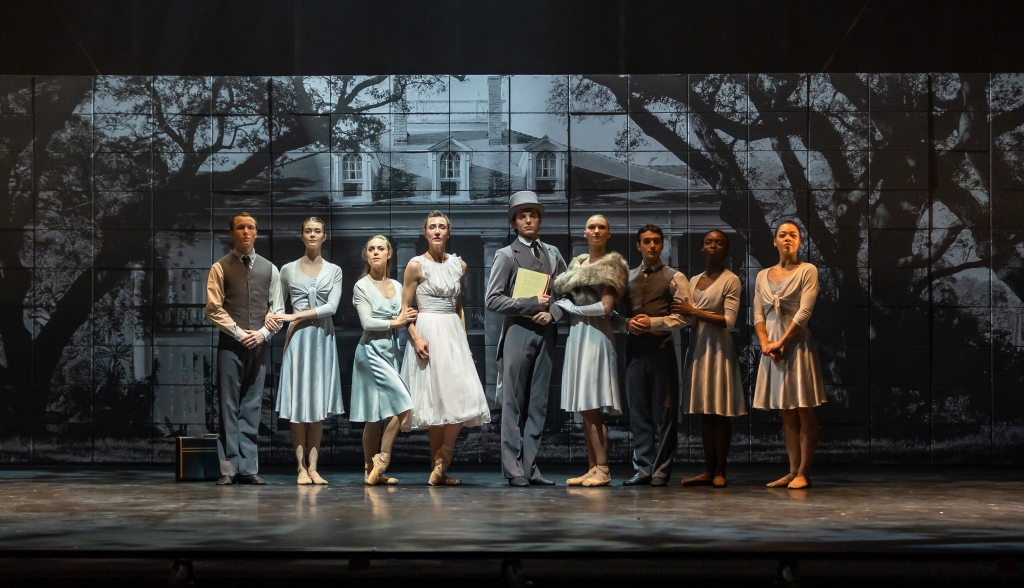
The three protagonists of Williams’ play are Blanche, her sister Stella, and Stanley, Stella’s husband.  Set in the New Orleans of 1947, the year in which Williams wrote his play, the action takes place in the claustrophobic atmosphere of Stella’s apartment where Blanche has come to escape her old life.  Blanche is trapped by memories of the past, combined with a fantasy world of her own imagination.  The story of Blanche’s past and the losses that she has incurred are revealed gradually, bit by bit, as the play progresses.  In contrast, Lopez Ochoa’s ballet depicts Blanche’s life chronologically, beginning with her wedding as a young girl, which visibly portrays her as the “tender and trusting” character that Stella describes to Stanley (Williams 81). 

Scottish Ballet company in A Streetcar Named Desire. Photo: Andy Ross

But the joyous wedding is followed by a brutal stream of losses occurring one after the other in unremitting succession. First comes the suicide of Blanche’s young homosexual husband, Allan, for which she feels an inescapable, hounding guilt, demonstrated by his haunting blood-stained reappearances through the course of the work.  After Stella leaves for New Orleans, their relatives disappear from the tableau of the family photograph, represented by the cast collapsing one after the other with a sickly inevitability.  The structure of Blanche’s life as she knows it finally gives way with the loss of Belle Reve, the ancestral home, which without warning, suddenly disintegrates block by block, crashing to a pile on the floor.  For Marge Hendrick, one of Scottish Ballet’s Principals who performs Blanche, this approach to communicating the narrative explains the reasons for Blanche’s behaviour (qtd. in O’Brien 15).  Hendrick further asserts, “We can see her in her best light at the start, and really see the decline, which is progressive” (1:14-1:23).  And for us, this means that we are seeing the narrative through the eyes of Blanche: Lopez Ochoa has given her a “voice”.  

Scottish Ballet company in A Streetcar Named Desire. Photo: Andy Ross

Kahlo’s life is also depicted as a chronology in Broken Wings.  After her “birth” from the black box, a structure that is central to the narrative and, as noted, symbolises various locations and aspects of Kahlo’s life, she meets her first love, who is with her when she experiences the accident that will change her life forever, causing permanent damage to her spine and pelvis.  The severity of her injuries impacts on her ability to bear children, and leads to a series of operations over the course of almost three decades.  Like the loss of Belle Reve, Kahlo’s accident is depicted vividly and symbolically.  Four of the Skeletons, two moving towards Frida’s front and two towards her back, form a line that travels through her centre, representing the bus handrail that pierced right through her pelvis. The slow motion of the action reflects Kahlo’s own memory of the incident: “It was a strange crash, not violent but dull and slow” (qtd. in Svoboda).  The Skeletons place her inside the black box, now transformed into the hospital.

Response to loss

Lopez Ochoa and her collaborator Meckler leave us in no doubt as to the impact of loss and guilt on Blanche in Streetcar.  Living a lonely, haunted life alone in a hotel room, she turns to alcohol to escape from her savage memories, and to promiscuity (“intimacies with strangers”, as she describes it in the play) to fill her “empty heart” (Williams 87).  In dance critic Sara Veale’s pithy words, we witness Blanche “drowning her sorrows with bottle after bottle and stranger after stranger”.  Hendrick sees the sexual encounters, conveyed with a sensual, tactile fluidity, as “the only thing that makes her feel alive” (1:03-1:06).  But the garish neon hotel sign accentuates the insalubrious nature of Blanche’s pitiful existence, as well as the impersonal atmosphere of the environment.  The scene makes for a drastic contrast to the warmth of the “soft and sprightly” duet for Blanche and Allan back at Belle Reve (Veale).  This chapter of Blanche’s life culminates in inappropriate sexual behaviour with a minor, for which she is driven out of town “by a chorus of disapproving, stomping grey people” (Parry). This aggressive crowd is patently devoid of the empathy the creators of the ballet wish us to feel for Blanche.  

And so Blanche arrives in New Orleans in the hope of starting a fresh life.  Her actions reveal her insecurity: she surreptitiously swigs from a bottle, flirts demurely with Stanley, and takes a bath as if she can cleanse herself of her recent past.  But the image that she presents is based on her young affluent life, her upbringing as a Southern belle, and consequently clashes harshly with her new environment.  On entering Stella and Stanley’s apartment, she scans the room with visible dismay and swipes the dirt uneasily from her hands. Blanche’s genteel demeanour and the stylish wardrobe she has brought with her belong to the world of her youth, a world to which she retreats to preserve her sense of self-worth and dignity.  Towards the end of Act II she wears a deep fuchsia gown, made of heavy silk and covered with rhinestones and diamantes, behind which she can indulge in her memories and in her fantasy world, where she is a gentlewoman of great refinement and respectability, with a host of admirers.  Eve Mutso, who created the role of Blanche, comments on the symbolism of the dress: “You can’t see through this dress: it’s a cover; it’s a façade she puts on. And it’s fake” (9:45-9:50).

Guest Principal Ryoichi Hirano & Principal Marge Hendrick in Scottish Ballet’s A Streetcar Named Desire. Photo by: Andy Ross

Like Blanche, Frida too must begin a fresh life after the accident that creates such a devastating impact on her health.  In the hospital interior of Broken Wings’ black cube—white, cold, impersonal— we witness Frida’s despair, the paralysis of her trauma, her physical pain and feelings of hopeless entrapment imposed upon her by the two-dimensionality of her surroundings.  But from this clinical environment is born Frida’s life of imagination, as her paintings are brought into three-dimensional life by a group of 11 Male Fridas, sporting billowing full-length ruffled skirts in bright, contrasting colours, inspired by traditional Tehuana dress. Their headdresses include flowers, butterflies, antlers, and the ceremonial resplandor.  Through their reference to Kahlo’s self-portraits, such as Self-Portrait with a Monkey (1948), Self-Portrait with a Necklace of Thorns (1940), and Self-Portrait as a Tehuana (1943), these costumes, designed by Dieuweke van Reij, simultaneously refer to Frida’s iconic dress style and to her phenomenal imagination and talent as an artist.  As the Male Fridas swirl and sway with bold lunges and leaps, and expansive leg gestures, they make full use of their skirts, creating a riot of colour and energy, filling the stage with Kahlo’s own peculiar union of masculinity and femininity.  Frida now strides purposefully out of the black box, dressed in an orange Tehuana skirt to dance in the same style.  She is held aloft by the Male Fridas, dances in unison with them, and boldly leads and directs their movements. 

Katja Khaniukova as Frida Kahlo in Annabelle Lopez Ochoa’s Broken Wings
© Laurent Liotardo  
Katja Khaniukova as Frida Kahlo in Annabelle Lopez Ochoa’s Broken Wings © Laurent Liotardo 

The strength of Frida’s imagination comes to her aid again after she endures a miscarriage, portrayed on stage with a red cord reminiscent of her painting Henry Ford Hospital (1932).  Now the cube becomes a blood-bespattered hospital room in which she cowers after her desperate struggle to keep hold of the cord, which is inevitably wrenched from her grasp by one of the Skeletons.  But in spite of the pain that engulfs her being, she is distracted by leaves creeping through the gap between the door and frame of the cube, as if they are growing through an open wound, making us think of Roots (1943), in which Kahlo is “stretched out on the ground dressed in her Tehuana costume, with leafy green stems full of sap, emerging from her chest and taking root in the arid, fissured landscape” (Burrus 90).  Significantly, this painting, such a rich evocation of rebirth, depicts Kahlo in an orange skirt, the colour of Frida’s skirt in Broken Wings.  And indeed the leaves emerge as fantastical creatures, who gradually entice Frida out of the box again.

For both Frida and Blanche fantasy becomes integral to their survival.  As an unmarried, unemployed woman with no family apart from her sister, Blanche is both suspect and vulnerable.  To survive she needs a husband, so the fantasy she creates about her life is in part to this end, even telling Stanley’s friend Mitch, a prospective spouse, “I don’t want realism … I’ll tell you what I want. Magic!” (Williams 86).  Blanche sees Mitch as “a cleft in the rock of the world that I could hide in” (88).  Like the moth, which Williams considered for the title of the play, she avoids the light of reality. 

In contrast, the fantasy of Frida’s life is of an entirely different ilk: it is not Kahlo’s way of hiding from the world; rather it is her way of coping with the catastrophes that beleaguer her, making sense of her troubled life through drawing from the treasure trove of her prodigious talent.  Kahlo “paint[s] her reality”, as art writer Christina Burrus emphasises by quoting the artist’s own words in the subtitle of her biography of Kahlo: images inspired by bodily and emotional torture share the canvas with symbols of the natural world and the manufactured world.  In Broken Wings Frida’s reality is communicated not only through the choreography of suffering, but through her costume based on The Broken Column (1944), in which Kahlo’s damaged body is held together by a brace, and later through the figure of The Deer, who is pierced by an arrow, referring to the 1946 painting The Wounded Deer.

The Presence of death

Just as tragic loss and harsh reality connect Blanche and Frida, so does the constant presence of death. 

The Skeletons, present at both the start and end of Broken Wings, make regular appearances throughout the course of the ballet, either actively observing or participating in the action.  Ominous though this may sound, and it is ominous, they are often rather comical characters, lounging against the black box in their boredom, playing with a ladder, cavorting with sombreros, mimicking guitar playing; and when they interfere too much, Frida gives them a sharp rap over the knuckles. 

Katja Khaniukova as Frida Kahlo in Annabelle Lopez Ochoa’s Broken Wings © Laurent Liotardo

This is not only a reflection of Frida’s feisty spirit, but also of her culture.  In Mexico death is perceived as a part of everyday life (Burrus 77), and traditions connected to the  Dias de los Muertos (Day of the Dead), when people dress up as skeletons and have their faces painted as skulls, are laced with irony and humour (Ward).  Having survived polio as a child and escaped the eager clutches of death in her near-fatal accident, Frida seems to have the upper hand over death.  At the end of the ballet two of the Skeletons slowly fold the doors of the box shut, and as the brightly plumaged bird bourrées around and around atop the black cube, Kahlo’s own words come to mind: “Nothing is absolute. Everything changes, everything moves, everything revolves, everything flies and goes away” (qtd. in Almeida).

Reminders of death in Streetcar Named Desire escalate not only through the recurring appearance of Allan in his blood-drenched shirt, but through the lone Mexican Flower Seller from Act I multiplying into a corps de ballet of dark figures carrying flowers for the dead in Act II.

Dance critic Judith Mackrell describes the “horror” of the rape scene in the ballet as “focused not on the act of penetration but on the preceding struggle, during which Blanche is stripped, manhandled and degraded by Stanley to become an abject thing”.  That Blanche is stripped is significant: she is robbed of her fuchsia gown, which has enabled her to hide from reality and given her some sense of hope and identity.  Now, having been reduced to an “abject thing”, she no longer has the capacity to cope with real life at all.  Although Blanche has not experienced a death that takes her physically from this world, this metaphorical death creates the final irreversible rift between herself and the reality of the world around her—a reality that has passed sentence on her but has acquitted her assailant. 

Through the vision of Lopez Ochoa, we come to understand how the “tender and trusting” young Blanche becomes the doomed moth of Tennessee Williams’ play. 

Equally our eyes are opened to the butterfly that is Frida Kahlo, reborn and transformed in all her glory: vulnerable and ephemeral, but with the capacity for rebirth and transformation through the life of her creations. 

Begona Cao as Frida Kahlo and James Streeter as Diego Rivera in Annabelle Lopez Ochoa’s Broken Wings © Laurent Liotardo

© British Ballet Now & Then

References

Almeida, Laura. “Quotes from Frida Kahlo”. Denver Art Museum, 28 Dec. 2020, https://www.denverartmuseum.org/en/blog/quotes-frida-kahlo.

Burrus, Christina. Frida Kahlo ‘I Paint my Reality’. Thames & Hudson, 2008.

Garcia, Peyton. “Inside the Fantastical World of Frida Kahlo”. RED, 8 Apr. 2022, https://red.msudenver.edu/2022/inside-the-fantastical-world-of-frida-kahlo/#:~:text=I%20paint%20my%20own%20reality,of%20Denver’s%20Department%20of%20Art.

Hendrick, Marge. “Scottish Ballet: A Streetcar Named Desire – Becoming Blanche”. YouTube, uploaded by Scottish Ballet, 8 June 2023, https://www.youtube.com/watch?v=rG1aQDZiIFU&t=87s.

Mackrell, Judith. “A Streetcar Named Desire review – erotic and tragic ballet”. The Guardian, 1 Apr. 2015, https://www.theguardian.com/stage/2015/apr/01/streetcar-named-desire-sadlers-wells-scottish-ballet-review.

Mutso, Eve. “Scottish Ballet: A Streetcar Named Desire Uncut”. YouTube, uploaded by Scottish Ballet, 9 Mar. 2015, https://www.youtube.com/watch?v=mUT7wJxzxKE&t=592s.

O’Brien, Róisín. “Getting Lost in the Story”. Programme for A Streetcar Named Desire, 2023, pp. 12-16.

Parry, Jann. “Scottish Ballet – A Streetcar Named Desire – London”. DanceTabs, 29 Apr. 2012, https://dancetabs.com/2012/04/scottish-ballet-a-streetcar-named-desire-london/.

Svoboda, Elizabeth. “How a Devastating Accident Changed Frida Kahlo’s Life and Inspired Her Art”. Sky History, 9 Mar. 2022, www.history.com/news/frida-kahlo-bus-accident-art.

Veale, Sara. “Real Magic”. Fjord Review, 2 Apr. 2015, https://fjordreview.com/blogs/all/scottish-ballet-streetcar-named-desire.

Ward, Logan. “Top 10 things to know about the Day of the Dead”. National Geographic, 14 Oct. 2022, https://www.nationalgeographic.com/travel/article/top-ten-day-of-dead-mexico.

Williams, Tennessee. A Streetcar Named Desire. Penguin Modern Classics, 2009.

The 19th Century Canon Now & Then

The 19th Century Canon Now

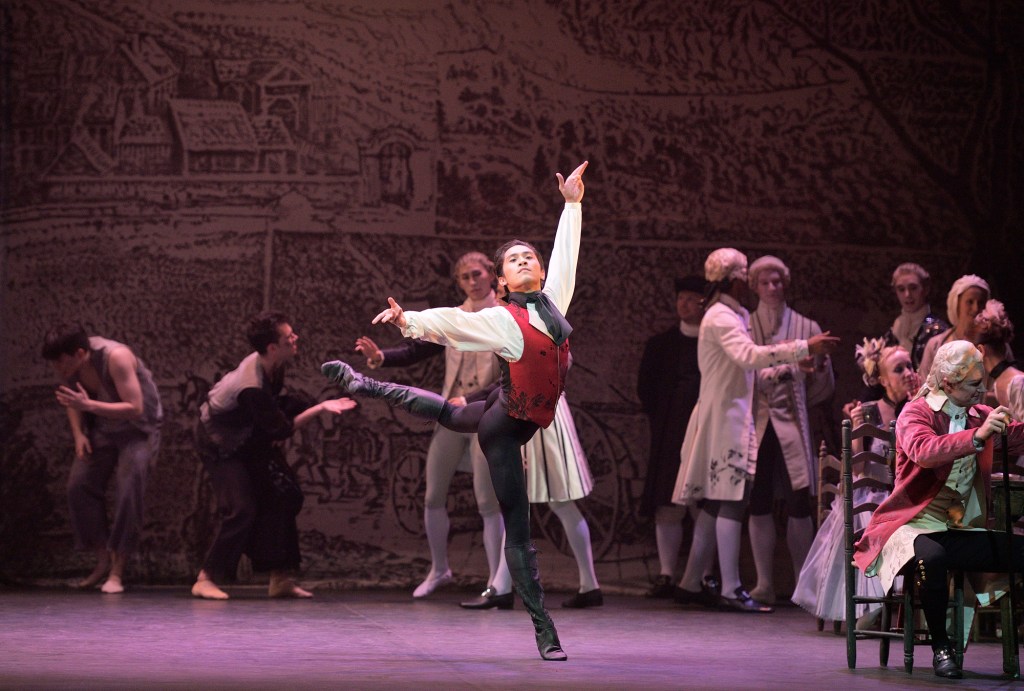
Last summer Birmingham Royal Ballet (BRB) brought their new production of Marius Petipa’s 1869 Don Quixote to London, after it had premiered four months earlier at the Birmingham Hippodrome.  With the exception of The Nutcracker, which is pretty much obligatory fare for any major ballet company (as discussed in our very first British Ballet Now & Then post, this was the first work from the 19th century ballet canon to have been performed by BRB since Carlos Acosta took over as Artistic Director in January 2020.  The premiere had originally been planned for the start of Acosta’s inaugural season, but like so many productions had to be postponed due to the Covid pandemic.

Matador Scene featuring Brandon Lawrence as Espada Photo with Artists of Birmingham Royal Ballet; photo: Emma Kauldhar

The choice of Don Quixote in favour of any other work from the 19th century canon was hardly surprising: Acosta himself has been long associated with the role of Basilio.  At the age of 17 he won the Prix de Lausanne after dancing Basilio’s Act III variation; he performed the role with the Royal Ballet (RB) in Rudolf Nureyev’s staging mounted by Ross Stretton and then created his own production of the ballet for the Company, now adapted for his own Company.

Like the other 19th century classics, Don Quixote provides technical challenges for dancers of different ranking, and opportunities for a large cast of performers to engage in different styles: classical, character and mime.  Other works in the British ballet repertoire that offer similar opportunities are La Sylphide (Bournonville, 1836), Giselle (Coralli/Perrot, 1841), Coppélia (Saint-Léon, 1870; Petipa, 1884) La Bayadère (Petipa, 1877), The Sleeping Beauty (Petipa, 1890), Swan Lake (Petipa/Ivanov, 1895) Raymonda (Petipa, 1898) and Le Corsaire (Petipa, 1899).

Artists of English National Ballet in La Sylphide, photo: Laurent-Liotardo
Jurgita Dronina and Isaac Hernandez in La Sylphide, photo: Laurent Liotardo

Apart from the fact that these works were all created during the 1800s, when ballet as an art form became more recognisably what we understand as ballet today, with its focus on the female dancer, themes inspired by Romanticism, and development of pointe work and ballets blancs, they are all connected by the fact that they were originally choreographed in France or Russia and “travelled” to this country via various routes (as we will discuss further in the Then section of this post).  Although we are sure that you are all familiar with Don Quixote, La Bayadère, Raymonda and Le Corsaire, these works took a number of decades to become established within the British repertoire, being produced in the UK at different times by different companies from 1962 to 2022, and not always in their entirety.

If you follow this blog, you will already know the history of Raymonda in the UK prior to English National Ballet’s evening-length production, which premiered in January last year.  Important details for this particular post is the fact that it was Nureyev, just three years after his defection from the Soviet Union, who first staged Raymonda in this country, initially in a complete production for the Royal Ballet (1964), and then as a one-act ballet based on the final act of the work, in 1966.  In this form Raymonda can stand on its own as a divertissement within a mixed bill, and between 1993 and 2014 English National Ballet also performed a single-act Raymonda, firstly in a production by Frederick Franklin (the British-American dancer, teacher, choreographer and director), and then, in 1993 in Nureyev’s staging, as part of the Nureyev Celebration, marking 75 years since Nureyev’s birth and 20 years since his death.

Momoko Hirata as Kitri and Mathias Dingman as Basilio, with Artists of Birmingham Royal Ballet in Don Quixote; photo: Johan Persson

Similarly, it was Nureyev who first staged La Bayadère in the UK—not in its entirety, but in that superb example of high classicism, the “Kingdom of the Shades”—and who introduced the Le Corsaire grand pas de deux to the British repertory.  In 1985 the “Kingdom of the Shades” entered the repertory of English National Ballet in a production by Natalia Makarova, and in 2013 the same company became the only British ballet company to perform the complete Corsaire.

The three most celebrated ballet defectors from the Soviet Union all had a tremendous impact on dancing in the West, but like Nureyev, Makarova and Mikhail Baryshnikov also had a substantial influence on the expansion of the 19th century repertoire, by staging major full-length productions for American Ballet Theatre: La Bayadère (Makarova, 1980) and Don Quixote (Baryshnikov, 1978).  Relevant for the development of British ballet is the fact that both of these productions were also mounted on the Royal Ballet.  While La Bayadère was the first complete version of the work to be performed in Britain (and remains the only full-length production in the UK), Don Quixote has had a far more varied history in this country, including stagings by Ballet Rambert (1962) and by London Festival (now English National) Ballet (1970), both mounted by Polish ballet master Witold Borkowski, in addition to the two more recent RB productions.  It seems that it is only since the RB’s staging of Baryshnikov’s version in 1993 that the work has become more firmly established within the British ballet repertoire. 

Although these star dancers from the Soviet Union also mounted new productions of 19th century works already established within the British ballet repertoire (including Nureyev’s Nutcracker for the Royal Ballet in 1968, and Makarova’s 1988 production of Swan Lake for London Festival Ballet), it is noticeable that they focused their efforts primarily on the 19th century works that they knew from their experiences at the Vaganova Academy and Mariinsky Ballet but were absent from North American and Western European companies.  And the newer 19th century additions to the British ballet repertoire have indubitably enriched our understanding of ballet as an art form, given dancers new challenges and offered audiences both entertainment and food for thought.  Don Quixote belongs to a very small number of comedic ballets, and provides a great variety of character and demi-character roles.  Le Corsaire is teeming with opportunities for virtuoso male dancers.   And can any scene in the ballet repertoire surpass the transcendence of the “Kingdom of the Shades”?

Artists of English National Ballet in Le Corsaire photo: Laurent-Liotardo

Yet even ballet, with its highly stylised technique, and its penchant for magic and fantasy and reputation for escapism, is not immune from the changing attitudes of our Zeitgest.  Although ENB’s production of Le Corsaire is little over a decade old, the last time it was performed (at the start of 2020), it came with a caveat from the Artistic Director, Tamara Rojo:

When English National Ballet commissioned its new production of Le Corsaire, we worked to challenge some of the traditions of this work, and therefore made adaptations to tone [down] the characters.  We know that still some elements, such as the attitude towards women and other cultures, now seem unacceptable to our values.  However, we present this traditional work with the strength of the assumption that the audience has the knowledge and the critical frame of judgement to view them in the context in which they were created.

As explored in our Raymonda post, in her own 2022 production of Raymonda, Rojo was at pains to address conflicts between current attitudes and those prevalent in Petipa’s original production, by offering a heroine with greater agency over her own life, and a reconceptualisation of Abderakhman the Muslim Saracen to address the traditional othering of this character.

The Royal Ballet last staged La Bayadère in 2018.  For the most part, as is usual for works that are already established in the repertoire, reviews highlighted the performances of the principals, and as is usual for works which feature major ballets blancs, commented on the unison of the corps de ballet (Desvignes; Hugill; Jennings; Parry).  However, both Robert Hugill and Luke Jennings raised concerns regarding Bayadère‘s promotion of orientalist attitudes manifest in “its inanely capering fakirs, lustful priests and blithe appropriation of Hindu, Islamic and Buddhist religious and cultural motifs” (Jennings). 

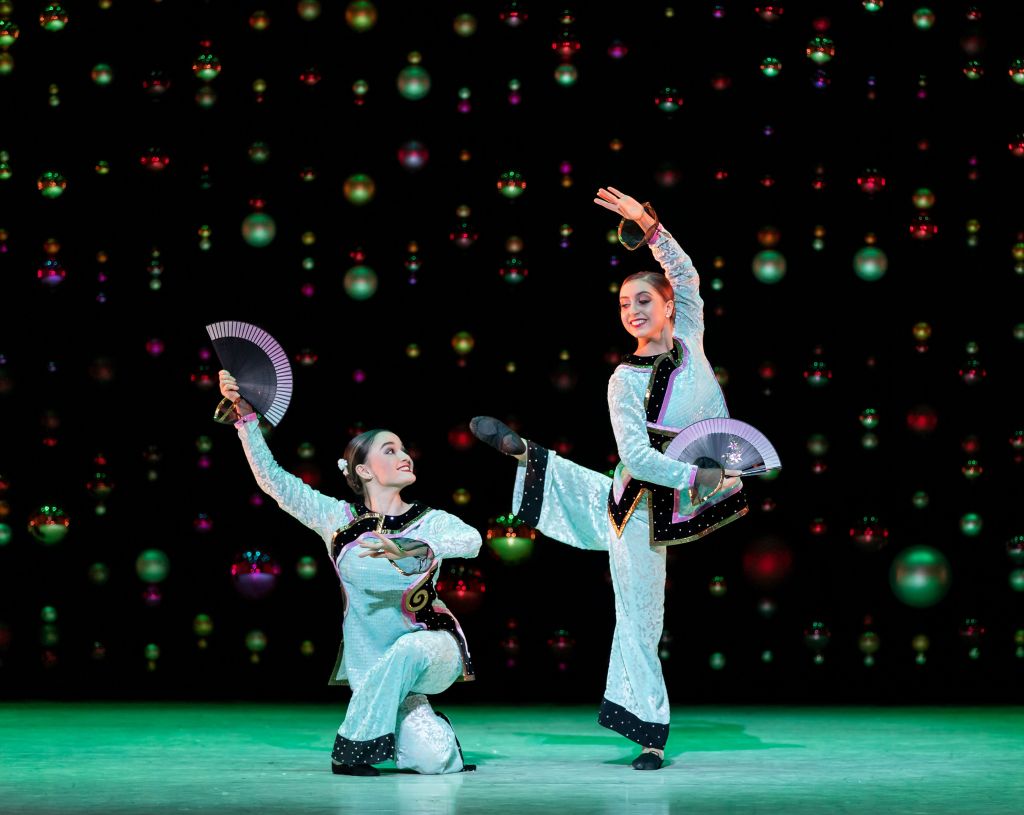
In recent years BRB, ENB, RB, and Scottish Ballet have all made revisions to the choreography, costumes and/or make-up of the Arabian and Chinese Dances from the Nutcracker productions in order to start confronting such offensive stereotypes.  But how does a company approach revising a whole full-evening work?

Scottish Ballet Artist Alice Kawalek and First Artist Kayla-Maree Tarantolo in Chinese Tea Dance. Photo credit: Andy Ross

In the United States, Arts Educator and Co-founder of Final Bow for Yellow Face Phil Chan is producing his own versions of Le Corsaire and La Bayadère to make them more suitable and relevant for American 21st century audiences by addressing what he perceives to be their inherent racism and misogyny.  In his plans, Le Corsaire takes place at a beauty pageant complete with “scheming showgirls, gunslinging beauty queens” (Chan), while La Bayadère will feature Hollywood cow girls and references to Busby Berkeley’ oeuvre, as well as a plot line similar to Singin’ in the Rain (Donen/Kelly, 1952).  These ideas may avoid racial stereotyping, but on paper at least they seem to raise other problematic issues.  Neither do we understand how the tragic nature of La Bayadère will translate into this new context.  Perhaps the productions themselves will transcend their description on paper …

The 19th Century Canon Then

In the 1920s and early 1930s, when Marie Rambert and Ninette de Valois were taking their first steps to establish ballet as a British art form, there was no canon of 19th century “classics” as we know it today. 

So what exactly was the tradition of ballet in 19th century Britain?

Well, in the 1840s, during the flourishing era of ballet Romanticism, Her Majesty’s Theatre Haymarket became a centre for the art form, with important works being created there by the pre-eminent French choreographers of the day Jules Perrot (co-creator of Giselle in 1841, with Jean Coralli) and Arthur Saint-Léon (choreographer of Coppélia, 1870).  These included Ondine, La Esmeralda and Pas de quatre by Perrot, and La Vivandière by Saint-Léon.  However, the situation changed radically in the later decades of the century, when music halls and variety theatres, such as the Empire and the Alhambra on Leicester Square, became regular venues for ballet performances, a situation that continued into the 20th century.  Despite the frequency of performances and popularity of ballet in these theatres, the works created specifically for the music halls were short lived, and even the names of the choreographers, such as Carlo Coppi and Katti Lanner, are not generally well known to today’s ballet-going public.  Further, these connections to popular theatre meant that the status of ballet as a serious art form was on thin ice, even though versions of Giselle and Coppélia, now generally considered as works of the highest calibre, were staged at the Empire in the 1880s.  And when in 1921 Serge Diaghilev mounted his sumptuous production of Tchaikovsky’s The Sleeping Beauty, based on Marius Petipa’s 1890 choreography but titled The Sleeping Princess, it was also produced in a music hall setting: at the Alhambra.

SLEEPING BEAUTY, Deanne Bergsma ( as The Lilac Fairy ) ; The Royal Ballet at the Royal Opera House, London, UK ; January 1969 ; Credit: G.B.L. Wilson / Royal Academy of Dance / ArenaPAL

When de Valois set up the Vic-Wells Ballet (later to become the UK’s flagship company the Royal Ballet) in 1931, she had a clear vision of the kind of repertoire she considered necessary for a national British company.  It consisted of four categories:

  1. Traditional-classical and romantic works
  2. Modern works of future classic importance
  3. Current works of more topical interest
  4. Works encouraging a strictly national identity in their creation generally

(Bland 57)

With both Ashton and herself at the helm creating new choreographies, it is clear how her last three aims might be fulfilled.  But of course, what interests us in this post is the way de Valois obtained the “Traditional-classical and romantic works”.

SWAN LAKE ; Nadia Nerina , Shirley Grahame and Doreen Wells ; Choreographed by Ashton and de Valois ; Designed by Hurry ; Music by Tchaikovsky ; the Royal Ballet New Group, at the Royal Opera House, London, UK ; May 1965 ; Credit : G.B.L. Wilson / Royal Academy of Dance / ArenaPAL

What we find fascinating is that political events came to de Valois’ aid: like many other figures from the Russian ballet world, the Mariinsky régisseur Nikolai Sergeyev had fled his home after the 1917 Revolution.  With him he took scores of 19th century works in a dance notation system devised by Vladimir Stepanov.  These included The Sleeping Beauty, The Nutcracker and Swan Lake, as well as Giselle and Coppélia; ballets of which de Valois had some, but limited, knowledge (Walker 129).  The distinct advantage of mounting the works from the notation scores was of course that it must have given a sense of gravitas to the productions through an authenticity that most music hall productions were unlikely to match, even if that was indeed an aim.  Before Sergeyev started to work for de Valois, he had already staged two works in London: Diaghilev’s The Sleeping Princess, and The Camargo Society’s Giselle.  However, the work of staging these ballets for de Valois’ fledgling company created a cornerstone of the British ballet repertoire.  Further, this process was solidified by Mona Inglesby, founder of International Ballet in 1941, another highly significant figure who promoted 19th century works in Britain, and for whom Sergeyev worked from 1946 until his death in 1951.  Crucially, the company toured these works the length and breadth of the British Isles: from the suburbs of London through the Midlands to Liverpool and Manchester, up to Newcastle, Glasgow and Edinburgh, and over to Belfast and Dublin.  In fact, although the Company folded in 1953, International Ballet was of such significance in its day that it was chosen to appear at the opening of the Royal Festival Hall in 1951.

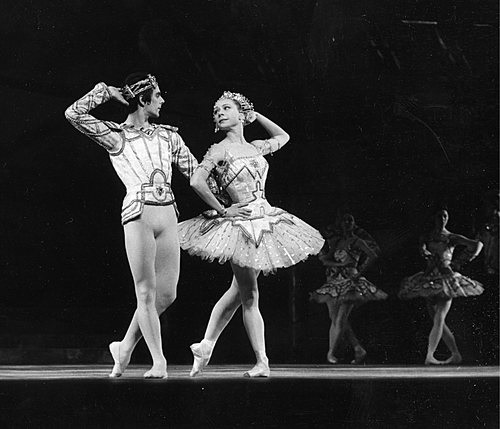
LA BAYADERE – Dress rehearsal Royal Opera House – Covent Garden November 1963 SIR FREDERICK ASHTON / RUDOLPH NUREYEV and THE CORPS DE BALLETS Credit: Royal Academy of Dance / ArenaPAL

De Valois’ and Inglesby’s selection of works seems highly interesting to us, because the ballets they produced constituted only approximately one quarter of the works that could have been staged.  La Bayadère, Le Corsaire and Raymonda could have entered the British ballet repertoire decades sooner; we might have enjoyed The Pharaoh’s Daughter (Petipa, 1862) and La Esmeralda (Petipa after Perrot, 1886) or the Petipa and Ivanov version of La Fille mal gardée (1885).  Both Inglesby and Pavlova before her had made plans to produce La Bayadère, but had reached the conclusion that it was “too old fashioned” (Inglesby 97; Pritchard “Bits” 1121).  While Pavlova did mount a version of Don Quixote, according to historian and expert in British ballet history, Jane Pritchard, this also struck audiences as rather dated after Leonid Massine’s Le Tricorne (1919) (Anna Pavlova 112).  La Esmeralda also proved enticing to Inglesby, but was rejected as a project by the Royal Opera House (Inglesby 106-107).  On other hand, Giselle, Coppélia, The Sleeping Beauty and Swan Lake all had two distinct advantages: they had already been introduced to the British public, and they all had superb scores (Tchaikovsky was known to have admired the compositions of both Adolf Adam and Leo Delibes) (Pullinger).

RAYMONDA ( Act III ) ; Donald MacLeary and Svetlana Beriosova ( as Jean de Brienne and Raymonda ) ; The Royal Ballet at The Royal Opera House, London, UK ; March 1969 ; Credit: G.B.L. Wilson / Royal Academy of Dance / ArenaPAL

In addition to music hall performances of Coppélia at the Empire Leicester Square from the 1880s into the early 1900s, we were also intrigued to discover that in 1890, the same year that Petipa had choreographed the ballet for the Mariinsky Theatre with Carlotta Brianza as Aurora, one of the other Italian ballerinas who starred with the Russian Imperial Ballet, Pierinna Legnani, had danced the same role in a full production at the Alhambra, but to the choreography of Leon Espinoza with music by Georges Jacobi.  Further, in the years immediately leading up to the first London season of the Ballets Russes in 1911, the West End evidently became a veritable hive of ballet activity, with appearances from Lydia Kyasht, Tamara Karsavina, Olga Preobrazhenska, Alexandra Baldina, Ekaterina Geltzer, and of course Anna Pavlova.  Included in these performances were shortened versions of works that were to become “the classics”: in 1910 Preobrazhenska staged Swan Lake at the Hippodrome, while Karsavina mounted a truncated production of Giselle at the Coliseum.  The following year saw the complete Giselle, The Sleeping Beauty Grand pas de deux and a two-act condensed Swan Lake at the Royal Opera House performed by the Ballets Russes.

And what of the ubiquitous Nutcracker? Well, if you have been following British Ballet Now & Then since the start, you will know that the notion of The Nutcracker as a quasi-obligatory Christmas treat is a phenomenon of the later 20th century. In fact this ballet was not well known in this country before de Valois’ Vic-Wells Ballet staged it in 1934.  However, the Nutcracker Suite, which was in fact presented in concert halls before the ballet premiered at the Mariinsky Theatre, was performed in London as early as 1896. 

SADLER’S WELLS BALLET – THE NUTCRACKER 1943 ROBERT HELPMANN / MARGOT FONTEYN Credit: Royal Academy of Dance / ArenaPAL

Ballets Russes audiences would also have known some excerpts, because Diaghilev himself was a great admirer of the score and interpolated some of the numbers into his productions of The Sleeping Beauty and Swan Lake (Newman 20-21).

But you may be asking yourself how La Sylphide became integral to the 19th century canon. The original work by Filippo Taglioni, created for his daughter Marie Taglioni, the most celebrated of Romantic ballerinas, was hugely popular in its day and was performed at Covent Garden only a few months after the March premiere in Paris, 1832.  Marie Taglioni also performed it in Russia, where it continued to be included in the repertoire, and was revived by Petipa in 1892.  However, it does not seem to have been amongst the works that were recorded in the Stepanov notation, and sometime during the first half of the last century Filippo Taglioni’s choreography was lost, although the Romantic ballet expert Pierre Lacotte did produce a reconstruction of it for the Paris Opera Ballet in 1972.  As you probably are aware, the choreography that has been passed down through the generations is the version by August Bournonville, who saw the original production in Paris, but then created his own in 1836.  According to Pritchard (who also happens to be one of our favourite dance historians), Marie Rambert, who established the first ballet company in the UK, loved Romantic ballet (“Marie Rambert” 1177).  She had become familiar with Giselle during her time with the Ballets Russes, and in 1946 Giselle became the first long work to enter the repertoire of Ballet Rambert (now Rambert).  This production was staged with the help of historian Cyril Beaumont, author of The Ballet Called Giselle, first published in 1944, and still available to purchase today.  Beaumont devotes a substantial section of his book to La Sylphide, exploring its influence on Giselle in terms of themes, style, technique and structure.  The work he discusses is the original Taglioni La Sylphide, which was of course not available for Rambert to stage.  Instead, the Bournonville version was staged in 1960, by Bournonville expert Elsa Marianne von Rosen.  In contrast to the full-length Giselle and La Sylphide, only extracts from The Sleeping Beauty, The Nutcracker and Swan Lake were performed by Rambert.  However, Rambert seems to have produced an appetite for Bournonville’s ballet in Britain: Danish ballet master Hans Brenaa was invited to stage a production for Scottish Ballet in 1973; in 1979 the Danish dancer Peter Schaufuss (later to become Artistic Director) mounted his production for English National Ballet; and eventually the Royal Ballet acquired the work in Johan Kobborg’s 2005 staging.  Perhaps one factor that contributed to the growing familiarity with La Sylphide of the British ballet audience was the BBC broadcast of the Act II Pas de deux in 1960 with von Rosen herself, followed by a broadcast of the complete work with Ballet Rambert less than a year later.  Another factor was undoubtedly Rudolf Nureyev’s performances with Scottish Ballet at the London Coliseum in 1976, in which he danced James at every performance over the course of two weeks.

Concluding thoughts

A brief glance through Instagram leaves us in no doubt about the popularity of the 19th century canon across the globe.  And the importance of the works to the British ballet repertoire cannot be denied: in the 2022-2023 season, in addition to the The Nutcracker, Birmingham Royal Ballet have performed Swan Lake, English National Ballet both Raymonda and Swan Lake, and the Royal Ballet The Sleeping Beauty.

We perhaps think of the classics as being exempt from politics, but this is a fallacy: neither their content nor their arrival to these shores can be said to be divorced from politics.  The word “timeless” is also often associated with the term “classics”, but of course the style of performance varies over space and time and our perception of and relationship with the works changes with the Zeitgeist.

Ballet has traditionally been perceived as an ephemeral art form, being handed down by dancers from generation to generation, with limited means for recording the choreography.  But today, with the regular use of Benesh Movement Notation and video to record works in their different productions, perhaps we can feel more secure about the preservation of the 19th century repertoire. 

How would you like to see these works preserved? Would you like to see them performed in a style more compatible with the original style, with original choreography restored, as Alexei Ratmansky has done with his productions of The Sleeping Beauty and Swan Lake? Or would you prefer a more experimental approach, in response to a more contemporary world view, such as that proposed by Phil Chan?  We would love to hear your thoughts!   

© British Ballet Now & Then

We would like to thank our dear friend and colleague Paul Doyle for his help with this post.

Next time on British Ballet Now and Then … Ballet has a reputation for being very gender specific.  However, there is a tradition of subverting gender norms in certain circumstances.  The Royal Ballet’s recent run of Cinderella has seen both female and male identifying dancers perform the Step-Sisters, while the last time English National Ballet staged The Sleeping Beauty, the cast included a gender-fluid dancer, as well as both male and female performers in the role of Carabosse.  So this will be the focus of our next Now and Then post …     

References

Beaumont, Cyril W. The Ballet Called Giselle. Dance Books, 2011.

Bland, Alexander. The Royal Ballet: the first fifty years. Threshold Books, 1981.

Chan, Phil. “On Yellowface and a way forward for Diverse Audiences”. One Dance UK, 2020, https://www.onedanceuk.org/resource/on-yellowface-and-a-way-forward-for-diverse-audiences/.

Desvignes, Alexandra. “Marianela Nuñez shines in a star-studded, polished Bayadère at The Royal Ballet”. Bachtrack, 3 Nov. 2018, https://bachtrack.com/review-bayadere-royal-ballet-nunez-muntagirov-osipova-opera-house-london-november-2018.

Hugill, Robert. “Iconic but flawed: La Bayadère the Royal Ballet”. Planet Hugill, 12 Nov. 2018, https://www.planethugill.com/2018/11/iconic-but-flawed-la-bayadere-royal.html.

Inglesby, Mona, with Kay Hunter. Ballet in the Blitz: the story of a ballet company. Groundnut Publishing, 2008.

Jennings, Luke. “La Bayadère review – moonlit heights from Nuñez and co”. The Guardian, 11 Nov. 2018, https://www.theguardian.com/stage/2018/nov/11/la-bayadere-royal-ballet-review-marianela-nunez-natalia-osipova.

Newman, Barbara. The Nutcracker. Aurum Press, 1985.

Parry, Jann. “Royal Ballet – La Bayadère – London”. DanceTabs, 6 Nov. 2018, https://dancetabs.com/2018/11/royal-ballet-la-bayadere-london-2/.

Pritchard, Jane. Anna Pavlova Twentieth Century Ballerina,

—. “Bits of Bayadère in Britain”. Dancing Times, vol. no. , 1989.

—. “Marie Rambert”. International Dictionary of Ballet, edited by Martha Bremser, St. James Press, 1993, pp. 1175-77.

Pullinger, Mark. “A step into the world of Tchaikovsky’s ballets: Swan Lake”. Bachtrack, 23 July 2017, https://bachtrack.com/ballet-focus-tchaikovsky-swan-lake-petipa-july-2017.

Rojo, Tamara. “A Word from Tamara Rojo, Artistic Director”. Le Corsaire programme Jan. 2020, English National Ballet, London.

Walker, Katherine Sorely. Ninette de Valois: idealist without illusions. Dance Books, 1987.


Ballet at War Now & Then

Art does help you process; it does help you see your own situation from a different point of view; it does help you either process that situation or actually distract from that situation, which is equally valid.  Fantasy is again another of those human necessities, and to be able to disappear in an alternative reality is, I think, now certainly needed

(Tamara Rojo “The Art of Empathy” 13:25-14:22)

Ballet at War Now

Early 2020 was truly auspicious for British ballet.  It began with Northern Ballet’s 50th Anniversary Celebration Gala, featuring dancers from a range of British ballet companies: Birmingham Royal Ballet, English National Ballet, the Royal Ballet and Scottish Ballet.  There were glorious performances of Le Corsaire by English National Ballet, followed by three performances of their 70th Anniversary Gala, highlighting the range of works in their repertoire over the years and the strength of the Company in terms of both technique and character. Cathy Marston’s The Cellist, her first work for the main stage at the Royal Opera House, premiered in February.  And then there was the promise of other major new works: Kenneth Tindall’s Geisha for Northern Ballet, and most excitingly Akram Khan’s much anticipated Creature for English National Ballet – their third collaboration.

With the announcement of COVID-19 as a global pandemic this promise was largely unfulfilled: although Geisha received its world premiere in Leeds to substantial acclaim (Brown, M.; Roy; Hutera), the tour was cancelled, along with all performances in April and May of Red Riding Hood; and to our utter dismay, Creature was postponed weeks before the premiere.  Since we wrote our spotlight post on British ballet in lockdown, further cancellations and postponements have ensued, including both English National Ballet’s and the Royal Ballet’s Swan Lake and Scottish Ballet’s The Scandal at Mayerling, all of which are vital to the finances of the respective companies.  

It goes without saying that the primary purpose of any ballet company is to produce and perform live performances, and that these performances require daily training and rehearsals for the dancers and musicians, as well as work behind the scenes from a whole host of people of different skill sets, including set and lighting designers, wardrobe and technical staff, and physiotherapists, to say nothing of teachers, coaches and directors.  For all of these people, whose communities are sometimes referred to as a “family” (Weiss; Wulff 89), the current loss of this purpose must seem like a bereavement.  Further, for dancers and musicians in particular, who perform in groups as well as individuals and rely on the extreme skill of their bodies to fulfil their profession, being cut off from their working environment with the space and facilities they require must feel far more disorienting, and constitute a far greater breach to their professional identity, than for those of us who are locked out of our offices. 

Understandably perhaps, the language of war pervades the discourse of the pandemic.  Journalists have highlighted vocabulary used to describe our relationship with the virus: Dominic Raab looked “shell-shocked” before chairing the “war cabinet” (Hyde); the virus is a “cruel enemy” that must be defeated in battle (Freedman).  The death toll is constantly updated in the news, and people are anxious about their loved ones, and lose them without being able to bid them a real farewell.  In addition, there is a sense of dislocation as we relocate our work to our homes; this sense of dislocation must be especially acute for dancers who have to practise, sometimes alone, in limited and limiting spaces at home.  And then there is time.  Literary scholar Beryl Pong describes wartime life as having “peculiar temporalities”: it is “a period when one feels that time has stopped, but also when it simply cannot pass by quickly enough” (93).  So we experience dislocation in both time and space, the two elements that choreographer Merce Cunningham regarded to be the only essentials to dance other than the moving body (qtd. in Preston-Dunlop).  This dislocation, the attendant physical restrictions and mental pain are in our opinion most movingly expressed in the film Where We Are.  Organised by Alexander Campbell of the Royal Ballet with choreography by Hannah Rudd of Rambert, the film features Campbell’s colleague Francesca Hayward, freelancer Hannah Sveaas, and Jeffrey Cirio of English National Ballet.  The movements are predominantly performed in the near space of the dancers’ kinesphere, arms folding over their bodies, hands across their mouths and necks, sometimes with tense fluttering gestures; all indicating both the restrictions and the anxiety experienced by the performers in their current situation.  

But despite the poignant message expressed by Where We Are, the film also symbolises hope.  It is not only that Cirio utters the words “I’m so hopeful”, but the film is one of the many activities undertaken by the dancers of this country that are witness to their resourcefulness and creativity.  In our last post we outlined some of these activities, from the practical, such as classes targeted at a wide range of demographic groups, to the highly entertaining films made by Sean Bates and Mlindi Kulashe of Northern Ballet.  Since we wrote that post, there have been many many other delightful offerings.  One favourite is English National Ballet’s Isabelle Brouwers’ Instagram video post in which she cooks a highly nutritious meal, while simultaneously explaining to us how to access the nutrients for optimising dancers’ performance and magic them up into a delicious meal.  This video was made after Brouwers gained a diploma in Sports Nutrition with distinction (Bellabrouwers).  Another favourite is completely different in nature, though equally upbeat: a compilation by no fewer than ten Royal Ballet dancers performing the “Fred Step”, Frederick Ashton’s signature movement phrase, in a variety of guises and locations (Frederick Ashton Foundation). 

Dancers’ projects are highly visible – they are ideal fare for social media, and their ventures also make for engaging feature articles in newspapers, magazines and news websites, garnering such catchy headlines as “How should everyone keep fit during lockdown? Just put on some music and move!” (Monahan), “These Ballet Dancers are Keeping Limber under Lockdown” (Rosado), “Dancing in the streets: Royal Ballet stars rock to new Rolling Stones song” (Wiegand).  For us, however, it was noticeable that later in May and well into June the focus of articles shifted towards the vexed question of reopening theatres and the arduous process of preparing dancers for a return to the stage (Craine; Crompton “What will it take?”; Mendes; Sanderson).  This development seemed to be a response to two events:  the first steps to the easing of lockdown with the opening of “non-essential shops”, and the establishment of a government Cultural Renewal Task Force, which notably included the presence of Tamara Rojo, Artistic Director of English National Ballet.  The resultant growing concern about the future of the arts resulted in a series of petitions and an escalating flurry of anxious activity on social media leading up to a cautious sense of relief triggered by the announcement of a £1.57 billion rescue package for the arts, culture and heritage industries from the Treasury. 

This situation calls for a different kind of creativity from company and theatre directors, one that is less visible, less immediately engaging and eye-catching than videos of performances (including cooking!).  Yet this kind of problem-solving creativity and resourcefulness is vital for the future of ballet in this country, and is crucially a long-term endeavour.  Someone who has brought greater visibility to this kind of creativity is Tamara Rojo, who is an avid theatre goer, as well as being passionate about the development of ballet as an art form and the part that her own company is playing in this.  In June, she participated in three events in which the repercussions of lockdown for the performing arts were included in discussion (“The Art of Empathy”; “The Future of Live Performance”, “Tom and Ty Talk”).  All of the conversations could be described as “equally sobering and optimistic” and “bittersweet” (@uk_aspen).  These oxymoronic phrases capture the predicament faced by artistic directors, who must be realistic in balancing the books as well as idealistic in holding on to their vision for their art form.  At this time, in the face of the plummeting UK economy and the uncertainty regarding the nature of the virus, artistic directors are confronted with a predicament of far greater proportions than is usually the case: depleted income, dancers who require months to return to full physical and mental preparedness for performance, and the likelihood of low box-office takings when theatres reopen, due to new social distancing regulations.   Exacerbating matters is the status of the arts in the UK, implied in Sarah Crompton’s statement: “with so many demands on the Exchequer, the needs of culture may seem low on the list” (“What will it take?”).

Happily, ballet audiences have all benefited from creative solutions already.  Initially companies shared previously recorded performances online.  More recently, the Royal Opera House “re-opened” with Live from Covent Garden, a concert series of ballet and opera streamed live from the Opera House, but minus the audience.  Members of the Royal Ballet danced Morgen, a new creation by Wayne McGregor, Frederick Ashton’s Dance of the Blessed Spirits (1978), and pas deux from Concerto (MacMillan, 1966) and Within the Golden Hour (Wheeldon, 2008).  Of necessity, these were small-scale performances danced by couples living together or individuals dancing alone.   Similarly, wife and husband Erina Takahashi and James Streeter of English National Ballet performed the “White Swan pas de deux” at Grange Park Opera House.     

Ballet companies do, of course, offer a lot of digital content on their websites in order to both inform and entice their audiences.   These include short dance films made specifically for the camera in a variety of settings, such as Ballet Black’s Mute, performed in the Thames Estuary as part of Mark Donne’s Listening with Frontiersman (2016), Scottish Ballet’s Frontiers (2019), filmed in outdoor locations around Glasgow, and the ambitious Ego from Northern Ballet, which moves from the home of the characters to the London tube, to Lytham St. Anne’s seafront. But since the middle of March, of course, the only way for companies to share content has been online.

We have no doubt all experienced how life under lockdown has expanded our use of technology, and the potential advantages of this, for example, in terms of the possibility for some of us to work from home for a portion of the week, and the positive impact a continuation of this practice may have on productivity, the environment and personal finance (Bayley; Courtney).  Similarly, Rojo believes that digital performances and events will, in the future, run in parallel with traditional live shows as part of the core business, rather than digital content on company websites and social media platforms being used predominantly as marketing tools (“The Art of Empathy”).  In our opinion, this is the kind of creative thinking that could bring a boost to ballet as an art form by attracting new audiences, making it more accessible and inclusive, while generating new channels of revenue for companies.  

Let’s finish this section with a war analogy from LBC’s radio presenter Nick Abbot.  He likens life in lockdown to being in a bunker: while we’re in the bunker we’re safe, but we are uncertain of what will meet us when we emerge, and what the repercussions will be of occurrences that have taken place while we have been sheltered in our bunker.  But we do know that as well as performing in theatres, albeit theatres bereft of audiences, dancers are starting to take class again in their company studios that have been made safe for them; and we have a date for the opening of indoor theatres with socially distanced audiences.   So step by step dancers are emerging from their bunkers, and Rojo is confident that we, their audiences, will follow suit once theatres have also been made safe (“The Art of Empathy”).   As far as we are concerned that will definitely be the case, as our thoughts are perfectly encapsulated by Crompton’s eloquent description of the current “absence” of live theatre performances as “an aching hole where something rich and vibrant used to live” (“What will it take?”). 

Ballet at War Then

To lovers of ballet, the story of how the infant British ballet flourished against all the odds during the course of World War II is now a familiar and triumphant episode in the history of the art form in this country (Brown, I.; “Dancing in the Blitz; Mackrell”).  In fact, we have written twice about this phenomenon in previous posts :“The Sleeping Beauty Now & Then”; “British Ballerinas Now & Then”. 

Given the current international standing of British ballet, it is easy to forget that ballet as an established art form with a national company and school and distinctive style of choreography and performance with internationally celebrated dancers does not have a long history in this country, in contrast to the case of France, Russia or Denmark.  As you are doubtless aware, the contemporary dance company Rambert started life as a ballet company named after its founder Marie Rambert, and in fact this was the first ballet company to be established here.  However, by the outbreak of war, Ballet Rambert was still only in its second decade, and Ninette de Valois’ Company, later to become the Royal Ballet, had been founded only eight years previously.

As in the current crisis, the War instigated debates regarding the function and value of the arts, and whether male dancers would serve their country more effectively by joining the armed forces, or in their highly skilled profession, which would allow them to bring the kind of benefits to their audiences that we experience through art, ranging from joy, solace and escapism, to emotional resonance and intellectual stimulation (Eliot 91).  Considering the early stage of British ballet’s development at the time, the advent of war could have been catastrophic for the art form.  Companies still needed to shape an identity through repertoire and the development of a distinctive style; and they needed to build a loyal following.  Even during the Phoney War, conscription, along with the day-to-day problems of rationing, blackouts and restrictions on public transport, all impacted on those involved in ballet, with potentially long-term devastating effects.  

At the start of the War, theatres were closed, causing problems with performing opportunities.  However, in the pithy words of Alexander Bland, “It soon became apparent to the authorities that a total cessation of normal recreation was more damaging to Londoners than a few bombs” (65).  Evidently, access to the arts, including ballet, was perceived as a necessity to the psychological wellbeing of the capital’s residents, and consequently a useful means of boosting the morale of the population, whether or not they were already familiar with ballet as a performance art.  Despite this, availability of suitable performance spaces continued to be a problem in London due to the repurposing of important venues: the Royal Opera House became a Mecca Dance Hall, and Sadler’s Wells (home of the Vic-Wells/Sadler’s Wells Ballet) was used as a centre for air raid-victims (Eliot 34).  

Two institutions were set up to promote and support the arts: CEMA (Council for the Encouragement of Music and the Arts) and ENSA (Entertainments National Service Association).  Although these organisations were privately run, both were supported by the government, indicating the value attributed to the arts at this time (Eliot 33).  In addition to addressing concerns about the mental health of both civilians and members of the armed forces, these organisations proved invaluable in ensuring work for artists in their different fields (34-35).  Over the years of the War ballet companies toured the provinces as well as larger cities, staging shows in an array of different venues in addition to theatres, including local halls, military bases, munitions sites, factories, and aircraft hangars, thereby bringing ballet to new audiences.  In fact, Ballet Rambert were performing for the Codebreakers of Bletchley Park as Germany surrendered in 1945 (Simpson).  There was also lunchtime ballet and teatime ballet, resulting in an increase in the usual number of performances (Eliot 52-3).  This combination of diversity of location and frequency of performance made ballet central to people’s everyday lives (58).  

The necessity and stringencies of touring, catering for new audiences, and producing performances with severely depleted numbers of male dances required imagination and resourcefulness from the various staff members of ballet companies.  Adapting the repertoire to such an assortment of unusual spaces must have called for constant thinking outside the box.  An orchestra was a luxury, so Constant Lambert, Music Director of the Sadler’s Wells Ballet, and Hilda Gaunt, Rehearsal Pianist, accompanied the dancers on two pianos.   Absent male dancers were replaced by young inexperienced colleagues (Eliot 52), although sometimes they were able to participate in performances at short notice when they were on leave (90).  Repertoire was selected to accommodate the situation, with Les Sylphides (Fokine, 1909) a regular item in the performances of many companies:  it was already an audience favourite; it required only one male dancer; and Chopin’s music was originally composed for piano. 

For us, the image of Les Sylphides brings to mind the notion of escapism, and as Rojo says this is one function of art that is “now certainly needed” (“The Art of Empathy”).  Karen Eliot emphasises the importance of ballet’s ability to divert audiences’ attention away from everyday realities in her comments on the rising popularity of the 19th century repertoire during the War years: 

Unexpectedly, the multi-act 19th-century classical ballets that had earlier seemed old-fashioned and irrelevant during the war afforded both comfort and fascination to the diverse audiences who crowded theaters to see them …they opened up worlds of fantasy and colour, granting and audiences a few hours of visual sumptuousness that must have countered the gloom. (174)

However, in in addition to discussing art in terms of diversion, Rojo highlights its ability to help us to process situations we find ourselves in and to see them “from a different point of view”.  For some people this is perhaps more likely to occur when watching and contemplating a different type of work.  Known for the charm, vivacity and even frivolity of his choreographies in the 1930s, Ashton turned to more serious subject matter in the early 1940s in Dante SonataThe Wise VirginsThe Wanderer and The Quest.  In the words of Alexander Bland, “The international crisis seems to have opened up an emotional level in Ashtons’s artistic personality that had not previously been tapped” (59).  Rich in symbolism, these allegorical ballets dealt with such themes as the conflicts between light and darkness, good and evil, the weaknesses of human nature, and the workings of the psyche (Vaughan).

In 2007 an exhibition at the Churchill Museum and Cabinet War Rooms entitled Dancing through the War: The Royal Ballet 1939-1946 showcased the contribution made by the Sadler’s Wells (now Royal) Ballet towards the War effort.  This gave rise to dramatic broadsheet headlines paying tribute to the heroism and fighting spirit of the dancers: “As bombs fell, they danced on” (Crompton) and “Take that, Adolf!” (Mackrell).  Seven years later, a BBC 4 documentary on British ballet in the War years was released: “Dancing in the Blitz: how World War II Made British Ballet”.  As this title suggests, the focus this time was on the ways in which the conditions of war – or perhaps more accurately, the ways in which the government and those involved in ballet responded to those conditions – stimulated the development of ballet in this country in terms of the dancers’ performance and technical skills, the breadth of repertoire and the size and diversity of the ballet audience.  Once again, the company that was the subject of this documentary was the Sadler’s Wells Ballet.

While it is understandable that what was to become Britain’s flagship ballet company would be the principal player in this narrative, we find these accounts problematic.  It is not difficult to locate evidence that the Sadler’s Wells Company was one amongst many contributing to both the War effort and the development of the art form in this country.  For example, Andrée Howard of Ballet Rambert provided “psychological realism” in her work, giving the audience insights into the “interior world” of her characters (Eliot 154-55).  In contrast, Mona Inglesby’s International Ballet toured Britain throughout the War years staging “lavish full-scale ballets and playing in cinemas where theatres weren’t available, taking ballet to the people at a price they could afford” (“Blackout Ballet”).  In fact, such was the prestige of International Ballet by 1951 that it was this company that was selected to perform at the opening of the Royal Festival Hall (Brown, I.).  And there was an array of other, smaller companies that expanded audiences for ballet in Britain through their commitment, fortitude and imagination, offering them (civilians and those involved in military action alike) much needed comfort and distraction on the one hand, and intellectual inspiration and spiritual resonance on the other.  These included Pauline Grant’s Ballet Group, Lydia Kyasht’s Les Ballets Jeunesse Anglaise, the Anglo-Polish Ballet, Les Ballets Trois Arts, the Ballet Guild and the Arts Theatre Ballet (Eliot 38).

Concluding Thoughts

“We are in the business of mass gatherings”.  These straightforward and pragmatic  words from Gillian Moore, Director of Music of the Southbank Centre (“The Future of Live Performance”) highlight both the long-term quandary imposed on the performing arts by lockdown and social distancing, and the way in which the present “war” differs so radically from the situation experienced by ballet companies during World War II, when gatherings of people from all walks of life in a variety of environments and venues became new captive audiences for ballet.  With the emergence of new ballet companies there seems to have been constant work for dancers.  We are not as confident about the employment situation faced by today’s freelancers working in ballet in all their various capacities – freelancers who, in our opinion, should be treated as “the crown jewels” of the industry (Thompson).

Let’s finish by drawing on some words by Karen Eliot from her peerless research on British ballet in the Second World War:

Personnel with the companies was fluid as the smaller groups disbanded and reformed under new direction, or as dancers moved from one organization to another.  Throughout the period, dancers seem to have gamely carried on, moving through the daily regimen of their lives, making do with few resources, and mixing discipline and adventure.  In their various missions, the companies created during the war highlighted ballet’s relevance to new and eager audiences; they demonstrated ballet’s potential to entertain as well as to offer aesthetic stimulus; and they testified to its viability as an art form with a distinct British identity. (38)

As we know, ballet in Britain now has a long-established identity, to which the activity of the War years made a pivotal contribution.  However, since the beginning of lockdown, dancers, musicians, choreographers, film makers, amongst other ballet professionals, have engaged in new online endeavours in order to maintain both professional activity and their relationship with their audiences.  They have offered us entertainment and aesthetic stimulus through their efforts, sometimes collaborating with colleagues from other companies.  We have witnessed their sense of discipline, in particular through the sharing of online classes, and adventure in some of the enterprising videos we have relished.  And we hope that new audiences will be attracted by the current hive of online activity in the world of British ballet.        

But when those new audiences arrive, let’s not forget that the ballet world is an “ecology” comprising a plethora of establishments large and small, who are dependent on one another as well as on individual freelancers (Rojo “Tom and Ty Talk”).  Let’s remember to recognise the contribution of everyone to the development of our art form and how it is helping us through the COVID “war”.

Dedicated to everyone working in British ballet, with heartfelt thanks for their steadfast commitment to the art form that we all love.

© British Ballet Now & Then

Next time on British Ballet Now & Then … Let’s not forget that this year English National Ballet is celebrating their 70th anniversary, so we’ll be thinking about its directors, repertoire and dancers, and the way the company has evolved over time.  

Reference List

Abbot, Nick, and Carol McGiffin. What’s your Problem with Nick and Carol? Letting out gas on a planeGlobalPlayer, 30 June 2020, http://www.globalplayercom. Accessed 11 July 2020.

Apter, Kelly. “Eve McConnachie: ‘Dance Films can add something to the movement because you can isolate moments and play with time’”. The List, 16 May 2019,  https://list.co.uk/news/3595/eve-mcconnachie-dance-films-can-add-something-to-the-movement-because-you-can-isolate-moments-and-play-with-time. Accessed 18 July 2020.

“The Art of Empathy: Renée Fleming and Tamara Rojo on Creativity and Wellbeing”. The Female Quotient, 15 May 2020, https://www.facebook.com/FemaleQuotient/videos/172377800811211/?vh=e. Accessed 12 July 2020.

Bayley, Caroline. “The Highs and Lows of Working from Home”. BBC Radio 4, 2020, http://www.bbc.co.uk/programmes/articles/2Mky6fvrChwCRd7fWQW8h9l/the-highs-and-lows-of-working-from-home. Accessed 19 July 2020.

Bellabrouwers. “The Quarantine Chronicles/Culinary Edition Pt1/2”. Instagram, uploaded 23 Apr. 2020, http://www.instagram.com/tv/B_VjsqSAme5/?igshid=1k1u993r4nt94. Accessed 5 July 2020.

“Blackout Ballet”. BBC Radio 4, 10 Dec. 2012, http://www.bbc.co.uk/programmes/b01p704k. Accessed 22 July 2020.

Bland, Alexander. The Royal Ballet: the first fifty years. Threshold Books, 1981.

Brown, Mark. “Geisha, Northern Ballet, review: ‘ambitious and accomplished’”. The Guardian, 15 Mar. 2020, http://www.telegraph.co.uk/dance/what-to-see/geisha-northern-ballet-review-ambitious-accomplished/. Accessed 31 May 2020.

Brown, Ismene. “Black-Out Ballet: the invisible woman of British Ballet”. The Arts Desk, 11 Dec. 2012, https://theartsdesk.com/dance/black-out-ballet-invisible-woman-british-ballet. Accessed 23 July 2020.

Courtney, Emily. “The Benefits of Working from Home: why the pandemic isn’t the only reason to work remotely”. FlexJobs, 1 June 2020, http://www.flexjobs.com/blog/post/benefits-of-remote-work/. Accessed 19 July 2020.

Craine, Debra. “Tamara Rojo: ‘It’s exciting for the dancers to have a date to work towards’”. The Times, 17 June 2020, http://www.thetimes.co.uk/article/tamara-rojo-its-exciting-for-the-dancers-to-have-a-date-to-work-towards-7d0067cfx. Accessed 17 June 2020.

Crompton, Sarah. “As bombs fell, they danced on”. The Telegraph, 5 Feb. 2007, http://www.telegraph.co.uk/culture/theatre/dance/3662992/As-bombs-fell-they-danced-on.html. Accessed 31 May 2020.

—. “What will it take to save British theatre?”. Vogue, 11 June 2000, http://www.vogue.co.uk/arts-and-lifestyle/article/uk-theatre-crisis-coronavirus. Accessed 14 June 2020.

“Dancing in the Blitz: how World War 2 Made British Ballet (BBC Documentary)”. YouTube, uploaded 9 May 2019, http://www.youtube.com/watch?v=g5xxPY8er7E. Accessed 22 July 2020.

Edgerton, David. “Why the Coronavirus crisis should not be compared to the Second World War”. New Statesman, 3 Apr. 2020, http://www.newstatesman.com/science-tech/2020/04/why-coronavirus-crisis-should-not-be-compared-second-world-war. Accessed 30 May 2020.

Eliot, Karen. Albion’s Dance. Oxford, 2016.

Frederick Ashton Foundation. “Fred step film”. YouTube, uploaded 27 May 2020, http://www.youtube.com/watch?v=qbiMm96_H2M&feature=youtu.be. Accessed 5 July 2020.

Freedman, Lawrence. “Coronavirus and the Language of War”. New Statesman, 11 Apr. 2020, http://www.newstatesman.com/science-tech/2020/04/coronavirus-and-language-war. Accessed 30 May 2020.

“Frontiers”, choreographed by Myles Thatcher. Scottish Ballet, 2019, http://www.scottishballet.co.uk/tv/frontiers. Accessed 18 July 2020.

“The Future of Live Performance”. Aspen Initiative UK,11 June 2020.

Hyde, Marina. “The horror of coronavirus is all too real. Don’t turn it into an imaginary war”. The Guardian, 7 Apr. 2020, http://www.theguardian.com/commentisfree/2020/apr/07/horror-coronavirus-real-imaginary-war-britain. Accessed 23 May 2020.

Hutera, Donald. “Geisha Review – supernaturally charged and unexpectedly touching”. The Times, 16 Mar. 2020, http://www.thetimes.co.uk/article/geisha-review-supernaturally-charged-and-unexpectedly-touching-g3xgrf557. Accessed 31 May 2020.

Mackrell, Judith. “Take that, Adolf”. The Guardian, 14 Feb. 2007, http://www.theguardian.com/stage/2007/feb/15/dance. Accessed 22 July 2020. 

Mendes, Sam. “How we can save our theatres. Financial Times, 5 June 2020, http://www.ft.com/content/643b7228-a3ef-11ea-92e2-cbd9b7e28ee6. Accessed 20 June 2020.

Monahan, Mark. “‘How should everyone keep fit during lockdown? Just put on some music and move!’”. The Telegraph, 30 Apr. 2020, http://www.telegraph.co.uk/dance/what-to-see/should-everyone-keep-fit-lockdown-just-put-music-move/. Accessed 14 June 2020. 

Donne, Mark. “PERFORMANCE: Mute”. BalletBlack. Performed by Circa Robinson, 2016, https://balletblack.co.uk/bb-on-film/. Accessed 18 July 2020.

Pong, Beryl. British Literature and Culture in Second World Wartime: for the duration. Oxford UP, 2020.

Rosado, Ana. “These Ballet Dancers are Keeping Limber under Lockdown”. 7News, 20 Apr. 2020, https://7news.news/these-ballet-dancers-are-keeping-limber-under-lockdown/. Accessed 14 June 2020.

Roy, Sanjoy. “Northern Ballet: Geisha review – potent fusion of romantic dance and Japanese horror”. The Guardian, 15 Mar. 2020, http://www.theguardian.com/stage/2020/mar/15/northern-ballet-geisha-review-grand-theatre-leeds. Accessed 31 May 2020.

Sanderson, David. “Ballet dancers need three months to get back in step after lockdown”. The Times, 15 June 2020, http://www.thetimes.co.uk/article/ballet-dancers-need-three-months-to-get-back-in-step-after-lockdown-vnrhlw6z7. Accessed 17 June 2020. 

Simpson, Edward. “Solving JN-25 at Bletchey Park:1943-5”.  The Codebreakers of Bletchley Park, edited byRalph Erskine and Michael Smith, Biteback Publishing, 2011. 

Thompson, Tosin. “The real ‘crown jewels’ of the arts? An unprotected freelance workforce”. The Guardian, 22 July 2020, http://www.theguardian.com/stage/2020/jul/22/the-real-crown-jewels-of-the-arts-an-unprotected-freelance-workforce.  Accessed 25 July 2020.

“Tom and Ty Talk: ‘Ballet is honest’ with Tamara Rojo”. Tom and Ty Talk, 19 June 2020, https://pod.co/tom-and-ty-talk. Accessed 19 July 2020.

@uk_aspen. “It’s not often”. Twitter 11 June 2020, 6:28pm, https://twitter.com/uk_aspen/status/1271132243000471555?s=20.

Vaughan, David. Frederick Ashton and his Ballets. Rev. ed., Dance Books, 1999.

Weiss, Deborah. “English National Ballet – 70th Anniversary Gala – London”. DanceTabs, 20 Jan. 2020, https://dancetabs.com/2020/01/english-national-ballet-70th-anniversary-gala-london/. Accessed 31 May 2020.

“Wartime Entertainment”. Victoria and Albert Museum, 2016.

“Where We Are: An original film by Alexander Campbell and Anthoula Syndica-Drummond”. YouTube, 11 June 2020, https://youtu.be/gN8mjOLU9Gg. Accessed 20 June 2020.

Wiegand, Chris. “Dancing in the streets: Royal Ballet stars rock to new Rolling Stones song”. The Guardian, 8 June, 2020, http://www.theguardian.com/stage/2020/jun/08/royal-ballet-rolling-stones-mick-jagger-living-in-a-ghost-town. Accessed 14 June 2020.

Wulff, Helena. Ballet Across Borders. Berg, 2001.

Watching with British Ballet Now & Then

MacMillan offerings from English National Ballet and Scottish Ballet, June 2020

Julia and Rosie have been watching some of the ballets being streamed by British ballet companies and have some thoughts on three works by Kenneth MacMillan shown in June: Scottish Ballet’s The Fairy’s Kiss, and English National Ballet’s Song of the Earth and Manon.

There is so much to watch online in lockdown – an overwhelming choice of offerings from companies all over the world.   But for our blog we need to focus on British ballet.  We notice that there is a cluster of MacMillan ballets available to watch that we are really interested in: we’re not familiar with The Fairy’s Kiss; we love Song of the Earth; and the performance of Manon being streamed is a cast we didn’t get to see live and features Jeffrey Cirio, one of our favourite dancers.   

Jeffrey Cirio in Manon © Laurent Liotardo

Before watching The Fairy’s Kiss from our respective homes, we discover that it’s quite an early work, from 1960 (MacMillan started choreographing seven years previously, for the Sadler’s Wells Choreographic Group).  We wonder whether we will be able to notice any particular MacMillan characteristic features; it seems likely, as he had already made his renowned The Burrow in 1958, and he created his seminal The Invitation later in 1960, so only months after the premiere of The Fairy’s Kiss (originally known by its French title, Le Baiser de la fée).  There’s a connection between the three ballets too, in that they all had major roles for MacMillan’s most important muse, the incomparable Lynn Seymour, originator of Juliet, Anastasia and Mary Vetsera, some of his most significant ballerina creations.  

Constance Devernay and Andrew Peasgood of Scottish Ballet in Kenneth MacMillan’s The Fairy’s Kiss. Photo by Andy Ross

So we watch The Fairy’s Kiss and notice how important the establishment of character is through the use of movement style. The three female protagonists are all quite different in their styles, which is crucial to the narrative: the Fairy is a combination of glittering spikiness and sparkling sensuality; the Fiancée is more free flow and buoyant, gentle in her port de bras, while the Gypsy is all voluptuousness with her ample use of the arms and back, and flirtatious in the detail of her footwork.  Rosie tells Julia about the webinar she attended when Bethany Kingsley-Garner (who dances the Fiancée) talked about building character through the rehearsal process.  She focussed specifically on the role of the Mother, a significant but small role whose past is not explained.  Consequently the dancers were encouraged to ask questions about her backstory to give the movements more meaning.  This is a clear indication to us that MacMillan thought it vital for his choreography to express situation, narrative, feeling, even for more minor characters. 

Dancers of Scottish Ballet in Kenneth MacMillan’s The Fairy’s Kiss. Photo by Andy Ross

But we’re a bit perplexed.  Wasn’t MacMillan famous for saying that he was sick of fairy tales?  The basis of the narrative is The Ice-Maiden written by Hans Christian Andersen in 1861; so perhaps we can think of it more as a work of Romantic literature, with its melancholy tale of forbidden love, shattered dreams, loss and grief.  We discover that Andersen claimed “Most of what I have written is a reflection of myself. Every character is from life. I know and have known them all” (qtd. in Silvey, 25).  So these concerns in fact seem to be entirely compatible with MacMillan’s choreographic voice.  A bit of research uncovers the fact that between 1955 and 1962 MacMillan created a total of four works to the music of Stravinsky: in addition to The Fairy’s Kiss, there was Danses Concertantes (1955), Agon (1958), and most famously The Rite of Spring (1962).  We conclude that some important factors drove MacMillan to tackling The Fairy’s Kiss, uncharacteristic though it may seem. 

Tamara Rojo, Joseph Caley and Fernando Carratalá Coloma in Song of the Earth © Laurent Liotardo

Then we watch Song of the Earth.  This is a ballet that we know.  We decide we think of it as a “plotless” work, for want of a better term: it doesn’t trace a linear narrative, but neither is it completely abstract.  The characters are fascinating; in fact, despite their overtly archetypal nature, the Man, Woman and Messenger seem more real to us than the protagonists from The Fairy’s Kiss.  We always enjoy discussing dancers’ individual interpretations of their roles.  How does this work with this plotless ballet? For sure, The Messenger of Death requires a dancer with charisma.  Julia finds Jeffrey Cirio to be quite menacing in the role: the harbinger of death – the abiding inevitable of life, who can arrive unexpectedly at any moment.  Rosie also compares him with Carlos Acosta in the same role.  Carlos’ interpretation seemed to be more of a reflection of the original title for the character – Der Ewige, meaning The Eternal One.  His presence was portentous, but it felt like a constant companion who would continue to accompany The Man and Woman into the next world.  We agree that a role of this complexity and depth is a treasure trove for both the performer and the audience.

As we watch Song of the Earth, we realise that we notice things on a recording that we don’t necessarily take in during a performance.  Do we perhaps tend to watch recordings in a more analytical way, because we know we can re-watch the same recording to pick up other aspects we’re interested in? Or maybe because of the choices made in the process of filming and editing? Rosie’s attention is drawn to the partner work for the male dancers in the opening section “The Drinking Song of Earth’s Sorrow”.  Julia notices another point about partnering.  In the third song (“Of Youth”) the main female dancer of the section is supported in a series of playful cartwheels by four male dancers.  Julia makes a connection with a supported cartwheel that is repeated from arabesque to arabesque in an adagio manner in one of the duets for the Fairy and the Young Man in The Fairy’s Kiss.  The “Of Youth” cartwheels are also clearly an expression of the lyrics about the surface of the pond showing the world in mirror image, so that everything is standing on its head.  We recognise MacMillan as a master in the creation of pas de deux, but seeing these works within such a short space of time makes us more alert to how innovative some of his movement ideas for partnering were, and how imaginatively he reworked them to fit the context of the ballet he was in the process of creating. 

Thinking ahead to Manon, we acknowledge that MacMillan created some extraordinary female roles.  As well as Manon, our list includes Juliet, Anastasia, Lady Capulet, The Chosen One in The Rite of Spring, the Sisters in Winter Dreams.  This list covers almost three decades.  But thinking back to The Fairy’s Kiss and Song of the Earth, we remember that the Young Man from The Fairy’s Kiss is involved in multiple pas de deux, and both the Man and The Messenger of Death are protagonists.  And on consideration, this development of male choreography is also characteristic of MacMillan’s oeuvre.  We think of the male protagonists in Romeo and Juliet and Gloria, and his most developed male role, Crown Prince Rudolf in Mayerling, who has duets with his Wife, and his Mother, as well as with various Mistresses.  

James Streeter, Alina Cojocaru, Jane Haworth and Jeffrey Cirio in Manon © Laurent Liotardo

As the curtains open on Manon, named after its female protagonist, it is of course her brother Lescaut who sits alone on the stage in a pool of light surrounded by his cloak.  Perhaps because it’s his shenanigans that drive the narrative to disaster?  He is the first to dance a solo, and his conniving character is conveyed through the steps themselves as well as through mime, meaning that the dancer has to be very skilful technically as well as being a great actor – like David Wall, the originator of the role.  This first solo establishes his personality with those tricky entrechats.  Of course Jeffrey Cirio is an exceptional actor-dancer and makes for a real wheeler-dealer Lescaut right from the start, articulating the choreography with fantastic finesse.  The entrechats are performed with bent legs.  We’re unsure about the correct terminology for the movement.  We think maybe Italian entrechats, like Italian assemblés.  In trying to find an answer we discover Edmund Fairfax’s Eighteenth-Century Ballet.  According to this research, the execution of movements with bent legs was quite prevalent in 18th century ballet in comic and what they called “grotesque” styles, by which we believe they meant dancing with lots of acrobatic elements performed by Commedia dell’arte figures, such as Harlequin and Scaramouche.  We don’t know whether these particular entrechats were MacMiIlan’s idea, or if he knew the history of the step and connected it to Manon’s 18th century Paris.  We consider whether MacMillan saw Lescaut as a kind of Harlequin with his agility, wiliness and high spirits.  It may seem fanciful, but it doesn’t seem beyond the realm of the possible.

Looking back, this particular selection of MacMillan ballets highlights the choreographer’s deep concern with creating complex characters, his innovative approaches to partnering, and his gift of superb roles for male as well as female dancers.  

References

Fairfax, Edmund. “The Bent-Legged Jumps of Eighteenth-Century Ballet”. Eighteenth-Century Ballet, 16 Feb. 2016, https://eighteenthcenturyballet.com/2019/02/16/bent-legged-jumps-of-eighteenth-century-ballet/. Accessed 25 June 2020.

Kingsley-Garner, Bethany. “The Fairy’s Kiss Post-Show Conversation”. Arts Alive. Webinar, 18 June 2020.

Silvey, Anita, editor. Children’s Books and their Creators. Houghton Mifflin, 1995.

Spotlight on British Ballet Lockdown

How does ballet function in lockdown? Julia and Rosie have been closely following the activities of British ballet companies during the COVID-19 lockdown.  Here are our thoughts …

When people started to absent themselves from public places, and events started to be cancelled we became quite nervous, as we had various performances planned, including the Heritage programme in the Linbury Theatre (a programme of works by Ninette de Valois, Frederick Ashton and Kenneth MacMillan), Kenneth Tindall’s Geisha created for Northern Ballet, and Akram Khan’s Creature choreographed for English National Ballet.  We cheered when Geisha received its world premiere in Leeds, but once lockdown was announced, it was clear that the London performances would be cancelled.  And even more devastating was the cancellation of Creature – Khan’s third collaboration with English National Ballet, featuring the extraordinary Jeffrey Cirio, who has excelled in roles as diverse as Ali in Le Corsaire, Des Grieux in Manon and Hilarion in Akram Khan’s Giselle.

However, we were amazed at how quickly dancers and companies, in the face of a lockdown, started to organise a whole host of online activities, both for themselves and for their audiences.

The first event we recall was actually just prior to lockdown when Tamara Rojo both taught and did class herself with a small number of English National Ballet dancers at City Island, the Company’s new home.  The class was streamed live on Facebook and YouTube, and it was wonderful to see the comments – people were clearly so appreciative, not only of Tamara’s teaching and the skill and dedications of the dancers, but also of the music, as it was the amazing Nicki Williamson playing. After two classes, Tamara had to move what became daily streamed classes to her kitchen.

Tamara-Rojo-C-Paul-Stuart-2
Tamara Rojo – Photo by Paul Stuart

Although it’s a professional class, it’s still manageable for people who regularly take ballet class at an intermediate level, and Tamara explains really clearly, which makes it easy to modify exercises if necessary.  Because she teaches from her kitchen, it has a very personal feel.  This also came across in Birmingham Royal Ballet’s class, which launched their Home from Home series: you can see the dancers in different parts of their houses – Carlos Acosta at the banister, for example.  It was a beautiful sunny day, so it was delightful to see Mathias Dingman doing the centre work in his garden with one of his small sons “joining in”.  In fact, seeing dancers “make do” in their living rooms and dining rooms, holding on to various bits of furniture as makeshift barres and adapting to spaces quite different from a dance studio has become an inspiring symbol of these times.  Beth Meadway of Ballet Cymru even demonstrated and danced a lovely “grand allegro” in a tiny space between bed and wardrobe.

But it’s not only ballet classes for professionals and experienced amateurs that are offered.  English National Ballet was a pioneer of Dance for Parkinson’s, and other companies have followed suit, as well as developing other classes to support people with various health issues.  And these members of the population have not been forgotten.  English National Ballet Artist Kate Hartley-Stevens is teaching Dance for Parkinson’s classes, while Katie Mason delivers sessions for ballet lovers with restricted mobility.  Meanwhile, Scottish Ballet live stream Health classes every week day, including Dance for Parkinson’s Scotland, Dance for Multiple Sclerosis, classes for people with dementia, and more generally for people over the age of sixty.

As we have been researching for this post and keeping our eyes open for new initiatives, it seems that each day brings something new, from English National Ballet’s array of ballet classes at various levels delivered by members of the Company, to Scottish Ballet’s Family Barre for parents and children led by Principal dancer Bethany-Kingsley-Garner, to Birmingham Royal Ballet’s recently announced Baby Ballet uploaded on YouTube in bite-size chunks, including “Stretch those Feet”, “Butterflies” and “Fireworks”.  As the country’s flagship opera house, the Royal Opera House have announced a more ambitious project which will run over the next twelve weeks entitled Create and Learn.  Children are introduced to ballet and opera, if they are not already familiar with the art forms, and given the opportunity to write, make videos, engage in art, and make dances.  The activities are very clearly structured with guidance regarding age suitability and time requirements.  Learning outcomes are even provided.

Even smaller adult ballet enterprises, such as Everybody Ballet (led by Bennet Gartside of the Royal Ballet) and The Ballet Retreat, have now developed digital platforms.  The Ballet Retreat, as the name suggests, is a little different from attending a regular ballet class.  It was co-founded by Hannah Bateman of Northern Ballet and David Paul Kierce, formerly of the same company, and they run adult ballet intensives (from 1 to 3 days), where people are given the opportunity to learn extracts from the traditional ballet repertoire.  Although they still have courses planned for late spring and summer in London and Leeds, currently they are offering a range of ballet classes run by members of Northern Ballet, which has included a Disney ballet barre by Gavin McCaig.

So far our focus has been very strongly on classes, with dancers being wonderfully creative in both doing class themselves and in teaching class, thereby developing additional skills.  As lecturers ourselves, we know that teaching requires a range of intellectual, interpersonal and communication skills, and an extra layer of complexity is demanded for online delivery, we feel.    However, performances of various types are also being offered online, from works previously released on commercial DVD, such as the Royal Ballet’s The Metamorphosis and The Winter’s Tale, and Northern Ballet’s 1984, to performances created in people’s homes for the specific purpose of bringing us cheer.

Northern Ballet in Jonathan Watkins’ 1984. Photo by Emma Kauldhar

Northern Ballet are well known for their children’s ballets, such as Puss in Boots and The Ugly Duckling. These ballets are adapted for television in collaboration with CBeebies.  This year it was heart breaking that they had to cancel the tour of their latest children’s production Little Red Riding Hood, but the show has been made available on BBC iPlayer with the usual supplementary activities on CBeebies, such as jigsaw puzzles at various levels and movement to try at home.

Without a doubt the most entertaining of the performances have been the films made by Sean Bates and Mlindi Kulashe of Northern Ballet in their flat and the adjacent car park.  They made the news with their renditions of “The Greatest Show” and “Tomorrow”, evidently breaking some furnishings in the procedure.

At the other end of the scale, one of the most stirring performances was the except from Raymonda played by the English National Ballet Philharmonic under the baton of Music Director Gavin Sutherland.  The orchestra members were all playing from their homes, and the film was beautifully edited to highlight different sections of the orchestra, enhancing the gorgeous melodies and sumptuous textures of Alexander Glazunov’s score.  But what made this performance particularly rousing was its dedication to NHS Staff and its title “Play for our Carers”.  While of the surface, this might seem quite random, let’s remember that Tamara Rojo’s new adaptation of Raymonda opening in the autumn is inspired by Florence Nightingale.  Not someone to do things by halves, Tamara has been researching the life of Florence Nightingale for four years in preparation for this production, so the dedication was more than fitting.

ENB Philharmonic

As we were writing this post, English National Ballet announced the most exciting initiative yet – their Wednesday Watch Parties.  Each Wednesday a full recording of a Company performance will be premiered online; no complete recordings of these works have ever been made available before.  For the first two Wednesdays two jewels of their recent repertoire are being released on Facebook and YouTube for 48 hours: Akram Khan’s Dust (2014) and Anna Lopez-Ochoa’s Broken Wings (2016).  And there will be more jewels to come no doubt …

Tamara Rojo and James Streeter in Dust by Akram Khan – Photo by ASH

At this time of crisis, British ballet companies are working assiduously to keep themselves fit and ready to return to work, but they are also demonstrating their creativity in ways that help to bolster the nation in body, mind and spirit.  We hope that their generosity of spirit and invaluable contribution to people’s health and well-being at this time will be recognised and rewarded in both the short and the long term.


Cinderella Now & Then

Cinderella Now

It’s been a year of Cinderellas!

We started this blog two years ago with The Nutcracker Now & Then. Last December we published a second Nutcracker post.  However this year, Cinderella seems a more relevant ballet for our Christmas discussion.

On the other hand, Cinderella seems to be a ballet for all seasons: at the start of 2019 Scottish Ballet (SB) were performing their production by Christopher Hampson; in the summer English National Ballet (ENB) performed Christopher Wheeldon’s Cinderella in the round at the Royal Albert Hall, but in the autumn toured the original version, choreographed on Dutch National Ballet and San Francisco Ballet for the proscenium stage; shortly after this Northern Ballet (NB) started to tour their 2013 production by David Nixon, which they will continue to perform over the Christmas period and then again in the spring months of 2020.

Of course, Cinderella adaptations that are based on the famous score by Sergei Prokofiev have the four seasons built into the structure of the work, if the choreographer chooses to employ the music in that way.  Wheeldon and ENB took advantage of this structure when adapting his 2012 choreography for the huge arena of the Albert Hall by doubling the number of dancers for the Four Seasons divertissement making it into a magnificent spectacle.  But nevertheless, with its magical tree, vibrant blues and greens, the fantastical birds and mythical Tree Gnomes, it seems to us to be imbued with a sense of warmth and fecundity that makes us associate it more with spring and summer.

English-National-Ballets-Cinderella-c-Laurent-Liotardo-2
English National Ballets Cinderella / Photo: Laurent Liotardo

The same might also be said for Hampson’s 2007 staging of Prokoviev’s Cinderella with SB, in which a rose planted by Cinderella …

… becomes the motif…, blooming into swirling curlicues and trailing blossom, becoming the backdrop of the ballet’s scenes of magic.  There’s a corps de ballet of roses, and it’s a rose, as much as a dropped slipper, that reunite this Cinders with her prince.  (Anderson)

In this way the magic of nature is woven into the fabric of the ballet, and more literally into the fabric of Cinderella’s gown for the ball, woven together by “silk moths, grasshoppers and spiders” as it is (Lowes).

In contrast to this emphasis on nature’s warmer months, NB’s Cinderella is set for the main part in a fantasy Moscow winter time, affording the opportunity for visits to the winter market populated by the likes of jugglers, acrobats and a magician, skating scenes on the Crystal Lake, and huskies for Cinderella’s sleigh to take her to the ball.

Abigail Prudames and Joseph Taylor in Cinderella. Photo Guy Farrow copy
Abigail Prudames and Joseph Taylor in NB’s Cinderella / Photo: Guy Farrow

The atmospheric score composed by Philip Feeney, and Duncan Hayler’s sparkling set, with its Fabergé-inspired ballroom (new this year) create a quite different world of magic to that created by Daniel Brodie, Natasha Katz and Basil Twist for ENB, and the art nouveau realm of Tracy Grant Lord’s designs for SB.

Araminta Wraith in Scottish Ballet's Cinderella by Christopher Hampson. Credit Andy Ross copy
Araminta Wraith in Scottish Ballet’s Cinderella by Christopher Hampson / Credit Andy Ross

One of the things that these three Cinderellas all provide is a back story that helps to create a sense of humanness in the characters, making them more than stock figures or archetypes.

Both Hampson (SB) and Wheeldon (ENB) show their heroine in childhood grieving over her Mother’s grave.  But the everlasting bond between mother and daughter is symbolised by Cinderella’s tears generating new life: the blossoming of Hampson’s rose garden and the growth of Wheeldon’s magical tree.  Hampson’s Prince is portrayed as lonely, without anyone to whom he can relate (“The Story of Cinderella”), while ENB’s Prince Guillaume seems to enjoy his life with his childhood friend Benjamin too much to want to commit to marriage – until, of course, he meets Cinderella.  A delightful scene occurs in Act I as the result of the familiar trope of swapping identities: taking Guillaume for a destitute pauper, Cinderella offers him food, shelter and company – a mark of her compassionate nature.  But as they clumsily dance together on the table, the attraction between them is unmistakable.

Erina-Takahashi-and-Joseph-Caley-in-English-National-Ballets-Cinderella-c-Laurent-Liotardo-5
Erina Takahashi and Joseph-Caley in English National Ballets Cinderella / Photo: Laurent Liotardo

Nixon’s (NB) Cinderella meets Prince Mikhail in childhood, but the most significant thing we discover about her is that she is partially responsible for her Father’s accidental death; this perhaps accounts for her Stepmother’s antipathy towards her.  Yet, despite her burden of guilt, the grown-up Cinderella radiates delight in the world of the market and the Crystal Lake.  The innovations in characterisation that make this production feel fresh and closer to life, despite the wintry glitter and sparkle, are Cinderella’s eventual bold defiance of her Stepmother, and the Prince’s initial derisory rejection of Cinderella when he discovers her lowly status as a servant to the household.  The Prince’s “upper-class bad-manners moment”, as Amanda Jennings calls it (37), felt quite uncomfortable to watch; however, so poignantly did Joseph Taylor portray Mikhail’s remorse at his own lack of empathy and insight, that there could be no doubting his love for Cinderella.

Cinderella Then

As the first three-act British ballet, Frederick Ashton’s 1948 Cinderella, still regularly performed by The Royal Ballet (RB), is without a doubt the most celebrated Cinderella in the history of British ballet.  And without a doubt this is in part attributable to the number of prestigious ballerinas who have performed the eponymous role, amongst them Moira Shearer, Margot Fonteyn, Nadia Nerina, Svetlana Beriosova, Antoinette Sibley, Jennifer Penney, Lesley Collier, Maria Almeida, Darcey Bussell, Viviana Durante, Tamara Rojo and Alina Cojocaru.

Sibley_Fairy Spring_GBL Wilson
Annette Page ( as The Fairy Godmother ) ; Antoinette Sibley ( as Fairy Spring ) ; Vyvyan Lorrayne ( as Fairy Summer ) ; Merle Park (as Fairy Autumn ) ; Deanne Bergsma ( as Fairy Winter ) ; Royal Opera House, December 1965 ; Credit : G.B.L. Wilson / Royal Academy of Dance

But despite its status in the British Ballet canon, Ashton’s Cinderella is to some extent an exception, especially for the year 1979, which is where we focus our attention now.  We chose this particular year, because not only did the RB stage Ashton’s Cinderella that December, but both NB and SB mounted brand new productions – by Robert de Warren and Peter Darrell respectively.

It is no secret that Ashton choreographed his Cinderella as a tribute to late 19th century ballet.  The divertissements of the Seasons are reminiscent of the Prologue Fairies from The Sleeping Beauty (Petipa, 1890), with their quirky, idiosyncratic movements that portray the feel of the season, while the Stars remind us of Ivanov’s Snowflakes, with their sharp, spikey, shimmering movements and patterns that bring to mind the constellations of the night sky.  The pantomime dame style “Ugly Sisters” could be comical renditions of Carabosse, as they plot to ensure Cinderella’s continued subjugation and to deny her her destiny, earned by the beauty of her being.

Ugly sisters_Ashton & Helpmann_GBL Wilson
Robert Helpmann ( as the Ugly Sister ) & Frederick Ashton (as the Ugly Sister ) Royal Opera House, December 1965 ; Credit : G.B.L. Wilson / Royal Academy of Dance

Like Desiré in The Sleeping Beauty, Cinderella’s Prince arrives late in the proceedings and has to pursue Cinderella through the Stars that form barriers between them.  Like a 19thcentury classical ballerina role, Cinderella herself is the focus of the stage action and the narrative, with a string of solos and duets in different styles.  No ballerina we have seen has ever competed with Tamara Rojo in portraying the two faces of Cinderella: the downtrodden but creative, imaginative and kindly young woman on the one hand, and the ideal vision of the fairy princess on the other.

But in 1979 NB offered a quite different interpretation of the Cinderella story.  De Warren based his choreography on the 1901 score by Johan Strauss Jr., the only ballet score ever written by the composer, and adapted the scenario from Heinrich Regel’s original libretto. The theme of the seasons was retained in the name of the department store where the action is located.  Here Cinderella is employed in the millinery workshop and bullied by her Stepmother, who is head of the department.  However, as far as we can make out, there were no fairies representing the seasons, although magical doves (reminding us of Wheeldon’s fantasy birds) help Cinderella with her chores so that she can go to the ball.

CIN79-001
Alexandra Worrall and Serge Lauoie in Robert de Warren’s Cinderella (1979) for Northern Ballet. Photo Ken Duncan.

The ball has been organised by Gustav, the owner of the Four Seasons, for his staff.  What we find so enchanting about this telling of the story is that Gustav is so in love with Cinderella, despite her lowly position, that he makes excuses to go to the millinery department to catch a glimpse of her, and seeks her out at the ball, where everyone is disguised by masks.

Darrell’s 1979 SB Cinderella shared similarities with the NB production in that it also used an alternative musical score to Ashton’s, one arranged by Bramwell Tovey from music by Gioachino Rossini, including some numbers from his Cinderella opera La Cenerentola (1817).  The libretto was also based loosely on the scenario to the opera (Tovey) and evidently foregrounded the Prince.  The first source we found on this production was a review by John Percival which struck us with both its title “She knows a good ‘un when she sees him”, and with the first lines:

The Hero of Peter Darrell’s ballet Cinderella is the quiet, gentle Prince Ramiro, who is more interested in books than court occasions; you could almost imagine him talking to the plants in the palace gardens …

Scottish Ballet present Peter Darrell's Cinderella. Credit Bill Cooper (1)
Scottish Ballet – Peter Darrell’s Cinderella/ Credit Bill Cooper

This version of Cinderella in fact started with the Prince, who, finding the preparations for the masked ballet tedious, changes places with his equerry Dandini; and as in the current production, an instant bond is kindled between Cinderella and the Prince, despite the disguise.  As Percival emphasises “Cinderella knows real worth when she sees it” (“A Scottish Cinderella” 20).  Once again, nature plays an integral part in the staging, with Exotic Birds, Fire Fairies and Dew Fairies listed in the cast, and Cinderella arriving at the ball in an exquisite cloak resembling butterfly wings.

Concluding thoughts

Choreographers past and present have drawn on different sources and ideas in order to make their particular Cinderella fitting for their context.

Yet, no matter which adaptation you see, Cinderella is a ballet about different kinds of magic, love and beauty, as well as the everyday miracle of nature, with its message of hope and faith in the constant renewal of life.  As such it as an ideal Christmas ballet, as well as a ballet for all seasons.

© British Ballet Now & Then

This post is dedicated to Kelly Kilner, Rosie’s Angel of Islington – a living example of everyday magic.

We would like to thank Graham Watts for his help with our research on Christopher Hampson’s Cinderella.

Next time on British Ballet Now & Then … It’s an exciting anniversary season for English National Ballet, so we must take a look at the history of the company – its directors, repertoire and dancers.  

References

Anderson,Zoë.  “Cinderella, Festival Theatre, Edinburgh, review: Romantic            production combines glamour and liveliness”. The Independent, 24 Dec. 2015, http://www.independent.co.uk/arts-entertainment/theatre-     dance/reviews/cinderella-festival-theatre-edinburgh-review-romantic-          production-combines-glamour-and-liveliness-a6785011.html. Accessed 22            Dec. 2019.

Jennings, Amanda. “Cinderella”. Dance Europe, no. 244, Nov. 2019, pp. 35-37.

Lowes, Susan. “Cinderella”, All Edinburgh Theatre, 8 Dec. 2015, http://www.alledinburghtheatre.com/cinderella-scottish-ballet-review-2015/. Accessed 22 Dec. 2019.

Percival, John. “A Scottish Cinderella”. Dance and Dancers, vol. 30, no. 12, 1979, pp. 18-22.

—. “She knows a good ‘un when she sees him”, The Independent, 17 Dec. 2019, http://www.independent.co.uk/arts-entertainment/dance-she-knows-a-good-un-when-she-sees-him-1191878.html. Accessed 22 Dec. 2019.

“The Story of Cinderella”. Scottish Ballet, 2019, https://www.scottishballet.co.uk/tv/the-story-of-cinderella. Accessed 22 Dec. 2019.

Tovey, Bramwell. “The Music for Cinderella”. Cinderella. Programme. His Majesty’s Theatre, Aberdeen, 1979.
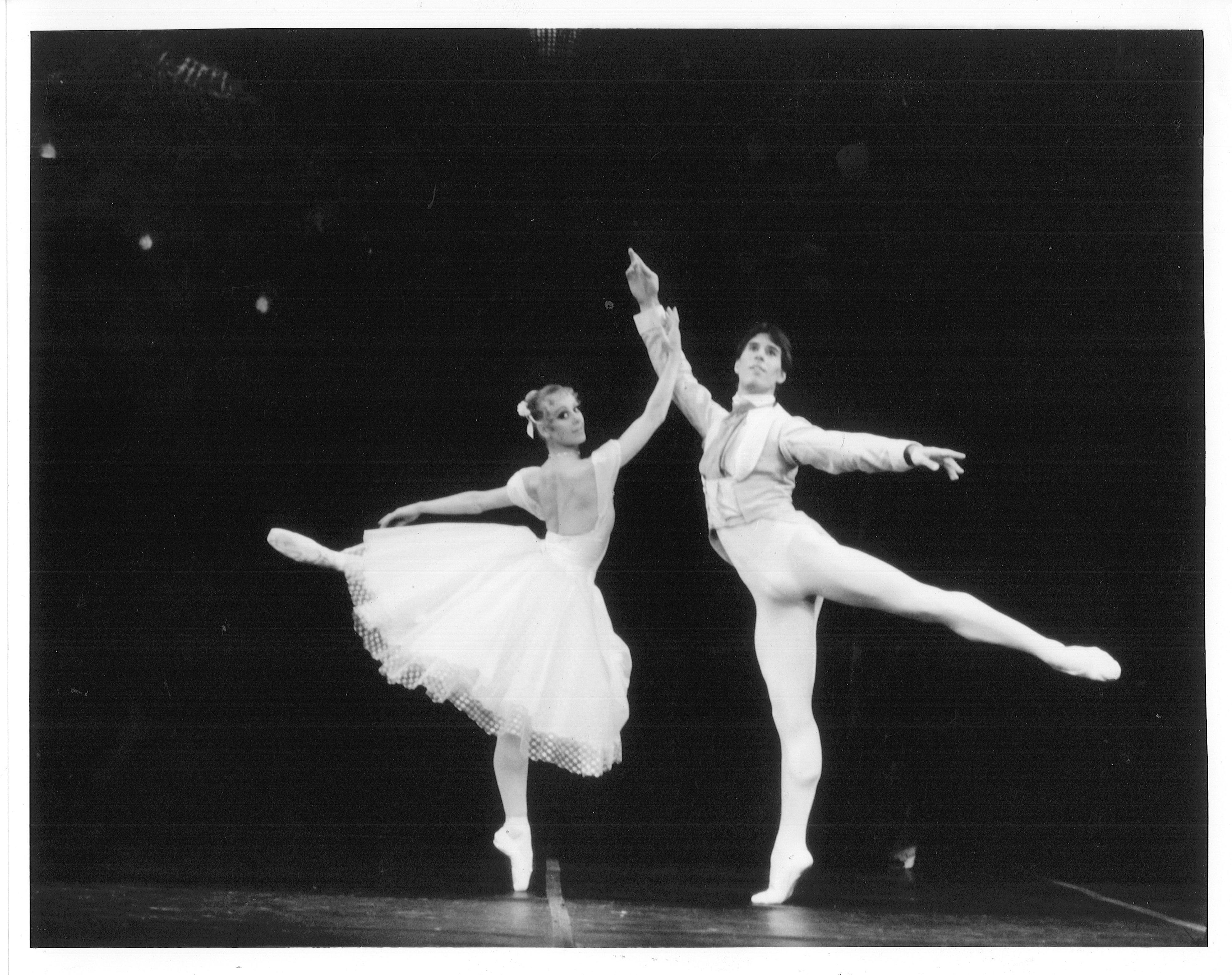
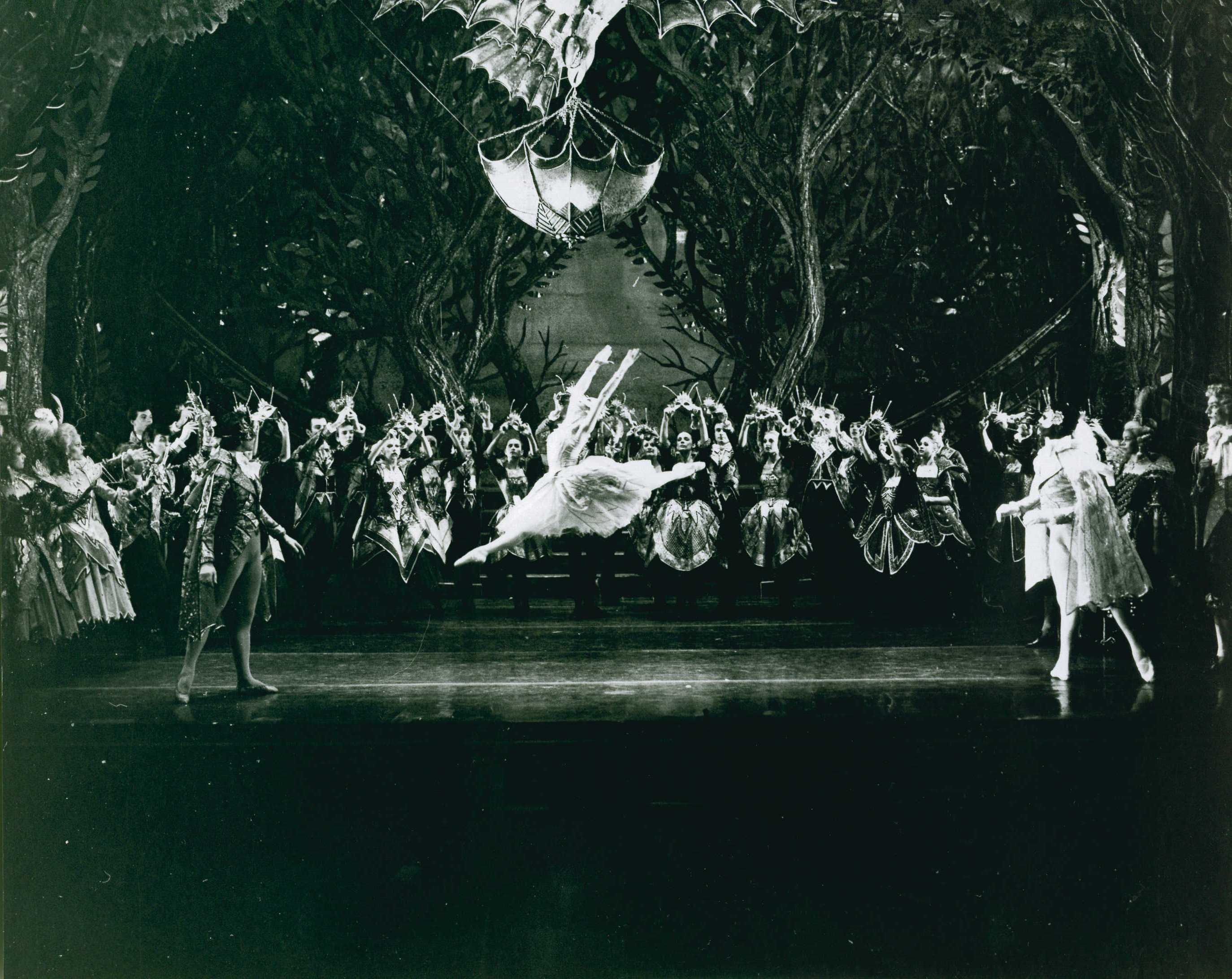
The Nutcracker Now & Then

This is the excerpt for your very first post.

The Nutcracker Now

As is now the tradition, there is plenty of opportunity to see The Nutcracker this Christmas.

The Royal Ballet’s season at the Royal Opera House runs from December 5th December till January 10th, while Birmingham Royal Ballet is performing at the Birmingham Hippodrome from 24th November to 13th December and then just before the new year at the Royal Albert Hall with Simon Callow as the voice of Clara’s magician Godfather Drosselmeyer.  English National Ballet begins its long-established annual Nutcracker season in Southampton at the end of November, followed by over a month at the London Coliseum. And through most of December and January Scottish Ballet is touring the ballet in Edinburgh, Glasgow, Aberdeen, Inverness and Newcastle.

If you’re not able to get a ticket for one of these live performances, or if you prefer the cinema, you might be able to catch the live screening of the Royal Ballet on December 5th.

One of the ballerinas dancing the two different roles of Clara and the Sugar Plum Fairy with the Royal Ballet is Francesca Hayward.  Last year she featured in a documentary broadcast on national television on Christmas Day itself: Dancing the Nutcracker – Inside the Royal Ballet.  This also marked her debut in the role of the Sugar Plum Fairy.  As well as showing her dancing in rehearsal and on the stage, it depicted her at home with her grandparents in Sussex, where the story of her first encounter with a classical ballet – a video of The Nutcracker – was recounted with warmth and humour.  Meanwhile, at ENB Francesca Velicu, who gained acclaim earlier this year in Pina Bausch’s Rite of Spring, makes her company debut in the dual ballerina role of Clara and the Sugar Plum Fairy.

So popular has the ballet become, that Northern Ballet theatre are already advertising David Nixon’s version scheduled to tour in November and December 2018.

The Nutcracker Then

So how did a ballet created for the Imperial Russian Court in 1892 become a British tradition of family Christmas entertainment?

Well, The Nutcracker has a long and varied history in this country.

The first important British production was staged on January 30th 1934 by the Vic-Wells Ballet, which was to become the Royal Ballet 22 years later. This was the first complete Nutcracker to be staged in Western Europe, 42 years after the premiere in Saint Petersburg.  Alicia Markova and Stanley Judson were the stars of the ballet (Anderson 92-93), but Margot Fonteyn made her stage debut under her original name of Peggy Hookham as a Snowflake in the same production (93).  Only three years later the Company staged a new version with Fonteyn as the Sugar Plum Fairy, partnered by Robert Helpmann (93).

But the Vic-Wells was not the only company to stage the ballet in the 1930s, when British ballet was still in its infancy. Alicia Markova, the original British Sugar Plum Fairy, set up a company with Anton Dolin, and from 1935 to 1937 they showed excerpts from Act II as they toured the country (Anderson 96; Pritchard 69).

After spending some time abroad, Markova and Dolin returned to England and realised that in post-War Britain there was an increasing interest in ballet.  In 1950 they formed Festival Ballet (later London Festival Ballet, now English National Ballet) with a view to popularising ballet, making it affordable, and bringing it to the provinces as well as performing in London (Teveson 89, 93).  And this is where The Nutcracker really starts to take off in Britain.  In its very first season Festival Ballet already produced a full staging of the ballet and established the tradition of performing The Nutcracker every year, although the ballet wasn’t always performed in its entirety, and was shown at various points throughout the year. However, by the 1960s the tradition of a Christmas season of the ballet was well underway.  As Jane Pritchard puts it, the 1957 production by David Lichine, designed by Alexandre Benois “may be said to have established the ballet as a popular Christmas treat in Britain” (70-71).

ENB now performs its annual Nutcracker season at the London Coliseum.  Although we think of it as an opera house, originally the Coliseum was a variety theatre.  Festival Ballet’s first production was at the Stoll Theatre on Kingsway, which was once a cinema, as was the New Victoria Theatre, another venue for this Company’s Nutcracker, and the theatre where the musical Wicked is currently running.  For many years too the annual Nutcracker was performed in The Royal Festival Hall, a venue that was conceived as democratic, relaxed and welcoming (Open University).  So it’s interesting that the tradition of the ballet’s annual runs became established through regular performances in venues connected to enjoyment and family entertainment as much as to high art and exclusivity. 

In 1976 Ronald Hynd’s production of The Nutcracker was broadcast by the BBC, performed by London Festival Ballet, led by Eva Evdokimova and Peter Breuer.  By this time Scottish Ballet also had its own version by Peter Darrell, the founder of the Company.  Staged for the first time in 1973, this ballet was created only four years after the establishment of the Company, originally named Scottish Theatre Ballet. Initially Act II was performed as part of a triple bill earlier in 1973, and then the full ballet was staged at Christmas, starting a tradition of annual Christmas performances for the Company (Anderson 150).  So this is a similar pattern to the one established by Festival Ballet in the 1950s and ’60s. The Peter Darrell production was revived three years ago and is in fact the very same production that is being toured this season in Scotland and Newcastle.  


In our opinion The Nutcracker was integral to the building of an audience for ballet in Britain, an audience that spanned class and age. True to its story, the ballet has become associated with Christmas festivities, family and friends.  And promising young dancers can be given a chance to tackle a ballerina role in the presence of an audience that is perhaps less critical than the usual audience for classical ballet.


Next time on British Ballet Now and Then … we will be looking at Kenneth MacMillan’s choral works, two of which are being performed in the new year by English National Ballet and Northern Ballet Theatre.

References

Anderson, Jack. The Nutcracker Ballet. Bison Books, 1979.

Anderson, Robin. “The Scottish Ballet”. 20th Century Dance in Britain, edited by Joan W. White. Dance Books, 1985, pp. 143-67.

Dancing the Nutcracker – Inside the Royal Ballet, directed by Hugo Macgregor, Oxford Film and Television for British Broadcasting Corporation, 25 Dec. 2016.

The Open University. “Royal Festival Hall”, OpenLearn, 26 Nov. 2001. Accessed 18 Nov. 2017.

Pritchard, Jane. “Archives of the Dance (18): English National Ballet Archive”, Dance Research, vol. 18, no. 1, 2000, pp. 68-91.

Teveson, Claire. “London Festival Ballet”. 20th Century Dance in Britain, edited by Joan W. White. Dance Books, 1985, pp. 87-110.

© Rosemarie Gerhard 2017