In October last year Jodie and Rosie went to see English National Ballet’s quadruple bill R:Evolution at Sadler’s Wells, which opened their 2025-26 season. The programme brought together George Balanchine’s Theme and Variations and Martha Graham’s Errand into the Maze, both from the year 1947, followed by William Forsythe’s Herman Schmerman (Quintet) (1992), and David Dawson’s 2023 Four Last Songs.
Looking back at 2025, this programme unexpectedly ended up being a highlight of the year, as we found so much to discuss …
Rosie: To be honest, I was quite sceptical about this bill. The last time I saw Errand into the Maze was when the Martha Graham Dance Company visited the Barbican in 1999. Even back then I thought it looked quite dated, and the reaction of some audience members corroborated this feeling. And I wasn’t sure how it would “fit” with the other works. But it’s quite clear from the reviews that the variety of dance styles was seen as a highlight, a really strong point of the billing (Murphy; Weiss, “ENB: R:Evolution”; Winship).
artwork by Victoria Trentacoste
Jodie: I know what you mean, but I felt I went in almost completely ignorant—apart from the joyful Herman Schmerman Quintet, I’d never seen any of the other works before.
Rosie: But you’re familiar with choreographic styles of Balanchine and Graham, right?
Jodie: Ha yes, and well enough to know that the combination seemed like a buffet-style spread; choreographic prowess aside, I wondered if this eclectic concoction might turn out to be immiscible.
Rosie: As it was, to me Errand, which was the work I was most hesitant about, looked really fresh. I thought maybe because it was new to the Company, or perhaps precisely because it was in the context of contrasting works. As far as I know, ENB’s never performed any Graham before, but I always think that one of the strengths of the Company is the dancers’ willingness to go for different styles—I’m thinking Akram Khan, Pina Bausch, for example. When it came to it, I relished watching the dancers rise to the challenge of such varied styles, but I did feel a distinct jolt moving straight on to Herman Schmerman after Errand, with only a few minutes’ pause—I was still deep in Ariadne’s world when Herman Schmerman was starting.
Jodie: I agree that the shift from Errand to Herman felt abrupt, almost like a bit of a whiplash. Because everything about them felt different—the form, the structure, the atmosphere, even the colour palette. And being my two favourite works of the quadruple bill, I would have liked to see these bookend the night— I imagine that Errand would have had the audience entranced from the outset.
Rosie: So Herman Schmerman at the end? I’d also love to see the Herman SchmermanPas de deux with the Pas de cinq. It’s so cool when the five dancers jump over the barrier at the back, look at each other and collapse to the floor, like they’re kids playing a game, and then the duet starts with the couple stepping over the same barrier.
Jodie: The first time I saw the dancers drop behind the riser, I found it a little too tongue-in-cheek—you know, like physical punctuation to the end of the performance, in tandem with a classic blackout. It felt a bit self-conscious. But now I have come to love and appreciate Forsythe’s crisp and unserious customs. It is funny how that happens. But can we go back to Errand? One of the things I loved was that Theseus does not feature in the work, so the woman conquers the Creature of Fear (her fear) by herself, on her own. Who knew?
Rosie: I feel sure that my perception of the work was influenced by “The Truth about the Minotaur”, an episode of the podcast Betwixt the Sheets. By all accounts Theseus was not at all worthy of Ariadne. The programme quotes Graham as conceiving the Woman as a female remaking of Theseus, presumably because it is she who overthrows the Creature of Fear, rather than being the one who helps Theseus to do this.
Jodie: I want to quote Lindsey Winship and her alliteration:“Stark, striking, and stylised”. I also sensed an independent strength. For me, much of that came from Emily (Suzuki)’s performance, the Woman appearing stalwart despite her sinuous voyage into the self. Rhythmically Emily is so precise—punchy and committed.
Rosie: Of course I was thrilled that Emily was the first cast for Errand. She is such a superbly versatile dancer with such impressive dramatic gifts. I first noticed her in Pina Bausch’s Rite of Spring, but she is equally suited to classical roles, such as the Satanella pas de deux that she performed in the Emerging Dancer Competition in 2020 (we wrote about her at the time). She was chosen for the first cast when William Forsythe brought his Blake Works I to ENB, and Mats Ek created the role of the Daughter on her in his adaptation of the Rite of Spring (2022). But probably my favourite was her rendition of the Ratchuli, the Georgian character dance from Tamara Rojo’s adaptation of Raymonda. She just blazed with fun and energy. I’m really happy that she’s the poster girl for the 10th anniversary of Akram Khan’s Giselle, and performing with James (Streeter) on first night.
Jodie: I just want to say one more thing about Errand, about Ariadne’s dress —it’s understated, yet so audacious against the minimalist set. It all feels very Modern…
Rosie: Very different to the nude tones of the Four Last Songs costumes. Some of my friends absolutely loved Four Last Songs. I do understand in a sense. The dancers perform it so well, with such conviction, and there is an appealing melancholy about it and a sense of spirituality that comes from the poignant music, written by Richard Strauss when he was nearing the end of his life. I think the atmosphere arises too from the seamless choreography that shows the dancers merging into configurations which then unravel and move calmly into new patterns. There are many beautiful moments, notably when dancers rest for a moment of unison into a gentle gestural pose. Like the one where their right hand makes a soft curve by their cheekbone, while their elbow is resting lightly on the wrist of the other arm. To me it’s a really pensive pose, and it reminds me a lot of Macmillan’s wonderful Requiem, which he made in 1976 to the music of Gabriel Fauré.
Jodie: Yes, I found some of the movement phrases poignant, and I was quite captivated by stolen moments of gentle gesturing and fleeting instances where the women moved their arms freely, invoking statuesque figures in an overgrown Garden of Eden.
Rosie: You like to capture the movement through imagery, don’t you?
Jodie: Indeed I do!
Rosie: But I find it disappointing that this work, which was made only a couple of years ago, is so dominated by male dancers lifting and tossing female dancers. In fact, I found a review that put my thoughts into words better than I could. Lucía Piquero of Gramilano wrote “I doubt there were 30 straight seconds in which a female dancer moved without being lifted or manipulated by a man, other than when walking or running”.
Jodie: Oh yes, I furiously agree with that. The throwing of women was incessant to my eyes: by the third throw it had lost its impact. I enjoy a refined and minimalist choreographic palette, but I feel there were just too many lifts. Especially as when they weren’t in the air, the women were being held, dragged, and manipulated on the ground. I was yearning for more between the running and the lifting. On my way home I tried running along the streets like a Four Last Songs dancer—arms outstretched, wrists flexed, searching for hope skyward, wondering how I might have developed the choreography …
Rosie: Of course the women in the Herman Schmerman Pas de cinq are a completely different species. My knowledge of the ballet comes from a YouTube recording of the Bolshoi Ballet. All the dancers are in black (the original Versace designs, I believe), and the women all look like Amazons, but I like watching it with ENB partly because there are Amazonian dancers in the Company like Alice (Bellini), but they’re juxtaposed with pocket rockets like Carolyn (Galvao). And then there’s Swanice Luong, who dances as if to the manner born. She’s one of the dancers who followed Aaron Watkin to ENB from Semperoper Ballet in Dresden, and so has had experience of dancing Forsythe’s works. There’s a lovely Instagram reel of her talking about Forsythe’s influence on her (English National Ballet).
Jodie: I only ever see lines when I watch Forsythe’s works, lines and their point of initiation. The architecture of the body and the vacant spaces between sing with such style, swagger, and slick. It’s truly a task not to move in your seat. Herman Schmerman reminds me so much of Blake Works I, or rather Blake Works I reminds me of Herman Schmerman–same font, different colours.
Rosie: Again, I like that image! Talking of colours … The orange-red velvet costumes worn in this production do give the work a different visual impact and even a different mood, I think. Forsythe said he was “curious to see if it altered the perception of the work” (qtd. in Sulcas 17), and I thought the dancers were channelling more cool and fun than the recording I’m familiar with.
Jodie: Yes, even though I’ve just said it’s the lines in the choreography that hit me when I’m watching, I get that mood that you’re talking about. But also I thought that Dani (McCormick) and Noam (Durand) really seemed to have the measure of the choreography with great ripples through the body, fearless off-balance movements, to say nothing of the exciting syncopations.
Rosie: One of my friends said that Herman Schmerman was her favourite of the four pieces because of its fast-paced choreography and its technical challenges. But I feel that Theme and Variations is more exacting and exposing—there’s just nowhere to hide. Like that series of tours en l’air into pirouettes from 5th position for the male principal, and the sequence of pas de chat into soutenu, then pirouette from 5th for the ballerina. When Aaron introduced the work into ENB’s rep, he wanted to make sure that the tempo was appropriate for Balanchine, so it was coached by Cynthia Harvey who used to dance it at “Gelsey Kirkland tempo” (qtd. in Weiss “George Balanchine” 8). I have to say that for me tempo is crucial to Balanchine works. Earlier this year the Royal Ballet performed a triple bill of Balanchine works, and a really important contribution to my enjoyment was that the music was conducted by Fayçal Karoui, who was music director of New York City Ballet for over five years.
Jodie: I so enjoy hearing your many stories of the ballet—particularly when you so meticulously debrief on the multiple casts, noting the subtle but never insignificant nuances between their performances, always calling into question personal, and perhaps in this case even national style (though discussing the orchestral conducting it may be).
Rosie: Of the casts I saw, my favourite principals were Dani and Julia (Conway), both “home-grown” dancers, so to speak: they were both winners of Emerging Dancer (Dani in 2018, Julia in 2019). Dani was a gracious partner, supporting Julia and mirroring and complementing her lines, and he nailed those ferociously challenging tours en l’air with pirouettes from 5th position. Wonderful rhythm too. As soon as Julia came on stage I noticed a beautiful “spring” in her steps, making all her movements appear light and breezy. As well as beautiful lines and ports de bras, she did those wonderful turns that I love—really speedy with those sloooow endings that make the dancing look both exciting and easeful. To me she seems to be developing a true ballerina aura too, which makes be very happy.
Ivana Bueno as Clara and Francesco Gabriele Frola as Nutcracker Prince (c) Johan Persson
November 2024 saw the world premiere of a brand-new Nutcracker for English National Ballet (ENB), choreographed by Aaron Watkin (Artistic Director) and Arielle Smith, and with designs by Dick Bird.
The Nutcracker was the subject of our very first British Ballet Now& Then blog post in 2017, when we wrote about ENB establishing the tradition of performing the ballet annually in this country.
Rhys Antoni Yeomans as the Nutcracker Doll (c) Johan Persson
In December 2024 and January 2025 Rosie and Rebecca went to see the new production, and here are their thoughts …
Rosie: Shall we start by talking about the designs? I was following the posts on ENB’s social media before I first saw the production, and I really enjoyed watching the interview with Dick Bird where he discusses the sets and costumes. I loved the idea that we experience the Edwardian setting inside an Edwardian theatre—the London Coliseum.
Rebecca: Yes, I really enjoyed the setting in Edwardian London with the nods at Mary Poppins—the Chimney Sweeps and Suffragettes. It made the setting seem very familiar.
Rosie: On the other hand, I don’t think there’s any getting away from the fact that Cheesemonger Uromys Grimsewer with his gang of Street Children look like they come straight out of the pages of Oliver Twist, which was published in the 1830s, but I don’t think there’s any point in being picky about historical accuracy in this case.
Rebecca: Ha, I think that’s ok, though—no one is claiming realism, and they’re all connected to London history, or familiar literature set in London and made into musicals. And Grimsewer is a fantastic name!
Rosie: I think Dickens would approve … Even before the performance started I was entranced by the frontispiece: I loved the way the tree baubles glistened and was fascinated by the Nutcracker’s mouth opening from time to time.
Rebecca: That’s exactly the kind of detail in design that I loved—I don’t think I’ve ever seen a Nutcracker costume with a lever at the back. And then there was the Knight in Shining Armour—you could see the joints really clearly. That attention to detail is something I really appreciated.
Rosie: I noticed it in particular in some of the headgear in Act II, set in the Land of Sweets, like the cinnamon stick hats and headdresses for the Buttercream Roses.
English National Ballet Dancers (C) Johan Persson
Rebecca: And the Liquorice top hat.
Rosie: Do you know, I think everyone I’ve spoken to loved that dance, maybe because of the combination of design and choreography, and perhaps because of the children too.
Rebecca: I’m interested, because I’m not familiar with the music for that dance.
Rosie: It’s not actually in all productions I’ve seen, but it was originally for Mère Gigogne. In Balanchine’s Nutcracker she’s called Mother Ginger, but she also appeared in London Festival Ballet’s 1957 production by David Lichine with the name of “Madame Regnier”. She’s similar to the Old Woman who Lived in a Shoe. She comes on stage in a huge frock, then her children run out from under the frock, and after they dance they return underneath her petticoats again.
Rebecca: Oh I see. So there’s a direct link—now the children come out of the Liquorice Allsorts box.
Rosie: Yes, and the Grandmother from Act I is on top of the box.
Rebecca: I thought the children looked great in their Liquorice Allsorts outfits and their movements complemented the soloist’s choreography well. He had lots of quirky bendy, bouncy, curvy movements …
Rosie: Haha! Quirky and bendy—just like Liquorice Allsorts! Yes, I see circles all over the place—on the costumes for the children and the soloist round the arms, legs and bodices, in the soloist’s port de bras and the funny little circles of his head. I think the choreography reminds me of Bassett’s Catherine wheels and bootlaces, and the round coconut flavoured ones in pink and yellow.
Rebecca: Memories of childhood … Again, you could see the different Allsorts in the children’s tutus and headdresses. I read in the programme that a phenomenal number of balls were sewn into their costumes to represent the aniseed-flavoured ones in blue and pink. And it really did pay off.
Rosie: I think design is probably more important for you than me, but I couldn’t help gasping when the curtain opened on the Ice Realm.
Anna Nevzorova as Ice Queen (c) Johan Persson
Rebecca: Yes, all the glittering ice stalagmites, and stalactites cascading down from that fantastical tree. Magical. But what did you think of the choreography? I know you love the Royal Ballet “Dance of the Snowflakes”.
Rosie: Yes, I do. It’s not just that it’s based on the original choreography by Lev Ivanov (there’s a notation score for it), but the imagery of the snow is really clear—the dancers are constantly moving, weaving in and out, making snowflake patterns, fluttering their hands, then blocking together like a snowdrift. It all looks very easy and organic.
Rebecca: Yes, this new choreography didn’t quite have that fluidity, though I guess the dancers are icicles and snowflakes, so it’s not quite the same.
Rosie: Ah, I didn’t really twig that. What I did enjoy was the Ice Queen’s Italian fouettés. I just love them—they’re so expansive and regal—but they don’t seem to be included in many ballets: I can only think of Gamzatti in La Bayadère, the Queen of the Dryads in Don Quixote, and the Lilac Fairy in some productions of Sleeping Beauty. So, ideal for the Ice Queen.
Anna Nevzorova as Ice Queen (c) Johan Persson
Rebecca: Something in the choreography that felt fresh to me was the way people were paired up in the Party Scene. I found it so refreshing to see women dancing with women as well as men, and girls dancing with one another, as often happens in real-life social gatherings. The social dancing in Nutcracker is so often too cleanly segregated according to gender.
Rosie: Exactly. And I love that it wasn’t only the boys who were being boisterous, noisy and disruptive. Let’s not pretend that girls can’t be boisterous too.
Rebecca: So lots to enjoy, and it looks really revitalised as a production.
Rosie: Yes, it does, and it’s a big cast, so plenty of opportunity to see lots of our favourite dancers.
English National Ballet Dancers as Marzipan (c) Johan Persson
With thanks to our good friend Rebecca for her contribution to this post
English National Ballet perform The Nutcracker at the London Coliseum 11 December 2025 to 11 January 2026.
Ivana Bueno as Clara and Francesco Gabriele Frola as Nutcracker Prince i (c) Johan Persson
When Ninette de Valois’ ballerina Alicia Markova left the Vic-Wells (now Royal) Ballet in 1935, initially there was no single dancer capable of taking her place, due to the extent of her repertoire and skills. Instead, Markova’s roles were divided amongst a group of dancers, including Margot Fonteyn, who became the most celebrated of the group by far. The other dancers were Elizabeth Miller and Pamela May, already with the Company, plus two new recruits, June Brae and Mary Honer. This last dancer, Mary Honer, is the focus of this British Ballet Now & Then post. And the reason we have chosen Mary is that Elizabeth Honer, CEO of the Royal Academy of Dance since January this year, is related to her: Mary was in fact second cousin to Elizabeth Honer’s father, and a great influence on Elizabeth’s passion for ballet.
Not a great deal has been written about Mary, so it has been quite a journey finding out sufficient information about her to fill a blog post, rather like following a trail of breadcrumbs. Still, rifling through books, magazines, journals and programmes, finding bits and pieces of information from primary as well as secondary sources, and fitting them all together like a jigsaw makes us feel like detectives uncovering a mystery, and we have found it quite exhilarating.
Something that set Mary apart from her colleagues was her professional experience in musical comedy and revue. This was of course not unusual at the time—it’s easy to forget how closely intertwined the establishment of ballet in Britain was with the music hall. Adeline Genée, Anna Pavlova, Tamara Karsavina, Lydia Lopokova, Phyllis Bedells and Ninette de Valois all danced in London music halls, and Frederick Ashton choreographed for musicals and revues. In fact the first role that Ashton created for Mary was not in the context of the Vic-Wells Ballet: we were interested to discover that in 1933 he had choreographed “an exquisite ballet” for the musical Gay Hussar “with the dainty Miss Honer” (The Stage qtd. in Vaughan 91).
Of the dancers who took over Markova’s roles, the two performers who by all accounts were the most technically accomplished were Elizabeth Miller and Mary. At this particular time in the development of British ballet technical proficiency must have seemed almost a matter of life and death. Reminiscing on the period, photographer Gordon Anthony (brother of Ninette de Valois) comments on the Vic-Wells dancers: “Its dancers then were rich in talent but comparatively weak in technical accomplishment” (88). Now that British ballet is so securely established with major companies, such as the Royal Ballet, English National Ballet, Northern Ballet and Scottish Ballet, as well as smaller troupes, including London City Ballet and Ballet Black, it is difficult to imagine that in the 1920s and ’30s ballet was perceived predominantly as a foreign, and more particularly Russian, art form. For de Valois dancers with secure technical ability were crucial to her plans for the repertoire: a combination of 19th and early 20th century “classics” and new works that would serve as a secure foundation for the development of her Company and the creation of a distinct British style.
In Mary Honer de Valois certainly found herself a dancer who could rise to any technical challenge. Here are just a few examples of comments about Mary’s technique:
“She brought with her a virtuoso technique hitherto unseen at Sadler’s Wells (Manchester 98)
“very strong technique” (Clarke 152)
“a delicious soubrette with a formidably strong technique” (Walker 23)
“brilliant technician” (Vaughan 123)
“a virtuoso dancer” with “technical strength” (Morris 104)
Most enthusiastically and evocatively, Anthony described her as “a pyrotechnical magician of those days, tossing off pirouettes and fouettés as if they were pink gins at a cocktail party” (88).
Mary’s technical prowess is suggested too by her casting as Odile to Margot Fonteyn’s Odette in Swan Lake (Le Lac des Cignes as it was known in those days) (Bland 279). According to Fonteyn’s biographer Meredith Daneman, it was in the event the more experienced Ruth French who performed the role (97). Ashton’s biographer and esteemed dance historian David Vaughan however states that French and Honer shared the performances of Odile until the autumn of 1937 when Fonteyn was considered sufficiently strong in technique and stamina to perform the dual role (158). Following some additional research we were very excited to discover a programme, probably from early 1937, listing Fonteyn as Odette, Honer as Odile, and signed by both ballerinas (“Swan Lake, The Vic-Wells Ballet- 1937”): incontrovertible evidence of Honer’s performance as Odile to Fonteyn’s Odette. Interestingly, this casting is also recorded in Alexander Bland’s statistics in the appendices of The Royal Ballet: the first 50 years (279), but within the text only Ruth French is acknowledged as Fonteyn’s Swan Lake counterpart (46). The vagaries of research!
In the same year Ashton created Les Patineurs. According to Ashton’s biographer Julie Kavanagh, his “main aim was to reveal the virtuosity of the burgeoning English ballet” (209). While Fonteyn danced the central pas de deux with Robert Helpmann, it was for Elizabeth Miller and Mary Honer that he created the “Blue Girls” with their effervescent and highly challenging choreography. Even Daneman states that Fonteyn and Helpmann’s “thunder was easily stolen by the virtuoso Blue pas de trois” performed by Miller, Honer and Harold Turner (111).
Although there are no existing recordings of the original Les Patineurs cast, we have watched videos from a variety of companies (American Ballet Theatre, Joffrey Ballet, London City Ballet, Royal Ballet), and from this feel that we have gained a sense of Honer’s technical capabilities. In the pas de trois, the continuous terre à terre work combined with adagio movements requires great stamina as well as precision. We are thinking here of repeating motifs such as relevé lent devant through passé into arabesque while executing temps levés, or demi grand rond de jambe sauté en dehors continuing round to arabesque while doing a series of temps levé en tournant, the whole motif accompanied by a huge port de bras. There were also challenges in pointe work, such as turning hops surpointe with the working leg in attitude devant. Given what we know about the casting of Honer as Odile, it is perhaps unsurprising that her role climaxes in a series of fouettés, but with the added complexity of integrating some pirouettes à la seconde and taking the arms to fourth position on every fourth turn. And in case we are tempted to assume that in the latter part of the 20th century dancers would have made the choreography more complicated to suit advances in technique, according to Kavanagh, towards the end of his life, Ashton would complain that “it was so much more complicated then than it has become” (209). This also resonates with Bland’s assertion that the “spinning Girls in Blue, Mary Honer and Elizabeth Miller, were to set a challenge for their many later replacements” (49).
WEDDING BOUQUET
Sadler’s Wells 21st Anniversary 1950
NINETTE DE VALOIS / MARY HONER / ROBERT HELPMANN / MICHAEL SOMES / CONSTANT LAMBERT (at the desk)
Credit: Royal Academy of Dance / ArenaPAL
http://www.arenapal.com
While we have emphasised Honer’s technical capabilities because of their significance in the development of British ballet during the 1930s, we in no way wish to pigeon-hole her. The range of Mary’s repertoire implies that she was in fact very versatile. Another role which Ashton created for her was the Bride in his A Wedding Bouquet, which premiered two months after Les Patineurs. Here Mary danced a parody of a classical pas de deux with Helpmann. Photographs by Gordon Anthony depict Mary posing in elegant positions while Helpmann partners her awkwardly by for example facing the wrong direction, appearing as if he is dragging her along behind him, or balancing her in a swoon on his knee with his arm hooked over her waist (Vaughan 150-51). Mary Clarke, dance historian and editor of the Dancing Times for forty-five years, provides a wonderfully vivid description of Mary Honer as the Bride: “She simpered and blushed and giggled her way through the ballet” (130). Clearly the effectiveness of Mary’s performance in the role was displayed through the combination of a keen comedic talent and the physical control required to end “upside down and back to front in most of the pas de deux … without looking ruffled by the experience” (Morris 104). In fact Kavanagh asserts that Mary was so hilarious as the Bride that Helpmann felt upstaged by her (212). Another Ashton ballet that capitalised on Mary’s comedic gifts was The Wise Virgins (1940), based on the Parable of the Wise and Foolish Virgins from Saint Matthew’s Gospel. Writing in 1946, ballet critic Audrey Williamson declared that as the leader of the Foolish Virgins, Mary “plumbed depths of disarming silliness no one has ever achieved since” (75).
WEDDING BOUQUET
Sadler’s Wells 21st Anniversary 1950
MARY HONER / ROBERT HELPMANN
CONSTANT LAMBERT (at the desk)
Credit: Royal Academy of Dance / ArenaPAL
http://www.arenapal.com
The role that seems to have been central to Honer’s classical repertoire was Swanilda in Coppélia (Saint-Léon, 1870; Cecchetti, 1894): a role requiring both comedic talent and technical virtuosity. With its two acts, the Vic-Wells’ 1933 production of Coppélia was the first multi-act 19th century “classic” staged by de Valois, and as such a crucial work in the establishment of ballet as an art form in this country. In 1940 Honer was chosen as first cast for the first three-act production of Coppélia in this country, making her the first English Swanilda in a full-length production, a performance for which she received a well deserved ovation, according to Richardson (464), and garnered much critical acclaim (Fisher 14; Manchester 99). Mary gave the role a “saucer-eyed wistfulness and mischief and a steel-pointed technique of glittering virtuosity”, wrote Williamson (120), intimating that the ballerina not only dazzled the audience with her rendition of the choreography, but also excelled in creating a warm, funny and captivating character.
In complete contrast to Swanilda is the Betrayed Girl in de Valois’ The Rake’s Progress, based on William Hogarth’s set of paintings. Although she finds herself pregnant by the Rake, the Betrayed Girl uses her savings to pay off his debts, and later, once his fortunes have deteriorated, visits him in the prison where he dies. This role differs from Mary’s most celebrated roles not only in character, but in style and technique. The Girl’s best known dance is probably her solo near the prison gate, which is also a personal favourite of ours and has been described as de Valois’ most lyrical piece of choreography (Williamson 62). The poignant dance shows her embroidering with motifs of developpés, lunges and relevés in attitude devant accompanied by port de bras representing her pulling thread through the fabric on her embroidery hoop. After this she puts the hoop down and gives into her distress through a series of weeping, reaching and pleading motifs. More motifs show her anxiously looking from side to side as she performs stuttering glissades piqués sur pointe. With its repeated motifs and cyclical structure the solo conveys to us a sense of time passing, suggesting the Girl’s loyalty and steadfastness, as well as her sorrow. The dance is understated, with emotion and character communicated through the combination of danse d’école and contained, stylised gesture.
Given what we have learnt about Mary’s virtuosic style, the Betrayed Girl seems an unlikely candidate as a highlight in her repertoire. Yet we have found a number of sources that draw attention to her interpretation of the role. Williamson remarked on the “true eloquence” of her hands in the embroidery solo, and the “wounded and wistful loyalty that was deeply touching” in the final scene (62). Her performance is described in her Dancing Times obituary as “wholly credible” in its “simplicity” (“Miss Mary Honer”), and Gordon Anthony even declared that she surpassed both Alicia Markova and Margot Fonteyn in the role (89), an opinion clearly shared by Williamson for whom Mary represented the “the criterion for this part” (62). These descriptions and appreciations of Mary in this role made us very happy, as they suggest that Mary was a far more versatile dancer than it seemed in the beginning stages of our research.
The Rake’s Progress was one of the ballets broadcast on the BBC before the service was shut down for the duration of World War II. It was such serendipity that the advent of television coincided with the fledgling years of British ballet. On 2nd November 1936 the BBC opened the world’s first regular high-definition television service. Three days later Ballet Rambert became the first British ballet company to be broadcast, swiftly followed by the Vic-Wells on November 11th (Davis 363). The BBC became an important patron of the arts, not only broadcasting but also commissioning concert music, plays, and yes, ballets, most notably by another significant British ballet choreographer, Antony Tudor (BBC Story: 1930s; Davis 302-03).
Between 1936 and the outbreak of World War II on 1st September 1939, the Vic-Wells Ballet regularly appeared on the BBC, and Mary, of course, made a significant contribution to these broadcasts. In addition to dancing the Betrayed Girl on television, Mary performed classical roles, including Princess Florine and the Sugar Plum Fairy, and 20th century works, most notably the two Ashton roles that had been created for her in Les Patineurs and A Wedding Bouquet, and her photograph appeared in the Radio Times Television Supplement in March 1937 in the Grand pas de deux from The Nutcracker (or Casse-Noisette as it was known at that time) (“Pre-war Television” 3). She also danced a role for which she received particular praise from both Phillip Richardson, editor of The Dancing Times, who declared her to be “at her best as Papillon” in Fokine’s Carnaval (138), and Gordon Anthony, who remembered the excitement of her “speed, lightness and precision” (89).
What we found more interesting, however, was that from the autumn of 1937 a small number of prominent dancers were given the opportunity to each curate a 10-minute programme highlighting their own individuality. Dancers included Alicia Markova, Pamela May, and unsurprisingly, Mary Honer. In 1938 Mary performed two such recitals. Some dances were evidently arranged specifically for the occasion, but for existing repertoire, in addition to the Sugar Plum Fairy variation and the ballerina solo from Ashton’s Les Rendezvous, Mary chose Odette’s solo from Act II of Swan Lake (Davis 284). To us this seems like a very deliberate choice that displayed Mary’s versatility rather than simply emphasising those qualities for which she was best known.
While television seems to us to have been an ideal medium to promote ballet, journalist John swift, who under the pseudonym “The Scanner” had a column in the television section of Radio Times, emphasised rather the importance of ballet for television, stating “One thing is clear: that ballet has established itself firmly as an important part of the more serious side of television programmes” (“Pre-war Television” 22).
Unexpectedly, in the course of our research we came across a repeated anecdote that gives us an impression of Mary’s character, her attitude to her work and to her colleagues. Several sources describe a performance of The Sleeping Princess (later named The Sleeping Beauty) where Pamela May, who was dancing the Lilac Fairy, unfortunately injured herself during the Prologue. That evening Mary was performing her usual roles—the Breadcrumb Fairy (known as the Violet Fairy in that production) and Princess Florine (Bluebird Pas de deux). Despite never having rehearsed the Lilac Fairy’s choreography, Mary’s reaction to her colleague’s unfortunate accident was to complete the Lilac Fairy performance in Pamela May’s stead as well as dancing her own roles. It was only in the Apotheosis that an additional dancer (Julia Farron) was needed to cover the last section of the Lilac Fairy’s role (Anthony 89; Clarke 166; Leith xii; Manchester 99). Critic P. W. Manchester showed her admiration for Mary’s dedication and intrepidness in the following words: “She can have known the part only because she had assiduously watched rehearsals when she might easily have chosen to take the time off”.
One further anecdote tells us of Mary’s commitment to the Company, and of her sense of fun. In 1950, at the Sadler’s Wells 21st anniversary gala, Mary reprised her role of the Bride in A Wedding Bouquet, despite having left the Company over seven years earlier. Evidently her performance showed an undiminished vitality: she looked “radiant and unchanged” (Clarke 253) “with all her old skill and charm” (“Miss Mary Honer”).
When Mary died in 1965, the Dancing Times paid tribute to her contribution to the development of British ballet in its formative years:
Virtuosity, in those days, was a rare ingredient in our national ballet and Mary Honer’s dancing set a standard and provided an example … She was proud of the role she played in the development of our national ballet and rightly so for her contribution was great. Technical standards have risen fantastically since her day—but the choreography written for her in Les Patineurs still taxes our strongest dancers. (“Miss Mary Honer”)
This obituary concludes with the uncompromising words “Her place in ballet history is safe”. But of course this brings us to the perplexing question of why the name of Mary Honer is not a more familiar one in British ballet history. For that burning question we have a few suggestions.
We have wondered whether, despite Markova’s status, experience and skill, de Valois was not altogether unhappy at her departure. De Valois’ aim was to develop dancers nurtured within her Company (Quinton), but although Markova was only 22 when she joined the Vic-Wells ballet, she had already danced with Diaghilev’s Ballets Russes for four years, been ballerina of the Camargo Society, and was dancing with Marie Rambert’s company. Similarly, when Mary arrived, she was, as Gordon Anthony put it “already a premiere danseuse of some note” (88). Fonteyn, on the other hand, was only fourteen years old when she joined de Valois’ school and debuted with the Company (Daneman 62). This circumstance allowed Fonteyn to develop into a truly “home-grown ballerina” (Hall 259).
The critics and dance writers of the 1930s and ’40s, such as Arnold Haskell, Lawrence Gowing, P. W. Manchester, Fernau Hall, and Ninette de Valois herself, were intent on ballet becoming integral to British cultural life, but also on ensuring that it would be considered a serious art form. Perhaps as a way of educating audiences, they seemed keen to categorise dancers as particular types. Apart from being labelled as a technical and virtuosic dancer, the descriptor most often applied to Mary was “soubrette”, a term both used at the time and reflected in later writings (Clarke 152; Manchester 99; Walker 23). As we have noted, the strength and ease of Mary’s technique was crucial at this time in the development of ballet performance and culture, something that is highlighted in favourable comparisons with Russian dancers (Vaughan 148; Manchester 99). Manchester expresses this point in no uncertain terms: “Her fouettés have the freedom and sweep of which previously only the Russians have held the secret”.
Yet, in our opinion, such labels as “soubrette” and “technical” can be rather limiting, and as you will have noted, from our research we have gained the impression that Mary was a rather versatile dancer. A number of writers referred to certain “mannerisms” (Fisher 14; Gowing 494; Manchester 98) that were presumed to be a result of Mary’s work in revues and musicals and deemed unsuitable for performing in a serious ballet company. We noted however that critics regularly commented on dancers’ improvements in technique and expression, and indeed some critics remarked on developments in Mary’s performances. The statements that Mary had “widened her mimetic range to an astonishing extent” (Manchester 98) and “acquired a true classical style” (“Miss Mary Honer” 477) suggest to us that she had not only “shed the mannerisms” (Fisher 14), but that over time her dancing developed in both expressivity and in refinement of style. Further, we do wonder whether drawing attention to this aspect of Mary’s performances was the result of some degree of snobbishness on the part of critics who were so eager for ballet to be perceived as a serious art form, and consequently wished to distance ballet from its ties with the music hall. Perhaps there was even a sense of resentment surrounding a dancer from what they considered a more lowly art form being able to out-fouetté, as it were, dancers with only ballet experience. We did also find it curious that even within the same article descriptions of Mary’s performance style could be contradictory. For example, while Gowing criticised Mary’s “mannered” hand movements, on the same page he describes her Princess Florine as “possibly the most perfect single piece of dancing seen on the Sadler’s Wells stage this season” (494). So to return to our main point, we believe that this association with revue and musicals could be another reason why so little has been written about a dancer who must have been influential at the time: we cannot imagine that her colleagues were not inspired to emulate her technique.
Although they may seem insignificant, there are two discoveries which brought home to us Mary’s importance to the Vic-Wells Company and to the flowering of ballet in this country. The first was Bland’s description of the way de Valois’ company had developed by 1939, numbering up to forty dancers “with at least the mandatory four principals – Fonteyn, Helpmann, Honer and Turner” (57). The phrase “mandatory four principals”, followed by an alphabetical list, implies not only equal ranking amongst the four dancers, but also that they were absolutely crucial to the Company. The second discovery was a cartoon from the same year by Charles Reading, stage designer at Sadler’s Wells Theatre (131). It depicts four “Sadler’s Wells Personalities”: Constant Lambert, Ninette de Valois, Robert Helpmann and Mary Honer. And who bothers to produce a cartoon of someone insignificant?
Mary left de Valois’ company at the end of 1942. While she continued her involvement in ballet by occasionally dancing with the Ballet Guild, becoming a member of The Royal Academy of Dancing (RAD) Major Examinations’ Committee and running a dance school, this means she was not involved in the post-war events that catapulted the Sadler’s Wells Ballet to international fame: the legendary re-opening of the Royal Opera House in 1946, and the triumphant first visit to New York in the autumn of 1949. Both of those events were led by performances of The Sleeping Beauty, which was to become the Company’s signature ballet. Both first nights were led by Margot Fonteyn as Aurora: the part that was to become her signature role. By the 1950s Fonteyn had become an international celebrity, and books about her by Cyril Beaumont (1948), Cecil Beaton (1951), Hugh Fisher (1954), James Monahan (1957), and Elizabeth Frank (1958) further thrust her into the limelight, contributing to the mythological figure she still is today.
Concluding thoughts
Mary Honer was distinctive in a number of ways: she demonstrated an unprecedented brilliance of technique that rivalled the Russian dancers of the time; she inspired Ashton in his choreography when the British ballet repertoire was starting to be developed; she could dance all the 19th century classics that de Valois introduced into the repertory and promoted to give British ballet more gravitas as a serious art form based on a strong tradition; and Mary was adaptable and versatile with a great work ethic and spirit of collegiality. The range of Mary’s roles can be seen in the table below.
Nonetheless, despite the confident words of the Dancing Times, Mary’s place in British ballet history has not been as safe as predicted. We hope therefore that this post goes some way to restoring her to her rightful place as a pioneer of British ballet.
We would like to thank the Library staff at the Royal Academy of Dance, particularly the wonderful archivist and dear friend Eleanor Fitzpatrick. Thanks also to our research assistant Jodie Nunn who, with her usual enthusiastic and energetic spirit, has helped with trawling through programmes from the archives, and Dancing Times editions from 1935 to 1943. And finally, a thank you to Madeleine of Madeleine’s Stagefor permission to use the image of her signed Lac des Cygnes programme.
Mary Honer’s Roles with the Vic-Wells Ballet
Work/ Production
Role
Façade (Ashton, 1931) New production (1935) †
**Scotch Rhapsody Tarantella and Finale (1939)
Les Sylphides (Fokine, 1909) (staged by Markova, 1932)
Mazurka (1936) Valse (1938)
Coppélia (Saint-Léon, 1870; Petipa/Cecchetti, 1894) Coppélia Acts I & II (staged by Sergeyev, 1933)
Swanilda (1938)
Le Carnaval (Fokine, 1910) † (staged 1933)
Papillon (1935)
The Sleeping Beauty (Petipa, 1890) “The Bluebird Pas de deux” (staged 1933)
The Enchanted Princess (1935)
The Sleeping Beauty (Petipa, 1890) “Aurora Pas de deux” (staged 1933)
Aurora (1936)
Les Rendezvous (Ashton, 1933)
Ballerina role (1937)
Giselle (Coralli / Perrot, 1841) (staged by Sergueyev, 1934)
Peasant Pas de deux (1939)
The Nutcracker (Ivanov, 1892) Casse-Noisette † (staged by Sergeyev, 1934)
Sugar Plum Fairy (1935)
Swan Lake (Petipa/Ivanov, 1895) Le Lac des Cygnes (staged by Sergeyev, 1934)
[Sometimes Act II, or III, was performed alone as part of a mixed bill.]
Act I Pas de trois (1935) Odile (1936) Odette/Odile (1937) Odette (1938) † Odette Act II solo † Odile Act III solo
The Rake’s Progress (de Valois, 1935) †
The Betrayed Girl (1936)
Le Baiser de la Fée (Ashton, 1935)
* Spirit
The Gods go a’Begging (de Valois, 1936)
*Serving Maid
Apparitions (Ashton, 1936)
Nocturne (Ashton, 1936) †
Prometheus (de Valois, 1936)
*Prometheus’ Wife
Les Patineurs (Ashton, 1937) †
*Blue Girl
A Wedding Bouquet (Ashton, 1937) †
*The Bride
Horoscope (Ashton, 1938)
*Follower of Leo
The Sleeping Beauty (Petipa, 1890) The Sleeping Princess (staged by Sergeyev, 1939) †
**Breadcrumb (Violet) Fairy **Princess Florine (Bluebird pas de deux) Diamond Fairy (1940) Lilac Fairy (unplanned)
Cupid and Psyche (Ashton, 1939)
* Minerva
Coppélia Acts I-III (staged by Sergeyev, 1940)
**Swanilda
The Wise Virgins (Ashton, 1940)
*Leader of the Foolish Virgins
The Prospect Before Us (de Valois, 1940)
*Street Dancer
Façade (Ashton, 1931) New production (1940)
**Maiden (Country Dance)
The Wanderer (Ashton, 1941)
* Allegro, Presto, Finale
Orpheus and Eurydice (de Valois, 1941)
*Leader of the Furies
* created role ** production first cast † televised performance
I have always thought you would kill me. The very first time I saw you I had just met a priest at the door of my house. And tonight, as we were going out of Cordova, didn’t you see anything? A hare ran across the road between your horse’s feet. It is fate. (Mérimée 44)
Carmen is having a moment! This year marks the 150th anniversary of Georges Bizet’s celebrated opera, and new ballet adaptations have been created by Arielle Smith for San Francisco Ballet (April 2024) and by Annabelle Lopez Ochoa for Miami City Ballet (April 2025). As you may remember, both of these choreographers have featured in previous British Ballet Now & Then blog posts. In this post, however, we are focussing on Johan Inger’s Carmen, created in 2015 and now in the repertoire of English National Ballet.
Last year’s English National Ballet premiere was our first encounter with Inger’s Carmen. On first viewing we were mostly struck by the performances of the dancers. We had seen Minju Kang before with Northern Ballet, and of course we were hoping to see her in Kenneth Tindall’s Geisha, which was created on her, but we had no idea how feisty she was. Unsurprisingly, James Streeter received praise as Zuñiga, Don José’s commanding officer (from critics Teresa Guerreiro and Deborah Weiss, for instance), and Erik Woolhouse was sensational as Torero. Erik is our favourite ever Birbanto in Le Corsaire—another extrovert, audacious character, and we are still hoping to catch him as Hilarion in Akram Khan’s Giselle.
The set design by Estudio Dedos is another aspect of the work that we found very satisfying on first night: sets that create different spaces in a fluid and symbolic way capture our imagination (like the black cube in Annabelle Lopez Ochoa’s Broken Wings, or the bookcases in Cathy Marston’s Victoria). As set designer Curt Allen explains, “the entire set arises out of one shape: an equilateral triangle”. Nine 3-sided prisms are moved around the stage space transporting the audience from mundane tobacco factory to glittering party venue to the foreboding mountains of Don José’s flight. Each side of each prism is different—mirror, concrete, black corrugated material—inviting parallels with the triangular relationship central to the dark tale: “three are a crowd, three stir up jealousy, three, alas, erupt into violence” (Allen).
Set, movement and music work together synergistically, like a Gesamtkunskwerk (total art work) that results in more than the sum of its parts. Rodion Schedrin’s 1967 orchestration of Georges Bizet’s opera (1875) has additional percussion, which adds a layer of energy, and maybe even suggests the violence that so interests Inger. But new music by Marc Àlvarez is integrated into this existing score to explore Don José’s inner world. What we found so impressive was the seamlessness of the result, a seamlessness that supports the recurring shifting between the tangible world and Don José’s inner torment.
The focus on Don José rather than on Carmen herself was something unexpected. However, given that Inger went back to Prosper Mérimeé’s 1845 novella, in which Don José tells the narrator his life story, after giving himself up and being condemned for Carmen’s murder, this focus was understandable. Yet despite Inger’s aim to explore the darkness of Don José’s psyche and expose the story’s domestic violence against women (qtd. in Compton), we found ourselves sympathising more with the tortured Don José than the deviant Carmen. It is Don José who both brings Act I to a close and then starts Act II with an unnerving running motif, and while he is clearly running from the authorities after killing Zuñiga, the vicious undercurrents of the score speak of a man desperately attempting to escape from himself and his own obsession.
We wondered whether our sympathy was also connected to the casting. Rentaro Nakaaki, a young dancer who joined the Company in 2018 and almost still looks like a teenager, has an air of naivety about him. Critic Jenny Gilbert commented on the effect of his “loose-limbed dancing” on her sympathetic reaction to the character, stating that he “was a joy to watch throughout”. But on subsequent viewings we still found ourselves sympathising with this character. Inger himself aims to be “honest” and “very human” in his choreography “to get to the people beneath” (qtd. in Compton), and his choreography for Don José accentuates the character’s struggles, with ample solo time for dancers to explore nuances in interpretation. For example, Aitor Arrieta seemed to highlight the character’s concern for his image and his desire to “do the right thing”. There was an awareness of and anxiety about the incongruities in his behaviour, so the tension was driven by his desperate struggle to resist his urges and hang on to his sense of self. In contrast, Fernando Carratalá Coloma seemed to succumb to the inevitable with less resistance, and his desperation was more an expression of his grief at unrequited desire, and his perceived lack of agency in the situation.
Something we struggled with was what we saw as something of a disconnect between Inger’s description of Carmen as a “feminist” and the way Carmen, and indeed the other Cigarreras, were represented on the stage. When the women enter the first time and dance in unison, they appear to take charge of the space as powerful determinants of their own destiny: most of all we remember the motif of the low wide fourth position, their arms in attitude greque and their gaze directed firstly to the audience and then on repeat to Zuñiga. But they are also brazen and flirt outrageously, as well as fighting amongst themselves in a way that could be perceived as disempowering. We found it difficult not to interpret the way they strut their stuff as inviting the male gaze rather than challenging it and wondered whether a female choreographer would present them differently. On the other hand, Carmen’s refusal to play by societal rules that demand a certain behaviour from her afford her a strength of character that Don José, so bound by those rules, lacks.
We always enjoy ambiguity in a work, so we were intrigued by The Boy, who is in fact performed by a female dancer. Significantly, they frame the whole narrative, perhaps symbolising youth and innocence that ultimately breaks down, but possibly also representing an integral feature of Don José’s character, even a stereotypically feminine side. Here we are thinking in particular of his longing for domesticity, and the reticence of his public demeanour, particularly in contrast to the other male protagonists, and in fact to Carmen and the other Cigarreras. To us this reticence was really noticeable in Carratalá Coloma’s posture on his first entrance, and in the way that Nakaaki was at times a palpable presence on stage, but without being central to the action—more like an onlooker.
One of the scenes that stood out was a trio with Don José, Carmen and The Boy that represents Don José’s vision of domestic bliss in the middle of a vicious fight with Carmen. It was noticeable that this pas de trois, which struck us as rather humorous, even ironic, was choreographed to the music that is given to the central pas de deux for Carmen and Don José in Roland’s Petit’s 1949 choreography for himself and Zizi Jeanmaire.
Other ambiguous characters are The Shadows, dressed in black, who seemed to us to represent fate—fate that Carmen is all too aware of in Mérimée’s novella. The presence of fate manifests itself in the structure of Inger’s piece, beginning and ending as it does with The Boy and one of The Shadows. As the work progresses The Shadows multiply and visibly draw it to its climax. It is as if they are the driver of Don José’s obsession, and as if Carmen’s death at his hand were preordained by some inexorable force—maybe even societal forces that drive the way we construct gender and therefore perceive man- and womanhood.
It’s noticeable that although we see Carmen philandering with her other lovers, the only duet she performs is with Don José. And the mirroring in the choreography clearly communicates a connection between them. But despite this, Carmen’s behaviour demonstrates that she is in no way tempted to accept Don José as a permanent fixture in her life. And then again we wondered whether this connection were simply a figment of Don José’s imagination, or wishful thinking on his part.
We are very aware that we have focused a lot of attention on Don José in this post, but that, we feel, is a reflection of Inger’s work. Carmen’s character is clear from her actions: she is energetic, fiery and independent, but also violent, rude and unfeeling. We wondered whether, if she had more solo material, we would see more depth in her character.
We found Matthew Paluch’s perspective helpful. He says:
Femicide is a deeply uncomfortable, pressingly current topic, but it doesn’t make the premise of Carmen any easier to swallow. Inger’s Carmen is very difficult to like, as her raison d’être seems to have zero consideration for others, so the audience is presented with questions as to how we approach her demise. It’s a very conflicting tactic.
We relish the wealth of possible meanings engendered by Inger’s ballet, and we appreciate the perplexing nature of the work. To us it seems to reflect Carmen’s words to Don José before he murders her:
You mean to kill me, I see that well. It is fate. But you’ll never make me give in … You are my rom [husband], and you have the right to kill your romi, but Carmen will always be free. (Mérimée 46)
Nonetheless, this is a work by a male choreographer, commissioned by a male artistic director (José Carlos Martínez), and based on a novella by a male writer, made famous by a male composer. The two recent adaptations that we mentioned at the start of this post have been created by female choreographers, and commissioned by female artistic directors (Tamara Rojo and Lourdes Lopez, respectively). Both choreographers have noted the emphasis on Don José in the original story and expressed their desire to present a work more focussed on Carmen herself:
The very basic theme, that I think is powerful, is it’s a piece about a woman … And that, for me, on the very basic level, was my job, was to make this piece Carmen’s story; otherwise we shouldn’t call it Carmen. (Smith 07:15-07:34)
I wanted my ballet to be more about a strong woman that yearns to be independent, that wants a job and that wants to go higher in the social rankings. (Ochoa 0:32-01:46)
Crucial for us is that both Carmens are involved in business: Smith’s heroine takes over the family restaurant, while Ochoa’s protagonist develops her career from card dealer to poker queen. This gives them a different kind of agency to Mérimeé’s creation: feisty and rebellious though she may be, the original Carmen does not use her wit and intelligence to better her lot in life or resist her fate, but accepts that her community can demand her life if she refuses to conform to its mores.
Carmen is clearly a seductive subject matter for artistic creators, but with its themes of violence and cultural stereotyping, an increasingly difficult one. We welcome further balletic investigations into Carmen’s character, but for starters we would love to see the interpretations of Arielle Smith and Annabelle Lopez Ochoa on a UK stage.
With thanks to Jodie Nunn for her contribution to the writing of this post
Allen, Curt. “Setting the Scene.” Programme for Johan Inger’s Carmen at Sadlers Wells Theatre, English National Ballet, London, 2024.
Crompton, Sarah. “Getting under the skin of Carmen: interview with Johan Inger.” Programme for Johan Inger’s Carmen at Sadlers Wells Theatre, English National Ballet, London, 2024.
Smith, Arielle. “‘She never felt like the protagonist of her own story’”. YouTube, uploaded by San Francisco Ballet, 16 Nov. 2023, https://www.youtube.com/watch?v=lfdCAk7FbOM.
The year 2025 marks the 60th anniversary of Kenneth MacMillan’s Romeo and Juliet.
At the premiere in 1965, Margot Fonteyn and Rudolf Nureyev famously received forty-three curtain calls (“The Royal Ballet’s Romeo and Juliet”). Since then the work has been staged regularly, filling the Royal Opera House. Moreover, despite the abundance of balletic Romeo and Juliets performed across the globe, as Emma Byrne of the Evening Standard points out, MacMillan’s adaptation is often considered to be the “definitive” ballet version of Shakespeare’s play.
From 1966 to the present day MacMillan’s Romeo and Juliet has also been screened in the cinema, on television, and since the 1980s reproduced on VHS tapes, then DVDs, and now on streaming services. This is the topic of our discussion below, originally written in 2022, and now updated, and enhanced with original artwork by Victoria Trentacoste of thinkcreatewrite.com.
Romeo and Juliet on Screen Now
Given the importance of this year’s anniversary in the history of MacMillan’s ballet, the announcement that a performance would be live-steamed in cinemas once again came as no surprise. In contrast, when a 2007 recording of Romeo and Juliet starring the celebrated dance partnership of Tamara Rojo and Carlos Acosta arrived in cinemas the following year, it caused quite a stir, as well as a debate about the advantages of watching ballet in cinemas (Wilkinson). Since then cinema screenings in the arts have become a regular occurrence, not only from the Royal Opera House but from, amongst other venues, the Metropolitan Opera in New York, the Palais Garnier in Paris, and the National Theatre here in London. And no fewer than four live performances of MacMillan’s Romeo and Juliet have been screened in cinemas since 2008, featuring the following principals: Lauren Cuthbertson and Federico Bonelli (2012); Yasmine Naghdi and Matthew Ball (2019); Anna Rose O’Sullivan and Marcelino Sambé (2022); Fumi Kaneko and Vadim Muntagirov (2025). Apart from this year’s offering (which will presumably be released in due course), all of these recordings have been made commercially available either on DVD or on Royal Ballet and Opera Stream, and all have been directed for the screen by Ross MacGibbon, former dancer with the Royal Ballet, and now a renowned filmmaker specialising in dance and theatre.
In preparation for our original Romeo and Juliet post in 2022 we studied all of the recordings available on DVD. However, for the purposes of our discussion below we focussed on only one of these recordings. We found it quite tricky to choose, but we decided that the ballet partnership of Rojo and Acosta made a neat parallel with the Fonteyn and Nureyev partnership featured in the Romeo and Juliet on Screen Then section of this post.
By the time of filming Rojo and Acosta were an established partnership in both the 19th century classics, particularly Giselle (Perrot/Coralli, 1841) La Bayadère (Petipa, 1877) and Swan Lake (Petipa/Ivanov, 1895), and in MacMillan’s Manon (1974), as well as Romeo and Juliet. Described as taking the Royal Ballet “by storm” when they joined the company (Acosta in 1998, Rojo in 2000) (Guiheen), over time they became known on stage as the “Brangelina of ballet” (Tan). This suggests that although they indubitably did not cause the sensation of Fonteyn and Nureyev (has any couple in the history of British ballet?), they were unquestionably a ballet partnership of glamour, and a force to be reckoned with. Further, they had received outstanding notices for their performances. John Percival, for example, claimed that Rojo “must be the best Royal Ballet Juliet for a quarter century or more, since Gelsey Kirkland’s guest seasons”, adding that Acosta was “on equally fine form”, while according to Sarah Crompton, their performances “absolutely gleam[ed] with greatness” (qtd. in “Reviews 2004-2007”). In contrast, with the exception of Bonelli, all of the other protagonists filmed in Romeo are home grown, so to speak, all having had at least some training at the Royal Ballet School; neither were their partnerships celebrated to the same extent. However, by the 2012 Bonelli-Cuthbertson performance, cinema screenings of ballet were well established, and consequently perhaps no longer needed the draw of an international star partnership.
By now you must be asking yourselves about still the most publicised screening of the ballet in recent years, that is, Romeo and Juliet: Beyond Words … which we have of course not forgotten. For their 2019 Beyond Words former Royal Ballet dancers Michael Nunn and William Trevitt held auditions, resulting in the cast being led by two more home-grown talents: Francesca Hayward and William Bracewell. Undoubtedly the reason for the additional publicity was that Nunn and Trevitt produced and directed an adaptation of the ballet filmed on location. Their choice of location was the Renaissance backlot of the Korda Studios in Hungary. Constructed for the TV series The Borgias, the backlot is a magnificent and atmospheric set of buildings, courtyards, piazzas, alleys and interiors depicting historical Italy.
Filming the ballet on location was of course not an original idea. As early as 1955, Lev Arnshtam directed the seminal Romeo and Juliet by Leonid Lavrovsky (1940) on location in the Yalta Film Studio. Perhaps more important for our discussion, however, is the film of Shakespeare’s play directed by Franco Zeffirelli. We know that MacMillan had been inspired by Zeffirelli’s 1960 Old Vic staging. Further, the naturalism emphasised by Zeffirelli in his direction lent itself well to an on-location filming, including the Palazzo Borghese in Rome, the streets of the medieval town of Gubbio, and the Basilica of St Peter in Tuscania. Therefore, this way of breathing fresh life into MacMillan’s choreography and bringing the ballet to potential new audiences seemed to us entirely compatible with the choreographer’s own vision for his work.
In all of the recent live recordings on DVD the familiar rich colour palette of Nicholas Georgiadis’ designs dominates: deep reds, browns and golds, with injections of white, noticeably in the costumes of the two Lovers. In contrast to this, Beyond Words is altogether brighter and livelier in its initial visual impact, opening as it does on the sun beaming down on a courtyard scene of hens and a dog, a busy servant, and a small child running off on some errand. Juliet’s room is no longer a minimally furnished vast stage space, but a chamber embellished with pale light drapes that let the sunshine in, and filled with various furnishings, including a chest, cushions, a settle, chairs and candles.
MacMillan’s ballet began life in 1964 when he was commissioned to create a short work for Canadian television. This work in fact became the Balcony pas de deux, which MacMillan created on his muses Lynn Seymour and Christopher Gable. This duet was the beginning of the full ballet that premiered the following year in London. Given its place both within the narrative and as the culmination of Act I, it is of course one the ballet’s main climaxes; but for us, the fact that the rest of the work emerged from this pas de deux gives it a special significance.
At the start of the scene Tamara Rojo’s Juliet emerges from the darkness of the balcony, the whiteness of her skin and dress gleaming softly through the night air, and we think of Romeo’s wistful words …
But soft! What light through yonder window breaks?
It is the East and Juliet is the sun!
(11.2.2-3)
She looks down at the hand that Romeo touched when they first met in the Ballroom, brings her hands together and holds them to her cheek. Again, we hear the voice of Romeo:
See how she leans her cheek upon her hand!
Oh that I were a glove upon that hand,
That I might touch that cheek!
(11.2.23-25).
artwork by Victoria Trentacoste
Given that MacMillan, Seymour and Gable worked with Shakespeare’s text, it seems reasonable to assume that these gestures were integral to the original choreography, but even if not, we know that Rojo studied Shakespeare’s text in her preparation for dancing the ballet, thereby rendering her approach to creating her own version of Juliet faithful to the spirit of the work (“Tamara Rojo on being Juliet”). We also find that the resonances with Shakespeare’s soul-stirring verse, and the reference to their first meeting lend a palpable air of longing to the opening of the scene.
At the end of the scene Juliet returns to the balcony, only to kneel down immediately and reach for Romeo, who is straining up towards her. But despite their burning passion, their hands don’t quite meet—a reminder perhaps that the distance imposed upon them is simply too great; or maybe it is an expression of unfulfilled desire; or perhaps both. Whatever our feelings about this moment, it is also a foreshadowing of the tomb scene where Rojo’s Juliet lacks the strength to keep hold of Romeo’s hand as she draws her last breath.
In an interview after the Beyond Words premiere, Hayward talked about how important the set was to her understanding and portrayal of Juliet. At the start of the Balcony Scene music we see the Nurse (Romany Pajdak) brushing Juliet’s hair. Juliet seems preoccupied, restless. As she approaches her balcony, we watch her from behind, almost as if we are following her into another world. But the scene is softly aglow with the light of the moon, so there is no sense of Juliet lighting up the darkness; neither are there any noticeable gestures referring to Juliet’s first meeting with Romeo or to Shakespeare’s text. But what we are given here is a sense of being physically present in Verona, as we watch the Lovers through the foliage of the garden. And at the end of the scene not only do their hands touch, but they are able to hold one another’s forearms before letting go again. Although the scene is to us rather less poetic than the stage version, it recreates the sense of realism that MacMillan was so eager to effect in a work—a realism to which we have perhaps become too accustomed to fully appreciate.
At the end of the film our minds return to this moment of joy: looking through the grille enclosing the crypt, we witness Juliet’s failed attempt to reach Romeo’s hand. In close-up shot all we can see in the final moments are her hands dangling over the tomb, almost as if they were disembodied. It is well known that MacMillan wanted no sentimentality to be portrayed in this scene: “… the death scene was crucial to Kenneth. His lovers were not reunited in death. They did not die in each other’s arms” wrote Seymour (186). As far as MacMillan was concerned, the death of Romeo and Juliet was a complete waste of young life (qtd. in Seymour 186), and this ending seems to us a fitting indictment on all those involved in precipitating the death of the teenagers.
artwork by Victoria Trentacoste
Another memory that Seymour writes about is the now iconic scene where Juliet sits alone and still on her bed in desperation until she resolves to visit Friar Laurence for help with her predicament. Sixty years after the premiere, this is still a suspenseful moment of high emotion in a live performance, a moment when we invariably reach for our opera glasses to experience more intensely Juliet finding a glimmer of hope through her despair. As if mimicking our opera glasses, in both the recordings we’re analysing the camera moves in close, so that we can witness the expressivity of Rojo and Hayward in their near stillness, watch the quickening of their breath, the agitation in Hayward’s face, and the transformation from Rojo’s dark mien to the return of light to her face. And sixty years after the premiere, this must surely still constitute a challenge for the ballerina to project her interpretation of Juliet’s emotions through the most economical of means. Rojo herself states, “The hardest thing is the moment when you sit in bed and you have no movement at all to express your feelings” (“Tamara Rojo on being Juliet”).
Romeo and Juliet on Screen Then
For commercial recordings of Romeo and Juliet from earlier years there is no problem of choice: as far as we are aware, there are only two. These are the film version made just one year after the creation of the work, starring Fonteyn and Nureyev, and the 1984 recording for BBC television featuring Wayne Eagling and a 21-year-old Alessandra Ferri.
We found comparing the two in terms of visual impact very interesting. Although recorded in Pinewood Studios, the film version attempts to simulate a theatre experience with the opening and closing of the curtains at the start and end of each act, and curtain calls at the end. Given that it was produced and directed by the film maker Paul Czinner, we would guess that the budget was quite substantial. In contrast, the quality of the television film is rather poor, far from the high definition to which we have now become accustomed. Although a sense of opulence is still conveyed with some imagination on the part of the viewer, the television production values are of the time, and we must confess that to us it is rather drab looking. This MacMillan may of course have appreciated in a way, given his love for realism in the theatre.
On the other hand, from the start the Czinner film blazes with colour like a Renaissance painting, with bright blues and highly pigmented reds, striking yellows and dazzling golds and greens vying for attention. For us these original sets and costumes provide an ideal frame for the kind of vibrancy that MacMillan had so admired in Zeffirelli’s Old Vic production of the play in 1960 and wished for his own ballet. In fact he told Georgiadis, who often attended rehearsals, that he wanted a Verona “where young horny aristocrats roamed the town full of romantic, adventurous spirits” (qtd. Seymour 181).
Just as there is such a dramatic contrast between the look of the two recordings, there are some equally alerting contrasts in the particular moments that we have discussed above in the Now section of this post.
When booking tickets at the Royal Opera House, we have always preferred to sit on the left side of the auditorium for this ballet, to ensure that we can watch Juliet on her balcony. There seems to be a substantial amount of freedom from performer to performer with regard to how she uses the opening music of this scene, and very likely ballerinas won’t even perform exactly the same movements from one performance to the next; so this is another moment when the opera glasses come out. Ferri appears with an air of blissful restlessness, looking up at the moon, down to her hands, over the balcony and up to the moon again. Leaning her elbows on the balustrade, the most telling moment is when she holds her hands to her cheek, swaying her body gently from side to side with an ecstatic smile on her face. But Fonteyn’s use of this moment of freedom to explore Juliet’s feelings we find almost disconcerting. As in the 2007 and 1984 productions, she emerges from darkness to light up like Romeo’s “bright angel” (Shakespeare 11.2 26, p. 37), after which she gestures slowly upwards with her right arm towards the moon. Although we know the moon to be significant to Shakespeare’s scene, in our opinion the gesture does not reveal much about Juliet’s thoughts and emotions. This was contrary to the intentions of MacMillan, Seymour and Gable who had “tried to find steps and gestures to express the characters’ state of mind” (Parry 279).
The scandal of the world premiere of Romeo and Juliet being given to Fonteyn and Nureyev in favour of Seymour and Gable, who had contributed so much to the rehearsal process, is well documented. Not only was Seymour cast as the fifth Juliet, but it was she who taught the role of Juliet to the other four ballerinas: “Margot … wanted to create her own Juliet”, she recalls (188). This is particularly noticeable in some movements near the start of the Balcony Scene that are reminiscent of “The Kingdom of the Shades” from Marius Petipa’s 1877 La Bayadère, which Nureyev had staged in 1963: supported pirouettes ending in arabesque accentuate Fonteyn’s classical line, and were presumably chosen by her for this reason. At the close of the scene Nureyev remains downstage right in a lunge, elegantly gesturing towards Juliet on the balcony as she reciprocates by unfolding her arm in his direction. This approach does accentuate the irreconcilable distance that the family feud has imposed upon the Lovers; but the poses strike us as symbolic, rather than reflecting the naturalism and urgent emotion that MacMillan was after. As Seymour put it during a coaching session on the Balcony Scene:
He wanted you to be a real pimply teenager, both of you, who bump noses when they first try to kiss and do all that sort of thing. They didn’t do it beautifully … it was a little awkward, and a little wonderful, and a little gawky and a little this and a little that. So try not to deal with it as if you’re some kind of ballerina.
(“Romeo and Juliet Masterclass”)
Another noticeable discrepancy that jars somewhat is Fonteyn’s choice of movement when her Juliet is trying to find a solution to her approaching marriage to Paris. Rather than sitting on the bed facing directly downstage, she kneels by the bed facing downstage left and mimics crying before raising her head and slowly moving her gaze to downstage right, almost as if watching herself rushing to Friar Laurence. Perhaps this worked at the time, but when the viewer is accustomed to the drama of being confronted with Juliet’s stillness face-on, it breaks the intensity of the moment.
Seymour recalls what a daring decision it was to reduce movement to a minimum at this climactic point in the narrative, and what a challenge it presented for her, but that MacMillan was convinced that she was capable of holding the audience (185-86). And his belief in Seymour was justified: audiences and journalists alike were struck by the audaciousness of the sequence, Seymour claiming that it “had a singularly terrifying effect on the scalp of balletgoers” (193).
Presumably it was a combination of Fonteyn’s celebrity status and the challenge presented by the innovative choreographic and dramatic ideas conjured up by MacMillan, Gable, and Seymour that persuaded the other Juliets to adopt Fonteyn’s approach to interpreting the choreography and character, resulting in MacMillan’s fear that his vision of the ballet would not be realised onstage (189). However, as the recording of Ferri’s 1984 performance testifies, MacMillan’s fears were ultimately unfounded. The Balcony Scene ends with Romeo and Juliet straining towards one another in their burning desire to touch one another’s hands just one more time before they part. Ferri’s Juliet sits on the bed facing the audience as Colin Nears’ camera zooms out, thereby emphasising her aloneness in the vast stage space that represents her room. And Ferri, who became such a long-standing interpreter of the role, showed no reluctance in the death scene to allow the weight of her body to hang in a precarious backbend over the sepulchre with no thought to elegance, unable to keep hold of Romeo’s hand. Fonteyn’s Juliet, on the other hand, dies holding onto Romeo’s arm and with her body carefully arranged so we can still see her face, and with little sense of the precariousness that might disrupt the ballerina image.
Ironically perhaps, the Czinner recording states overtly that the purpose of the film is twofold: to preserve the performance for a wider audience and as a record for posterity. For us, however, the importance of the film lies not so much in its preservation of the dancing of the two undisputed ballet stars of the era, but the way in which the reluctance of the performers to engage fully with MacMillan’s vision highlights the radical nature of MacMillan’s choreography seen both in performance and in the later films.
Concluding thoughts
Having grown up at a time when the only way to engage with ballet choreographies apart from seeing them live was through written materials, photos, LPs and the occasional television broadcast, we feel immensely privileged to have access to all of these recordings of MacMillan’s Romeo and Juliet.
The films offer us an insight into the radical nature of the choreography, and ways in which the politics of power can have an impact on the nature of a choreographic work. We can also re-evaluate the work after a long period of familiarity and find new ways of appreciating it through the imaginative work of directors and new casts that bring the work to life again.
In January of this year we saw Erina Takahashi dance her final performance of Giselle in English National Ballet’s wonderful Mary Skeaping production. It was quite an occasion. Erina joined ENB in 1996, almost three decades ago, and attained the rank of Lead Principal in 2007. So she has been an integral part of the Company for a long time. We are thrilled that Erina is continuing her career with ENB as a repetiteur. Therefore we are issuing this new edition of our 2019 post “Giselle Productions Now & Then” with photos of Erina and original artwork by Victoria Trentacoste ofthinkcreatewrite.com.
artwork by Victoria Trentacoste
Giselle Now
As lovers of the ballet Giselle, first created in 1841 by Jean Coralli and Jules Perrot, we were beside ourselves with excitement when we learnt that Akram Khan was going to choreograph a re-envisioned adaptation of the Romantic work for English National Ballet. Our only concern was whether the Company would retain a traditional production of their work in the repertoire. Fortunately this fear was soon allayed when Artistic Director Tamara Rojo announced that Mary Skeaping’s Giselle would be revived in the very same season as the world premiere of what turned out to be a most extraordinary retelling of the work in an age of refugee crises and concerns about increasing social inequality and injustice both in the UK and globally.
This autumn, three years after the premiere of Akram Khan’s work, it is an ideal time for us to revisit Giselle. Not only has Khan’s adaptation returned to Sadler’s Wells, but two additional stagings are being shown in the same theatre: both Dada Masilo’s 2017 feminist reading of the work, which draws on her South African heritage, in October, and David Bintley and Galina Samsova’s 1999 Giselle for Birmingham Royal Ballet in November. Therefore, in this post we’re focussing predominantly on productions, rather than on what individual dancers bring to the role of Giselle, as we did in our first GiselleNow & Then post.
As you may know, while maintaining the broad outline of the plot, Khan and his dramaturg Ruth Little have based their narrative on a community of migrants who have lost their jobs in a garment factory and are now reduced to providing entertainment for the cruel Landlords (who replace the aristocrats of the original libretto). In Act II the ghosts of dead Factory Workers wreak revenge on those who caused their death through the appalling working conditions in the factory.
When watching an adaptation, be it in the same medium, or book to film, play to ballet, the question of characterisation is always an intriguing one. There has been substantial discussion about the roles of Hilarion and Giselle herself. While Hilarion is absolutely crucial to the plot, in traditional versions he is not given extensive stage time or activity. In contrast, Khan’s Hilarion is a major character in terms of the stage action, and complexity of the role, as well as being a lynchpin in the storyline. A climax to Act I is the altercation between Hilarion and Albrecht, where they circle around one another like two stags fighting over their territory in a ritual of dominance creating a palpable tension with their glaring eyes drilling into one another. Hilarion is at the same time obsequious with the Landlords, supercilious with Albrecht and controlling with his fellow migrant Factory Workers. His skewed love for Giselle is bound to end in catastrophe.
Giselle herself is depicted by Khan as a leader (“Akram Khan’s Giselle: discover the main characters”); her pride and defiance are writ large when she refuses to pick up the glove that Bathilde has deliberately dropped, and stubbornly resists bowing her head to the Landlords. Khan sees Giselle as an optimist in the face of the disastrous closing of the factory and consequential unemployment, so she has no need to kowtow to the Landlords. She is also in love and expecting Albrecht’s child, so she has broken the rules and rocked the boat of the precious status quo that Hilarion is so eager to hold in balance.
Because of Hilarion’s centrality to Act I and the waywardness of his character, he seems to us to be a counterpart to Myrtha. Dramaturg Ruth Little describes Hilarion as “both sinning and sinned against” (“Akram Khan’s Giselle: discover”). Luke Jennings once found a libretto for a ballet about Myrtha’s backstory that accounts for her transformation from a loving, joyful and compassionate young woman to a vengeful wraith (“Who was Myrtha?”), and we can imagine reasons for Hilarion’s behaviour and his need to do anything to survive.
The 1841 Giselle is driven by dualisms: the daylight of the familiar village is pitted against the unknown of the dark forest; the poverty of the peasants is confronted by the blatant wealth of the aristocrats; a human community of corporeal beings is juxtaposed with the world of ethereal Wilis, where the relationship between flesh and spirit, body and soul is explored. Because of the spiritual element, Tamara Karsavina has referred to it as “a blessed ballet or an holy ballet” (A Portrait of Giselle). The spirit world is defined by a specific style of dancing, la danse ballonnée with its fleet lightness and Romantic tutus that balloon out to create the illusion that the dancers are hovering in the air. As Albrecht moves towards Giselle and fails to catch her, as she floats heavenwards in lifts and reaches away from Albrecht in arabesque, his longing for her is constantly met with confirmation of her unattainability. One of the reasons that Tamara Rojo chose Khan as the creative artist for this project was because of “the spirituality of the theme” and her belief that “he could find a different way of putting that on stage” (“Akram Khan’s Giselle: the creative”). The corporeal and ethereal worlds are clearly pitted one against the other by Khan, but the effect is strikingly different…
From the moment the curtain opens we sense the physicality of the dancers’ bodies as they push with all their might against a huge overwhelming wall (designed by Tim Yip).
Later, working as a group, they become the looms of their trade, mechanical pulsating machines; at other times they run in droves, almost like animals, as they escape their circumstances in search for new homes. In the radiant, sometimes playful, Act I duet between Giselle and Albrecht they orbit around one another and visibly enjoy their repeated moments of physical contact. Tenderly they touch one another’s head, neck, sternum, shoulders and palms, and Giselle places Albrecht’s hand on her abdomen to feel their child growing within her.
But the most intimate form of touch is when they touch one another’s faces with their hand – a movement reserved in Khan’s culture for husband and wife (Belle of the Ballet).
The Wilis of Act II wear pointe shoes, as a tribute to the Romantic tradition and the connection between pointe work and the notion of the otherworldly within that tradition. Moreover, the iconic scene where the Wilis cross one another in lines performing arabesque voyagé en avant is replicated. Originally this displayed their domination over the forest; in this case they preside over the abandoned factory. But these eldritch factory Wilis pound their canes threateningly and relentlessly into the ground, suggesting a less binary approach to the connection between flesh and spirit, the corporeal and ethereal, soul and body in this rendition of Giselle; and Giselle’s body is literally dragged into the factory by Myrtha – she may be dead, but she is in no way insubstantial.
This connection between body and spirit is demonstrated at its most poignant in the Act II duet between Giselle and Albrecht. For us Jennings’ description of Giselle’s state in Act II rings true: “She’s not dead, but she’s not quite alive, either” (Akram Khan’s Giselle review – a modern classic in the making). The choreography for Giselle and Albrecht’s duet is physically intimate, the closeness of the bodies more continuous than in the Act I pas de deux. As they wrap themselves around one another, their touch is more sustained and prolonged. It is this very physicality that suggests to us that their souls inhabit the same realm. There are fleeting moments where Giselle seems to evaporate from Albrecht’s embrace, as if in memory of Giselle of old. But her body is often limp, no longer able to resist the force of gravity, so Albrecht bears her weight and seems to try and woo her spirit back through the warmth of his body. At one extraordinary moment he draws her up from the ground using the power of her hand on his face, as if the bond between them will return her to life, but she almost immediately sinks back down again. Despite the bond Giselle pushes his hand away from her stomach – a reminder that their child has died within her. This is far from Romanticism’s trope of representing the spiritual as insubstantiality of body. A final touch of the hand on the other’s face is the last instance of physical contact. Their final prolonged gaze at one another is so intense that Albrecht fails to notice the wall descending. This ultimate physical separation in the face of the unassailable wall is gut-wrenching.
Giselle Then
The success of Khan’s Giselle with both critics and audiences in no way diminishes the power of traditional productions, so in this section we are discussing three traditional versions of Giselle performed by three major British ballet companies: David Bintley and Galina Samsova’s staging for Birmingham Royal Ballet, Peter Wright’s Royal Ballet production, and the version mounted by Mary Skeaping for London Festival (now English National) Ballet. Even though they present “standard” versions of the narrative and choreography, there are differences in design, staging, characterisation and movement style. These differences may initially seem slight, but on closer inspection they have a significant impact on performances and enable this 1841 Romantic ballet to maintain its freshness, and to continue to capture the imagination of the audiences.
When the Bintley-Samsova production of Giselle was first staged in 1999, Bintley expressed the objective of creating a “proper” Giselle (Marriott), meaning that he wanted to recreate some of the excitement felt by the 1840s audiences (Mackrell “Giselle: Birmingham”). Part of this excitement was instigated by the designers’ realistic depiction of Giselle’s two contrasting worlds, including live animals in Act I and Wilis “flying” on wires in the second act. Consequently, one of the elements that was chosen as a focus was the visual element.
For this mounting of the work designer Hayden Griffiths created a waterfall, vineyards and mountains as the background for Act I, an environment that David Mead likens to “a Victorian painting come to life”. The waterfall may also remind viewers of William Wordsworth’s The Waterfall and the Eglantine (1800), thereby making a satisfying connection with Romantic literature. The verisimilitude of Act I includes “a pig’s bladder football … a dead hare, two live beagles and a real horse” (Mackrell “Giselle: Birmingham”). The village is also brought to life by the inclusion of children in the cast (because why wouldn’t a village have children?) and by ensuring that the dancers emphasise the individuality of each villager. The bustling liveliness of this act, enhanced by the bright colours of the costumes, provides a striking contrast with the ballet blanc of Act II, with its “flying” aerial Wilis and its ruined abbey, in keeping with the tastes of the Romantic audiences, who relished the successful theatrical fashioning of the mystical and otherworldly. David Mead captures the atmosphere: “Gothic arches soar heavenwards above the ruined choirs. Lit by a full moon, peeking through what is left of the windows, it is spookiest of atmospheres”.
The waterfall of the first act is particularly significant, as water is an essential element in the legend of the Wilis – in Heinrich Heine’s Über Deutschland, one of the sources used for the original libretto of Giselle, Heine explains that their hems are constantly damp, as they dwell close to or even on the water. In Giselle; or The Phantom Night Dancers, the play based on the ballet that was produced in London shortly after the ballet’s premiere in Paris, the inclusion of “Fountains of Real Water” in Act II provided a major attraction and was therefore highlighted on playbills in no uncertain terms (Morris 53). Therefore, it’s interesting that Hanna Weibye incorporates water imagery in her writing to convey the effect of the corps de ballet as the Wilis in Peter Wright’s production for the Royal Ballet, to convey the impression that they create: “In John Macfarlane’s creamy Romantic tutus they cross the stage in serried ranks like swells on the open ocean, seemingly unstoppable” (“Giselle, Royal Ballet Review”).
It is this staging of Giselle by Wright for the Royal Ballet that is undoubtedly the most celebrated British production of the ballet. Wright has been producing Giselle since as long ago as 1966. We were fascinated to discover that when he first saw the ballet in the 1940s, he could not take it seriously. Once he had witnessed Galina Ulanova perform the title role on the Bolshoi Ballet’s first visit to London, however, he understood its potential; subsequently when John Cranko asked him to produce it for Stuttgart Ballet, Wright discovered (as we do!) that the more he researched, the more fascinated be became (“Getting it Right”). The current production is the second version that Wright has created for the Royal Ballet, and they have continued performing it regularly since 1985.
Wright’s approach to producing Giselle was to ensure that the characters and the drama made complete sense in his mind. To this end he made Bathilde into a more haughty, even heartless, character than she was in the original libretto, thereby creating a more sympathetic portrayal of Albrecht. This characterisation is often commented on by critics (Jennings “Giselle Review”; Mackrell “Giselle review”; Watts “An indelible performance”). Jennings’ comments on Olivia Cowley’s performance is particularly telling: “Realising that Albrecht has broken the village girl’s heart, Cowley’s Bathilde appears not so much wounded as faintly nauseated”. For Wright it is also essential that Giselle commits suicide, rather than dying of a broken heart, in order to account for her burial in the woods, outside the bounds of the churchyard and therefore unprotected from the Wilis (Monahan).
As in the case of Birmingham Royal Ballet’s production, design is a feature of the work that is essential to the creation of atmosphere, which has been described as “eerie”, with a “threatening” (Weibye) and “brooding” forest (Jennings). Macfarlane demonstrates a different approach to that of Griffiths, with a more uniform colour palette, but Graham Watts’ vivid description of the Act II décor shows how imaginative design can recreate an atmosphere by bringing new ideas to work that conjure up fresh images in the minds of the audience:
The woods … with their uprooted trees and a ceiling of scrambled, entwined branches provide the perfect lair for the ghostly Wilis to take their revenge on the carefree men who foolishly pass by in the dead of night (“Review: Royal Ballet in Giselle”).
And now to our favourite traditional Giselle …Like Peter Wright, Mary Skeaping spent years researching the ballet, but she also had the added advantage of dancing in Anna Pavlova’s company, when Pavlova herself was performing Giselle. In addition, Skeaping saw Olga Spessivtseva dance the role, and she received a great deal of support and guidance from Tamara Karsavina to help with her first staging of the ballet in 1953 for the Royal Swedish Ballet. In 1971 Skeaping mounted a production on London Festival Ballet (now English National Ballet), which is their current traditional Giselle. Undoubtedly the most authentic of the British versions, this production is probably exceeded in authenticity internationally only by Pacific Northwest Ballet’s 2011 reconstruction based on primary sources including two 19th century notation scores and the research of historian Marian Smith’s (“Giselle”).
artwork by Victoria Trentacoste
One of the reasons we favour this production is pure sentimental nostalgia – in particular memories of Eva Evdokmova and Peter Schaufuss as the protagonists, Maina Gielgud as Myrtha and Matz Skoog in the Peasant Pas de deux, as well as the first performance of Natalia Makarova and Rudolf Nureyev dancing the ballet together. However, we are also fascinated by the impact of recreating period style, so evident in the curved asymmetrical port de bras and posture of the Wilis. It draws us into another era with its distinctive aura, “antique sense of the supernatural” (Mackrell “Giselle: Coliseum”) and restored sections, such as the complete Pas de vendages for Giselle and Albrecht. Giselle’s solo in this particular section gives a taste of a more authentic Romantic ballet style with its skimming terre-à-terre petit allegro, the batterie and ballon and quick changes of direction, all enhanced by gentle épaulement. Not only do we appreciate the understated virtuosity of such passages and the way they extend our understanding and knowledge of ballet, but when we watched performances by English National Ballet in 2017, we were struck by the contribution the full Pas de vendages makes to the dramatic climax of Act I. In comparison with the truncated version that is generally presented, the full Pas brings all the focus of both the onstage audience and the audience in the auditorium, to Giselle and Albrecht. It is playful and tender in its inclusion of the usual game of kisses, but also in the joie de vivre of the dancing style. Consequently, it distracts us from the plot, giving no warning or sense of the impending disaster. When Hilarion suddenly challenges Albrecht, it seems to cut like a razor through the celebrations. After such idyllic moments of love witnessed by her community, Giselle’s isolation in her distress is all the more raw and brutal. Perhaps it was this dramatic effect that inspired Bintley and Samsova to reinstate some of the usual musical cuts to their interpretation of the work, particularly with Samsova’s personal experience of dancing the title role in a number of different productions.
In our opinion all of these productions are relevant today. Tamara Rojo herself highlights the impact of the social context on people’s behaviour when their actions are driven by their emotions (“Akram Khan’s Giselle: The Social Context”), a theme that is of course evident in both the 1841 Giselle and the 2016 reinterpretation. Writing of the Royal Ballet’s production Hannah Weibye considers the added import of the ballet in the #metoo era, emphasising the themes of “abuse of power for sexual gratification” and questioning whether Albrecht deserves Giselle’s forgiveness. Khan’s interpretation of Giselle is a monumental work of art in its own right. As an adaptation, moreover, it provides us with a new lens through which to watch the Romantic work, find fresh insights, new emotional resonance, and to appreciate once again its own singular portrayal of love, betrayal and the beautiful, dangerous undead.
“Akram Khan’s Giselle: the creative process”. YouTube, uploaded by English National Ballet, 4 Oct. 2016, http://www.youtube.com/watch?v=cs2nsC_pchw. Accessed 17 Sept. 2019.
When the curtains rises on Marius Petipa’s 1890 The Sleeping Beauty, we are left in no doubt that we are entering a world of rigid codes in terms of clothing, etiquette, and hierarchy. And as the ballet progresses, we quickly become aware of its binary nature, with clear-cut distinctions between good and evil, beauty and ugliness, youth and age, male and female.
Based on Charles Perrault’s “old fairy”, the Evil Fairy Carabosse is indisputably female. Nonetheless, following perhaps the example of Old Madge in August Bournonville’s La Sylphide (1836), Carabosse was originally performed by the renowned virtuoso and mime artist Enrico Cecchetti, and is still frequently performed by a male dancer. Another contributory factor to this decision may have been the nature of Baba Yaga, the “supreme scare figure of the Russian nursery”, who in mythographer Marina Warner’s words “breaks the laws of nature. Baba Yaga isn’t quite a woman, and certainly not feminine; there’s something of Tiresias about her, double-sexed and knowing” (more about Tiresias in the Then section of this post).
Writing in 1998, American historian Sally Banes describes Carabosse as “old, ugly, wicked, hunchbacked” (54). Clearly Carabosse is guilty of wickedness (although we are not given any explanation why), and her other attributes are implied through her name: bosse meaning hump or swelling, and cara meaning face. This is indisputably the archetypal figure of the ugly old crone (Warner; Watson; Windling).
Banes analyses the ways in which Carabosse flaunts all the codes integral to Sleeping Beauty’s court life:
She breaks the polite bodily codes of the courtiers. She takes up too much space; her movements are angular, spasmodic, and grotesque. She transgresses the boundary between female power seen as beautiful and good (as in the Lilac Fairy’s commanding presence) and female power seen as ugly and evil … Usually played by a man (like Madge in La Sylphide, symbolizing her distinctly unfeminine traits and behavior), Carabosse has all the wrong proportions, above all gigantic hands. She is a monster precisely because she is a category error, seemingly violating gender boundaries by combining aspects of male and female.
In this world a woman can be either powerful, good and beautiful or powerful, evil and ugly. However, not only is Carabosse ugly and evil, and old, but like Baba Yaga she simultaneously embodies an archetypal female stereotype and fails to adhere to ideals of femininity. And in this world of classical ballet, she is incapable of executing la danse d’école: “Unlike the good fairies, who balance confidently on one leg while dancing, she cannot even balance on two legs, for she walks with a cane” (Banes 54).
The Royal Ballet’s last run of Sleeping Beauty showcased a variety of female dancers in the role, including Kristen McNally, who has been performing Carabosse since 2009. Reviews of McNally demonstrate that in her interpretation, while the Evil Fairy may indeed be a monster by nature, she strays far from Banes’ description of Carabosse: Gerald Dowler describes her as “icily beautiful” with “an evil heart”, while Jann Parry sees her as similarly “glamorous and spiteful”. One of McNally’s predecessors Genesia Rosato, who performed the role in the first decade of this century, and is our favourite Carabosse, was perceived by reviewers not as “a grotesque old hag …, but a rather sexy and dangerous woman” (Titherington), a “beautiful fairy turned spiteful and gothic” (Liber).
Fortunately for us, both of these compelling performances are available commercially, so we were able to analyse the dancers’ movements closely in relation to Banes’ words and our knowledge of non-verbal communication and gender representation. As is characteristic of women, both Rosato and McNally walk with a narrower gait and keep their gestures rather closer to the body than do their male predecessors, such as Anthony Dowell and Frederick Ashton, and they use their canes to poke rather than beat the offending Catalabutte, who forgot to invite Carabosse to the Christening. Unlike the figure of the “ugly old crone” they walk upright, their skin is smooth, and their lips red; and there are no “gigantic hands”. Nonetheless we still see some “violation of gender boundaries” in their behaviour: they command the space around them; their gestures are strong, broad and intrusive, their eye contact ferocious. In fact their behaviour in general exhibits the kind of dominance more typical of men (Argyle 284; Burgoon et al. 381; Carli et al. 1031; Mast and Sczesny 414).
It seems clear that these renditions of Carabosse as glamorous and beautiful do not transgress the gender binary in the way that Banes has in mind, even though some masculine traits are visible. However, for us, the critical point about gender here is that in this particular world of Sleeping Beauty, a woman can be powerful and evil … and yes, beautiful.
Over at English National Ballet, who last performed The Sleeping Beauty in 2018, Kenneth MacMillan’s 1986 production provides a different, but equally fascinating, lens through which to view Carabosse, thanks to the costuming of Nicholas Georgiadis. Luke Jennings’ colourful description of Carabosse with her “sallow features and madly crimped [red] hair” is an unmistakable reference to Queen Elizabeth I, so renowned for her combination of masculine and feminine traits.
In 2018 casts included both male and female performers. Clearly, from critic Vera Liber’s point of view, there was a noticeable distinction between the interpretations of the first and second casts, one male, one female:
On first night, James Streeter revels in playing up the panto villain, giving it plenty of gothic largesse, whereas second cast Stina Quagebeur is a deliciously spiteful Nicole Kidman lookalike, a vengeful woman wronged.
Even though not explicit, the comparison with a female actor and choice of words “deliciously spiteful” and “vengeful woman” do strongly imply that, to Liber, Stina Quagebeur appears markedly more feminine than James Streeter. And her depiction of Quagebeur’s Carabosse is very much in line with the descriptions of Genesia Rosato and Kristen McNally in the role, combining evil, beauty and power.
What Carabosse and Elizabeth I have in common is that they both have the power to wreck the dynasty: Elizabeth through her choice not to bear children, and Carabosse by scheming to prevent Aurora from producing an heir. And this parallel with Elizabeth informs our understanding of Carabosse as a character that does not fit comfortably within a single gender category.
The Scottish preacher and author John Knox (1514-1572) declared that “God hath revealed to some in this our age that it is more than a monster in nature that a woman should reign and bear empire above man” (2). So whether performed by a male or female dancer, this Elizabeth-Carabosse can been seen as “a monster … seemingly violating gender boundaries”. And on a personal note, we would have to say that Stina Quagebeur is without a doubt the most terrifying Carabosse we have ever encountered.
Cinderella now
Last season Scottish Ballet explored gender fluidity, again in the context of a familiar, well-loved fairy-tale ballet, but in an unusual and innovative way.
Bruno Micchiardi as Cinders in Scottish Ballet’s Cinders. Credit Andy Ross
Renamed Cinders! the narrative of Cinderella on some nights featured the usual female Cinders, who falls in love with the Prince, while on others, romance blossomed between a male Cinders and the Princess.
The cast was deliberately not released in advance, so each audience remained uncertain of Cinders’ gender until their appearance on the stage. Consequently, when purchasing tickets, audiences had at least to be open to the challenge of a new way of viewing the work.
Scottish Ballet describes Cinders! as “an evolution and adaptation of Christopher Hampson’s [2015] Cinderella”. Given ballet’s rigid gender codes in terms of roles, behaviours, technique and vocabulary, you may, like us, be wondering how such a gender swap could ever be achieved. Critic Kathy Elgin asks with apparent consternation, “Would a man have to cope with girly bourrée-ing?”. Evidently, however, the adaptations were far more subtle than these musings suggest, as Elgin asserts that “the choreography is much the same irrespective of who’s playing what, except for some obvious variation in solos to accommodate male / female specialities. That is, in pas de deux, each is dancing the steps they would have danced in any pairing”. Yet despite the subtlety of the changes, it is clear that for both dancers and viewers the approach to characterisation made a substantial difference, resulting in fresh insights into of the nature of the protagonists.
Bruno Micchiardi as Cinders and Jessica Fyfe as Princess Louise in Scottish Ballet’s Cinders. Credit Andy Ross
Principal Dancer Bruno Michiardi reflected on the rehearsal process:
What I’ve found most interesting about the fluidity of the roles of the Cinders leads is just how different and new it’s made the ballet feel. We all know and love the classic story of Cinderella, but this new version means we’re suddenly working in this amazing upside-down realm, where the male part (previously a more traditionally stoic character) is a complex mixture of vulnerability and resilience, and the female role (usually quite timid and downtrodden for most of the original ballet) is empowered and full of charisma… I’m excited at the prospect of exploring this further and sharing that with the audience! (“Introducing Cinders”)
Reviewer Tom King sees this exchange of gender as a “re-written … dialogue of the dance between the Princess and Cinders … so the gender prominence of this work now changes completely too as it is the male lead who now dominates and performs so much of this ballet”. In contrast Elgin notes that “the commanding style of a princess in her own right reminds us how rarely women get the chance to make that kind of confident statement”.
Bruno Micchiardi as Cinders in Scottish Ballet’s Cinders. Credit Andy Ross
These different perspectives highlight what is most important to us about the Cinders! gender swap—that is, the opportunity for both dancers and audience to reappraise how they perceive gender roles within the context of a traditional ballet narrative.
Broken Wings and the Male Fridas
In 2016 choreographer Annabelle Lopez Ochoa created a very different world to that of The Sleeping Beauty and Cinderella for English National Ballet. Based on the life of artist Frida Kahlo, this ballet presents gender fluidity in a unique way—unique, but completely in line with Kahlo’s life and art.
Like Queen Elizabeth I, Kahlo was known for her own peculiar union of masculinity and femininity. In the ballet this is perhaps most notable through the presence of eleven “Male Fridas” who bring Kahlo’s paintings into three-dimensional life.
Performed by male members of the company, these Fridas, described by designer Dieuweke van Reij as an “extension of Frida herself”, sport billowing full-length ruffled skirts, in bright, contrasting colours, inspired by traditional Tehuana dress. Their headdresses include flowers, butterflies, antlers, and the ceremonial resplandor, referencing specific self-portraits by Kahlo, including Self-Portrait with a Necklace of Thorns (1940), Self-Portrait as a Tehuana (1943), and Self-Portrait with a Monkey (1948). Their torsos are painted to match their skirts.
The costumes are inspired by Kahlo’s iconic dress style, which is undeniably feminine, with the soft folds of the material and decorative headdresses. But Kahlo was also known for a more androgynous style of dressing: even as a teenager she was known to wear a man’s suit with waistcoat and tie, and in her 1940 Self-Portrait with Cropped Hair she has cut her hair short and wears a man’s dark suit. Her monobrow, moustache and strong features were also celebrated, even exaggerated, in her paintings. And neither in terms of her behaviour did Kahlo conform to stereotypical femininity, with her forthrightness, her revolutionary politics, and her sexual appetite for both female and male lovers. But despite the evident femininity of the Broken Wings costumes, they also connote power. This is because the Tehuana dress is the traditional dress of the Zapotec women from the Isthmus of Tehuantepec, who are unconventional in being considered, to some extent at least, a matriarchal society, and from which, significantly, Kahlo’s mother hailed.
As the Male Fridas swirl and sway with bold lunges and leaps, and expansive leg gestures, they make full use of their skirts, creating a riot of colour and energy. And Frida joins them, dressed in an orange Tehuana skirt, dancing in the same bold but non-gendered style, sometimes in unison. Her dominance is writ large as the Male Fridas hold her aloft, and she boldly leads and directs their movements, displaying Kahlo’s own peculiar fusion of masculinity and femininity.
Further, the non-binary nature of the “Male Fridas” is accentuated by their strong resemblance to the “muxes” of Zapotec culture. The muxes are considered neither female nor male, but instead are a recognised third gender. While they are assigned male at birth, as adults they exhibit more stereotypically female attributes in their behaviours, and economic and societal roles. This can be seen, for example, in the way they dress, their skill at embroidering and weaving, and their caregiving to elderly relatives (Balderas; Plata).
And now we return to The Sleeping Beauty and Cinderella to discover how gender fluidity manifested itself in British ballet in the past, before exploring a less conventional work …
Gender Fluidity Then
The Sleeping Beauty then
As we said in the Now section of this post, in 1890 Marius Petipa created the character of Carabosse for Enrico Cecchetti. However, it’s interesting that when Sergei Diaghilev mounted his production of The Sleeping Beauty in London in 1921, Carabosse was performed by Carlotta Brianza, the originator of the role of Princess Aurora. Over the last century there have been phases of male and female Carabosses, and following the lead of Petipa and Diaghilev, the calibre of dancers has sometimes been extraordinary, including Frederick Ashton, Robert Helpmann, Monica Mason, Lynn Seymour, Anthony Dowell, Edward Watson and Zenaida Yanowsky.
While it’s of interest that Brianza performed Carabosse for Diaghilev, it’s even more fascinating that it was not the role of Carabosse that the Impresario originally had in mind for Brianza; rather, it was her original role of Princess Aurora (Christoudia 201). By 1921 Brianza was in her mid-50s. According to the drama The Ballerinas, it was Brianza herself who suggested that she perform the part of the Evil Fairy. It would be understandable if Brianza had considered herself unsuitable for Aurora at this point in her career (Tamara Rojo famously stated that she believed ballerinas should not be performing Aurora beyond the age of forty, and the first night went to the 26-year-old Olga Spessivtseva). Ironically though, Carla Fracci, who performs sections of Aurora’s choreography as both Brianza and Spessivtseva in the programme, was herself just shy of fifty when it was recorded, and we would defy anyone to say she looks anything but youthful in both her appearance and her dancing. At the 1890 premiere designer Alexander Benois described Brianza as “very pretty”, while reviews highlighted her grace and elegance (qtd. in Wiley 189). Perhaps the most celebrated photograph of Brianza as Aurora shows her balancing sur pointe in cou de pied, her hands placed demurely by her neck, so that her forearms partially hide her décolleté, and attired in a tutu that gives her the perfect wasp-like waist. The picture of femininity. There seems no logical reason then that in her 50s Brianza would have lost all of her beauty, grace and elegance.
It is difficult to know what Brianza was like as Carabosse, but we were able to find a small number of photos of her in the role, which make it crystal clear that Carabosse in this production was bereft of beauty, grace and elegance. One photo shows her surrounded by her entourage of rats that seem to tower over her, making her appear a rather petite figure, her stature diminished by her hunched back and lankness of her hair (“Carlotta Brianza as Carabosse”). Feminine, but hardly the ideal of femininity. In another she is seems to be mistress of all she surveys. The stoop and the lank hair are still in evidence, but her silhouetted profile brings a baleful mystery to her lone, and in this image androgynous, figure (MacDonald 280).
Luckily, however, we have a very good idea of how Carabosse was portrayed in the 1950s by the Royal Ballet in the celebrated 1946 production by Nicholas Sergeyev and Ninette de Valois, thanks to two recordings of the work, made in 1955 and 1959. On opening night Robert Helpmann accomplished the astonishing feat of performing both Carabosse and the Prince. However, it is Ashton who appears in the 1955 recording, while the 1959 film features Yvonne Cartier, who by this time was focussing on mime due to an inoperable ankle injury.
Even though these two performances feature a male and a female dancer, they both exhibit a remarkable likeness to the image of Carabosse that we outlined in the Now section of this post. With their blemished skin and stooping gait both Ashton and Cartier display the attributes of the archetypal “ugly old crone” or “grotesque old hag”. More particularly, the words of Sally Banes could have been written specifically for these renditions of the Evil Fairy: Ashton’s movement are indisputably “angular, spasmodic, and grotesque”, while Cartier spreads her arms wide like enormous wings, and as a result “takes up too much space”. And they have “the wrong proportions”. Ashton has an exaggerated prosthetic nose, and they both have “gigantic hands” due to their long fake nails, threatening gestures, and in the case of Cartier, the spreading of her fingers like a raptor’s talons.
It seems that not even Brianza, the hyperfeminine Aurora of 1890, could escape the curse of being transformed from benign and pulchritudinous to malevolent and unsightly. But as we have seen, the figure of Carabosse has evolved quite drastically over the last decades of the 20th century and into the current century, challenging the binaries of female vs. male, ugliness vs. beauty, good vs. evil. How will that evolution continue, we wonder?
Cinderella then
The Royal Ballet’s decision to cast female Stepsisters as well as the traditional male Stepsisters in their 2023 production of Ashton’s Cinderella caused quite a stir (“Ashton’s Cinderella”; Pritchard), and we were excited about this “new” development. However, we soon discovered that it had been Ashton’s original intention to create his choreography on female dancers, more specifically on Margaret Dale (the pioneer ballet filmmaker) and Moyra Fraser. It was in fact Fraser’s unavailability that caused the change in plan, resulting in the celebrated Ashton-Helpmann Stepsister twosome.
Although critic Judith Mackrell has referred to the Stepsisters as “monsters”, in stark contrast to Carabosse, they are “monsters of delusional vanity” (“Girls Aloud”) rather than monsters of evil. Their behaviour and movements are noticeably “feminine”: they preen in front of the mirror, fuss about their clothes, bicker, walk in a flouncing manner and perform “female” variations at the Ball. These variations overtly reference typical vocabulary from classical pas for ballerinas: small sissonnespiqué arabesque into retiré, a series of pas de chat, développé à la seconde, emboîtés en tournant; they even include lifts and fish dives supported by their male partners. In fact the solo for the timid Stepsister, performed by Ashton, draws on the Sugar Plum Fairy variation, and perhaps also on Walt Disney’s hippo ballerina Hyacinth (Fantasia, 1940), inspired by the Baby Ballerina Tatiana Riabouchinska.
Further, there are additional layers of femininity to these characters. Firstly, with their exaggerated costumes and comedic manners, they recognisably reference the tradition of the Pantomime Dame, so familiar to audiences in this country. Secondly, Ashton had performed the Prince in Andrée Howard’s 1935 Cinderella, and according to David Vaughan (234) was influenced by some aspects of the characterisation, costumes and wig of the sister which Howard choreographed, designed and performed herself. And thirdly, both Ashton and Helpmann were known for their mimicry, notably of women, and both were said to have been influenced by specific “female eccentrics” (Kavanagh 365): Helpmann by Jane Clark (renowned for her feistiness) and comedienne Beatrice Lillie (Vaughan 234), and Ashton himself by Edith Sitwell (Kavanagh 365).
According to dance critic and historian David Vaughan, a female cast was unsuccessful, because “the kind of observation of the female character that lay beneath these performances could be achieved only by men” (234). However, we would argue that, as in the case of the Pantomime Dame, performers and audience share an understanding that the performers are male, and much of the humour resides in this shared understanding, despite the overt performative femininity: “The audience and the character comically share the knowledge that the Dame is not really a woman” (“‘It’s behind you!’”). And there must have been a delicious additional irony attached to the first cast at the premiere in 1948, given the status of both Ashton and Helpmann as key figures in the development of British ballet.
While the Sisters each perform a ballerina solo, their dancing is very poor in classical terms, with turned-in feet, shaky balance, poor coordination and spatial confusion. This of course adds to the humour of the work, a humour that perhaps loses some of its edge when these Pantomime Dames are performed by women. However, it also suggests that female characters who are not fully female, as it were, are in some way lacking, incapable as they are of performing female danse d’école, even when they are female dancers pretending to be male dancers pretending to be female.
Although Ashton and Helpmann were the most fêted “twin monsters” (Mackrell, “Girls Aloud”), the 1957 recording of the work featured Kenneth MacMillan instead of Helpmann. Writing about MacMillan’s performance, Peter Wright spotlights the humour that arises from the play on gender in this context:
Kenneth’s performance is remarkably considered, recognisably feminine but still decidedly masculine in the best tradition of pantomime dame … He was very funny. (149)
Tiresias
Happily, undertaking research for this post gave us the opportunity to discover more about a lesser known ballet by Frederick Ashton which, according to the Royal Opera House performance database, was performed only fourteen times over a period of four years after the premiere in 1951. Based on the titular figure from Greek mythology, Tiresias was a tale of sexual identity and pleasure, following the life of Tiresias, who was transformed from man into woman and then back to manhood as the result of his reaction to witnessing a pair of copulating snakes. Having experienced life as both man and woman, he is asked to decide the quarrel between Zeus and Hera as to whether males or females gain more enjoyment from the sexual act.
As we might expect from a ballet of this era, the eponymous Tiresias was not gender fluid in the way that Frida and her corps de ballet are in Broken Wings. Instead, Tiresias was performed by two dancers: Michael Somes as the male Tiresias, and Margot Fonteyn as his female counterpart. Nonetheless, David Raher, writing in The Dancing Times (15) after the premiere, made some comments about Fonteyn’s performance that are pertinent to our discussion:
Instead of contrasting femininity, she conveyed a masculinity in the attack and brio of her dancing. Incontestable evidence of her gender, however, lay in the soft yet firm arm placements and in the unsurpassed magic of controlled développés …
While we ourselves may not make the same gender associations as Raher, the critic’s commentary clearly demonstrates that he perceived aspects of male and female in Fonteyn’s performance.
David Vaughan, who also wrote Ashton’s biography, refers to the “wonderfully ambiguous eroticism” of the pas de deux (254), perhaps implying that the representation of gender is not as straightforward as is generally the case in ballet. Although there seems to be no publicly available video footage of the ballet, we have found some sources that suggest the sensual nature of the choreography: Julie Kavanagh’s description of the pas de deux as “fizz[ing] up into a kind of orgasm” (391), and John Wood’s photograph of Tiresias and her Lover (danced by John Field) showing them in a stylised pose of post-coital bliss, splayed across one another on the floor in a mirror image as they gaze into one other’s eyes.
Judging from the reviews, the number of performances, and the literature on Tiresias, the ballet was neither a critical nor a commercial success. Perhaps the sexually charged choreography and risqué subject matter (glossed over in the programme notes) were too ahead of their time. After Fonteyn’s fiancé forbad her from performing the role again, her replacement Violetta Elvin took on the role, and when her she remarried, the same thing happened: her new husband banned her from dancing in further performances (Macaulay).
Clearly the erotic nature of the choreography was challenging in 1951. And this seems to have been the sticking point However, the iconoclastic choice of gender fluidity and sexual identity as subject matter, in addition to sexual pleasure, should in our opinion not be forgotten, as it is a testament to the daring nature of a choreographer who is perhaps too often associated with conventionality.
Concluding Thoughts
From this exploration of a small number of British ballets based on fairy tales and myth, it is clear that ballet is not entirely new to the concept of gender fluidity, and the more we dig into the characters, the more complex they become. Nonetheless, while attitudes towards gender, and the stereotypes associated with two strictly defined genders, are becoming more open in everyday life, ballet is only very slowly reflecting this cultural shift. Happily, this autumn two British companies have announced upcoming productions that will clearly feature gender-fluid characters: Northern Ballet’s Gentleman Jack, choreographed by Annabelle Lopez Ochoa, and Scottish Ballet’s Mary Queen of Scots in choreography by Sophie Laplane.
As long ago as 2012 Gretchen Alterowitz urged her readers to “contemplate the possibility of multiple or varied genders having a place in the ballet world” (21). We would suggest that the example of Annabelle Lopez Ochoa’s Broken Wings based on the icon Frida Kahlo shows us that ballet does in fact have the capacity to create worlds where a greater diversity of gender representation can be explored—a diversity more suited to our current world and more relevant to the global art form that ballet has become.
Next time on British Ballet Now and Then … Autumn 2024 saw Noel Streatfeild’s 1936 novel Ballet Shoes adapted for the National Theatre. We investigate this new stage production, television adaptations, and the original book itself.
Alterowitz, Gretchen. “Contemporary Ballet: inhabiting the past while engaging the future”. Conversations Across the Field of Dance Studies, no. 35, 2015, pp. 20-23.
Banes, Sally. Dancing Women: female bodies on the stage. Routledge, 1998.
Burgoon et al. Nonverbal communication. 2nd ed., Routledge, 2022.
Carli, Linda L. et al. “Nonverbal Behavior, Gender, and Influence”. Journal of Personality and Social Psychology, vol. 68, no. 6, 1995, pp. 1030–1041, https://doi.org/10.1037/0022-3514.68.6.1030.
Mast, Marianne Schmid, and Sabine Sczesny. “Gender, Power, and Nonverbal Behavior”. Handbook of Gender Research in Psychology, vol. 1, Jan. 2010, pp. 411-25, SpringerLink, https://doi.org/10.1007/978-1-4419-1465-1_20.
If Tamara Rojo’s sole achievement during her years as Artistic Director of English National Ballet (2012-2022) had been the commissioning of Akram Khan’s Giselle, she would have made a tremendous contribution to the ballet repertoire. Such are our thoughts both before and after the Sadler’s Wells opening night of the production in September 2024.
Of course we have been watching the ballet since its first London run in 2016 and seen most of the casts. Treasured memories include multiple viewings of Tamara Rojo herself with the wonderfully human James Streeter; a particularly intense performance by Alina Cojocaru and Isaac Hernández, where they both seemed to take flight into another dimension; Crystal Costa’s final ENB performance, with the sensitive and expressive Aitor Arietta, and our first viewing of James and his wife Erina Takahashi performing together (last year in Bristol).
Revisiting the work after a period means seeing it afresh. We know that. But as the now-familiar stage action unfolds, we are surprised when a veil seems to lift from our eyes and we start to notice more clearly underlying patterns that bring an additional layer of emotional resonance to the piece for us.
From the gloom emerges the crowd of refugee Outcasts pressing against the Wall. From the crowd emerges a triangle of outliers: Giselle, a model of defiance and strength of will in the face of the Landlords; Albrecht, her lover, himself a Landlord, but one who spends time with the refugees to see Giselle; and the angry, arrogant, but fearful Hilarion, desirous of Giselle but desperate to improve his lot in life by bargaining with the Landlords. We start to realise that triangles in this work act as an omen. Conveyed through the most potent economy of means—space, eye contact and stillness—this is just the first of several dangerous triangles that mark key points in Khan’s staging.
Once seen and surely never forgotten is the Glove Scene. Bathilde, Albrecht’s fiancée, removes one of her gloves with deliberation and drops it on the floor for Giselle to pick up. Her cruel power game plays out in stillness: Giselle holds her rival’s gaze with confidence and defiance as she calmly returns the glove. But it is not Giselle who has retrieved the glove. No. The other character in this triangle is Hilarion. It is he who has stooped down to pick the glove up from the ground and has attempted in vain to make Giselle bow her head before Bathilde. He has managed to force the other Outcasts to bow down before the Landlords, but Giselle he cannot control.
Victoria Trentacoste
As Albrecht and Hilarion fight—a fight so palpable in its aggression, even though physical contact is limited—the chief Landlord circles slowly around them until his gaze reaches Hilarion’s eyes, a gaze of such force that it brings the confrontation to an abrupt end. Squeezing Albrecht’s jaw in the vice of his grip, the Landlord seals Albrecht’s fate with an angry kiss.
The fates of Giselle herself and Hilarion are sealed at the moment when triangular relationships collide into a deadlock. Giselle has dared to insert herself and her unborn baby into the “neat” triangle of the Landlord, Bathilde and Albrecht, that is, the triangle that will keep power in the hands of the powerful and keep it removed from the powerless. Giselle pulls Albrecht’s hand to her belly, holding it there so he can feel their bond. But feeling instead the glare of the Landlord and Bathilde’s penetrating eyes upon him, Albrecht wrenches his hand away, throwing Giselle to the ground. Then he literally turns his back on Giselle to walk off stage with Bathilde.
The ensuing mad scene is the final straw for the Landlords, as it were. Giselle must be got rid of. And it is Hilarion who is tasked with the dirty work.
Our impressions of Act I lead us to conclude that the narrative of Khan’s Giselle can be traced through this series of triangular relationships, based on love, desire, power and control, that escalate to the crisis point of Giselle’s destiny.
Victoria Trentacoste
In the final triangle of the ballet Giselle seems to regain some of her agency. It is she who cannot or will not pierce Albrecht through the heart with the cane, despite Myrtha’s urgent exhortations to do so. It is she who demands some grace time to relive moments of love with Albrecht. And it is she who pulls the cane from Myrtha’s grasp, thrusts it into herself and then Myrtha to connect them as they disappear back into the gloom. Giselle then holds Albrecht’s gaze for as long as she is able. Erina Takahashi, who has been dancing Giselle since 2016, gives us a sense of Giselle’s state of mind.
So one of the scenes that has a strong impact on me … is at the end of the ballet … the last pas de deux with Albrecht. At the end we are feeling each another and Myrtha takes us separate, but I decide to say to Myrtha “It’s ok, I’m coming with you”. … You have a last look to Albrecht to say goodbye to him, and then go away with Myrtha. That’s a very strong impact for me.
Days after the performance the magnificent score by Vincenzo Lamangna still haunts us. Lamagna’s reworking of the familiar love themes from Adolphe Adam’s original 1841 music have now taken on a life or their own: like a phantom they hover and linger, circle and circle without resolution. At a climactic moment the melody spirals into a dark wailing abyss as the Wilis perform their famous arabesques voyagés. With another woman dead at the hands of the Landlords, the vicious cycle of oppression continues without respite.
Ironically, in order to create such “bewitching” (Mackrell) performances of Outcasts, outliers and misfits, of divisive abuse of power, the Company must work together to produce cohesion in their dancing and storytelling. And in truth, we have never experienced a performance of this ballet where the effort and energy of such cohesion was not pouring from the stage.
We would like to thank our lovely friend Victoria Trentacoste for the beautiful hand-drawn illustrations 🙏
Khaniukova, Katja. “Akram Khan’s Giselle: Katja Khaniukova’s favourite moments | English National Ballet”. YouTube, uploaded by English National Ballet, 23 Oct. 2016, https://www.youtube.com/watch?v=5cM8nK0WYxs.
We are a tad nervous. Northern Ballet is one of our favourite companies: we’ve travelled out of London to watch them perform Cathy Marston’s Jane Eyre and Victoria, as well as David Nixon’s Cinderella and The Great Gatsby. But this is Romeo and Juliet, and over the years there has been such a plethora of productions to see in this country, and even a cluster of celebrated versions created for, or at least staged by, British companies: English National Ballet have staged both Rudolf Nureyev’s and Frederick Ashton’s choreographies, Scottish Ballet John Cranko’s, and of course both Royal Ballet companies the iconic adaptation of Shakespeare’s play by Kenneth MacMillan, often described as the “definitive” Romeo and Juliet ballet (Byrne; Watts). Having been watching it since our teens, it is the Romeo with we are most familiar, the one that is indelibly seared on our memory.
How is it possible to compete with these celebrated works? We did in fact once see Northern Ballet’s production, which was choreographed by Massimo Moricone, and directed and devised by the dancer and actor Christopher Gable, who famously created MacMillan’s Romeo in 1965. But that was long ago, in the 1990s, when it was new, and our understanding of adaptation not as developed as it is now. We have read positive reviews, and we enjoy the conducting of Daniel Parkinson (Associate Conductor), as well as the dancing of members of the cast we are about to see: Dominique Larose (Juliet), Joseph Taylor (Romeo), and Rachael Gillespie (one of Juliet’s Friends). So, tentative as we are, let’s see what happens …
At first the scale of the work bothers us slightly: the market scenes are not teeming with people, and surely the ball is a rather slight gathering for a family as proud and powerful as the Capulets. But let’s shift our watching a bit and think of the stage action more as symbolic than realistic … There are other ingredients that bring the work to life. There are children in the marketplace (not all choreographers have followed August Bournonville’s enthusiasm for including children in the villages and towns that provide the setting of their narratives); there are great swaying, streaming carnival pennants that fill the space and add energy to the movement.
But what is most noticeable about the first fight scene is its humour. Montagues and Capulets jump on each other’s backs. There are fisticuffs. Lord Capulet tries to throttle his rival Montague. It’s all a bit uncouth. And there seems to be more flag waving and stick wielding than real intention to kill, despite the menacing posturing of the Capulets. Lethal weapons are scant.
Nonetheless, this first fight ends on a note of strange tragedy. A child dies and is held up by Prince Escalus for all to see. It seems a bit out of place amidst all the raucous behaviour. But again, thinking of it on a symbolic level, it functions as a forewarning of events to come.
Similarly, the Ballroom Scene, while relatively small in scale, is rich in action—so much so that it is quite a challenge (albeit a pleasurable one) to pick up on all the narrative detail. Our eyes roam around the stage to follow all the activity … Once he has spotted Juliet, Romeo moves around and across the space, as if drawn to her by an invisible thread. There are some shenanigans going on between Lady Capulet and her Nephew Tybalt in the background, which seems to cause some tension with Lord Capulet. And joy of joys, Juliet’s friends have personality—their function is definitely not simply to frame Juliet as the ballerina, but to convey something of the excitement and sheer pleasure of youth. They flit around the stage, eagerly watching the dancing, animatedly “chatting” amongst themselves, with Juliet’s Nurse, and with the Guests; they are prominent in the dancing with the Guests and with Juliet. And their thrill at being at the ball ratchets up a notch when they notice, all aflutter, the instant and magnetic attraction between Juliet and Romeo.
The hustle and bustle of the ballroom dissolves into dark stillness as a pool of soft light creates Romeo and Juliet’s new world of radiant and tender love, a love that is also pitted against the escalating friction between the aggressive Tybalt and mapcap Mercutio.
And now to the climax of Act I … The sets that separate the protagonists as the curtain opens on the first scene is now used to explore their desire for one another before they come together in their duet. At the start of the scene their breathless anticipation is palpable. Juliet above and Romeo below, they lean their bodies against the balcony, feeling its surfaces with sensuous touch, like a surrogate lover. Now moving around the stage together, their touch is reciprocated: they stroke one another’s hair, embrace, lean on one another and eventually kiss. Although the heady sweep of MacMillan’s choreography is still so alive in our minds, there are moments in the choreography before us where we see the movement follow Sergei Prokofiev’s score in a different way, as their bodies open and close, rise and fall with the melody.
And so to Act II … The light-hearted, comedic tone resumes, with jocund carnival dancing, while Romeo sets himself up for a good ribbing as he wanders the town square in a state of swooning reverie, followed by bawdy fun with Juliet’s Nurse when she brings Romeo his letter from Juliet. Even the fight between Tybalt and Mercutio begins more as derring-do than any serious intention to wound, let alone cause a mortal wound. Mercutio goads his opponent by waving Tybalt’s own gloves in his face, spinning, leaping and cartwheeling around him, like an acrobat. This ridiculing is too much for the vain and vicious Tybalt, who avails himself of a metal claw to strike out at Mercutio. And suddenly there is Mercutio impaled on the wall stabbed by his own dagger.
The duel between Romeo and Tybalt is of an utterly different order to all the fighting that precedes it. Right from the start both parties wield their lethal swords, one in each hand, fighting to the death. The clash of metal and the speed of movement expose the emotional intensity of this fight. But the violence culminates not only in the anticipated thrust of Romeo’s sword: the two men seize one another’s throats, with the result that Romeo kills Tybalt with his bare hands around Tybalt’s neck. The murder of Mercutio has flipped comedy to tragedy, play fighting to murderous violence. Sheets of rain cascade down from the heavens, with thunder and lightning, closing the act like an echo of Mercutio’s curse “A plague a’both your houses!” (3.1.106).
In the final act, the gawky child whose feet dangle from the bed is jolted into womanhood. We watch this transition with awe. The ferocity with which Juliet rips off the signature Capulet red and black apparel establishes her independence. Completely alone on the stage and in life, betrayed by her Nurse, in conflict with her Parents, her Cousin killed by her exiled Husband, Juliet has to make the decision that will determine the rest of her life. Shakespeare leaves us in no doubt about Juliet’s fears of what may transpire if she decides to take the potion. She imagines the “foul mouth” of the tomb, Tybalt “festering in his shroud”, “loathsome smells”, and “madly play[ing] with my forefathers’ joints” (4.3.34-51).
We watch Juliet dance a pas de deux in this scene, with the vial of sleeping potion replacing her partner. Dancing a pas de deux, her aloneness is all the more poignant: by rights she should be dancing with her husband on the first joyful morning of their marriage. She holds the vial close to her body, away from her body, moves it in circular motions around her—in front, above, behind her—turning, bending, swaying, twisting as she explores the space around her. She may be making a decision, but the vial seems welded to her very being, as if fate has decided for her.
Lady Capulet instructs the Nurse to see to Juliet’s body. After the warm, playful exchanges between Juliet and her Nurse, after the sharing of confidences and the Nurse’s fierce defence of Juliet in the face of Lord Capulet’s rage at his Daughter’s flagrant disobedience (more striking in this version than others, we feel), the Nurse’s deft, uncompromising, seemingly detached, stripping of the bed and rearranging of Juliet’s body conveys its own peculiar sense of brutality.
The violence of this work strikes us again in the Tomb Scene when Romeo’s response to Paris’ assault on him with a dagger is to smash Paris’ head against the wall—the nearest, most immediate weapon to hand. Romeo’s grief again manifests itself in raw physical brutality before he lovingly and tenderly dances with Juliet’s comatose body, wrapping her limbs around him, wrapping his body around hers, stroking her soft skin, feeling her still-warm body against his own to relive their brief time together. Juliet’s joy at waking to find herself in Romeo’s arms is palpable but of course short lived.
As Lord Capulet and Montague become reconciled in their grief we sense Mercutio’s curse lifting. But the scene is not so long as to detract from the loss of young lives that has precipitated this long overdue reconciliation.
We leave the theatre, our minds astir with images that bring to mind Linda Hutcheon’s concept of adaptation as a “creative act” (8), and our nervousness assuaged. We are great admirers of MacMillan’s Romeo and Juliet, but we don’t feel comfortable with the notion of a “definitive” adaptation of anything really—it just seems too limiting to us. This adaptation of Shakespeare’s play has emphasised humour and sexual awakening on the one hand, and the pragmatism, grief and violence associated with death on the other. And we’re fine with that.
Katja Khaniukova and Jeffrey Cirio in Manon. Photo: Laurent Liotardo
Since we first started watching Kenneth MacMillan’s 1974 Manon in the late ’70s we have found the role of Lescaut’s Mistress to be an increasingly engaging and fascinating character.
As you will likely know, the Mistress is one of four protagonists, the other three being Manon herself, her Lover Des Grieux, and her Brother Lescaut. Famously, to aid her preparation for creating the role of the Mistress, Monica Mason read the whole of Abbé Prévost’s novel The Story of the Chevalier des Grieux and Manon Lescaut, upon which the ballet was based. However, to her disappointment, instead of discovering more about the Mistress, all she discovered was that no such character exists in the 1731 novel.
Not only did MacMillan invent the character of the Mistress, but he gave her two delicious solos and a pas de deux. The importance of the role is highlighted by the fact that it was created for Mason, a principal ballerina, who would moreover be dancing with an equally high-profile principal dancer, David Wall, as Lescaut. (You can read more about Wall in our “Male Dancers in British Ballet Now & Then” post.)
Sometimes dancing the Mistress can be a stepping stone to dancing Manon herself. Yasmine Naghdi, whose exquisite Manon we enjoyed this season, danced the Mistress in the Royal Ballet’s last revival of the work, in 2018. Similarly, her coach, Laura Morera (now in charge of overseeing the MacMillan repertoire for the MacMillan Estate) danced the Mistress for several seasons before her debut as Manon. And we are hoping that Mayara Magri, who is dancing the Mistress this season, will follow suit …
But for us, the importance of this character is not connected to career progression: rather, the importance of Lescaut’s Mistress lies in her feistiness and the sheer ebullience of her dancing. In their reviews critics highlight the different facets of her character as portrayed by individual dancers, showing the richness of her personality. Morera’s Mistress is “teasing” (Levene), while Yanela Piñera of Queensland Ballet is “spicy” and “sassy” in the role (Lois), and Katja Khaniukova of English National Ballet (ENB) dances “with creamy sensuality” (Mead, “The Full Depth”). Of all the Mistresses we have seen, the dancer who lives most vividly in our memory is Crystal Costa, former First Soloist with ENB. David Mead captures the essence of her performance: “Crystal Costa was spirited and vibrant. Bubbly and effervescent. She stole almost every scene she was in” (“Jurgita Dronina”).
In our opinion all of these characteristics are integral to the Mistress’ solos. Her expansive use of the kinesphere in movements such as développés and relevés lents à la seconde, and grandes sissonne ouvertes, along with her command of the general space, as she slices her way across the stage and travels around its circumference, clearly indicates her bold spirit, while the contrasting tricky pirouettes, intricate beats and piqués suggest her sharpness and wit. At the same time the Mistress indulges in flirtatious, coquettish gestures and head tilts, lifts her skirts with tantalising glee, and uses central pathways in her kinesphere to unfurl her arms with sensuous aplomb.
While the two solos and the duet with Lescaut are the highlights of the Mistress’ role, other, less central, moments reveal more about her personality. Just a few minutes into Act I Lescaut slaps her on account of her unsolicited flirtatious behaviour, and yanks her mercilessly towards a passing cart of convicted prostitutes to remind her of her potential fate (the fate that in fact befalls Manon). Given this treatment of her by her Lover, the ebullience of her solos strikes us as all the more remarkable, as does her humour and “haughty disdain” (Lois) in the duet. In Act II, although tipsy, she is sufficiently alert to be aware of and disapproving of Des Grieux’s cheating at cards. It seems to us that in a world where women have limited choices the Mistress is a survivor. And we are in no doubt that she will survive Lescaut’s death.
Throughout this post we have been acutely aware that we been repeatedly referring to the subject of our writing as “Lescaut’s Mistress” or “the Mistress”. This is because, despite having created such as smart, sexy, sassy character, MacMillan never dignified her with a name; and her title is dependent on her relationship with a man. In Antony Tudor’s one-act Jardin aux lilas (1936) only one character is given a name: Caroline. The other characters are identified in accordance with their relationship to Caroline: Her Lover, The Man She Must Marry, An Episode in His Past. In this instance the reasoning is clear: Caroline is at the heart of the drama, which is presented through her eyes. In contrast, even though Manon’s story is indisputably the focus of the stage action, apart from Lescaut’s Mistress, each of the protagonists has their own name, independent of their relationship with one another.
Every dancer who performs the Mistress emphasises different facets of her personality: even from the available recordings this evident, never mind the wealth of live performances we have witnessed. And there is undoubtedly more for dancers to mine in the choreographic riches of the role …
So, to conclude, there seems to be no good reason why Lescaut’s Mistress does not have a name. Is it not time that she did?
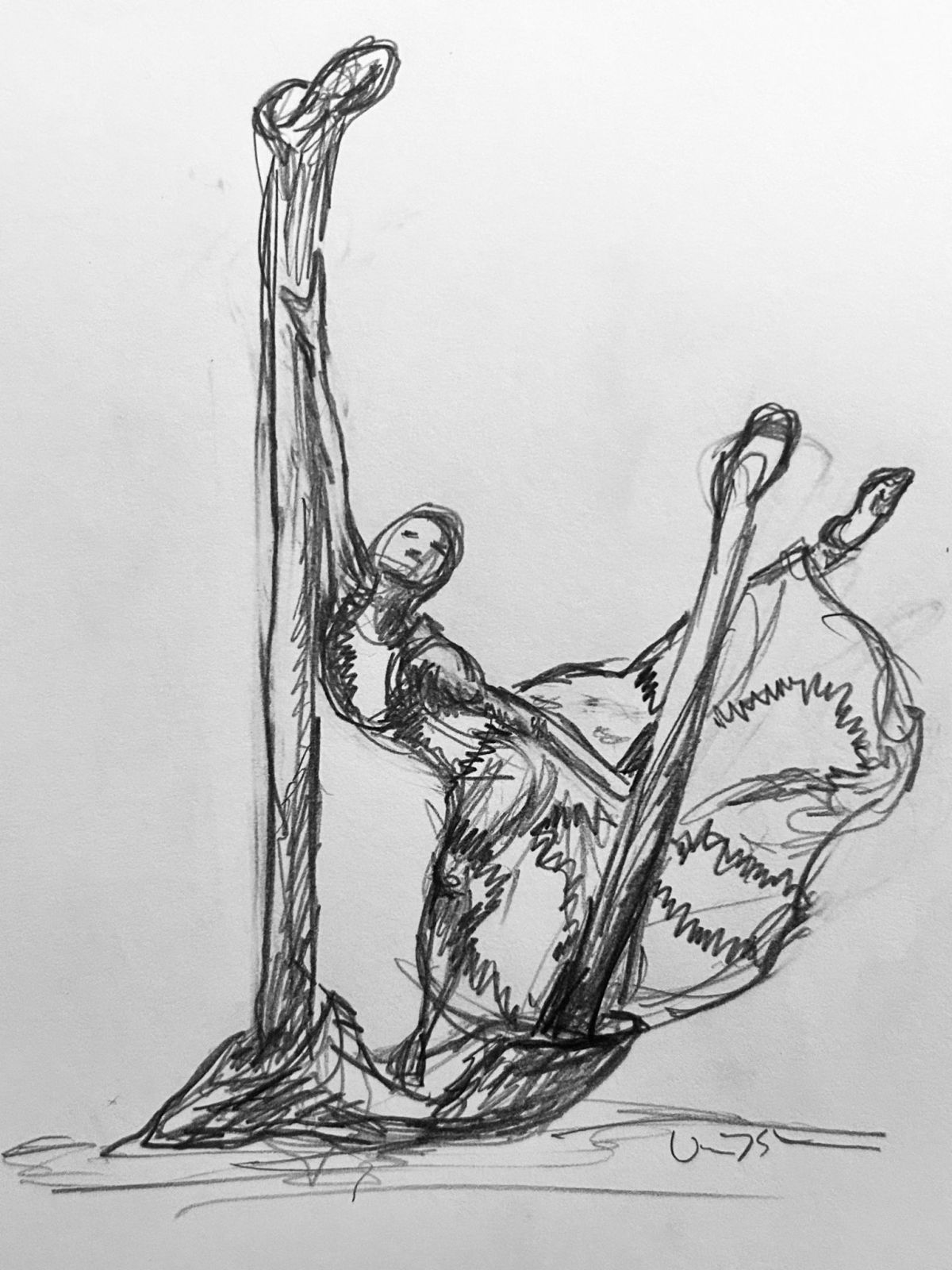
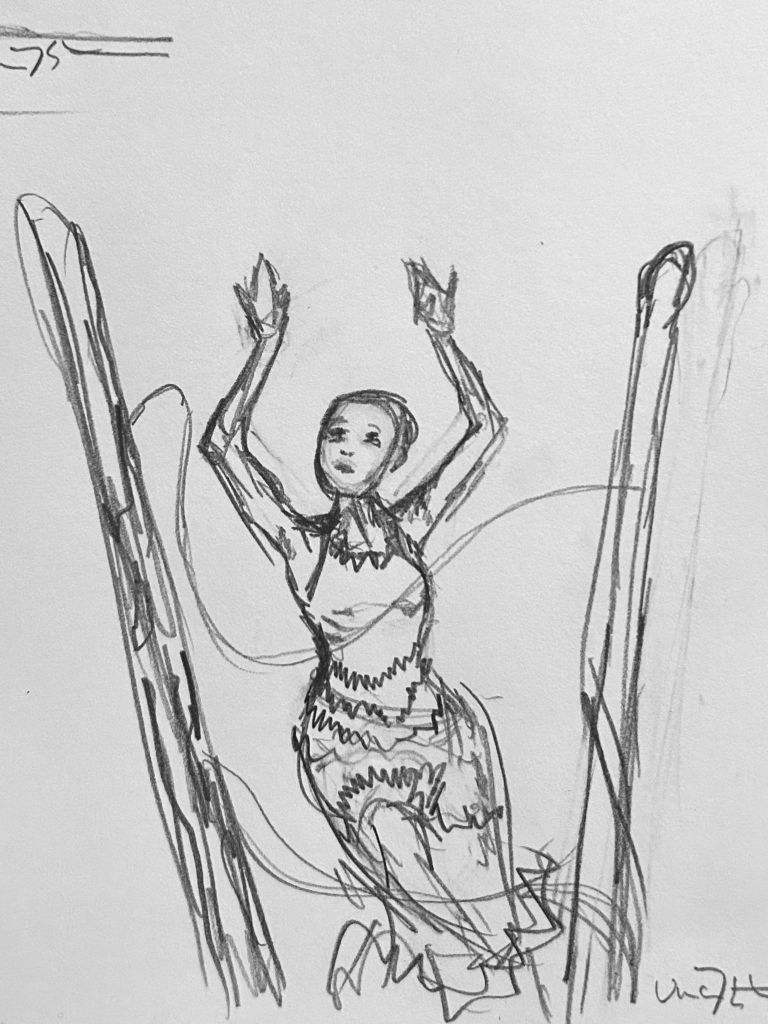
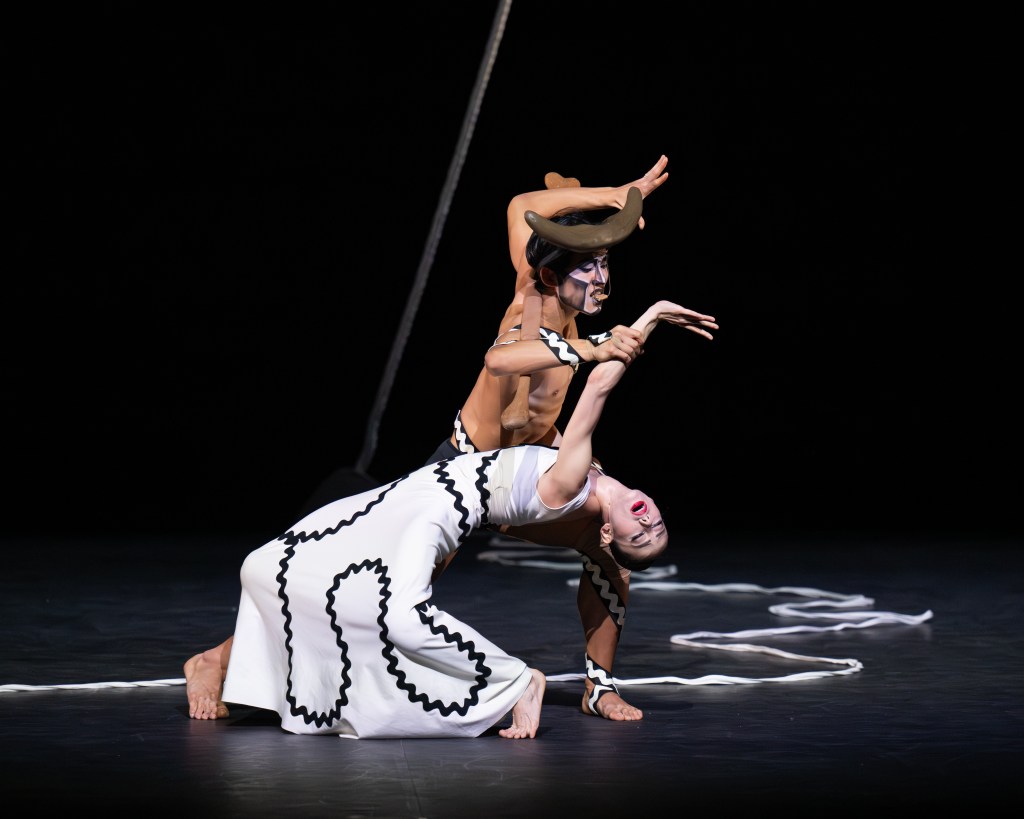
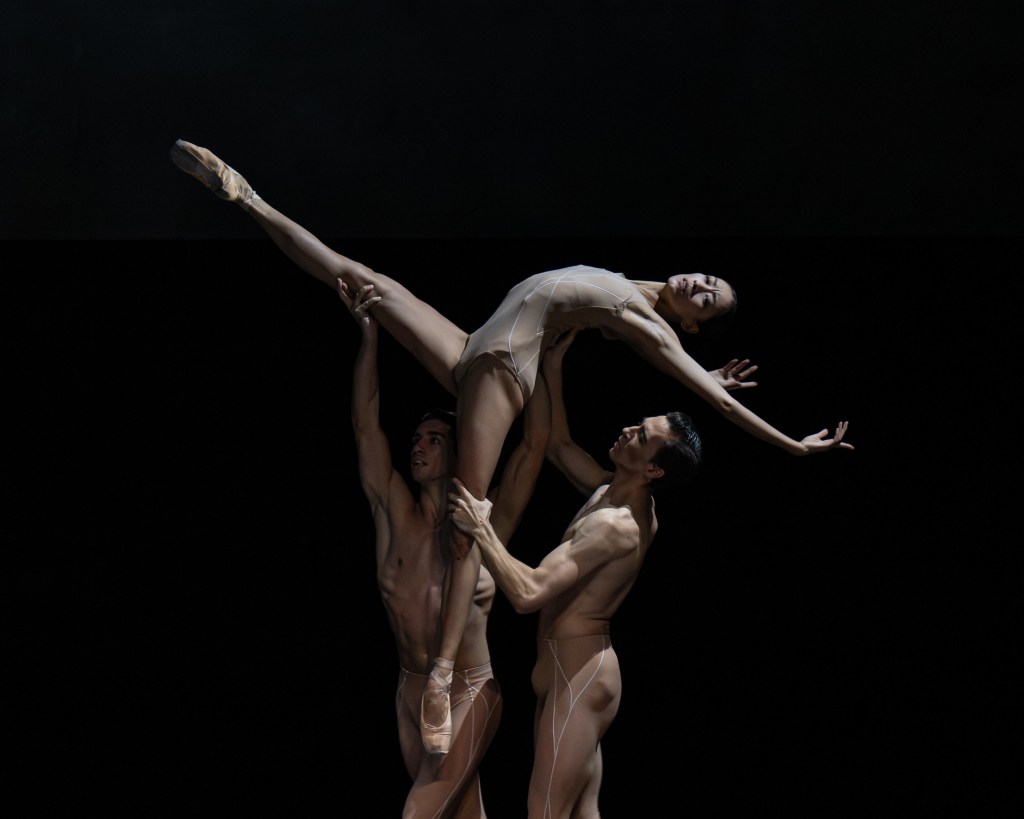
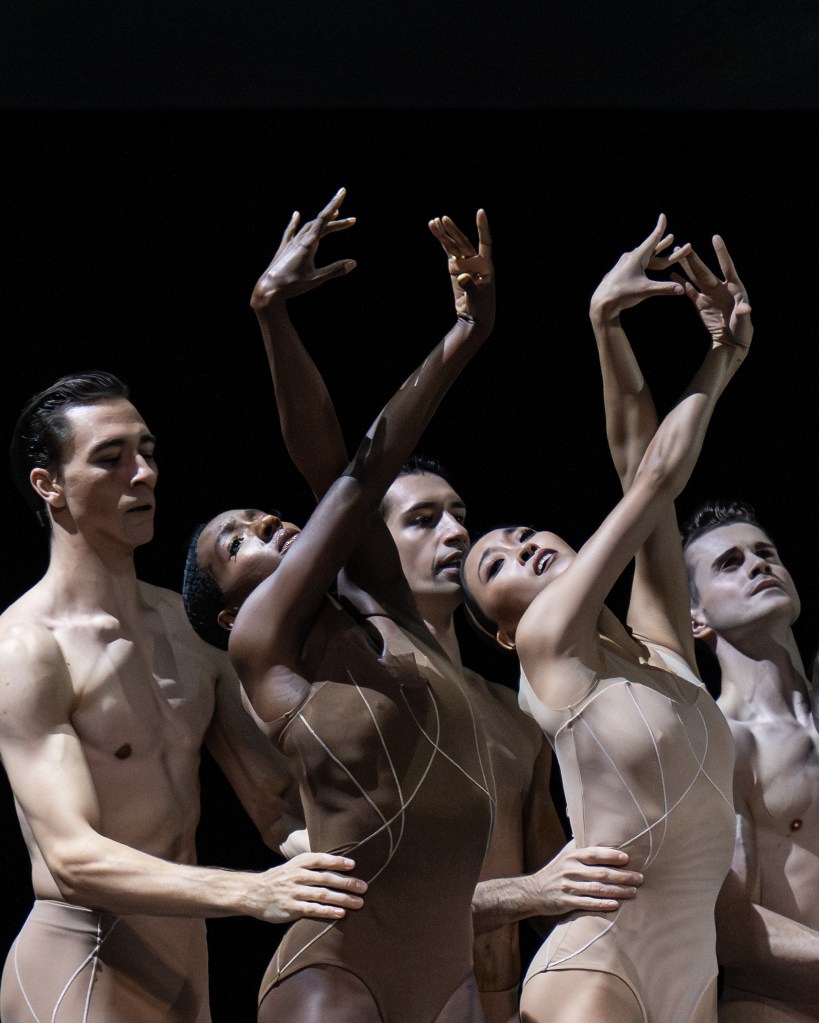
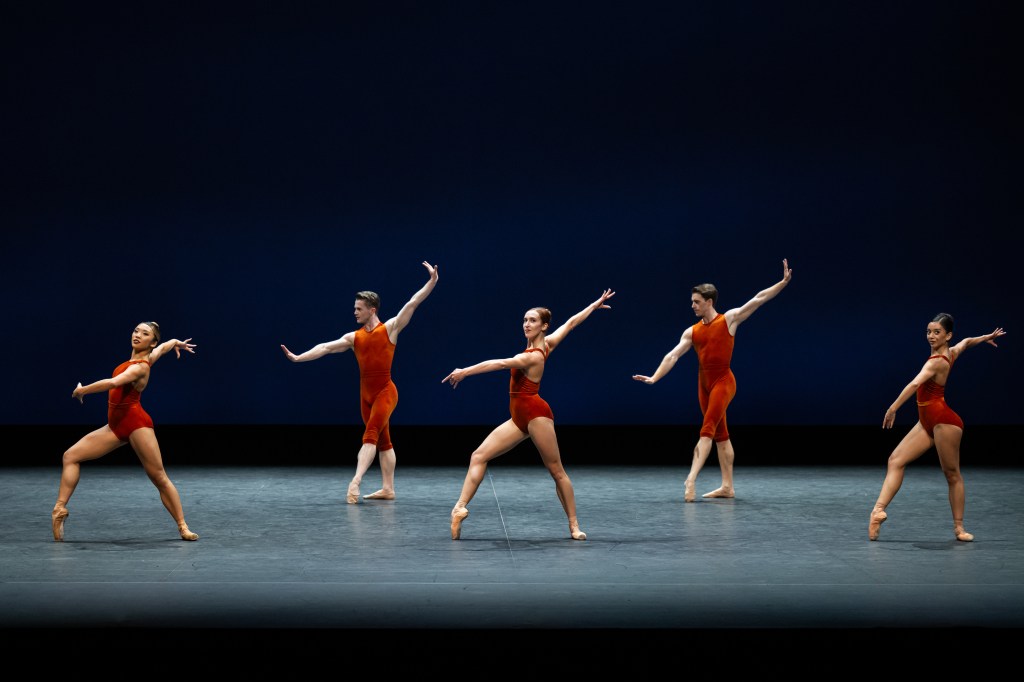
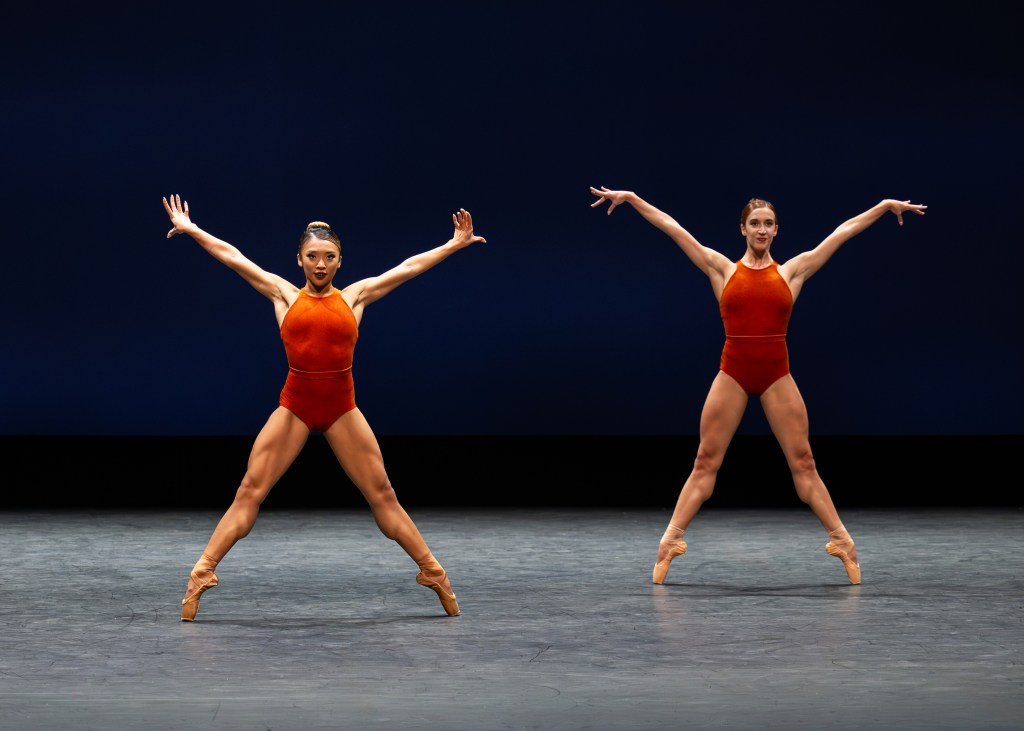
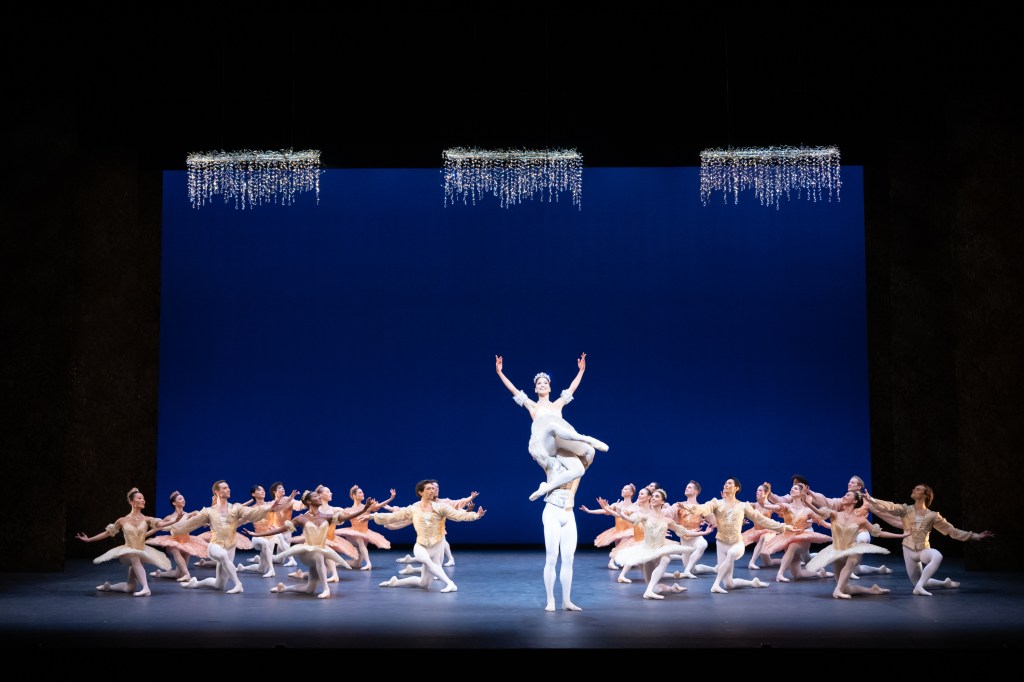
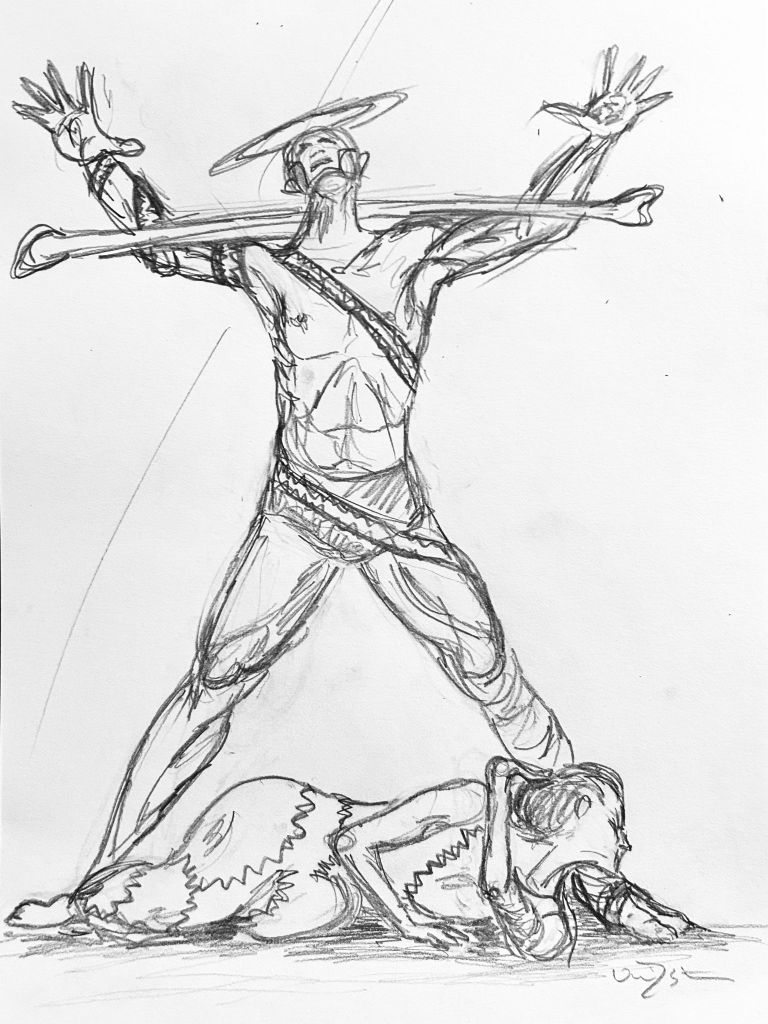
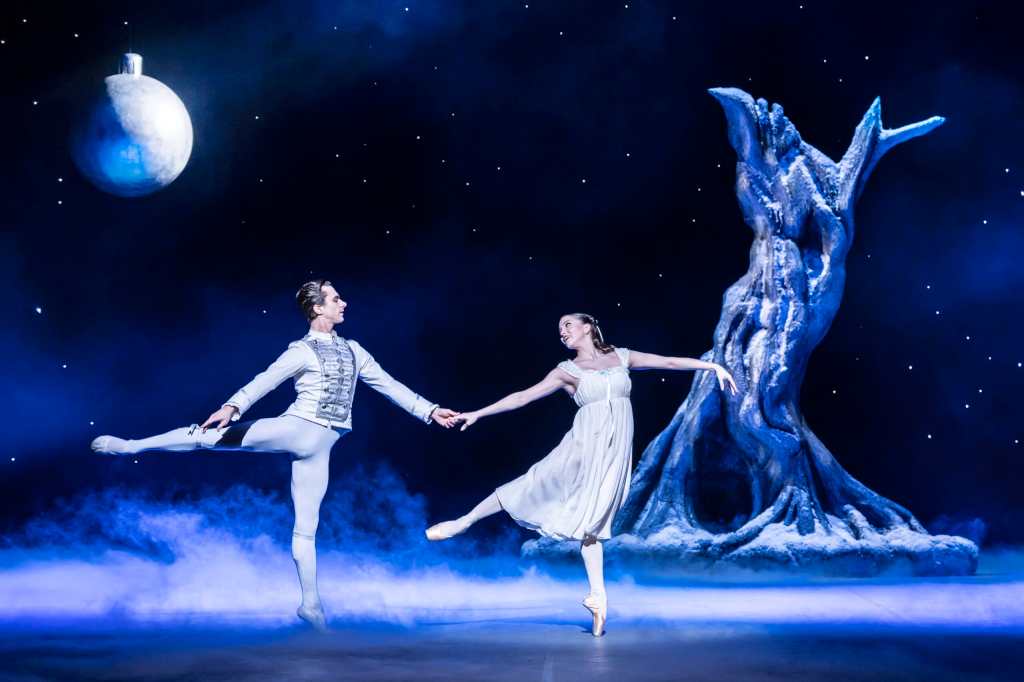
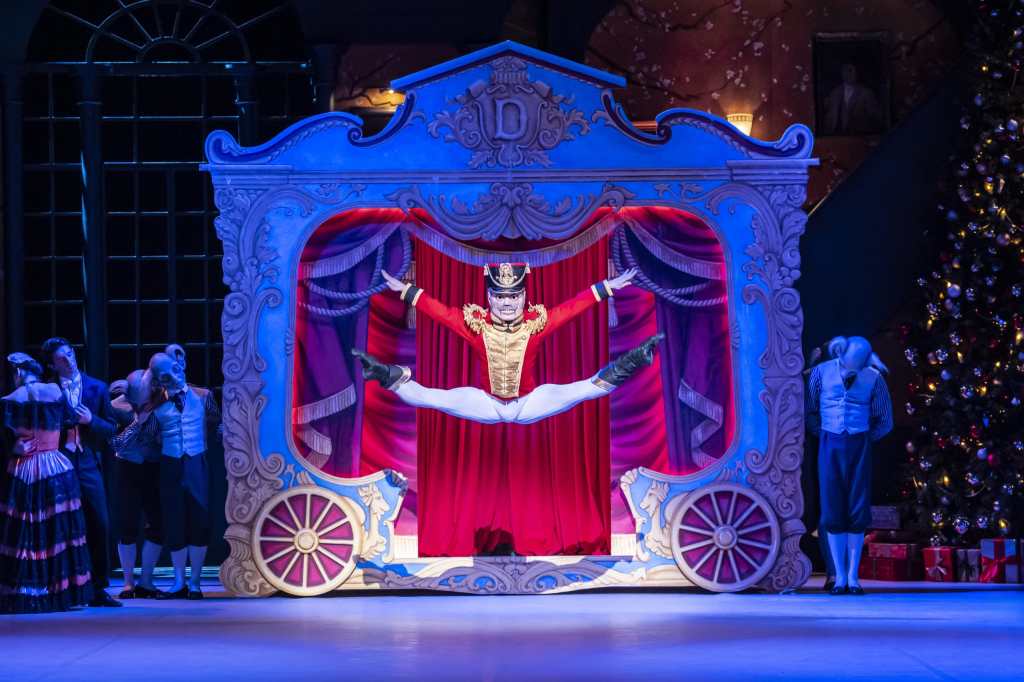
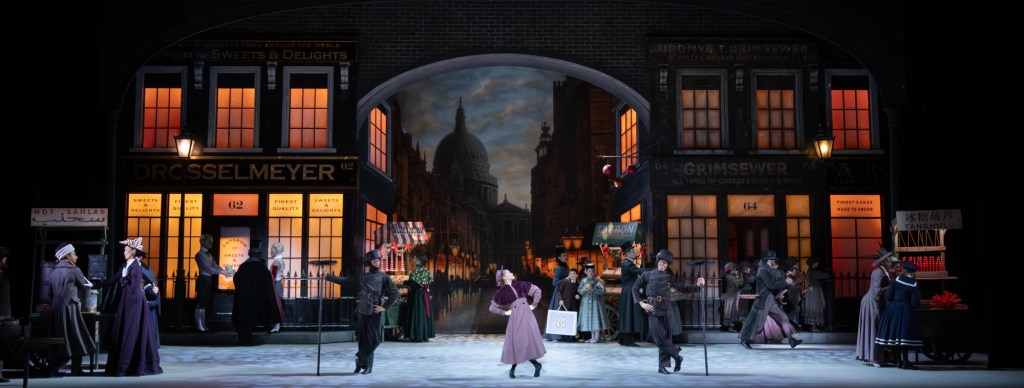
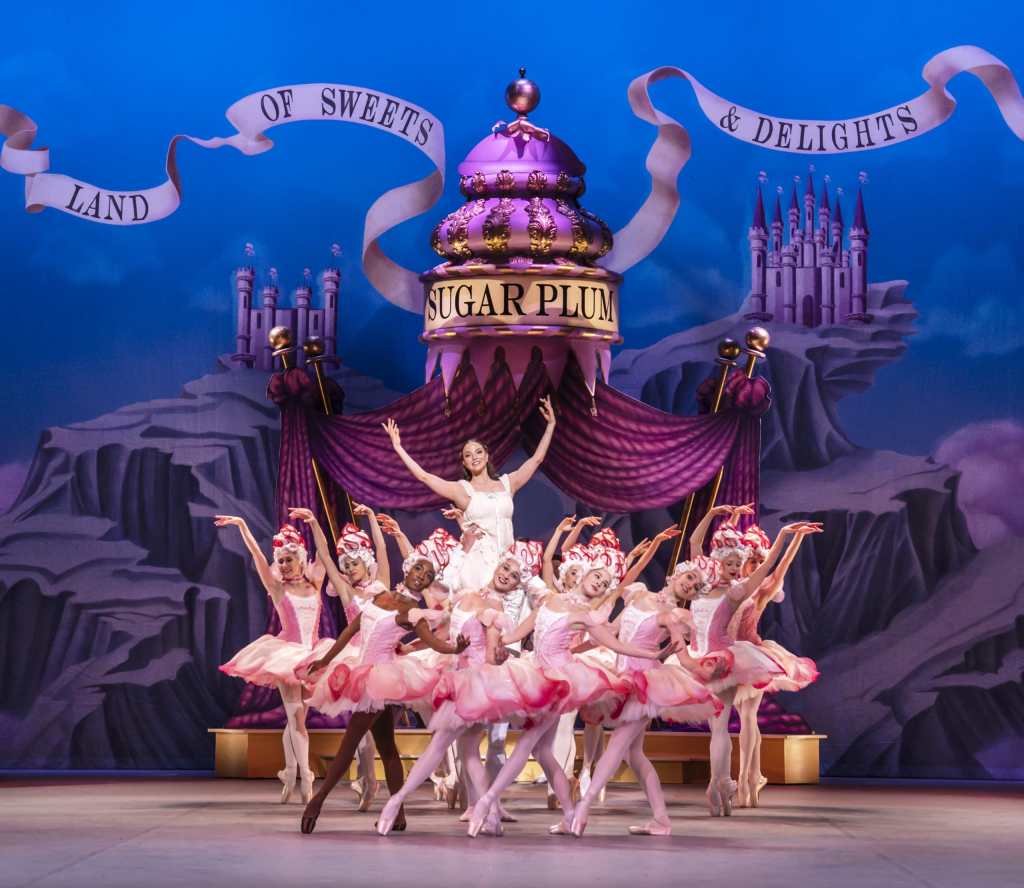
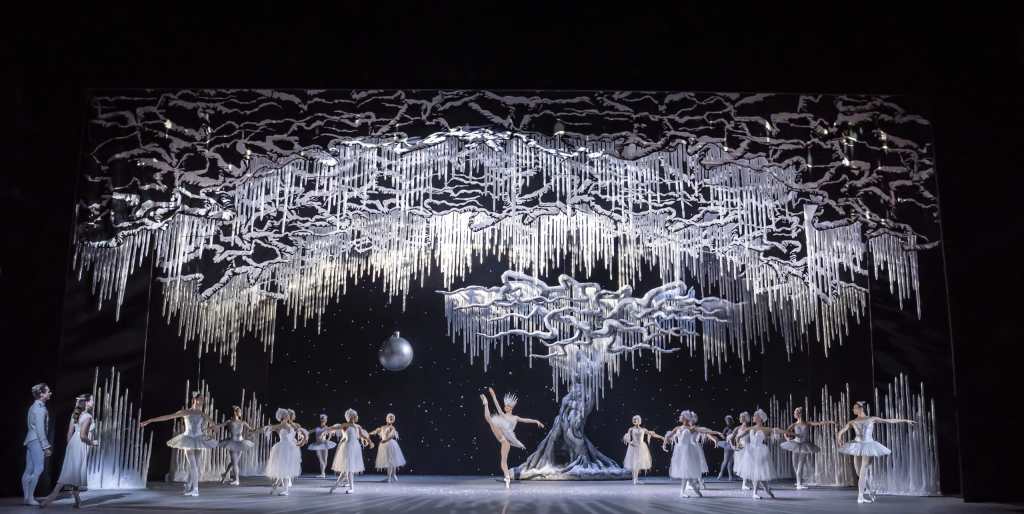
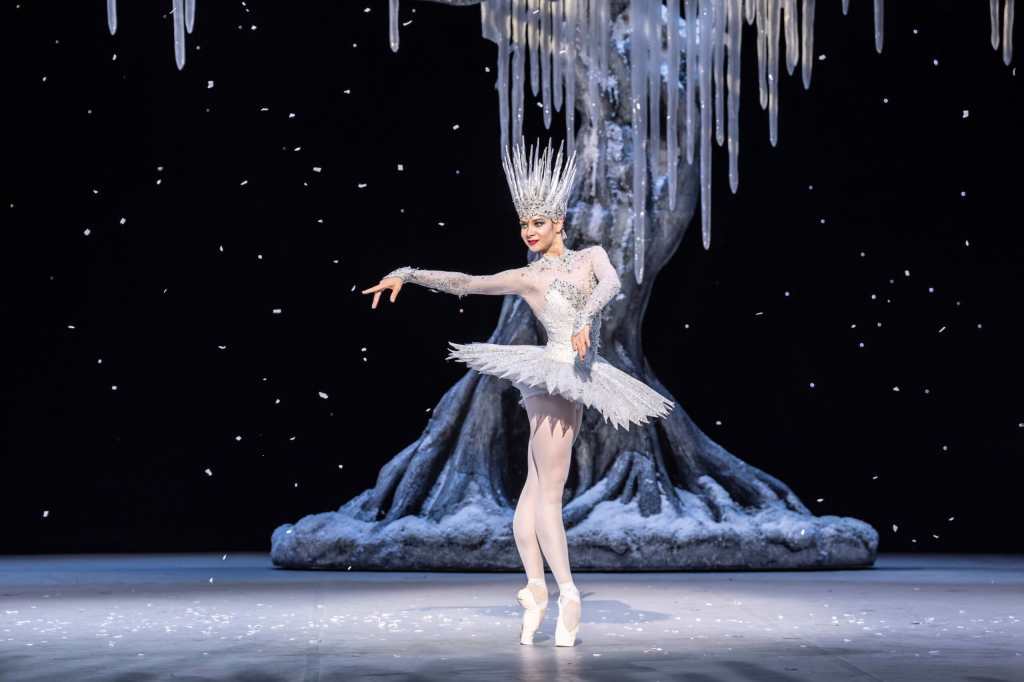
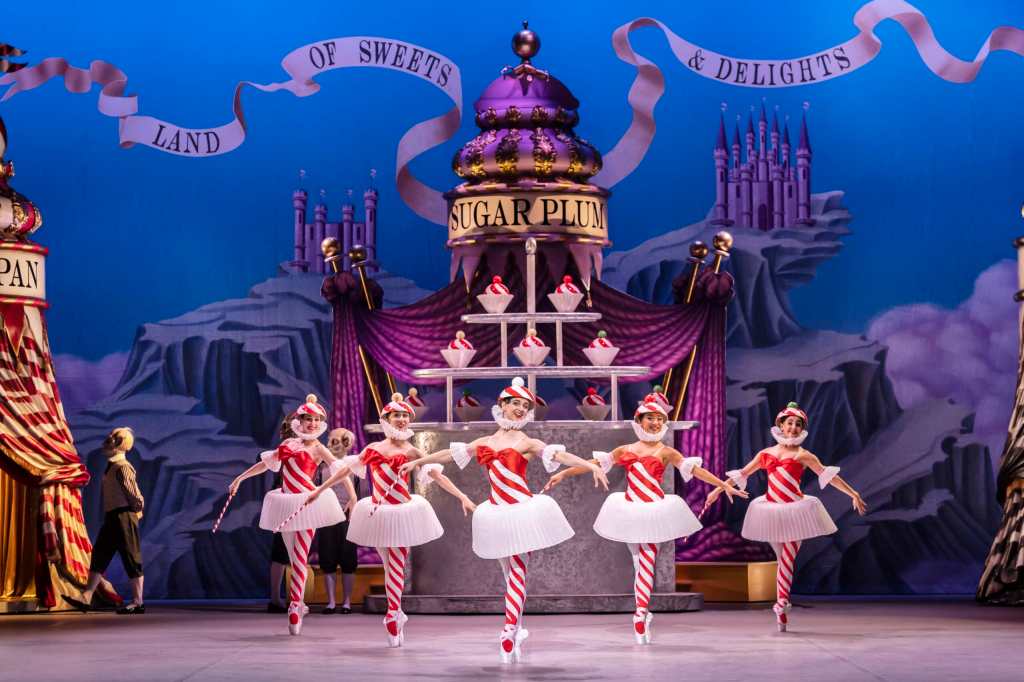
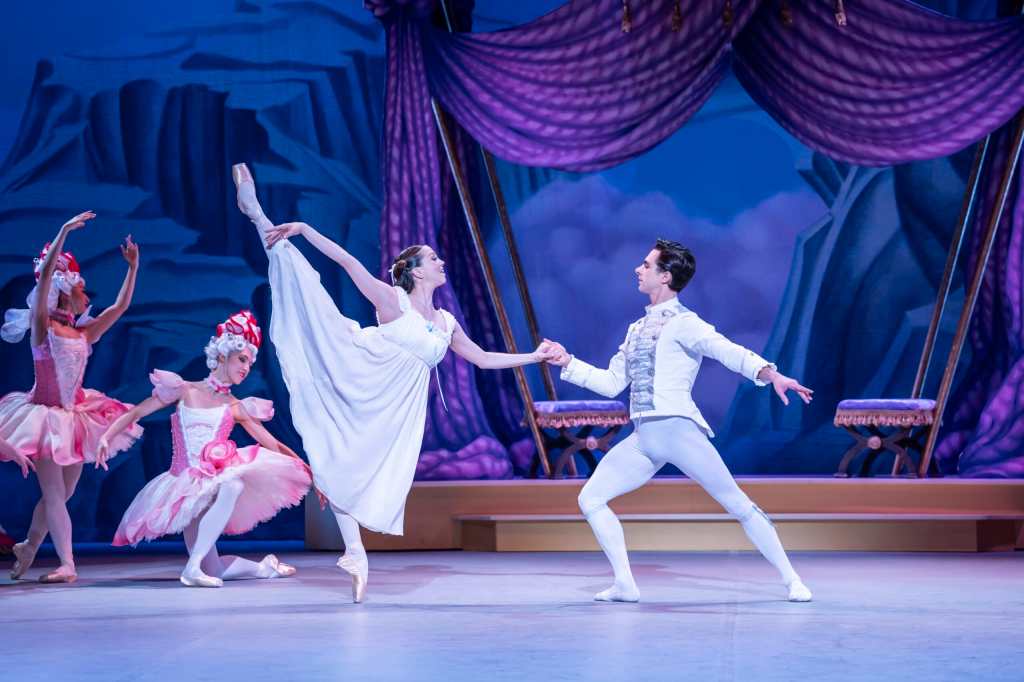
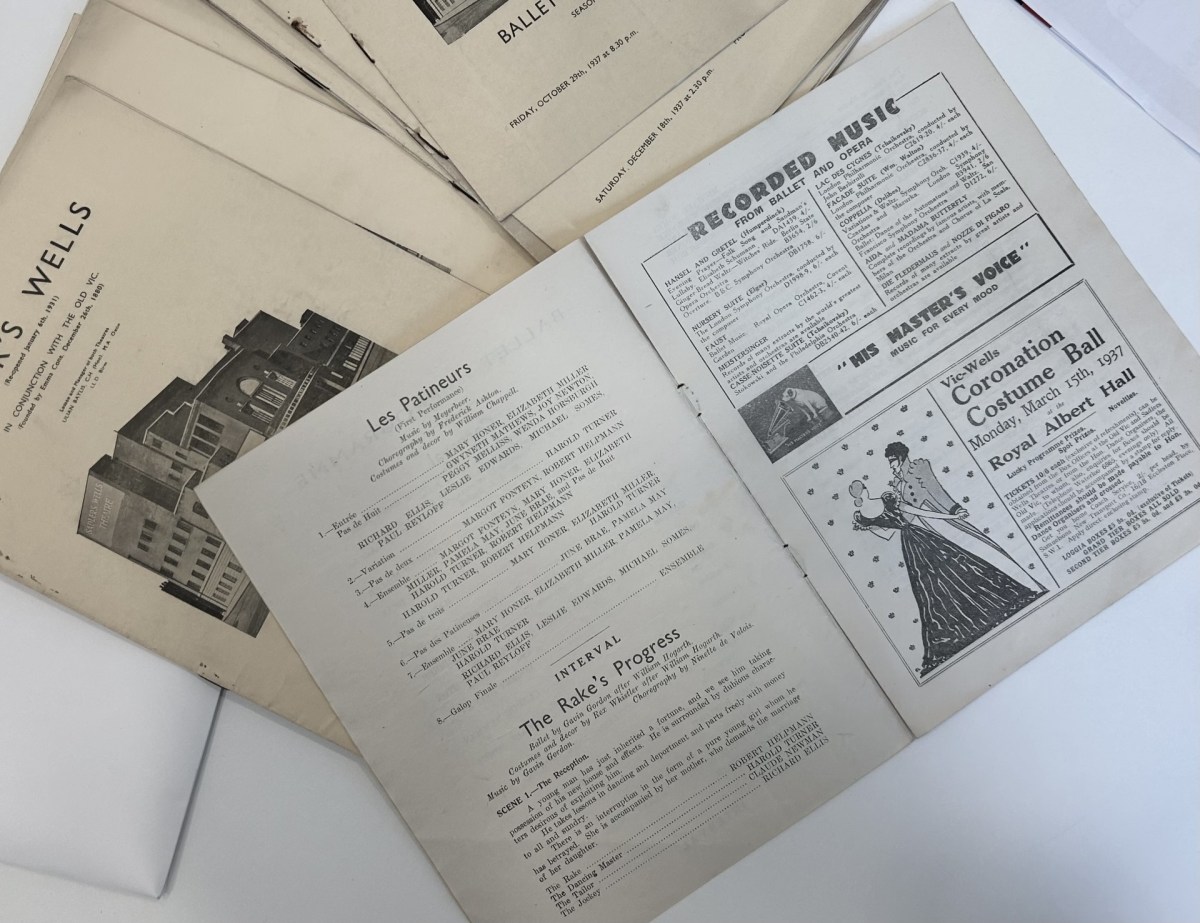


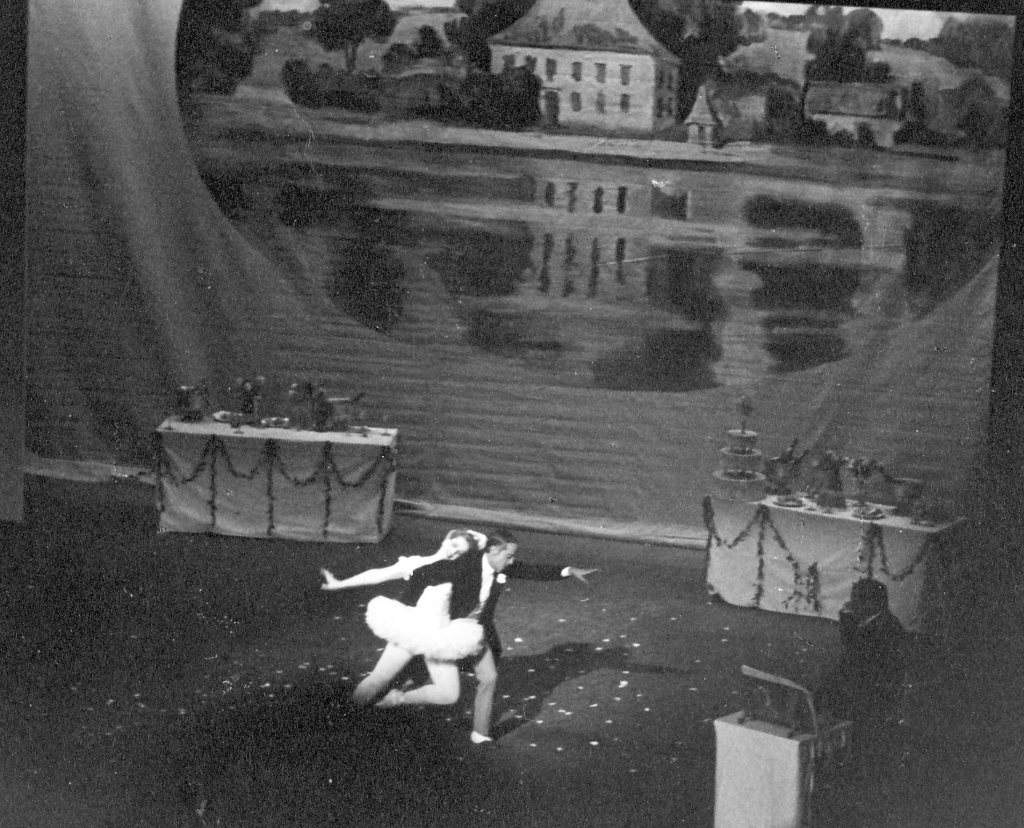
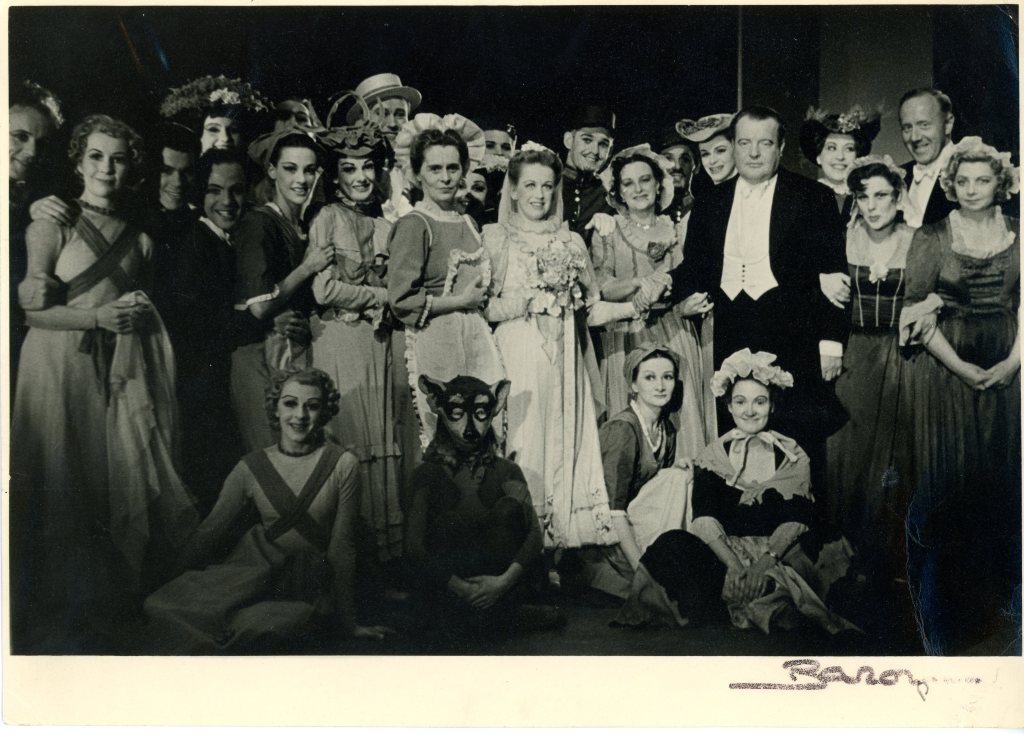


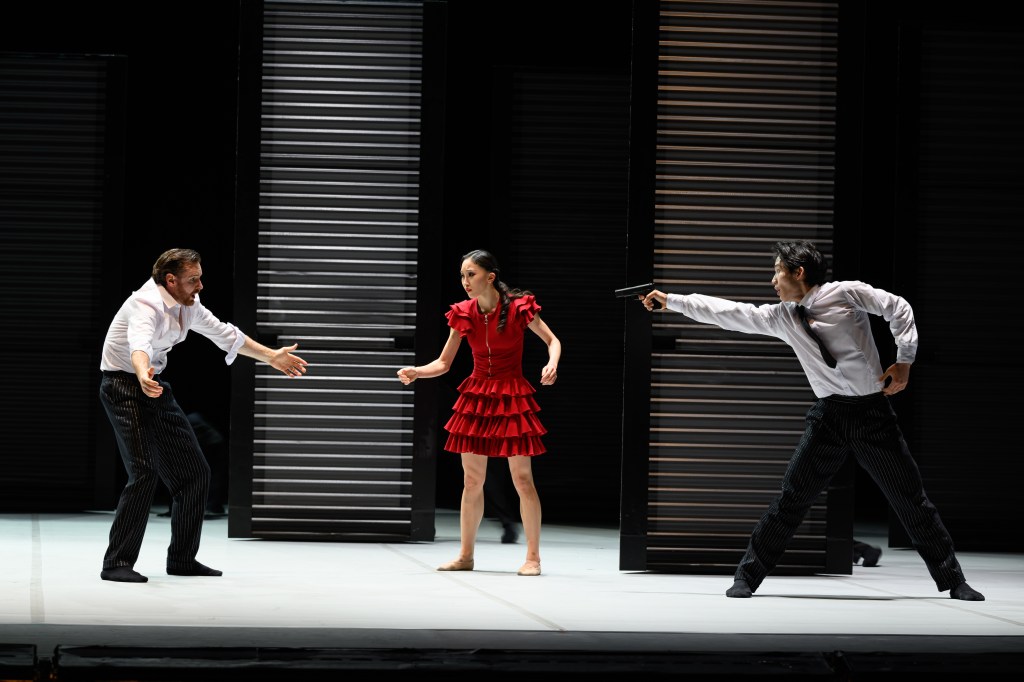

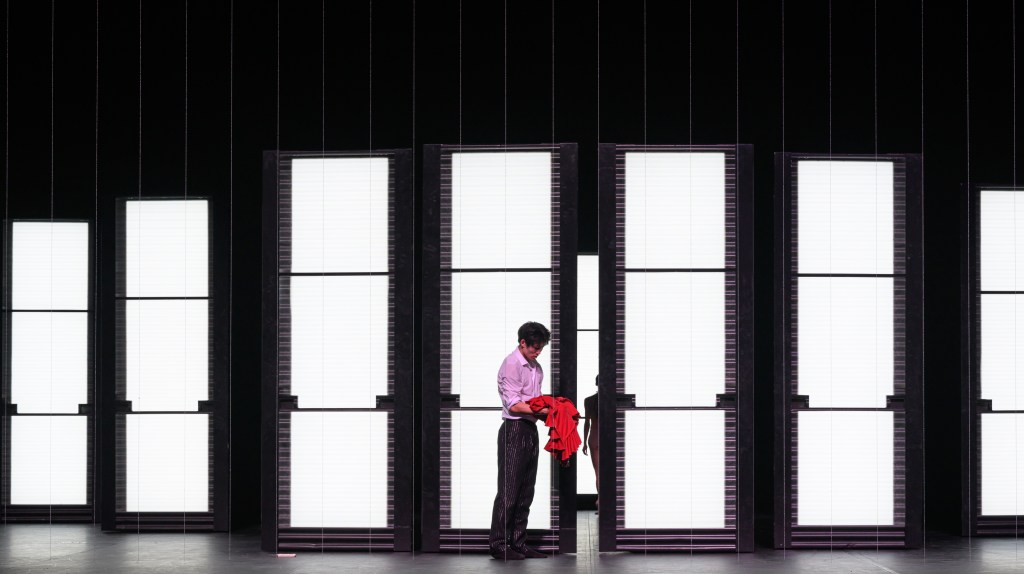
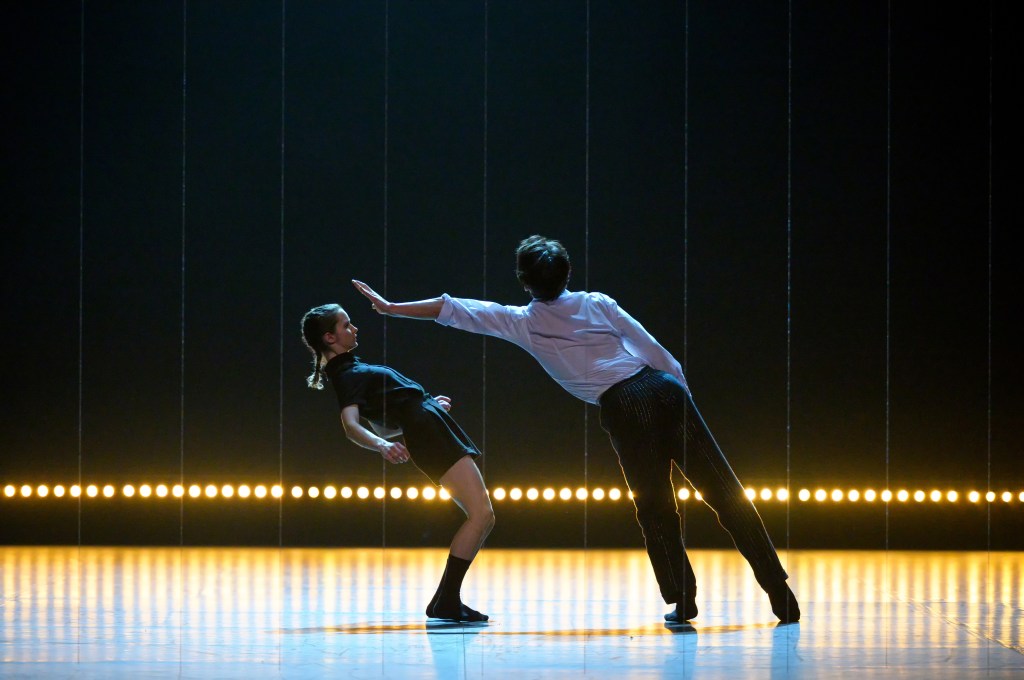


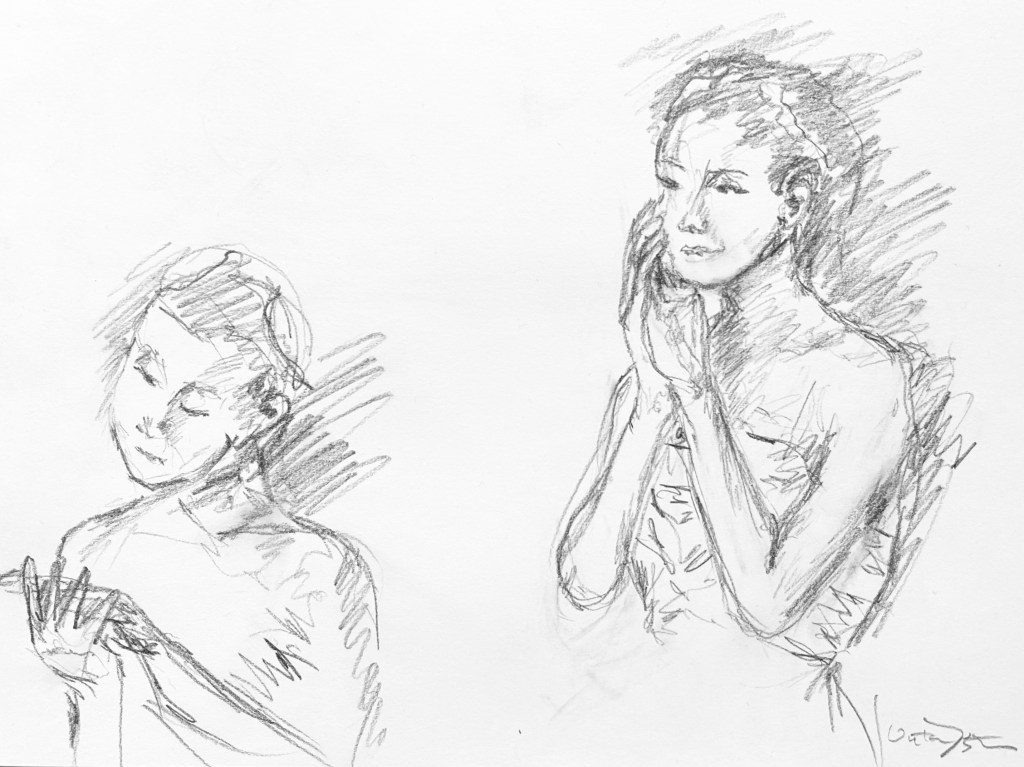
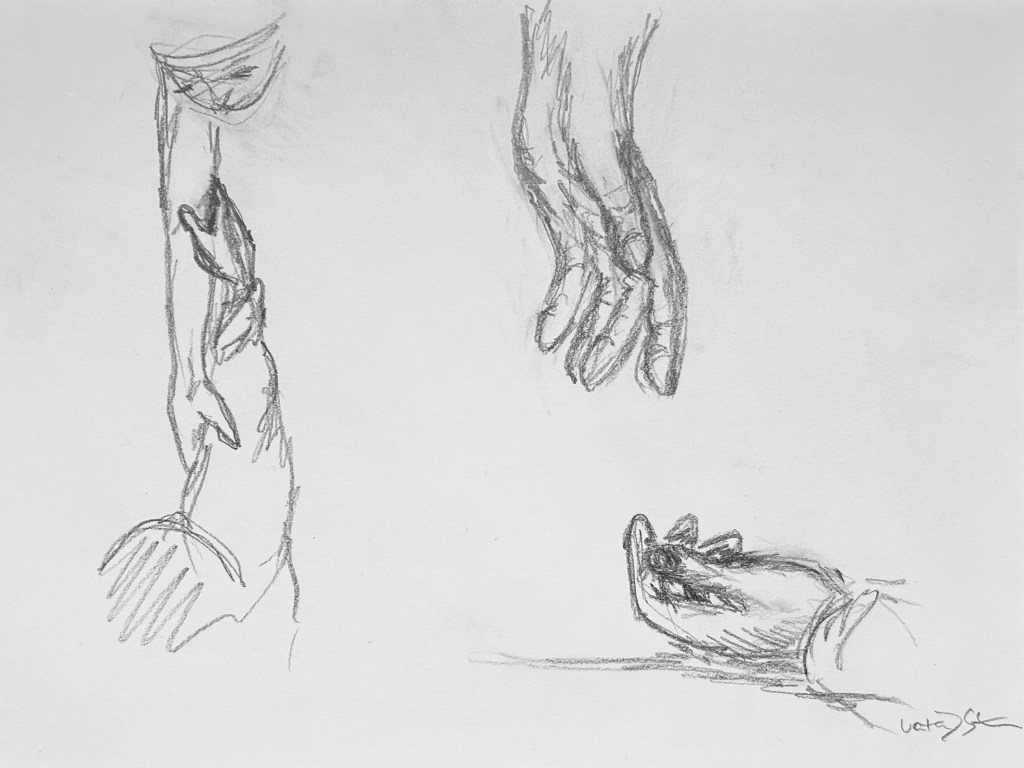

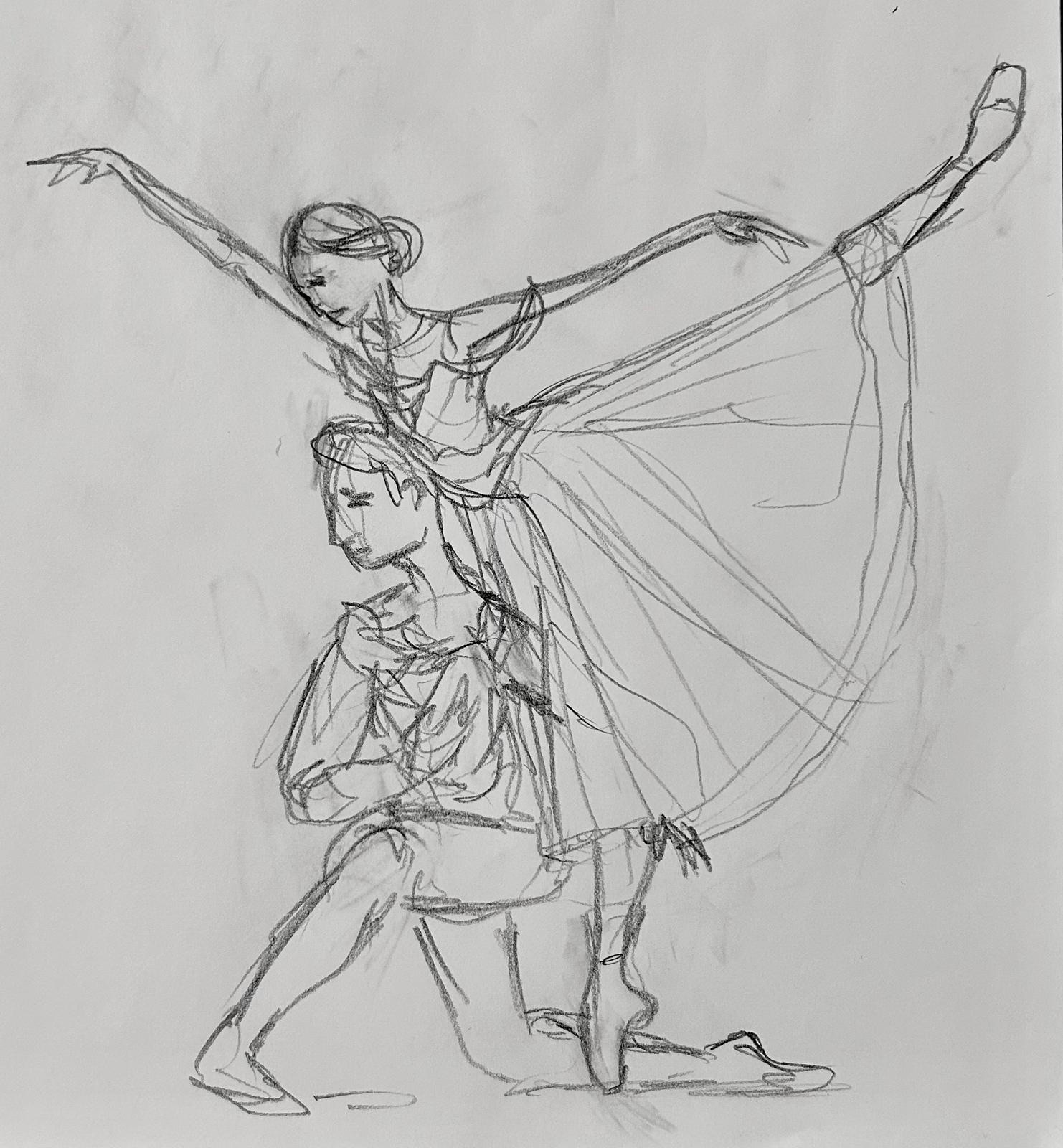

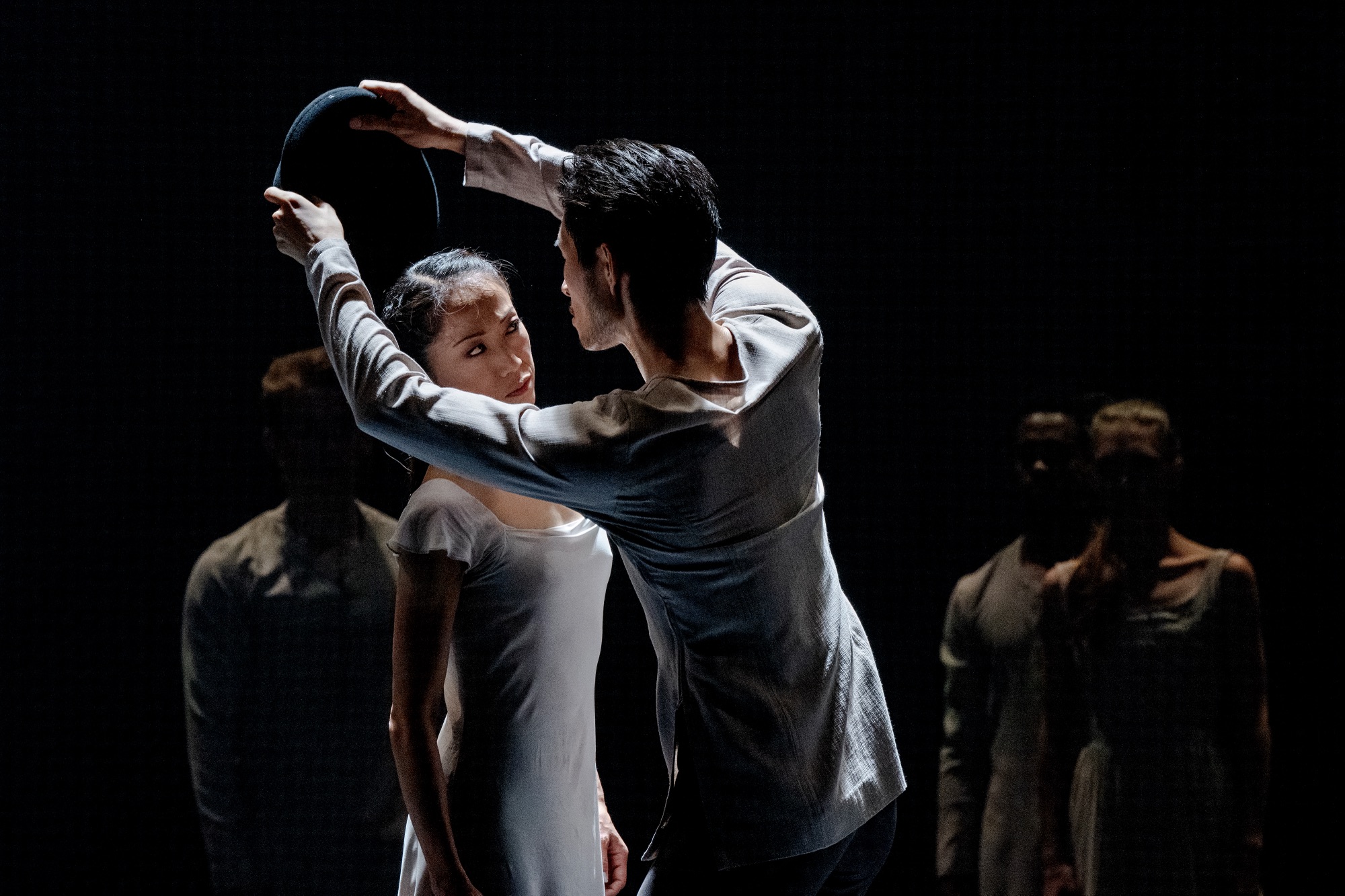


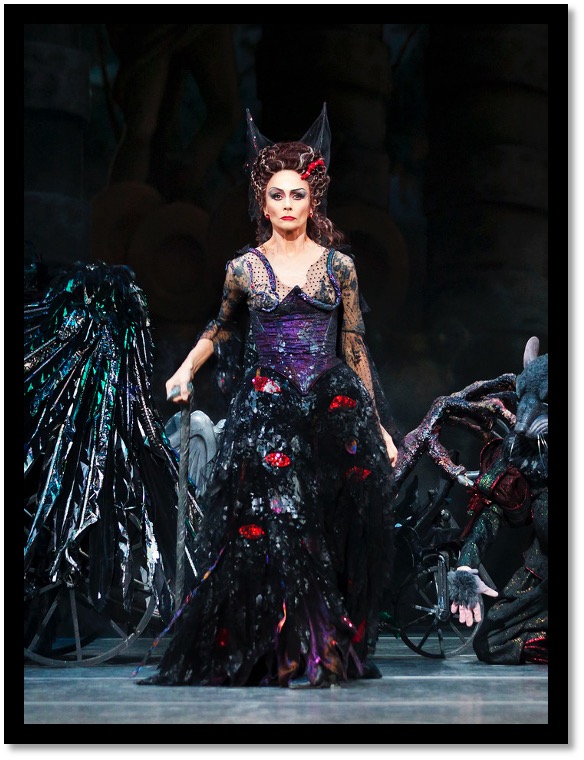


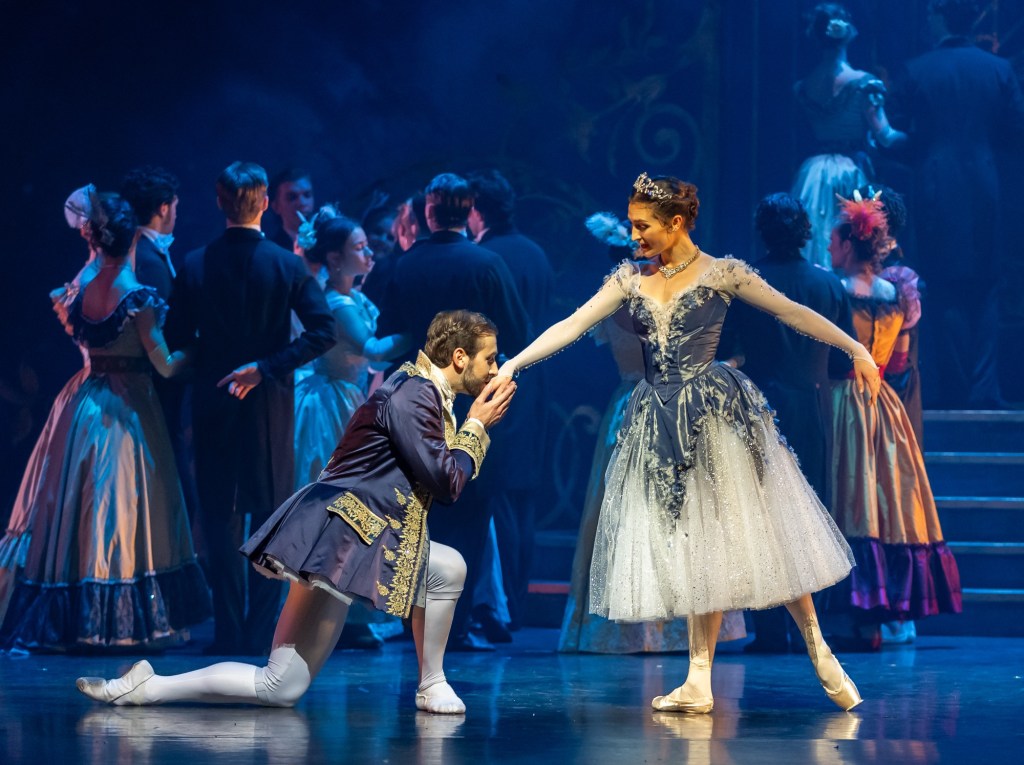
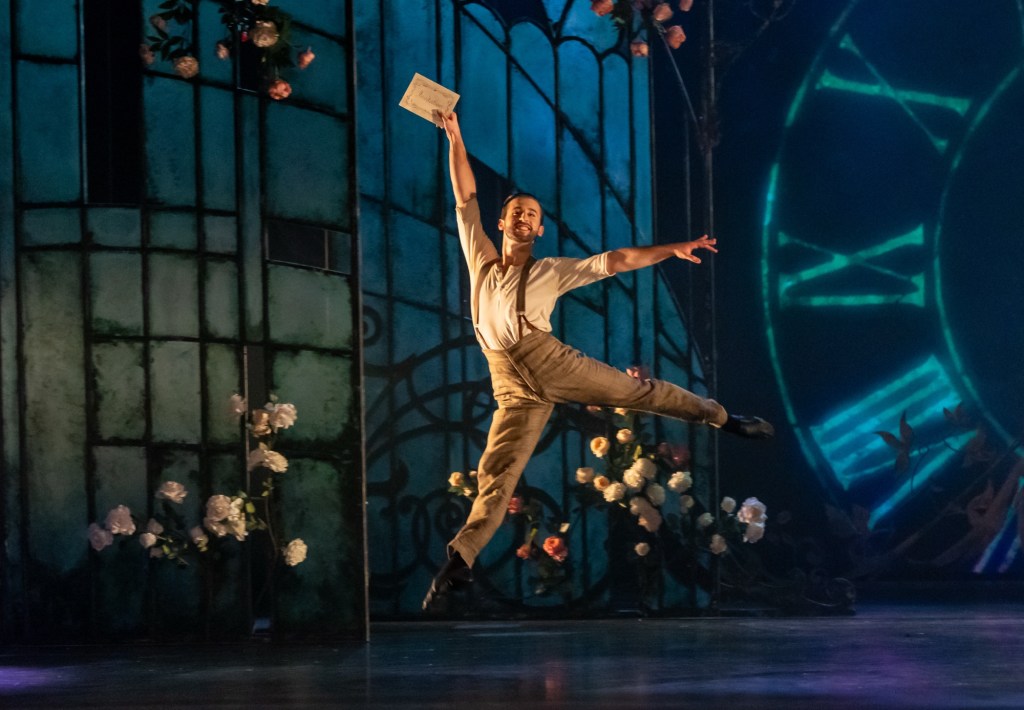
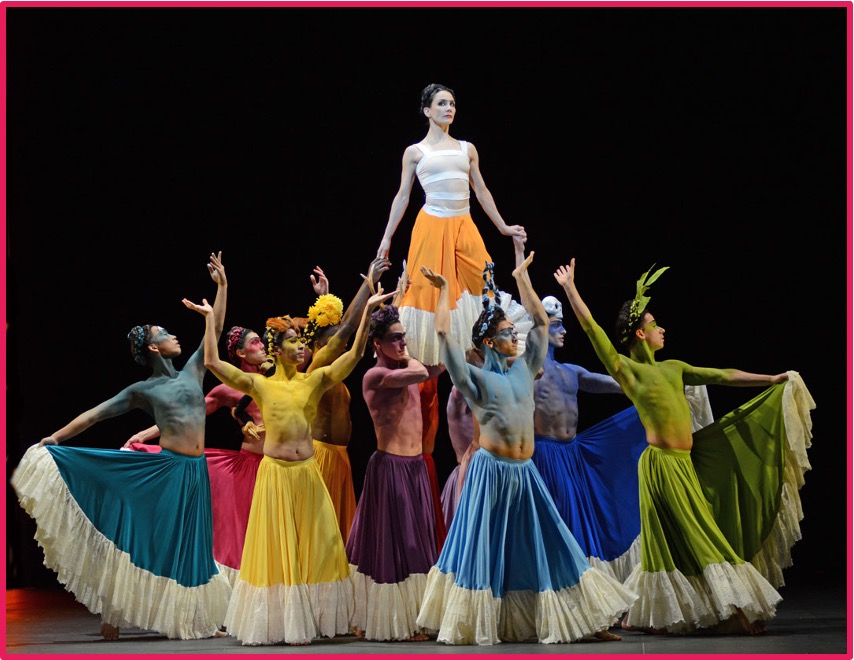
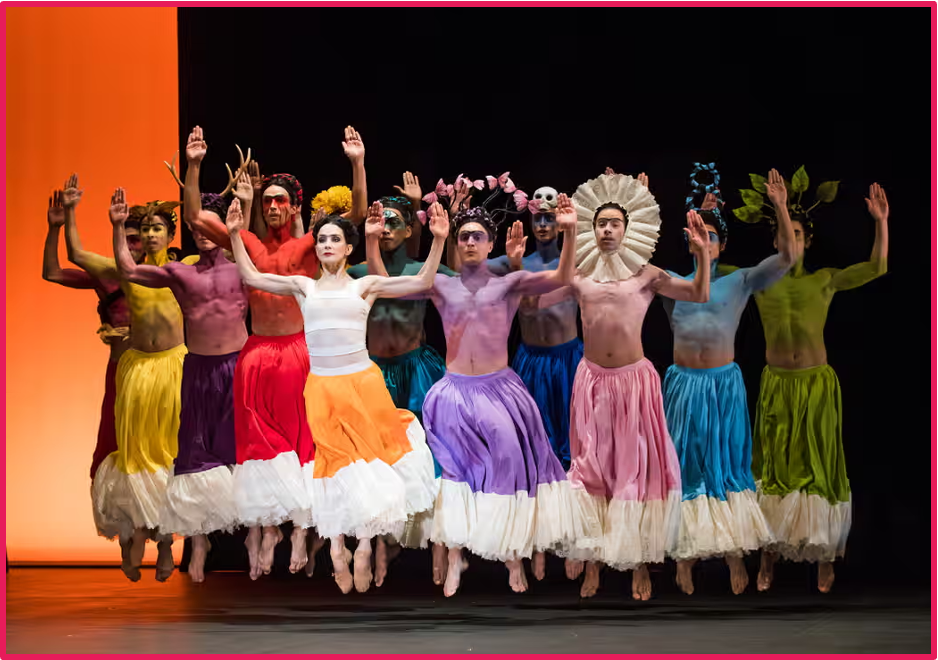
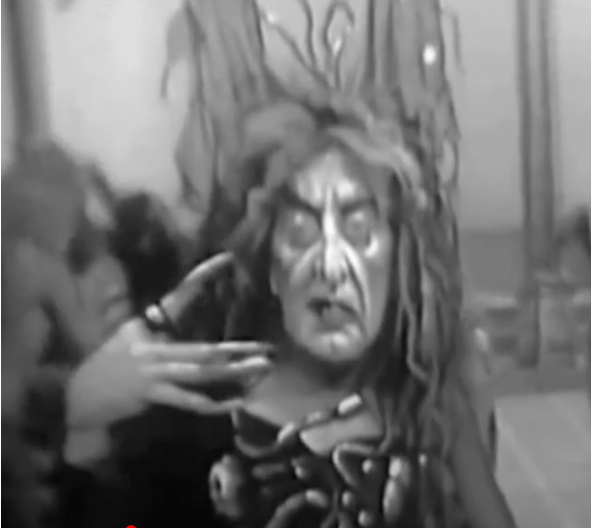


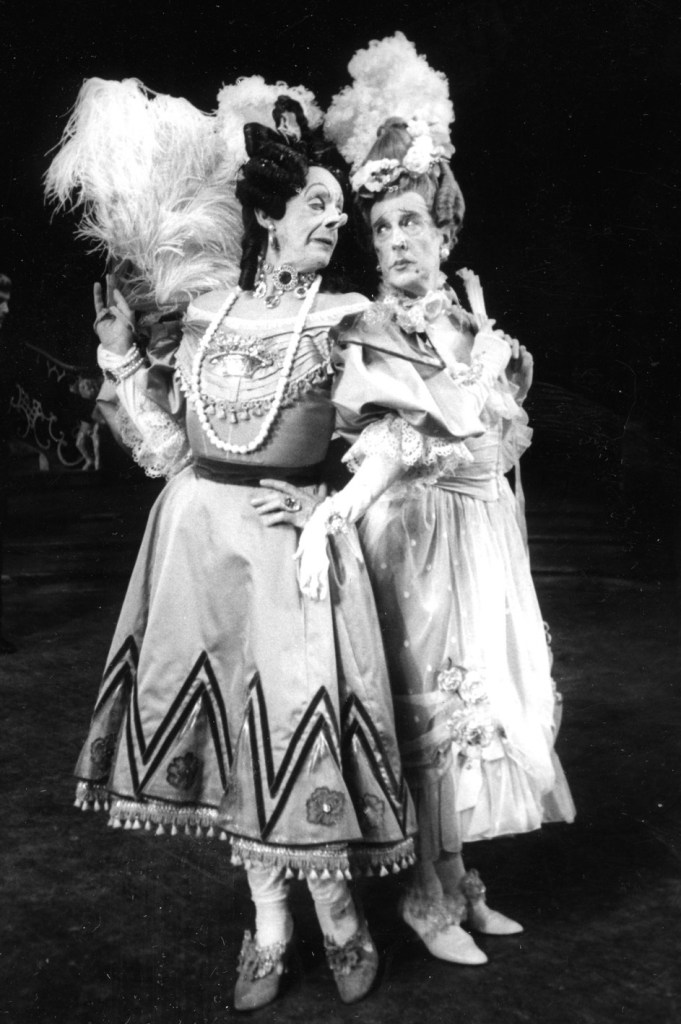
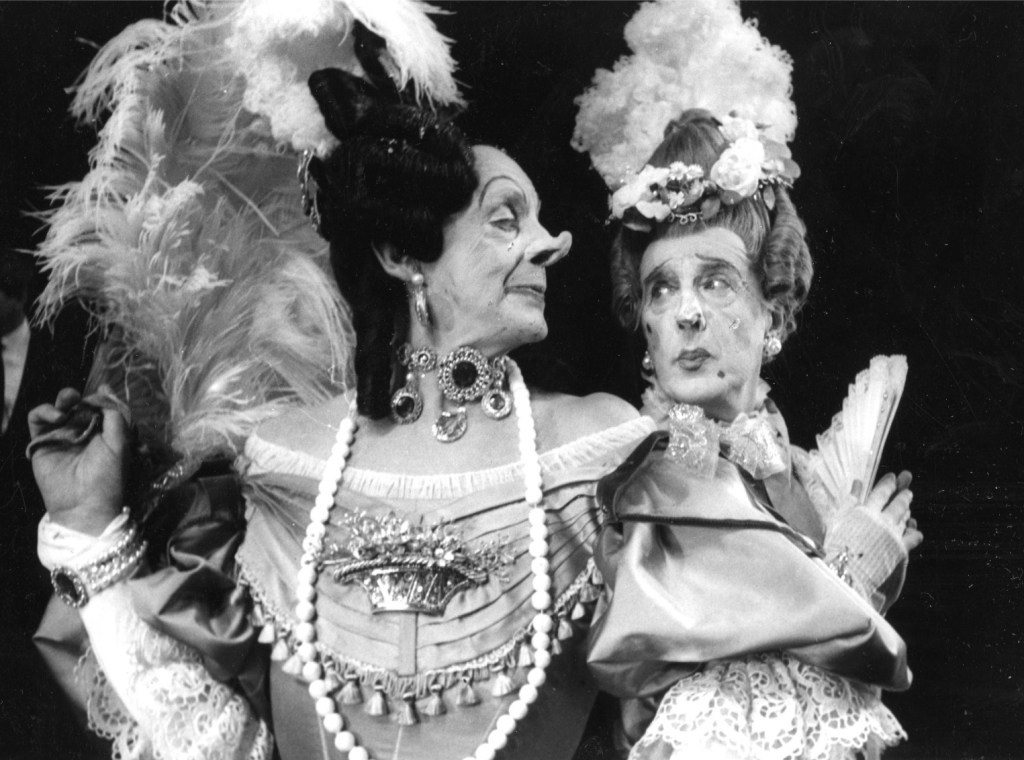


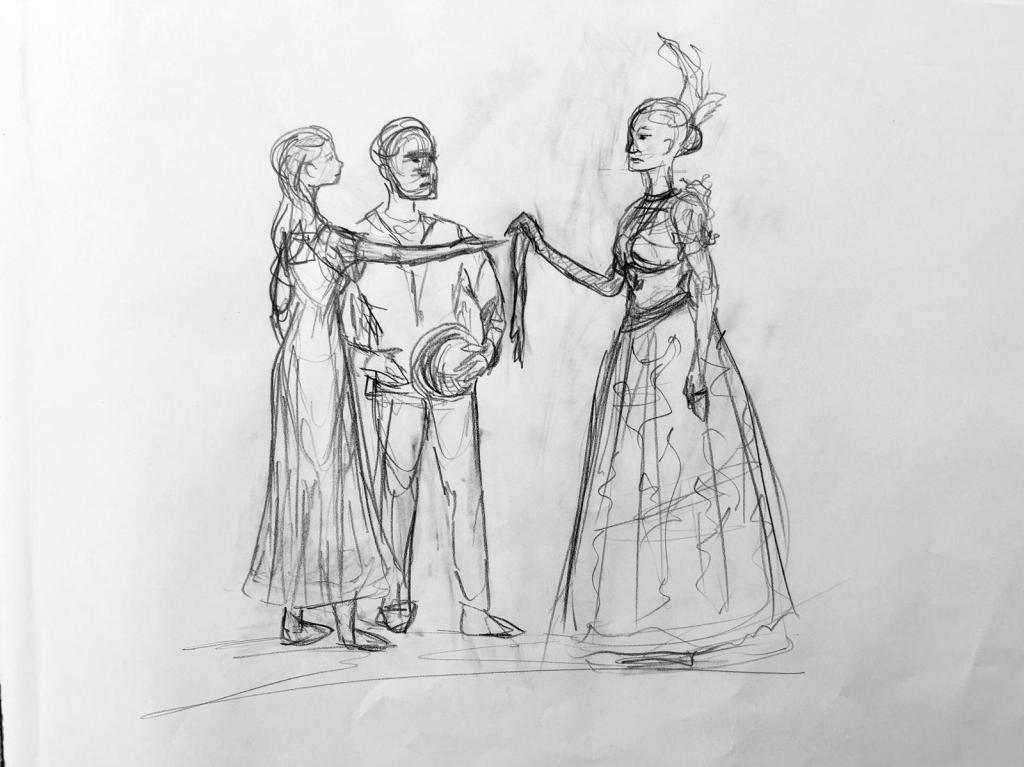


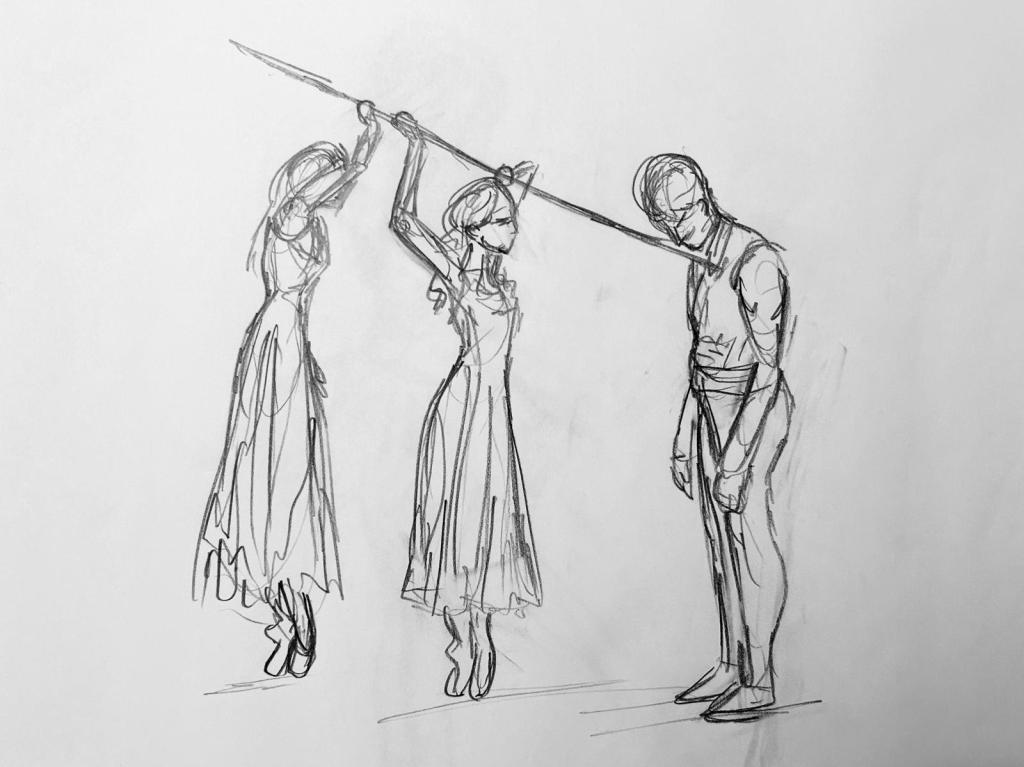

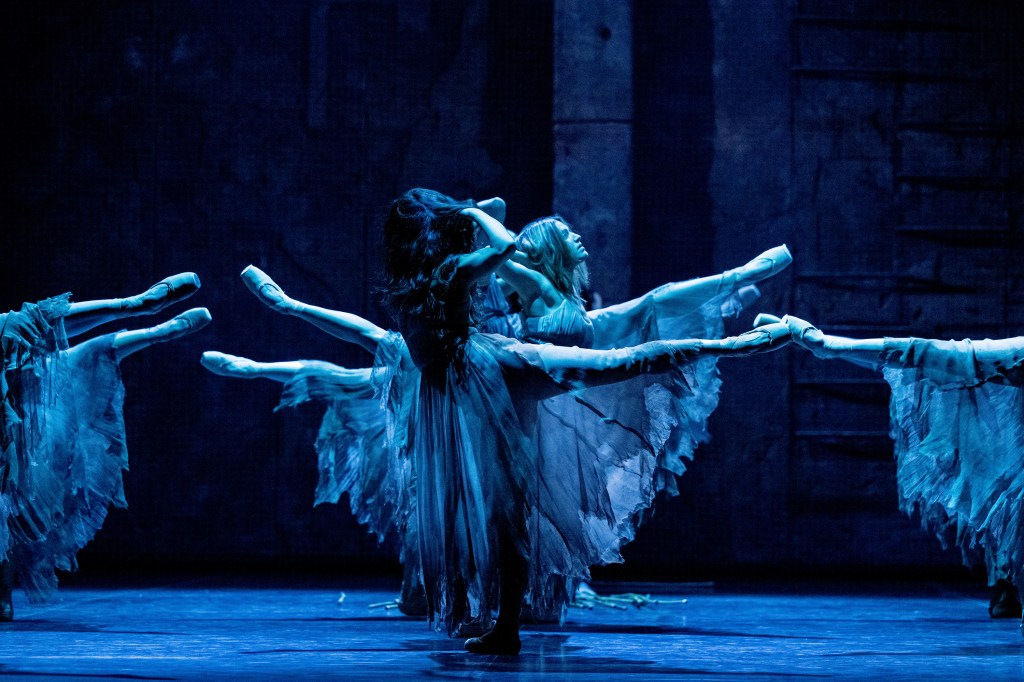
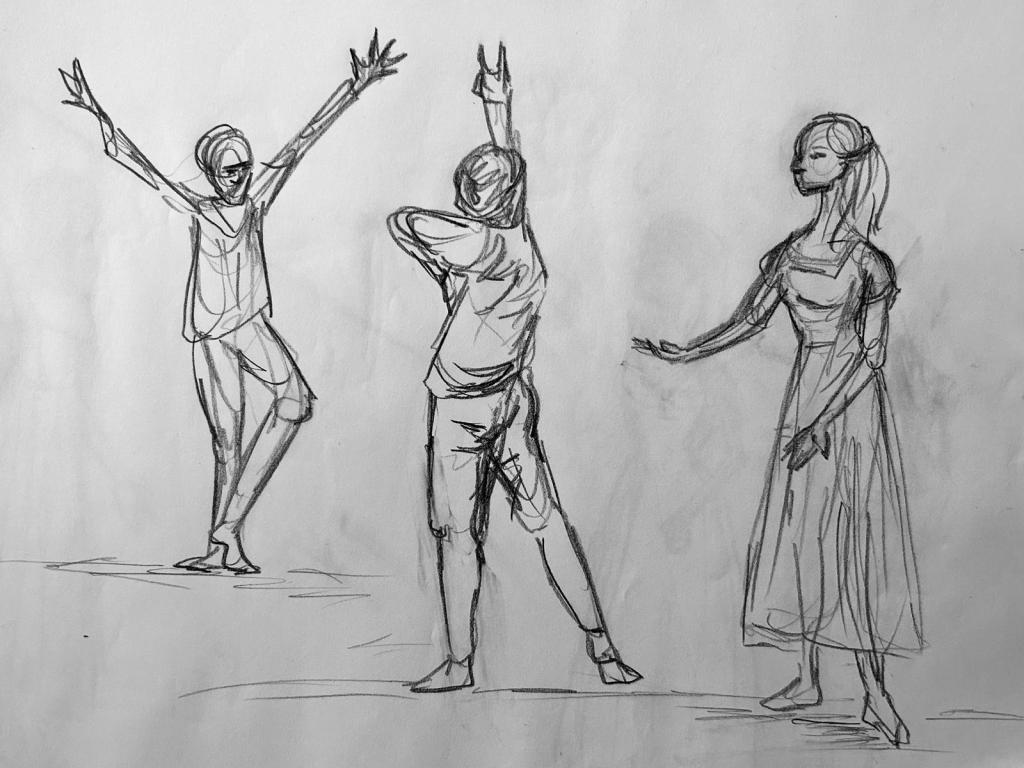

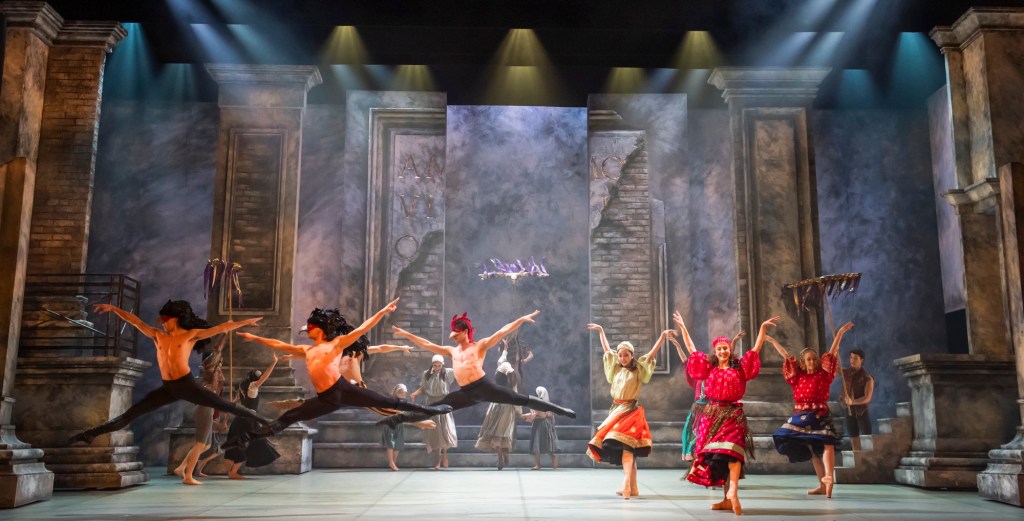

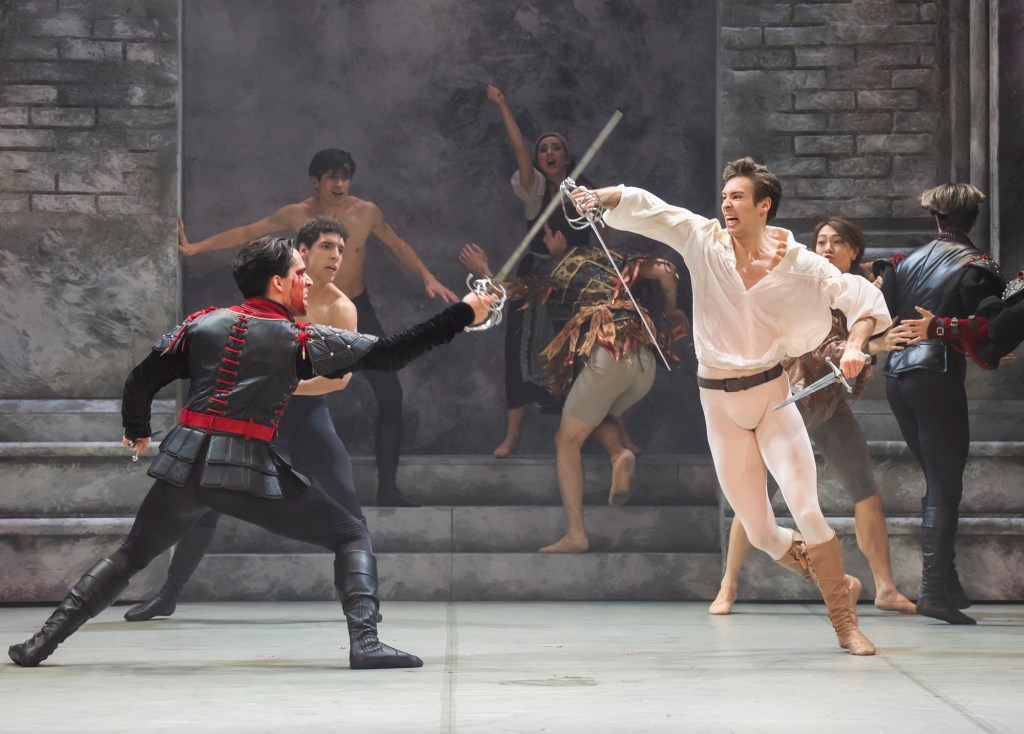
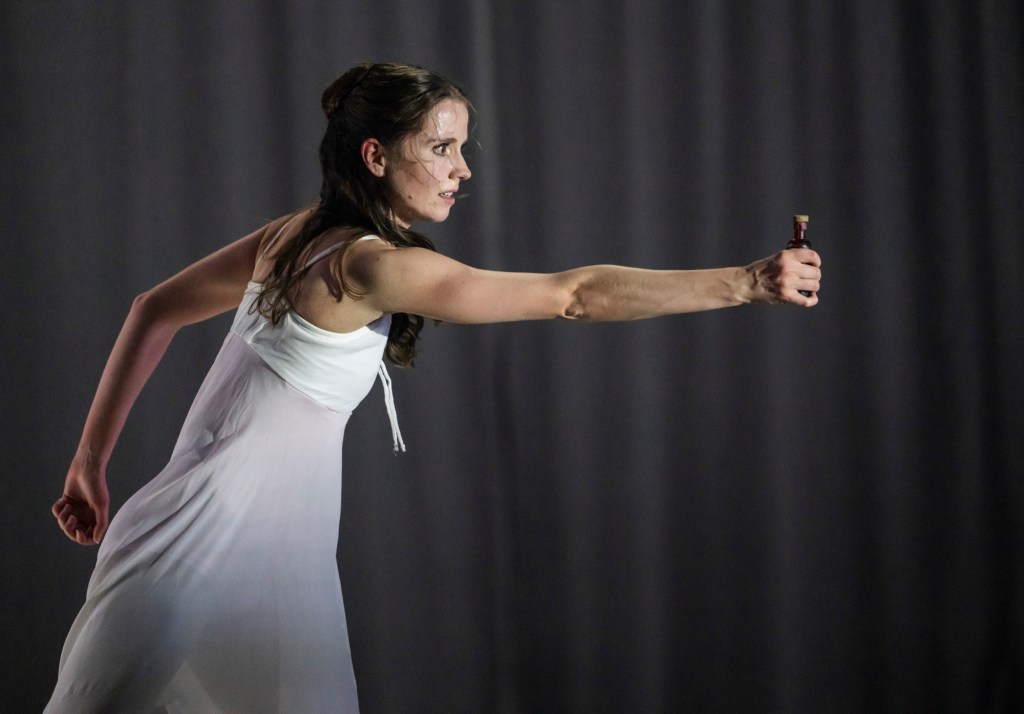

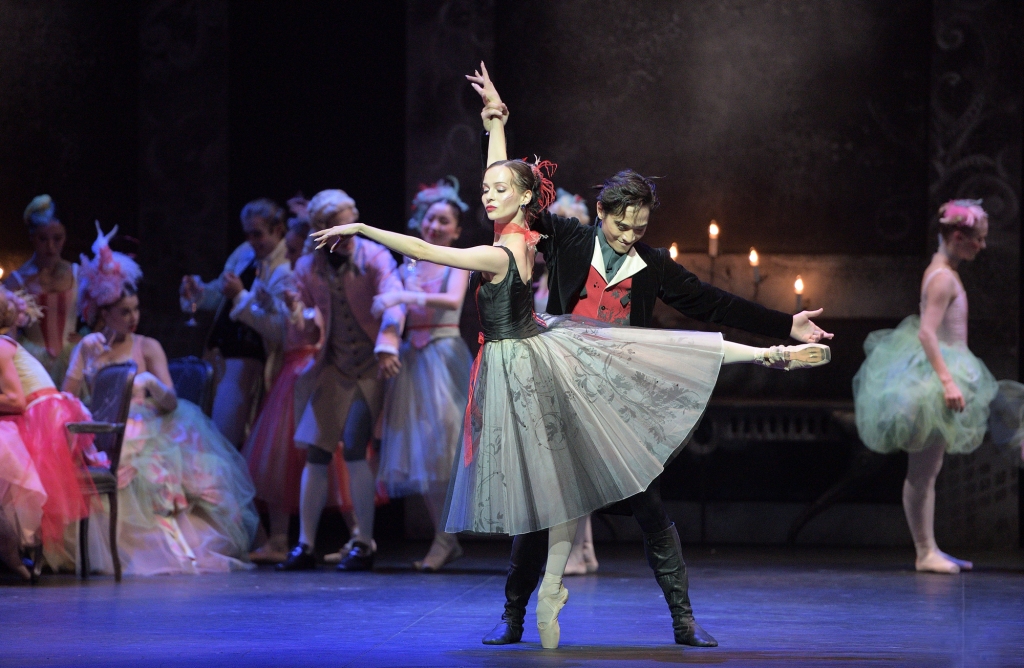
 British Ballet Now & Then