Watching with British Ballet Now and Then: Northern Ballet’s Romeo & Juliet

We are a tad nervous.  Northern Ballet is one of our favourite companies: we’ve travelled out of London to watch them perform Cathy Marston’s Jane Eyre and Victoria, as well as David Nixon’s Cinderella and The Great Gatsby.  But this is Romeo and Juliet, and over the years there has been such a plethora of productions to see in this country, and even a cluster of celebrated versions created for, or at least staged by, British companies: English National Ballet have staged both Rudolf Nureyev’s and Frederick Ashton’s choreographies, Scottish Ballet John Cranko’s, and of course both Royal Ballet companies the iconic adaptation of Shakespeare’s play by Kenneth MacMillan, often described as the “definitive” Romeo and Juliet ballet (Byrne; Watts).  Having been watching it since our teens, it is the Romeo with we are most familiar, the one that is indelibly seared on our memory.

How is it possible to compete with these celebrated works? We did in fact once see Northern Ballet’s production, which was choreographed by Massimo Moricone, and directed and devised by the dancer and actor Christopher Gable, who famously created MacMillan’s Romeo in 1965.  But that was long ago, in the 1990s, when it was new, and our understanding of adaptation not as developed as it is now.  We have read positive reviews, and we enjoy the conducting of Daniel Parkinson (Associate Conductor), as well as the dancing of members of the cast we are about to see: Dominique Larose (Juliet), Joseph Taylor (Romeo), and Rachael Gillespie (one of Juliet’s Friends).  So, tentative as we are, let’s see what happens …

At first the scale of the work bothers us slightly: the market scenes are not teeming with people, and surely the ball is a rather slight gathering for a family as proud and powerful as the Capulets.  But let’s shift our watching a bit and think of the stage action more as symbolic than realistic …  There are other ingredients that bring the work to life. There are children in the marketplace (not all choreographers have followed August Bournonville’s enthusiasm for including children in the villages and towns that provide the setting of their narratives); there are great swaying, streaming carnival pennants that fill the space and add energy to the movement.  

But what is most noticeable about the first fight scene is its humour.  Montagues and Capulets jump on each other’s backs.  There are fisticuffs. Lord Capulet tries to throttle his rival Montague. It’s all a bit uncouth.  And there seems to be more flag waving and stick wielding than real intention to kill, despite the menacing posturing of the Capulets.  Lethal weapons are scant.
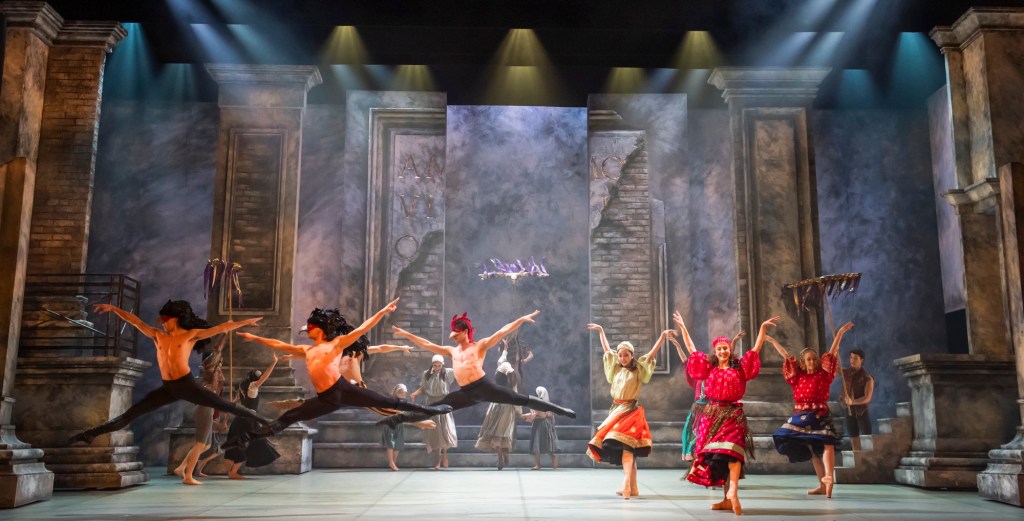
Northern Ballet dancers in Romeo and Juliet ©Tristram Kenton

Nonetheless, this first fight ends on a note of strange tragedy.  A child dies and is held up by Prince Escalus for all to see.  It seems a bit out of place amidst all the raucous behaviour.  But again, thinking of it on a symbolic level, it functions as a forewarning of events to come.

Similarly, the Ballroom Scene, while relatively small in scale, is rich in action—so much so that it is quite a challenge (albeit a pleasurable one) to pick up on all the narrative detail.  Our eyes roam around the stage to follow all the activity … Once he has spotted Juliet, Romeo moves around and across the space, as if drawn to her by an invisible thread.  There are some shenanigans going on between Lady Capulet and her Nephew Tybalt in the background, which seems to cause some tension with Lord Capulet.  And joy of joys, Juliet’s friends have personality—their function is definitely not simply to frame Juliet as the ballerina, but to convey something of the excitement and sheer pleasure of youth. They flit around the stage, eagerly watching the dancing, animatedly “chatting” amongst themselves, with Juliet’s Nurse, and with the Guests; they are prominent in the dancing with the Guests and with Juliet.  And their thrill at being at the ball ratchets up a notch when they notice, all aflutter, the instant and magnetic attraction between Juliet and Romeo.  

The hustle and bustle of the ballroom dissolves into dark stillness as a pool of soft light creates Romeo and Juliet’s new world of radiant and tender love, a love that is also pitted against the escalating friction between the aggressive Tybalt and mapcap Mercutio. 

And now to the climax of Act I … The sets that separate the protagonists as the curtain opens on the first scene is now used to explore their desire for one another before they come together in their duet.  At the start of the scene their breathless anticipation is palpable.  Juliet above and Romeo below, they lean their bodies against the balcony, feeling its surfaces with sensuous touch, like a surrogate lover.  Now moving around the stage together, their touch is reciprocated: they stroke one another’s hair, embrace, lean on one another and eventually kiss.  Although the heady sweep of MacMillan’s choreography is still so alive in our minds, there are moments in the choreography before us where we see the movement follow Sergei Prokofiev’s score in a different way, as their bodies open and close, rise and fall with the melody. 

Dominique Larose and Joseph Taylor in Romeo and Juliet ©Tristram Kenton

And so to Act II … The light-hearted, comedic tone resumes, with jocund carnival dancing, while Romeo sets himself up for a good ribbing as he wanders the town square in a state of swooning reverie, followed by bawdy fun with Juliet’s Nurse when she brings Romeo his letter from Juliet.  Even the fight between Tybalt and Mercutio begins more as derring-do than any serious intention to wound, let alone cause a mortal wound.  Mercutio goads his opponent by waving Tybalt’s own gloves in his face, spinning, leaping and cartwheeling around him, like an acrobat.  This ridiculing is too much for the vain and vicious Tybalt, who avails himself of a metal claw to strike out at Mercutio.  And suddenly there is Mercutio impaled on the wall stabbed by his own dagger.
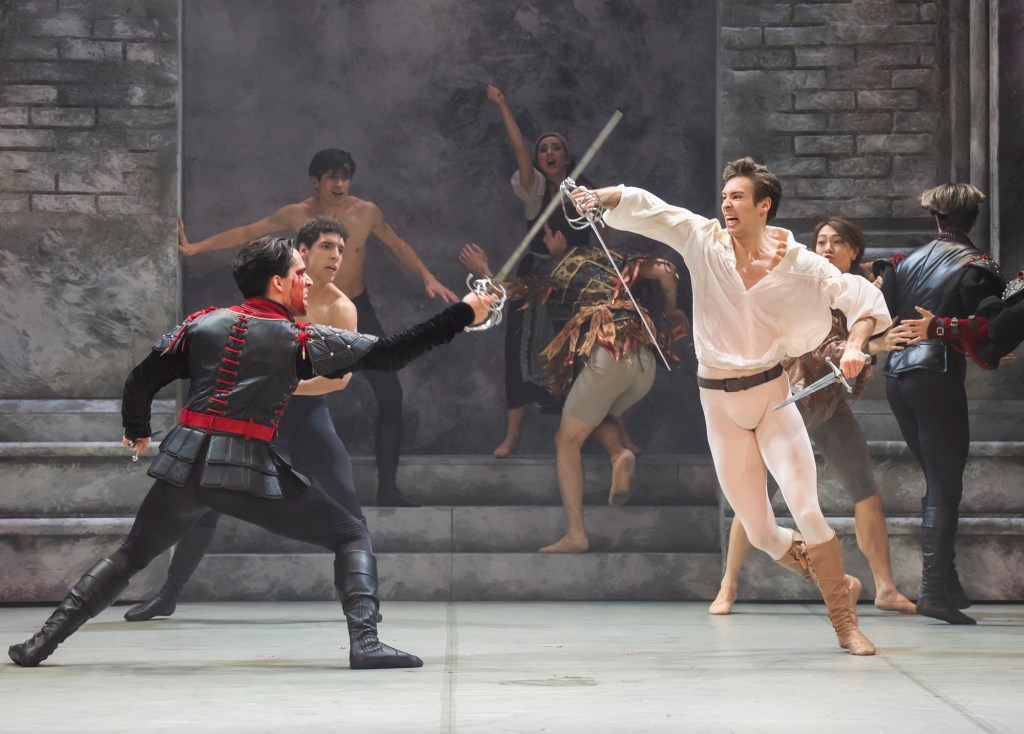
Harry Skoupas and Joseph Taylor in Romeo and Juliet ©Tristram Kenton

The duel between Romeo and Tybalt is of an utterly different order to all the fighting that precedes it.  Right from the start both parties wield their lethal swords, one in each hand, fighting to the death.  The clash of metal and the speed of movement expose the emotional intensity of this fight.  But the violence culminates not only in the anticipated thrust of Romeo’s sword: the two men seize one another’s throats, with the result that Romeo kills Tybalt with his bare hands around Tybalt’s neck.  The murder of Mercutio has flipped comedy to tragedy, play fighting to murderous violence.  Sheets of rain cascade down from the heavens, with thunder and lightning, closing the act like an echo of Mercutio’s curse “A plague a’both your houses!” (3.1.106).

In the final act, the gawky child whose feet dangle from the bed is jolted into womanhood.  We watch this transition with awe.  The ferocity with which Juliet rips off the signature Capulet red and black apparel establishes her independence.  Completely alone on the stage and in life, betrayed by her Nurse, in conflict with her Parents, her Cousin killed by her exiled Husband, Juliet has to make the decision that will determine the rest of her life.  Shakespeare leaves us in no doubt about Juliet’s fears of what may transpire if she decides to take the potion.  She imagines the “foul mouth” of the tomb, Tybalt “festering in his shroud”, “loathsome smells”, and “madly play[ing] with my forefathers’ joints” (4.3.34-51).  

We watch Juliet dance a pas de deux in this scene, with the vial of sleeping potion replacing her partner.  Dancing a pas de deux, her aloneness is all the more poignant: by rights she should be dancing with her husband on the first joyful morning of their marriage.   She holds the vial close to her body, away from her body, moves it in circular motions around her—in front, above, behind her—turning, bending, swaying, twisting as she explores the space around her. She may be making a decision, but the vial seems welded to her very being, as if fate has decided for her.
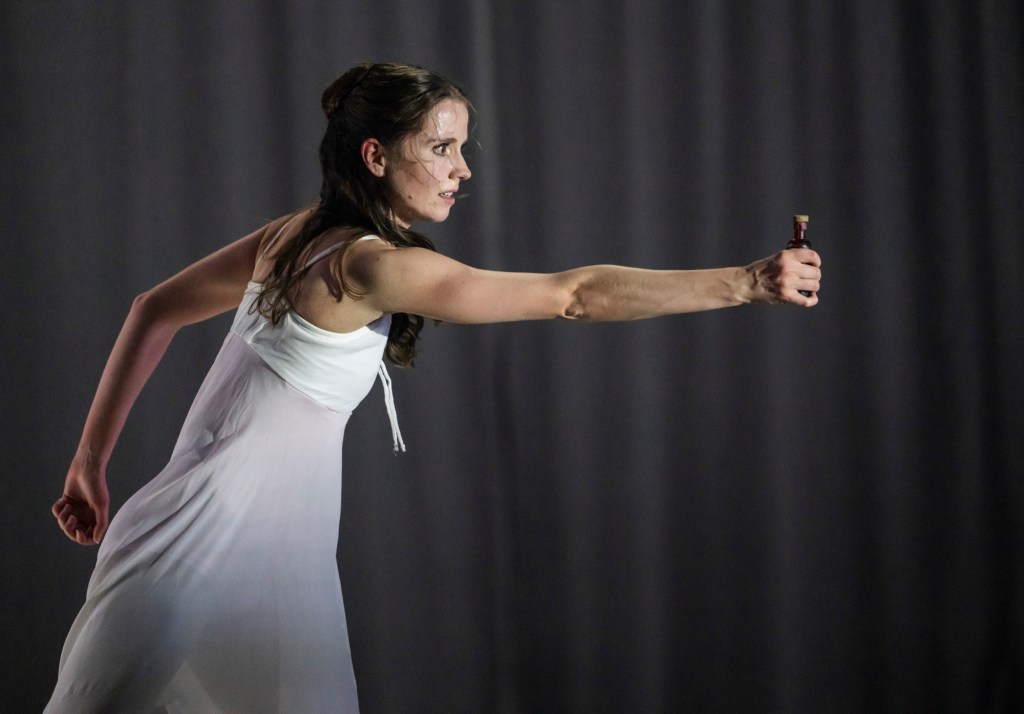
Dominique Larose in Romeo and Juliet ©Tristram Kenton

Lady Capulet instructs the Nurse to see to Juliet’s body.  After the warm, playful exchanges between Juliet and her Nurse, after the sharing of confidences and the Nurse’s fierce defence of Juliet in the face of Lord Capulet’s rage at his Daughter’s flagrant disobedience (more striking in this version than others, we feel), the Nurse’s deft, uncompromising, seemingly detached, stripping of the bed and rearranging of Juliet’s body conveys its own peculiar sense of brutality.  

The violence of this work strikes us again in the Tomb Scene when Romeo’s response to Paris’ assault on him with a dagger is to smash Paris’ head against the wall—the nearest, most immediate weapon to hand.  Romeo’s grief again manifests itself in raw physical brutality before he lovingly and tenderly dances with Juliet’s comatose body, wrapping her limbs around him, wrapping his body around hers, stroking her soft skin, feeling her still-warm body against his own to relive their brief time together.  Juliet’s joy at waking to find herself in Romeo’s arms is palpable but of course short lived.

Dominique Larose and Joseph Taylor in Romeo and Juliet ©Tristram Kenton

As Lord Capulet and Montague become reconciled in their grief we sense Mercutio’s curse lifting.  But the scene is not so long as to detract from the loss of young lives that has precipitated this long overdue reconciliation.  

We leave the theatre, our minds astir with images that bring to mind Linda Hutcheon’s concept of adaptation as a “creative act” (8), and our nervousness assuaged. We are great admirers of MacMillan’s Romeo and Juliet, but we don’t feel comfortable with the notion of a “definitive” adaptation of anything really—it just seems too limiting to us.  This adaptation of Shakespeare’s play has emphasised humour and sexual awakening on the one hand, and the pragmatism, grief and violence associated with death on the other. And we’re fine with that.

©British Ballet Now & Then


References

Byrne, Emma. “Romeo and Juliet review: an inspired choice for the Royal Ballet’s return”. The Standard, 6 Oct. 2021, https://www.standard.co.uk/culture/dance/romeo-and-juliet-review-royal-opera-house-b959020.html

Hutcheon, Linda and Siobhan O’Flynn. A Theory of Adaptation. 2nd ed. Routledge, 2013.

Shakespeare, William. Romeo and Juliet. Penguin Books, 1967.

Watts, Graham. “Northern Ballet’s Romeo & Juliet: a plethora of outstanding dancers”. Bachtrack, 29 May 2024, https://bachtrack.com/review-romeo-and-juliet-northern-ballet-sadlers-wells-may-2024


Cinderella Now & Then

Cinderella Now

It’s been a year of Cinderellas!

We started this blog two years ago with The Nutcracker Now & Then. Last December we published a second Nutcracker post.  However this year, Cinderella seems a more relevant ballet for our Christmas discussion.

On the other hand, Cinderella seems to be a ballet for all seasons: at the start of 2019 Scottish Ballet (SB) were performing their production by Christopher Hampson; in the summer English National Ballet (ENB) performed Christopher Wheeldon’s Cinderella in the round at the Royal Albert Hall, but in the autumn toured the original version, choreographed on Dutch National Ballet and San Francisco Ballet for the proscenium stage; shortly after this Northern Ballet (NB) started to tour their 2013 production by David Nixon, which they will continue to perform over the Christmas period and then again in the spring months of 2020.

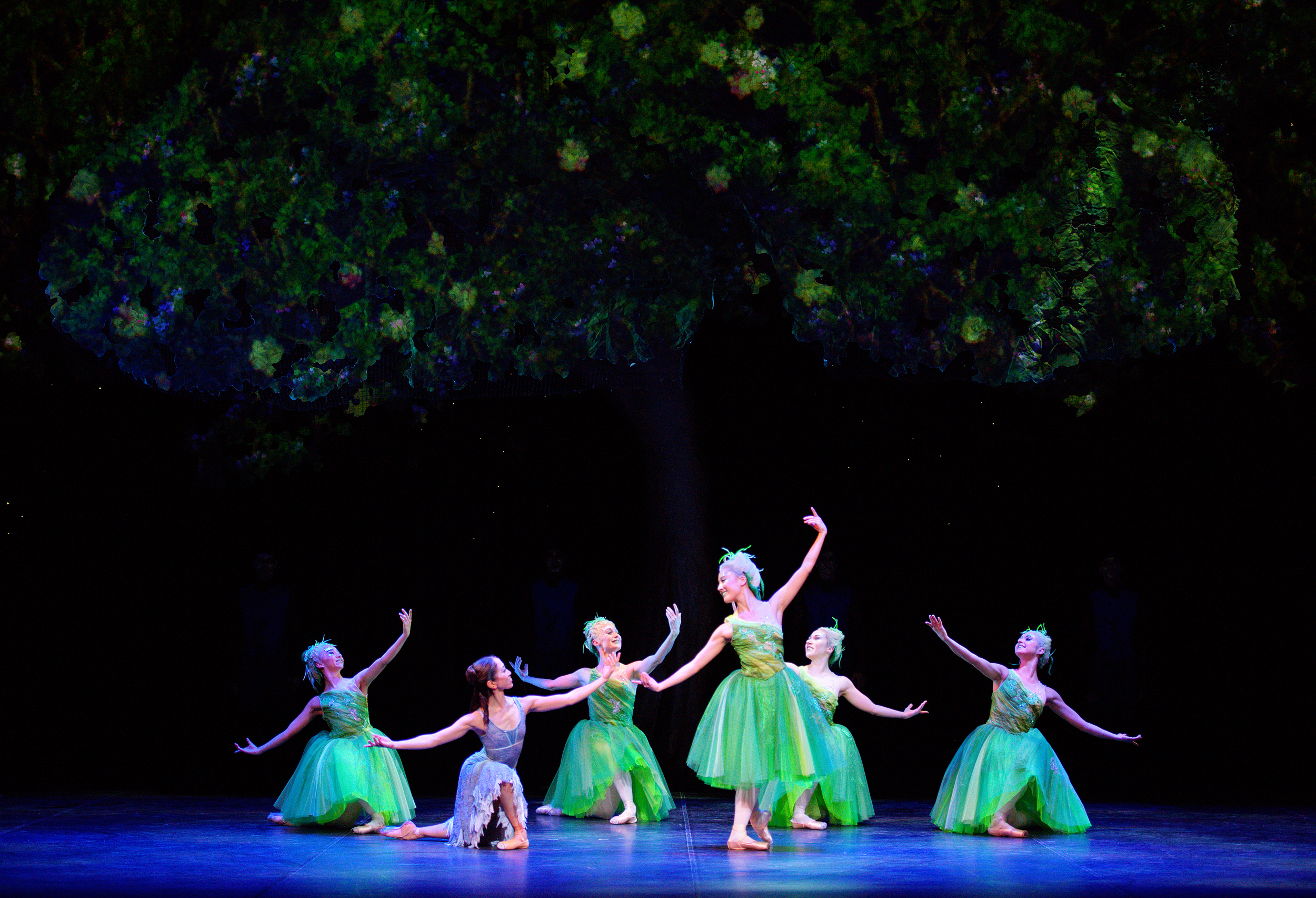
Of course, Cinderella adaptations that are based on the famous score by Sergei Prokofiev have the four seasons built into the structure of the work, if the choreographer chooses to employ the music in that way.  Wheeldon and ENB took advantage of this structure when adapting his 2012 choreography for the huge arena of the Albert Hall by doubling the number of dancers for the Four Seasons divertissement making it into a magnificent spectacle.  But nevertheless, with its magical tree, vibrant blues and greens, the fantastical birds and mythical Tree Gnomes, it seems to us to be imbued with a sense of warmth and fecundity that makes us associate it more with spring and summer.

English-National-Ballets-Cinderella-c-Laurent-Liotardo-2
English National Ballets Cinderella / Photo: Laurent Liotardo

The same might also be said for Hampson’s 2007 staging of Prokoviev’s Cinderella with SB, in which a rose planted by Cinderella …

… becomes the motif…, blooming into swirling curlicues and trailing blossom, becoming the backdrop of the ballet’s scenes of magic.  There’s a corps de ballet of roses, and it’s a rose, as much as a dropped slipper, that reunite this Cinders with her prince.  (Anderson)

In this way the magic of nature is woven into the fabric of the ballet, and more literally into the fabric of Cinderella’s gown for the ball, woven together by “silk moths, grasshoppers and spiders” as it is (Lowes).

In contrast to this emphasis on nature’s warmer months, NB’s Cinderella is set for the main part in a fantasy Moscow winter time, affording the opportunity for visits to the winter market populated by the likes of jugglers, acrobats and a magician, skating scenes on the Crystal Lake, and huskies for Cinderella’s sleigh to take her to the ball.

Abigail Prudames and Joseph Taylor in Cinderella. Photo Guy Farrow copy
Abigail Prudames and Joseph Taylor in NB’s Cinderella / Photo: Guy Farrow

The atmospheric score composed by Philip Feeney, and Duncan Hayler’s sparkling set, with its Fabergé-inspired ballroom (new this year) create a quite different world of magic to that created by Daniel Brodie, Natasha Katz and Basil Twist for ENB, and the art nouveau realm of Tracy Grant Lord’s designs for SB.

Araminta Wraith in Scottish Ballet's Cinderella by Christopher Hampson. Credit Andy Ross copy
Araminta Wraith in Scottish Ballet’s Cinderella by Christopher Hampson / Credit Andy Ross

One of the things that these three Cinderellas all provide is a back story that helps to create a sense of humanness in the characters, making them more than stock figures or archetypes.

Both Hampson (SB) and Wheeldon (ENB) show their heroine in childhood grieving over her Mother’s grave.  But the everlasting bond between mother and daughter is symbolised by Cinderella’s tears generating new life: the blossoming of Hampson’s rose garden and the growth of Wheeldon’s magical tree.  Hampson’s Prince is portrayed as lonely, without anyone to whom he can relate (“The Story of Cinderella”), while ENB’s Prince Guillaume seems to enjoy his life with his childhood friend Benjamin too much to want to commit to marriage – until, of course, he meets Cinderella.  A delightful scene occurs in Act I as the result of the familiar trope of swapping identities: taking Guillaume for a destitute pauper, Cinderella offers him food, shelter and company – a mark of her compassionate nature.  But as they clumsily dance together on the table, the attraction between them is unmistakable.

Erina-Takahashi-and-Joseph-Caley-in-English-National-Ballets-Cinderella-c-Laurent-Liotardo-5
Erina Takahashi and Joseph-Caley in English National Ballets Cinderella / Photo: Laurent Liotardo

Nixon’s (NB) Cinderella meets Prince Mikhail in childhood, but the most significant thing we discover about her is that she is partially responsible for her Father’s accidental death; this perhaps accounts for her Stepmother’s antipathy towards her.  Yet, despite her burden of guilt, the grown-up Cinderella radiates delight in the world of the market and the Crystal Lake.  The innovations in characterisation that make this production feel fresh and closer to life, despite the wintry glitter and sparkle, are Cinderella’s eventual bold defiance of her Stepmother, and the Prince’s initial derisory rejection of Cinderella when he discovers her lowly status as a servant to the household.  The Prince’s “upper-class bad-manners moment”, as Amanda Jennings calls it (37), felt quite uncomfortable to watch; however, so poignantly did Joseph Taylor portray Mikhail’s remorse at his own lack of empathy and insight, that there could be no doubting his love for Cinderella.

Cinderella Then

As the first three-act British ballet, Frederick Ashton’s 1948 Cinderella, still regularly performed by The Royal Ballet (RB), is without a doubt the most celebrated Cinderella in the history of British ballet.  And without a doubt this is in part attributable to the number of prestigious ballerinas who have performed the eponymous role, amongst them Moira Shearer, Margot Fonteyn, Nadia Nerina, Svetlana Beriosova, Antoinette Sibley, Jennifer Penney, Lesley Collier, Maria Almeida, Darcey Bussell, Viviana Durante, Tamara Rojo and Alina Cojocaru.

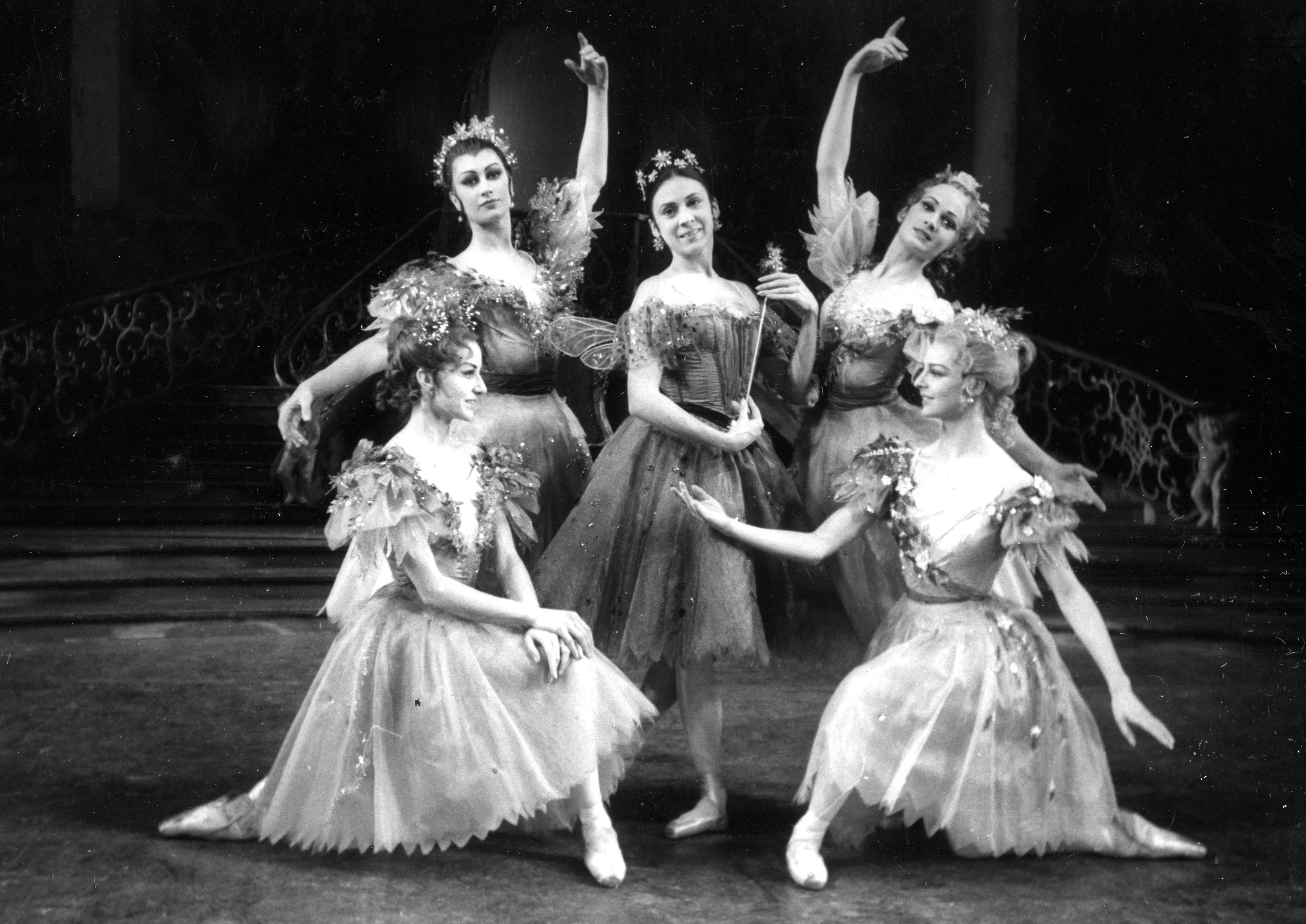
Sibley_Fairy Spring_GBL Wilson
Annette Page ( as The Fairy Godmother ) ; Antoinette Sibley ( as Fairy Spring ) ; Vyvyan Lorrayne ( as Fairy Summer ) ; Merle Park (as Fairy Autumn ) ; Deanne Bergsma ( as Fairy Winter ) ; Royal Opera House, December 1965 ; Credit : G.B.L. Wilson / Royal Academy of Dance

But despite its status in the British Ballet canon, Ashton’s Cinderella is to some extent an exception, especially for the year 1979, which is where we focus our attention now.  We chose this particular year, because not only did the RB stage Ashton’s Cinderella that December, but both NB and SB mounted brand new productions – by Robert de Warren and Peter Darrell respectively.

It is no secret that Ashton choreographed his Cinderella as a tribute to late 19th century ballet.  The divertissements of the Seasons are reminiscent of the Prologue Fairies from The Sleeping Beauty (Petipa, 1890), with their quirky, idiosyncratic movements that portray the feel of the season, while the Stars remind us of Ivanov’s Snowflakes, with their sharp, spikey, shimmering movements and patterns that bring to mind the constellations of the night sky.  The pantomime dame style “Ugly Sisters” could be comical renditions of Carabosse, as they plot to ensure Cinderella’s continued subjugation and to deny her her destiny, earned by the beauty of her being.

Ugly sisters_Ashton & Helpmann_GBL Wilson
Robert Helpmann ( as the Ugly Sister ) & Frederick Ashton (as the Ugly Sister ) Royal Opera House, December 1965 ; Credit : G.B.L. Wilson / Royal Academy of Dance

Like Desiré in The Sleeping Beauty, Cinderella’s Prince arrives late in the proceedings and has to pursue Cinderella through the Stars that form barriers between them.  Like a 19thcentury classical ballerina role, Cinderella herself is the focus of the stage action and the narrative, with a string of solos and duets in different styles.  No ballerina we have seen has ever competed with Tamara Rojo in portraying the two faces of Cinderella: the downtrodden but creative, imaginative and kindly young woman on the one hand, and the ideal vision of the fairy princess on the other.

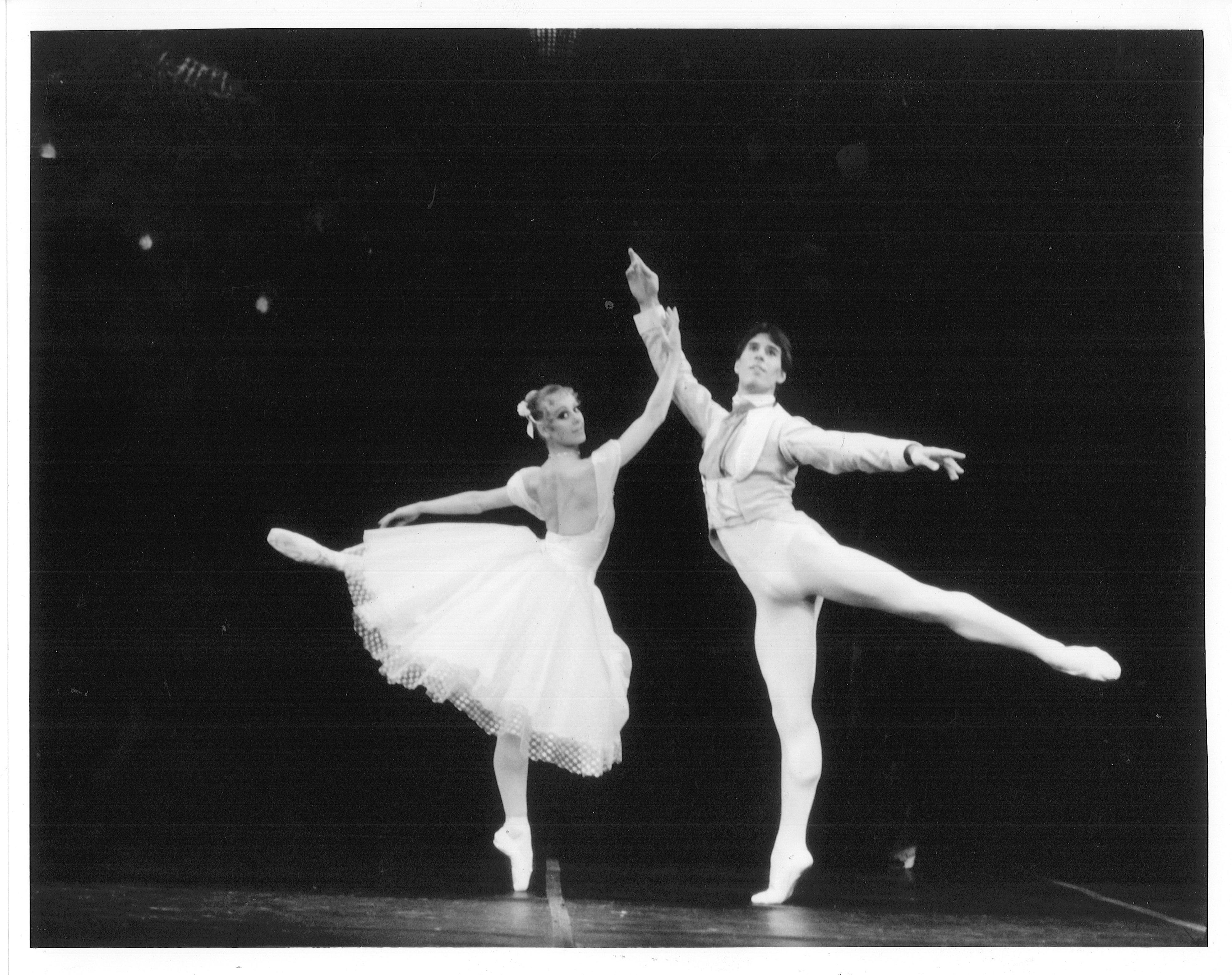
But in 1979 NB offered a quite different interpretation of the Cinderella story.  De Warren based his choreography on the 1901 score by Johan Strauss Jr., the only ballet score ever written by the composer, and adapted the scenario from Heinrich Regel’s original libretto. The theme of the seasons was retained in the name of the department store where the action is located.  Here Cinderella is employed in the millinery workshop and bullied by her Stepmother, who is head of the department.  However, as far as we can make out, there were no fairies representing the seasons, although magical doves (reminding us of Wheeldon’s fantasy birds) help Cinderella with her chores so that she can go to the ball.

CIN79-001
Alexandra Worrall and Serge Lauoie in Robert de Warren’s Cinderella (1979) for Northern Ballet. Photo Ken Duncan.

The ball has been organised by Gustav, the owner of the Four Seasons, for his staff.  What we find so enchanting about this telling of the story is that Gustav is so in love with Cinderella, despite her lowly position, that he makes excuses to go to the millinery department to catch a glimpse of her, and seeks her out at the ball, where everyone is disguised by masks.

Darrell’s 1979 SB Cinderella shared similarities with the NB production in that it also used an alternative musical score to Ashton’s, one arranged by Bramwell Tovey from music by Gioachino Rossini, including some numbers from his Cinderella opera La Cenerentola (1817).  The libretto was also based loosely on the scenario to the opera (Tovey) and evidently foregrounded the Prince.  The first source we found on this production was a review by John Percival which struck us with both its title “She knows a good ‘un when she sees him”, and with the first lines:

The Hero of Peter Darrell’s ballet Cinderella is the quiet, gentle Prince Ramiro, who is more interested in books than court occasions; you could almost imagine him talking to the plants in the palace gardens …

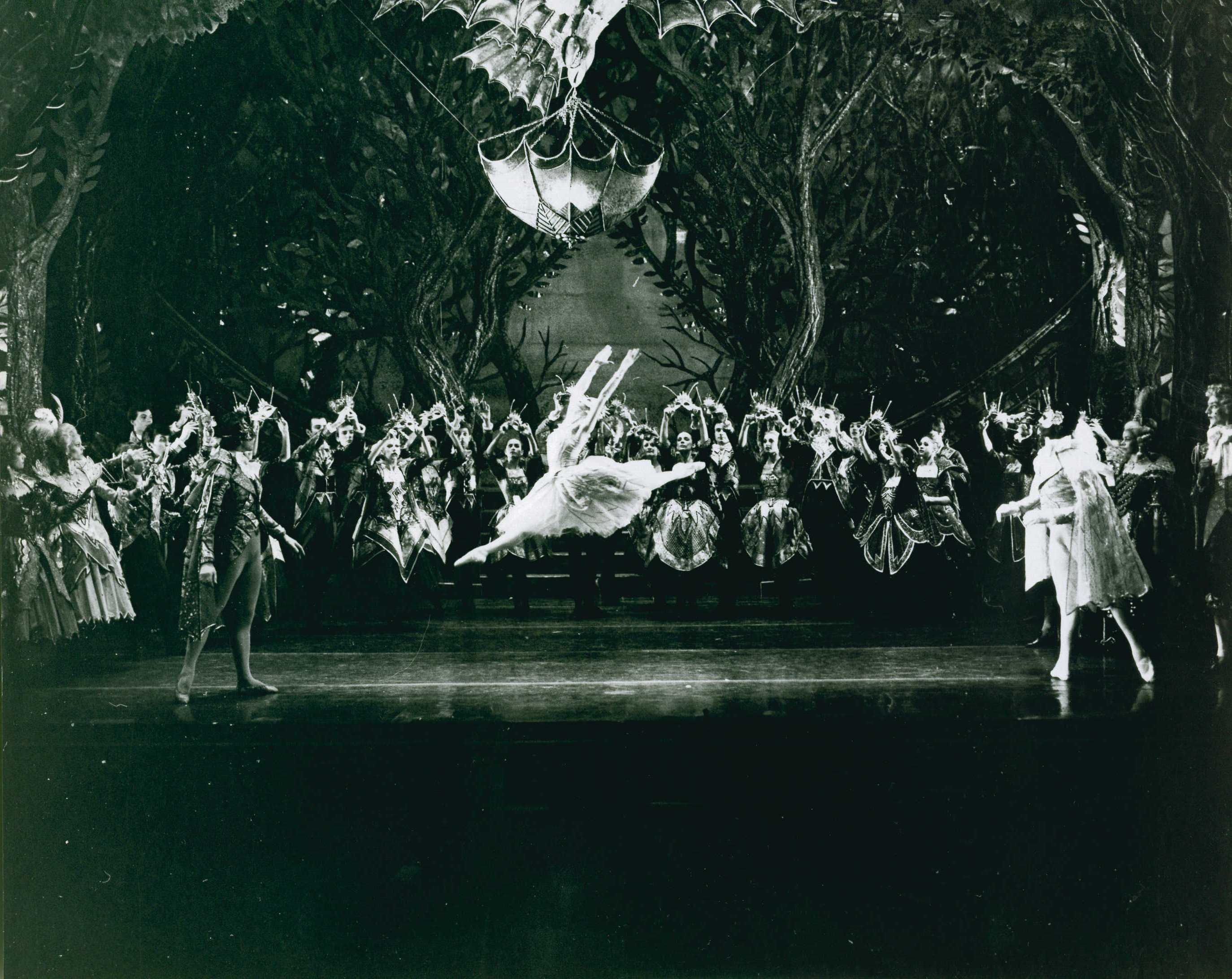
Scottish Ballet present Peter Darrell's Cinderella. Credit Bill Cooper (1)
Scottish Ballet – Peter Darrell’s Cinderella/ Credit Bill Cooper

This version of Cinderella in fact started with the Prince, who, finding the preparations for the masked ballet tedious, changes places with his equerry Dandini; and as in the current production, an instant bond is kindled between Cinderella and the Prince, despite the disguise.  As Percival emphasises “Cinderella knows real worth when she sees it” (“A Scottish Cinderella” 20).  Once again, nature plays an integral part in the staging, with Exotic Birds, Fire Fairies and Dew Fairies listed in the cast, and Cinderella arriving at the ball in an exquisite cloak resembling butterfly wings.

Concluding thoughts

Choreographers past and present have drawn on different sources and ideas in order to make their particular Cinderella fitting for their context.

Yet, no matter which adaptation you see, Cinderella is a ballet about different kinds of magic, love and beauty, as well as the everyday miracle of nature, with its message of hope and faith in the constant renewal of life.  As such it as an ideal Christmas ballet, as well as a ballet for all seasons.

© British Ballet Now & Then

This post is dedicated to Kelly Kilner, Rosie’s Angel of Islington – a living example of everyday magic.

We would like to thank Graham Watts for his help with our research on Christopher Hampson’s Cinderella.

Next time on British Ballet Now & Then … It’s an exciting anniversary season for English National Ballet, so we must take a look at the history of the company – its directors, repertoire and dancers.  

References

Anderson,Zoë.  “Cinderella, Festival Theatre, Edinburgh, review: Romantic            production combines glamour and liveliness”. The Independent, 24 Dec. 2015, http://www.independent.co.uk/arts-entertainment/theatre-     dance/reviews/cinderella-festival-theatre-edinburgh-review-romantic-          production-combines-glamour-and-liveliness-a6785011.html. Accessed 22            Dec. 2019.

Jennings, Amanda. “Cinderella”. Dance Europe, no. 244, Nov. 2019, pp. 35-37.

Lowes, Susan. “Cinderella”, All Edinburgh Theatre, 8 Dec. 2015, http://www.alledinburghtheatre.com/cinderella-scottish-ballet-review-2015/. Accessed 22 Dec. 2019.

Percival, John. “A Scottish Cinderella”. Dance and Dancers, vol. 30, no. 12, 1979, pp. 18-22.

—. “She knows a good ‘un when she sees him”, The Independent, 17 Dec. 2019, http://www.independent.co.uk/arts-entertainment/dance-she-knows-a-good-un-when-she-sees-him-1191878.html. Accessed 22 Dec. 2019.

“The Story of Cinderella”. Scottish Ballet, 2019, https://www.scottishballet.co.uk/tv/the-story-of-cinderella. Accessed 22 Dec. 2019.

Tovey, Bramwell. “The Music for Cinderella”. Cinderella. Programme. His Majesty’s Theatre, Aberdeen, 1979.